
On this page
Bathroom Design Trends 2024: What UK Homeowners Are Installing
The UK bathroom industry has witnessed a dramatic shift in recent months, with bathroom design trends for 2024 moving decisively towards spa-like sanctuaries and sustainability-focused installations. According to the latest data from the Bathroom Manufacturers Association, British homeowners spent over £1.8 billion on bathroom renovations in 2023, with spending projected to increase by 12% this year as consumers prioritise wellness spaces in their homes.
Key Takeaways
- Natural materials and earthy tones are replacing stark white bathrooms, with terracotta, sage green, and warm woods dominating new installations
- Wet rooms and walk-in showers now account for 38% of new bathroom projects in the UK, up from 23% in 2022
- Average costs range from £3,500–£7,000 for a standard bathroom renovation, with London prices typically 25–35% higher
- Underfloor heating installations have increased by 45% year-on-year as homeowners seek luxury upgrades that also reduce energy bills
- Sustainable fixtures including water-saving taps and dual-flush toilets are now standard rather than premium options
The Rise of Natural Materials and Warm Tones
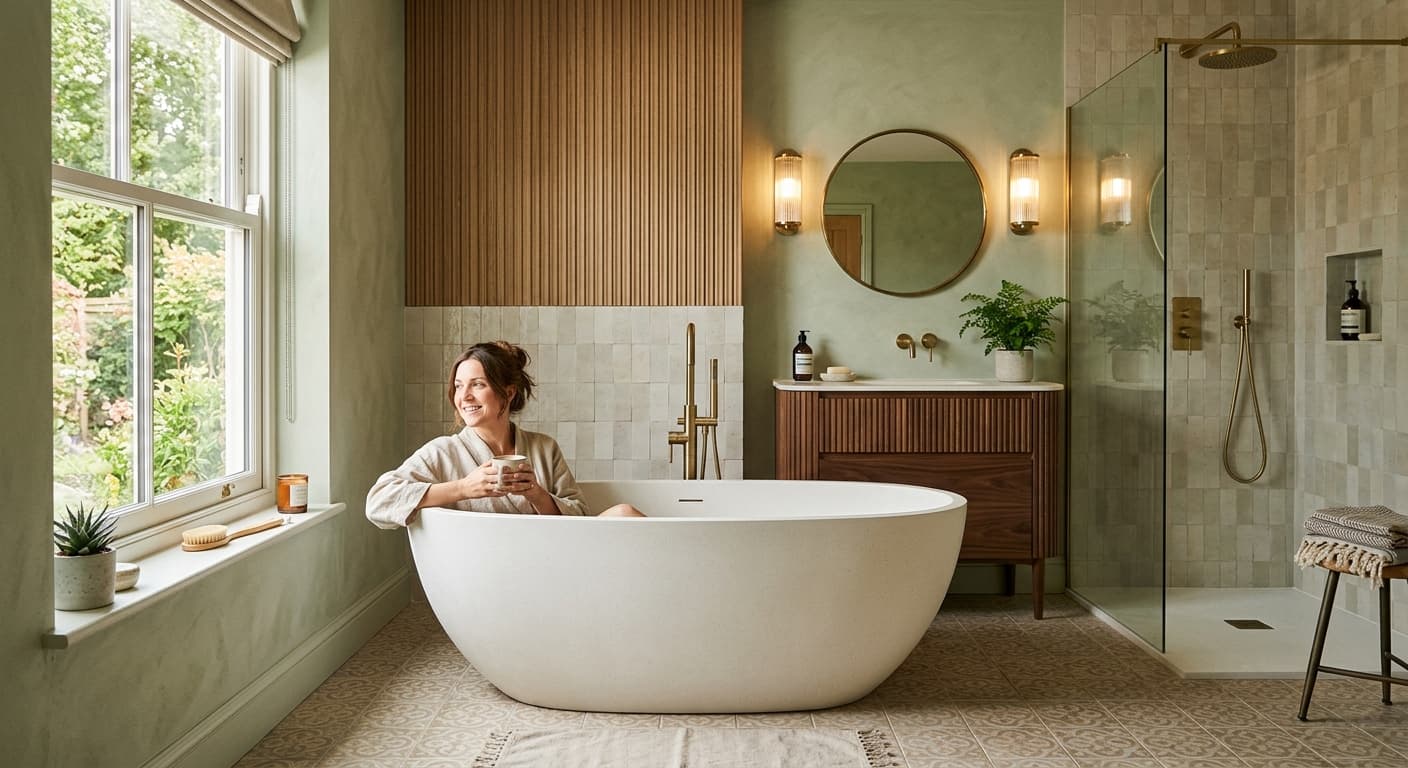
The clinical, all-white bathroom is officially out. We've seen a remarkable shift in our bathrooms directory listings, with suppliers reporting unprecedented demand for natural stone, terrazzo, and textured tiles in warm, earthy colours.
Travertine and limestone are making a comeback, particularly in high-end renovations across London and the Home Counties. These materials typically cost £80–£150 per square metre supplied and fitted, making them a significant investment but one that dramatically elevates the feel of a space.
Wooden elements—particularly European oak and walnut vanity units—are appearing in bathrooms that would have featured white gloss cabinetry just two years ago. Matt black and brushed brass taps and fixtures have become the default choice, with chrome now feeling dated to many homeowners.
The colour palette has warmed considerably. Sage green, terracotta, and deep navy tiles are outselling white alternatives at major UK retailers. Topps Tiles reported a 67% increase in sales of their heritage and earth-tone ranges in Q4 2023, whilst their contemporary white ranges saw a corresponding decline.
Wet Rooms Surge in Popularity
One of the most significant bathroom design trends we've observed is the explosion in wet room installations. These fully waterproofed, walk-in shower spaces now represent more than a third of all bathroom projects, according to installers listed on HouseJester.
Wet Room vs Walk-In Shower: Pros and Cons
Many homeowners struggle to understand the distinction and relative merits of each option. A wet room features floor-to-ceiling waterproofing with drainage across the entire floor, whilst a walk-in shower typically has a dedicated shower tray and partial screening.
Wet room advantages:
- Creates a seamless, spacious feel ideal for small bathrooms
- Fully accessible for those with mobility requirements
- Easier to clean with fewer crevices and joints
- Higher perceived value and desirability
Wet room disadvantages:
- Requires specialist tanking and waterproofing (£800–£1,500)
- Typically 30–40% more expensive than standard shower installation
- Must have adequate floor gradient for drainage
- Can require structural work on suspended timber floors
Walk-in shower advantages:
- Less expensive to install (£600–£1,200 vs £1,500–£3,000 for wet rooms)
- Suitable for most floor types without major structural work
- Contained shower area reduces humidity in the rest of the bathroom
- Easier to retrofit in existing bathrooms
Walk-in shower disadvantages:
- Shower tray can look dated compared to tiled wet room floors
- Screen requires regular cleaning and eventual replacement
- Less impressive visually than a full wet room
We recommend wet rooms for ground floor bathrooms with concrete floors, where waterproofing and drainage are more straightforward. For upstairs bathrooms in period properties, a quality walk-in shower often makes more practical and financial sense.
Do I Need a Wet Room Specialist?
Absolutely. The waterproofing requirements for wet rooms are exacting, and failure leads to catastrophic leaks and structural damage. Building Regulations Approved Document C (Site Preparation and Resistance to Contaminants and Moisture) sets out clear requirements for bathroom waterproofing, and wet rooms must comply with BS 8000-0:2014 standards.
General bathroom fitters may lack the specialist tanking skills required. Our recommendation is to verify that any installer you consider has demonstrable wet room experience with photographic evidence of previous projects. Expect to pay £150–£200 per day for a qualified wet room specialist, compared to £120–£180 for a standard bathroom fitter.
According to Which?, 17% of homeowners who attempted DIY wet room installations experienced leaks requiring remedial work costing an average of £2,300. This is not an area to economise on.
Small Bathroom Design Solutions
With the average UK bathroom measuring just 2.3 metres by 2.0 metres, space optimisation remains a perpetual challenge. The current bathroom design trends offer several solutions specifically for compact spaces.
Small Bathroom Design Ideas with Shower
Corner shower enclosures are being replaced by slim-profile walk-in screens that create the illusion of more space. By eliminating bulky shower doors and trays, homeowners in cities like Manchester and Birmingham are gaining valuable floor area.
Wall-hung toilets and basins have become mainstream rather than designer extras. These create visible floor space that makes rooms feel larger and simplify cleaning. The concealed cistern costs £120–£180 more than a standard floor-mounted toilet, but the spatial benefit is considerable.
Storage solutions have evolved significantly. Recessed medicine cabinets built into stud walls, typically costing £200–£400 installed, provide storage without protruding into the room. We've seen excellent examples in our directory where installers have created recessed shelving in the shower area using the same tiles as the walls.
Best Bathroom Tiles for Small Spaces
Large-format tiles (600mm × 600mm or larger) create fewer grout lines and make small bathrooms feel more spacious. This contradicts the old advice about using small tiles in small rooms—a rule that contemporary designers have thoroughly debunked.
Light-reflecting surfaces help considerably. Glazed porcelain tiles in pale colours or subtle patterns work better than matt finishes. Vertical tile patterns draw the eye upward, making low ceilings feel higher.
For walls, we recommend tiles no smaller than 300mm × 600mm. On floors, 600mm × 600mm tiles work well in most UK bathrooms. The fewer grout lines, the more cohesive and spacious the room appears.
Prices vary considerably. Budget ceramic tiles start at £12–£18 per square metre, mid-range porcelain costs £25–£45 per square metre, and premium natural stone or designer tiles reach £80–£200 per square metre. For a typical small bathroom (5 square metres of floor, 15 square metres of walls), tiling materials alone cost £400–£3,000 depending on specification.
The Underfloor Heating Revolution
One of the most significant shifts in bathroom design trends is the normalisation of underfloor heating. Once considered a luxury feature, it now appears in 56% of new bathroom installations according to the Heat Pump Association.
Underfloor Heating Bathroom Cost UK
Electric underfloor heating systems suitable for bathrooms typically cost:
- Materials: £50–£85 per square metre for quality systems from brands like Warmup or ProWarm
- Installation: £150–£250 per day for a qualified electrician (usually 1–2 days for an average bathroom)
- Total project cost: £500–£900 for a standard 5 square metre bathroom
Water-based (hydronic) underfloor heating costs significantly more—£1,200–£2,500 for a bathroom—and makes sense only when installing throughout a property or as part of a heat pump system.
Running costs for electric underfloor heating in a bathroom average £0.30–£0.45 per day when used for 2–3 hours daily, based on current UK electricity prices of £0.27–£0.30 per kWh. Over a year, that's £110–£165—comparable to running a heated towel rail.
The comfort benefit is substantial. Cold bathroom floors on winter mornings become pleasantly warm, and the gentle radiant heat dries the room more effectively than standard radiators, reducing mould and condensation.
Smart Technology Integration
Digital shower controls, voice-activated lighting, and integrated sound systems have moved from luxury hotels into residential bathrooms. We're seeing this particularly in renovations where homeowners are listing their businesses as smart home integrators alongside traditional bathroom specialists.
Digital shower systems from brands like Aqualisa, Grohe, and Mira allow precise temperature control and can be operated via smartphone apps. They cost £600–£1,800 depending on specification, but eliminate the temperature fluctuations that plague traditional mixer showers when taps are used elsewhere in the house.
Motion-activated lighting and heated mirror demister pads are becoming standard specifications. These small touches typically add £150–£300 to a project but deliver daily convenience.
Sustainability Becomes Standard
Environmental considerations have shifted from niche concern to mainstream requirement. The taps, toilets, and showers being installed today use 30–50% less water than equivalents from a decade ago.
Water-saving taps with flow rates of 6 litres per minute (versus 12–15 litres for older taps) are now standard. Dual-flush toilets with 4/6 litre flushes have replaced 9-litre single-flush systems. Aerated shower heads maintain pressure whilst using less water.
These fixtures cost no more than water-wasting alternatives. A quality water-saving tap from a brand like Hansgrohe or GROHE costs £80–£180—identical to standard equivalents.
The environmental benefit is clear, but so is the financial advantage. For a four-person household, water-efficient bathroom fittings save approximately £75–£100 annually on combined water and heating bills, according to the Energy Saving Trust.
How Much Does a Bathroom Renovation Cost in the UK?
Pricing varies enormously based on specification, location, and whether you're refreshing an existing layout or reconfiguring the space entirely.
Budget refresh (£2,500–£4,500):
- New white suite (toilet, basin, bath or shower)
- Basic ceramic tiles
- Standard chrome taps and fittings
- Vinyl flooring
- Cosmetic refresh without moving plumbing
Mid-range renovation (£5,000–£9,000):
- Quality branded sanitaryware
- Porcelain tiles throughout
- Brushed brass or matt black fixtures
- Walk-in shower or wet room
- Some plumbing reconfiguration
- Upgraded lighting
Premium installation (£10,000–£18,000+):
- Designer or bespoke sanitaryware
- Natural stone or large-format tiles
- Underfloor heating
- Digital shower controls
- Full wet room with linear drainage
- Significant structural work
- High-end fixtures and fittings
London prices typically run 25–35% higher than these national averages. A mid-range bathroom costing £6,500 in Bristol might cost £8,500–£9,000 in the capital.
These figures include all materials, labour, and associated costs (plumbing, electrical work, tiling, plastering, decoration). They assume you're hiring professionals rather than attempting DIY installation.
Read our complete guide to complete bathroom renovation guide UK for detailed breakdowns of each cost component.
How Long Does It Take to Fit a New Bathroom?
Timeline is often the forgotten consideration when planning bathroom renovations.
A straightforward bathroom replacement—removing an old suite and installing a new one in the same layout—typically takes 5–7 working days with a two-person team. This includes:
- Day 1: Strip out and first fix plumbing/electrical
- Days 2–3: Wall preparation and tiling
- Days 4–5: Floor tiling and grouting
- Days 6–7: Sanitaryware installation, final fix plumbing/electrical, decoration
Wet room installations extend this to 7–10 days due to tanking requirements and the need for waterproof membranes to cure properly before tiling.
Full renovations involving layout changes, structural work, or plumbing repositioning take 2–3 weeks. Complex projects with bespoke joinery or heritage property considerations can extend to 4 weeks.
The Federation of Master Builders recommends adding 20% contingency time to any bathroom project, as concealed issues with pipework, electrics, or structural problems frequently emerge during strip-out.
During this period, you'll be without bathroom facilities. Most homeowners either use another bathroom in the property, install temporary facilities, or stay elsewhere during the most disruptive phase.
Finding the Right Professionals
The quality of your installer determines whether your bathroom lasts 15+ years or requires remedial work within three. We strongly recommend using professionals listed in verified directories rather than finding someone through social media or cards in shop windows.
When browsing all categories on HouseJester, look for bathroom installers with:
- Public liability insurance (minimum £2 million)
- Evidence of relevant qualifications (City & Guilds, NVQ in plumbing, electrical qualifications)
- Portfolio of completed projects photographically documented
- Verifiable references from recent clients
- Membership of trade bodies like the Bathroom Manufacturers Association or Federation of Master Builders
Expect to pay £150–£250 per day for a qualified bathroom fitter, with projects typically requiring two tradespeople (a plumber and a tiler or general builder). Electricians cost £180–£280 per day for Part P certified work.
Budget an additional 10–15% above quoted prices for unexpected issues. In properties built before 1980, concealed plumbing problems emerge in roughly 40% of bathroom renovations according to Checkatrade data.
Making Your Decision
Bathroom design trends for 2024 offer more choice than ever before, but this abundance can feel overwhelming. Our recommendation is to prioritise longevity over fashion.
Earthy tones and natural materials have enduring appeal compared to stark contemporary aesthetics or maximalist pattern mixing. Water-efficient fixtures save money whilst meeting inevitable future regulations. Underfloor heating delivers daily comfort that justifies the installation cost.
The wet room versus walk-in shower decision depends entirely on your property type, floor construction, and budget. Both deliver excellent results when properly installed.
Start by searching our company directory for qualified installers in your area. Request at least three detailed quotes, verify insurance and qualifications, and view completed projects similar to yours. Expect the entire process from initial consultation to completion to take 8–12 weeks.
The bathroom you install today will serve you for 15–20 years. Choose carefully, hire competent professionals, and the investment will reward you every single day.
Browse Bathrooms businesses on HouseJester to find verified installers in your area.
Sources & Further Reading
- Bathroom Manufacturers Association - Market Research & Consumer Insights - Industry statistics and trends
- Which? - How to Plan a Bathroom - Independent consumer advice and cost guides
- Energy Saving Trust - Water Efficient Products - Information on sustainable fixtures and savings calculations
This article was created with AI assistance and reviewed by the HouseJester editorial team for accuracy and relevance.
Written by
Emma Richardson
Kitchen & Bathroom Specialist
Emma has reviewed hundreds of kitchen and bathroom installations across the UK. She combines product knowledge with real-world testing to help homeowners choose the right fitters and materials for their projects.
- Fitted Kitchens
- Bathrooms
- Tiles
- Heating & Plumbing