
On this page
Recent changes to UK bathroom lighting regulations have caught many homeowners and even some electricians off guard. The 18th Edition of the IET Wiring Regulations (BS 7671), which came into force in 2019 with amendments in 2022, has tightened requirements around bathroom electrical installations, including specific mandates for lighting zones and IP ratings that affect every bathroom renovation project across the country.
Key Takeaways
- All bathroom lights must now meet minimum IP44 rating, with IP65 required within 60cm of water sources
- Zone classification determines which lights you can legally install in different bathroom areas
- LED lights typically cost 75-85% less to run than halogen equivalents over their lifespan
- Professional installation by a qualified electrician (Part P compliant) is mandatory for bathroom lighting
- Expect to pay £150-£400 for basic bathroom lighting installation, with London prices 20-30% higher
What IP Rating Do I Need for Bathroom Lights?
The bathroom IP rating lighting zones explained system divides your bathroom into distinct areas, each with specific requirements. IP stands for Ingress Protection, and the two-digit number that follows indicates protection against solids (first digit) and liquids (second digit).
Zone 0 covers the interior of your bath or shower tray itself. Only specialist low-voltage lights rated IPX7 or higher can be installed here, and honestly, we rarely see this done outside luxury spa-style bathrooms.
Zone 1 extends directly above the bath or shower to a height of 2.25 metres. Here you need minimum IP65 rating. That's full dust protection and protection against water jets from any direction. We've seen many homeowners purchase attractive ceiling lights only to discover they're not rated for Zone 1 installation.
Zone 2 covers the area within 60cm horizontally from the bath or shower, extending 2.25 metres vertically. IP44 is the minimum here—protection against objects over 1mm and splashing water. Most modern bathroom lights meet this standard, but always check before purchasing.
Beyond Zone 2, standard IP20-rated lights are technically acceptable, though many electricians recommend IP44 throughout bathrooms to account for steam and humidity. According to the Electrical Safety First organisation, approximately 60% of domestic electrical accidents occur in bathrooms, making proper zone compliance essential.
Prices for IP-rated bathroom lights vary considerably. Basic IP44 downlights start around £15-£25 each at Screwfix or Toolstation, whilst designer IP65-rated wall lights from brands like Astro Lighting or Bathroom Brands run £80-£200 per fitting. For a typical family bathroom, budget £200-£500 for fittings alone, then add installation costs.
How Do I Plan Lighting for a Room?
The layered lighting design approach explained by lighting designers involves combining three distinct types: ambient (general), task, and accent lighting. This principle applies to every room in your home, not just bathrooms.
Ambient lighting provides overall illumination. In bathrooms, this typically means ceiling-mounted downlights or flush fittings. Calculate roughly 25 watts of LED lighting per square metre for adequate brightness. A 3m x 2m bathroom needs approximately 150 watts total, which translates to 3-4 modern LED downlights at 10-15 watts each.
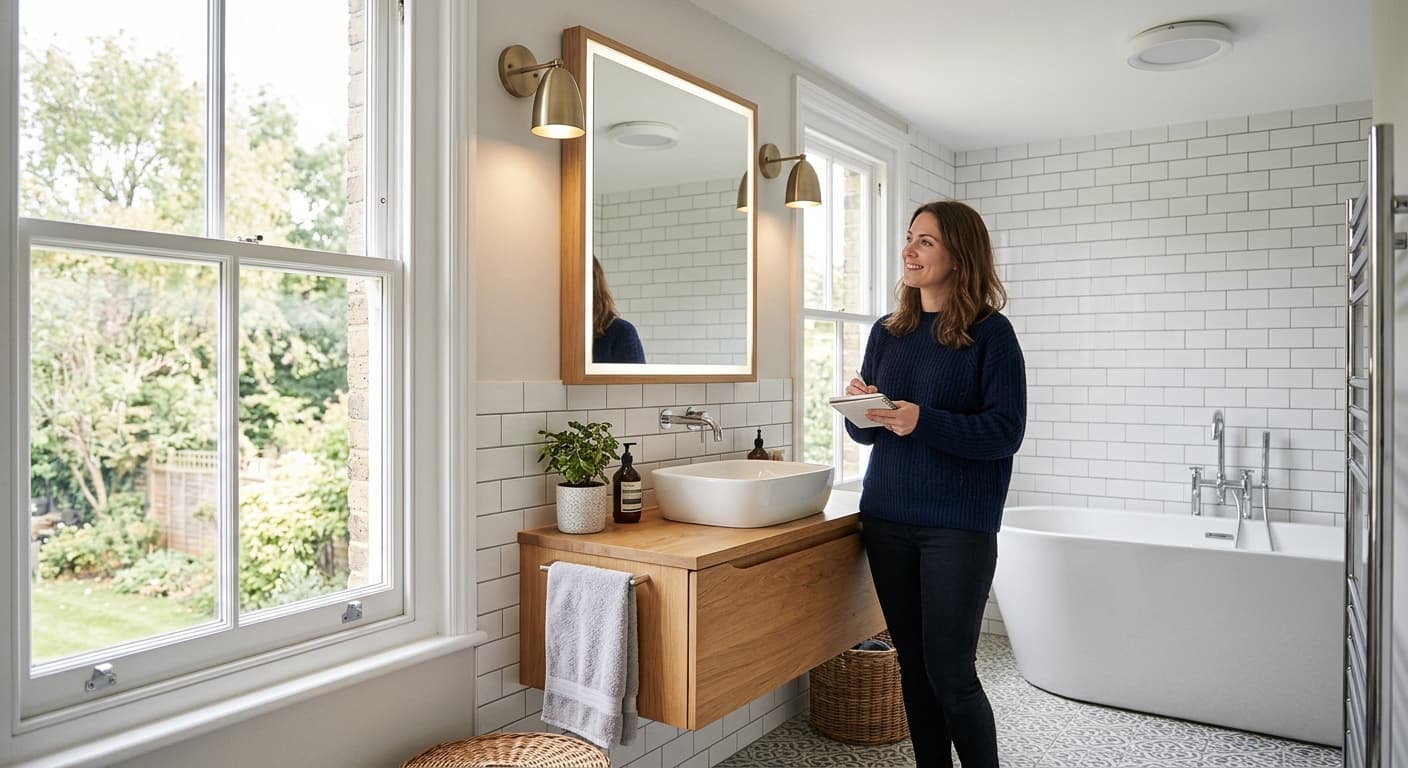
Task lighting addresses specific activities. Bathroom mirrors absolutely require dedicated lighting—either integrated LED mirrors (£150-£600) or wall-mounted fixtures positioned at face height rather than above. We've visited countless homes where overhead lighting creates unflattering shadows, making shaving or makeup application frustrating.
Accent lighting adds atmosphere. Consider LED strip lighting beneath floating vanities or behind mirrors. These typically cost £20-£60 per metre and create a hotel-style ambiance that's become increasingly popular in UK bathrooms.
For kitchens, the same three-layer approach applies. Browse our fitted kitchens directory for specialists who understand integrated lighting design.
Kitchen Island Pendant Lighting Ideas
Kitchen islands have become the centrepiece of modern UK homes, and the kitchen island pendant lighting ideas we're seeing in 2024 reflect both practicality and statement design.
The golden rule: hang pendants 70-80cm above the worktop surface. Too high and they lose visual impact; too low and tall family members will bang their heads. We recommend spacing multiple pendants 60-80cm apart for islands over 1.5 metres long.
Three-pendant arrangements work beautifully for islands between 1.8-2.4 metres. John Lewis offers excellent mid-range options from £60-£150 per pendant, whilst designer choices from Tom Dixon or Flos can exceed £400 each. For a standard three-pendant installation over a kitchen island in Manchester or Birmingham, expect total costs of £600-£1,500 including fittings and electrician fees.
Linear suspension lights—single elongated fixtures—suit islands perfectly and avoid the symmetry challenges of multiple pendants. These range from £150 for basic designs at Ikea to £800+ for designer pieces from brands like Heals or Habitat.
Consider dimmable LED pendants. The Energy Saving Trust confirms that LED lights with dimmer switches can reduce energy consumption by up to 40% compared to non-dimmable alternatives running at full brightness constantly.
LED Colour Temperature Guide Warm vs Cool
The LED colour temperature guide warm vs cool debate confuses many homeowners, but understanding it transforms how your home feels. Colour temperature is measured in Kelvin (K), and the wrong choice can make rooms feel clinical or dingy.
Warm white (2700-3000K) produces a cosy, yellowish glow similar to traditional incandescent bulbs. This suits living rooms, bedrooms, and dining areas where you want relaxation and comfort. Most UK homes prefer warm white for primary living spaces—it's what we're culturally accustomed to.
Neutral white (3500-4000K) offers a crisper, cleaner light without the starkness of cool white. We've found this increasingly popular in kitchens and bathrooms where accurate colour rendering matters but you don't want the cold institutional feel.
Cool white (5000-6500K) produces a bright, bluish light that enhances concentration and alertness. Whilst common in commercial settings, it's harsh for most UK homes. Some homeowners install it in garages or workshops, but rarely in living spaces.
Here's what we recommend for each room:
- Living rooms, bedrooms, dining rooms: 2700-3000K warm white
- Kitchens: 3000-3500K warm to neutral white
- Bathrooms: 3000-4000K (warmer for ambient, neutral for mirror lighting)
- Home offices: 3500-4000K neutral white for focus
- Utility rooms, garages: 4000-5000K cool white acceptable
Cost differences between colour temperatures are negligible—a Philips LED bulb costs £4-£8 regardless of Kelvin rating at B&Q or Homebase. The key is buying the right temperature initially, as mixing temperatures within visible sightlines creates an unsettling, disjointed feeling.
Are LED Lights Cheaper to Run Than Halogen?
Absolutely, and the savings are substantial. A typical 50-watt halogen bulb costs approximately £8.40 annually to run at current UK electricity rates (34p per kWh). An equivalent 8-watt LED delivering the same light output costs just £1.36 annually—an 84% reduction.
Over a 15-year LED lifespan, that's a saving of £105.60 per bulb. If you're replacing ten halogen downlights with LEDs, you'll save over £1,000 in electricity costs alone, not counting bulb replacements. Halogen bulbs typically last 2,000 hours versus 15,000-25,000 hours for quality LEDs.
The initial investment is higher. LED bulbs cost £3-£12 each compared to £1-£3 for halogens, but the payback period is usually under 12 months. According to Which?, UK households that fully transition from halogen to LED lighting save an average of £35-£65 annually on electricity bills.
Part L of the Building Regulations now requires energy-efficient lighting in all new builds and renovations. Halogen bulbs are being phased out—since September 2021, retailers can no longer stock most halogen bulbs, though existing stock can be sold until depleted.
For comprehensive lighting upgrades, professional lighting specialists in our directory can assess your entire home and calculate specific savings based on your usage patterns.
Smart Lighting Systems Compared UK
Smart lighting systems compared UK market shows three dominant ecosystems: Philips Hue, LIFX, and Ikea's Trådfri system.
Philips Hue remains the premium choice with the most extensive product range. Starter kits begin around £70-£90 for three bulbs and a bridge (required for full functionality). Individual bulbs cost £15-£50 depending on features. The system integrates seamlessly with Alexa, Google Home, and Apple HomeKit. We've installed Hue systems in dozens of homes, and reliability is excellent.
LIFX offers Wi-Fi-connected bulbs that don't require a separate bridge, simplifying installation. Bulbs cost £15-£60 each, and whilst cheaper per bulb than Hue for basic setups, costs equalise for larger systems. Colour rendering is marginally better than Hue, though most users won't notice the difference.
Ikea Trådfri provides budget-friendly smart lighting from £6.50 per bulb. The bridge costs £25. Functionality is more basic—no colour bulbs, just warm-to-cool white adjustment—but for homeowners wanting affordable smart control, it's perfectly adequate.
Installation is DIY-friendly since smart bulbs simply replace existing bulbs. However, for integrated systems with in-wall smart switches (recommended for proper lighting design), hire a qualified electrician. Expect £150-£300 for a professional to install smart switches throughout a typical three-bedroom home in London, or 15-20% less elsewhere.
Building Regulations require any new electrical work to meet Part P compliance. If you're installing smart lighting as part of a renovation, ensure your electrician is registered with a competent person scheme like NICEIC or NAPIT.
Finding the Right Lighting Professional
Poor lighting installation ruins otherwise excellent renovations. We cannot stress this enough: bathroom and kitchen lighting requires qualified electricians, not general handymen.
Expect to pay £40-£65 per hour for electricians outside London, rising to £50-£90 in the capital. Fixed-price quotes are standard for defined projects. A typical bathroom lighting installation (4-6 downlights, mirror light, extractor fan connection) runs £300-£600 depending on complexity and location.
Check credentials carefully. Any electrician working on your home should be registered with an approved scheme and provide certification upon completion. This isn't optional—it affects your home insurance and future sale prospects.
For comprehensive lighting design beyond basic installation, consider bathroom specialists who collaborate with lighting designers. These integrated services typically cost 15-20% more than standard electrical work but deliver significantly superior results.
Browse our verified lighting professionals or search our company directory for qualified electricians near you. If you're a lighting specialist or electrician, list your business to connect with homeowners planning renovations.
The Bottom Line on Bathroom Lighting Regulations
Compliance with bathroom lighting regulations isn't optional, and the penalties for non-compliant work extend beyond safety risks. Insurance companies can refuse claims for water damage if bathroom electrics don't meet current standards. Future buyers' surveyors will flag non-compliant installations, potentially derailing sales.
Budget realistically: £500-£1,200 for professional bathroom lighting installation is typical, including quality IP-rated fittings and proper zone compliance. Cutting corners with cheaper lights or unqualified installers costs more when you're forced to rectify the work.
The good news? Modern LED technology means your compliant bathroom lighting will cost pennies to run, last 15-20 years, and deliver better light quality than anything available a decade ago. The regulations might seem burdensome, but they've driven genuine improvements in bathroom safety and efficiency.
For more specialist advice on lighting throughout your home, browse all categories on HouseJester to find verified professionals who understand both design and compliance requirements.
Sources & Further Reading
- Electrical Safety First - Bathroom Safety - Comprehensive guidance on bathroom electrical safety and zone requirements
- Energy Saving Trust - LED Lighting Guide - Authoritative information on LED efficiency and cost savings
- IET Wiring Regulations BS 7671 - Official source for UK electrical installation standards including bathroom zones
This article was created with AI assistance and reviewed by the HouseJester editorial team for accuracy and relevance.
Written by
Sarah Mitchell
Interior Design Editor
Sarah has spent over 12 years covering UK interiors and design trends. She works closely with interior designers and soft furnishings specialists across the country to bring readers expert insights on creating beautiful, functional living spaces.
- Interior Design
- Soft Furnishings
- Paint & Wallpaper
- Lighting