
Key Takeaways
- Large format tiles (900x900mm and bigger) now dominate UK bathroom design, offering fewer grout lines and a cleaner aesthetic, but requiring specialist installation techniques
- Porcelain tiles consistently outperform ceramic for bathroom durability, with water absorption rates below 0.5% compared to ceramic's 3-7%
- Professional tiling costs range from £25-£60 per m² across the UK, with London installers typically charging £45-£75 per m²
- Anti-slip ratings matter more than ever, with HSE guidance recommending R10 or higher for wet areas
- Tiling over existing tiles is possible but requires proper assessment and adds 10-12mm height, potentially causing door and fixture issues
The UK bathroom tiles market has shifted dramatically in the past 18 months. This comprehensive bathroom tiles UK guide examines the changes reshaping how homeowners and bathroom specialists approach tile selection, from new large format options to evolving anti-slip requirements.
According to the Kitchen Bathroom Bedroom Specialists Association (KBSA), bathroom renovations increased by 23% in 2023, with tile choices driving much of the aesthetic and functional decision-making. We've analysed current trends, spoken to suppliers in our directory, and compiled practical advice for anyone planning a bathroom project.
What is the difference between porcelain and ceramic tiles?
The porcelain vs ceramic tile durability comparison matters more in bathrooms than any other room. Porcelain tiles are fired at temperatures exceeding 1,300°C, creating a denser, less porous material with water absorption rates below 0.5%. Ceramic tiles, fired at lower temperatures (900-1,100°C), absorb 3-7% of their weight in water.
For UK bathrooms, this distinction affects longevity and maintenance. Our experience working with UK tradespeople confirms that porcelain significantly outperforms ceramic in wet environments. Ceramic tiles often develop micro-cracks after 5-7 years in high-moisture areas, whilst quality porcelain maintains integrity for decades.
Price reflects this performance gap. Ceramic tiles start from £12-£18 per m² at major retailers like Topps Tiles and CTD Tiles, whilst porcelain typically begins at £25-£35 per m² for decent quality. Premium porcelain ranges from brands like Porcelanosa and Fired Earth reach £75-£120 per m².
The Building Research Establishment notes that porcelain's lower moisture absorption makes it inherently more resistant to freeze-thaw damage—relevant for poorly heated bathrooms or properties left unoccupied during winter months.
Large format tiles take over UK bathrooms
Large format tile installation tips tricks have become essential knowledge as 600x600mm tiles give way to 900x900mm, 1200x600mm, and even 1500x750mm formats. Tile Giant and British Ceramic Tile report that large format sales increased 67% year-on-year, now representing nearly half of all bathroom tile purchases.
The aesthetic appeal is obvious: fewer grout lines create a seamless, spa-like appearance. Cleaning becomes simpler with less grout to scrub. But installation complexity increases substantially.
Installing large format tiles requires:
- Perfectly flat substrates (deviation under 3mm per 2m run)
- Large-bed adhesive application using notched trowels (10-12mm)
- Back-buttering each tile to ensure 95%+ coverage
- Two-person handling for tiles exceeding 900mm
- Specialist cutting equipment—a standard tile cutter won't manage 1200mm porcelain
Based on listings in our directory, tiles specialists increasingly charge premium rates for large format installation. Expect to pay 30-40% more per m² compared to standard formats. A bathroom requiring £1,800 for 300x600mm tiles might cost £2,400-£2,500 for 900x900mm installation.
Substrate preparation matters more than ever. We recommend tanking systems (waterproof membranes) behind large format tiles, as any substrate movement creates visible lippage between tiles. BAL and Mapei tanking kits cost £45-£85 but prevent costly failures.
Best tiles for underfloor heating systems
Underfloor heating (UFH) continues expanding across UK homes—the Underfloor Heating Manufacturers' Association estimates 35% of new bathrooms now include it. The best tiles for underfloor heating prioritise thermal conductivity and dimensional stability.
Porcelain excels here. Its density conducts heat efficiently, typically reaching target temperature 15-20% faster than ceramic. Natural stone (travertine, limestone, marble) conducts heat even better but requires specialist sealing and maintenance unsuitable for most homeowners.
Tile thickness significantly affects UFH performance. Thicker tiles (12-15mm) retain heat longer but take longer to warm up. Standard 8-10mm porcelain offers the best balance—quick heat-up times with reasonable heat retention. Our team has found that tiles exceeding 15mm thickness can reduce UFH efficiency by 20-25%, increasing running costs.
Adhesive selection matters as much as tile choice. Flexible adhesives rated for UFH (look for S1 or S2 classification per BS EN 12004) accommodate thermal expansion without cracking. We've seen numerous failures where standard adhesive was used with UFH—tiles debond or crack within 18-24 months.
Grout must also be flexible. Mapei Ultracolor Plus or similar epoxy-modified grouts handle temperature cycling without cracking. Budget an extra £8-£12 per m² for UFH-rated adhesives and grouts.
How much does tiling cost per m2 UK?
Tiling costs vary considerably across the UK, influenced by location, tile size, and installation complexity. Based on 2024 rates from tradespeople listed on HouseJester, expect:
Standard ceramic wall tiles (300x600mm or smaller):
- Outside London: £25-£40 per m²
- London and Southeast: £35-£50 per m²
Porcelain floor tiles (standard format):
- Outside London: £35-£50 per m²
- London and Southeast: £45-£65 per m²
Large format tiles (900mm+):
- Outside London: £45-£65 per m²
- London and Southeast: £60-£85 per m²
These rates include labour, adhesive, grout, and spacers but exclude tiles themselves. Substrate preparation, tanking, and removing old tiles add £15-£25 per m². A typical 5m² bathroom renovation costs £1,200-£2,500 for labour and materials (excluding tiles).
Regional differences are significant. We've observed that Manchester and Birmingham installers typically charge 15-20% less than London counterparts, whilst maintaining comparable quality standards. Scotland and Wales show similar pricing to northern England.
Checkatrade's 2024 survey confirms these ranges, noting that tiling sits among the trades with highest price variation—choosing carefully matters.
Kitchen splashback tile ideas UK homeowners love
Whilst this bathroom tiles UK guide focuses primarily on wet rooms, kitchen splashback tile ideas UK trends influence bathroom design significantly. The distinction between spaces has blurred as homeowners seek cohesive aesthetics.
Current splashback trends crossing into bathrooms:
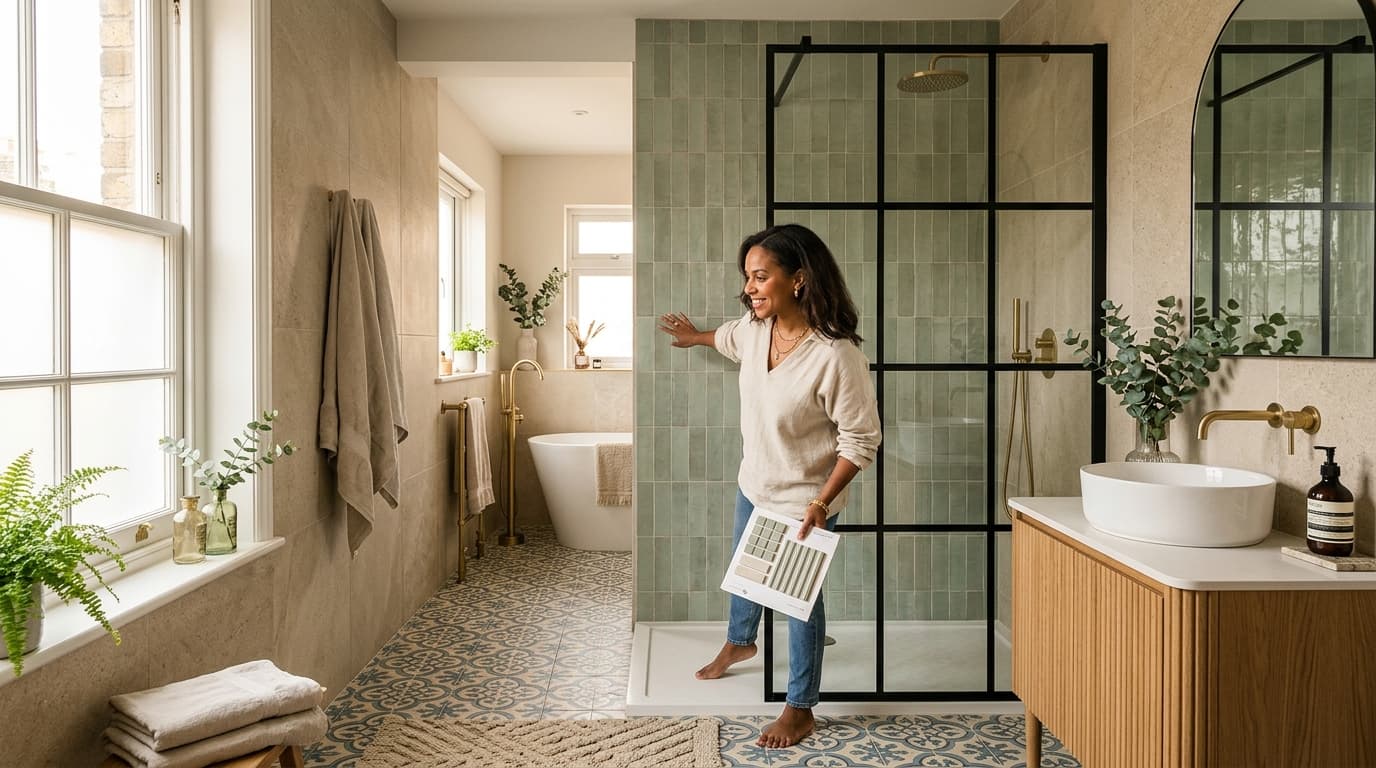
- Metro tiles: The 200x100mm bevelled format remains popular, now appearing in muted sage, terracotta, and charcoal alongside classic white
- Moroccan zellige: Handmade glazed terracotta tiles with irregular surfaces create texture; expect £65-£95 per m² from specialists
- Large format porcelain: Seamless splashbacks using 3000x1500mm slabs eliminate grout entirely; installation requires specialists and costs £800-£1,400 including materials
- Patterned encaustic tiles: Victorian-style cement tiles bring pattern without overwhelming small bathrooms; prices from £45-£85 per m²
Many fitted kitchens suppliers now stock tiles, recognising that homeowners prefer coordinated sourcing. B&Q and Wickes expanded tile ranges by 40% in 2023, focusing on mid-range options (£20-£45 per m²) suitable for both kitchens and bathrooms.
Can you tile over existing tiles?
Tiling over existing tiles is technically possible but requires careful assessment. The practice saves time and mess but introduces complications that catch many homeowners unaware.
Existing tiles must be:
- Firmly bonded to substrate (tap test—no hollow sounds)
- Clean and grease-free (thoroughly degrease and abrade)
- Flat within 3mm per 2m (check with straight edge)
- Structurally sound (no cracks or movement)
Building Regulations don't prohibit tiling over tiles, but the additional weight (typically 18-22kg per m²) may exceed floor load capacity in older properties. Wall installations rarely cause issues, but we recommend structural assessment for floors in pre-1960 properties.
The main problem we've encountered: height build-up. Adding 10-12mm thickness affects:
- Door clearances (may require trimming or rehanging)
- Toilet and basin connections (may need extenders or repositioning)
- Shower trays (new tiles may sit higher than tray lips)
- Transitions to adjacent rooms (tripping hazards)
Primer application is non-negotiable. BAL Bond SBR or similar primers create mechanical key on glazed surfaces. Skipping this step causes failures—we've seen entire installations debond within months.
Honestly, removing existing tiles usually proves wiser for bathrooms. The £150-£300 removal cost prevents future complications and allows proper substrate inspection and waterproofing. Browse our company directory for specialists offering tile removal services.
Anti-slip tiles bathroom ratings explained
Anti slip tiles bathroom ratings have gained prominence following HSE guidance updates and increased awareness of home slip incidents. The Health and Safety Executive reports that slips account for over 1 million UK injuries annually, with bathrooms featuring prominently.
Two rating systems dominate:
R-rating (DIN 51130): Measures slip resistance on oiled surfaces using an inclined platform. R9 suits dry areas, R10-R11 for wet areas, R12-R13 for commercial wet areas. Most bathroom floors should achieve R10 minimum, R11 preferably.
PTV (Pendulum Test Value): British Standard-aligned testing measuring slip resistance. 0-24 indicates high slip risk, 25-35 moderate risk, 36+ low slip risk. Target 36+ for bathroom floors.
Matt and textured finishes generally outperform polished tiles. The popularity of large format polished porcelain concerns us—they look stunning but often rate R9/PTV 20-30, inadequate for wet bathroom floors.
Manufacturers don't always publish ratings clearly. Topps Tiles, CTD Tiles, and Tile Mountain increasingly display slip ratings, but many retailers omit this crucial information. Always request test certificates before purchasing bathroom floor tiles.
Textured porcelain replicating natural stone offers the best compromise—attractive appearance with R10-R11 ratings and PTV values exceeding 36. Expect to pay £30-£55 per m² for quality anti-slip porcelain from British manufacturers like Johnson Tiles or Johnsons Tiles.
Finding the right tile installer
Quality installation matters as much as tile selection. Poor workmanship causes more bathroom failures than inferior tiles. When searching for installers, verify:
- Tile Association membership (professional accreditation)
- Public liability insurance (minimum £2 million)
- Recent bathroom portfolio (check finish quality and grouting)
- References from local projects (visit completed work if possible)
- Detailed written quotes (specifying adhesive types, waterproofing methods)
Our directory includes verified tiles specialists across the UK. Don't automatically choose the cheapest quote—a £800 saving means nothing if you're repairing water damage in two years.
The Federation of Master Builders recommends obtaining three comparable quotes and questioning significant price variations. If one quote is 40%+ cheaper, scrutinise what's being omitted.
For those planning comprehensive renovations, exploring our categories helps coordinate multiple trades efficiently.
Conclusion: Making informed tile choices
The bathroom tile market offers more choice than ever, but this bathroom tiles UK guide demonstrates that informed decisions require understanding performance characteristics, installation requirements, and realistic cost expectations.
Porcelain outperforms ceramic for durability and moisture resistance. Large format tiles create stunning aesthetics but demand specialist installation and proper substrate preparation. Anti-slip ratings must guide floor tile selection. Professional installation costs reflect skill levels—undervaluing this expertise risks expensive failures.
Read our complete guide to bathroom tiling ideas and guide for additional inspiration and technical guidance.
Browse tiles businesses on HouseJester to connect with verified specialists across 21 categories. Whether you're in London, Manchester, or anywhere across the UK, finding qualified professionals ensures your bathroom tile investment delivers lasting results. Ready to start your project? List your business if you're a tile specialist looking to reach homeowners planning renovations.
Sources & Further Reading
- Kitchen Bathroom Bedroom Specialists Association (KBSA) - Industry standards and consumer guidance
- The Tile Association - Technical information, installer accreditation, and British Standards guidance
- Health and Safety Executive: Slips and Trips - Official guidance on slip resistance and safety ratings
This article was created with AI assistance and reviewed by the HouseJester editorial team for accuracy and relevance.