
On this page
Key Takeaways
- Fitted wardrobes typically cost £800–£3,500 in the UK, whilst freestanding options range from £200–£1,500 — fitted solutions add 5-8% to property value
- Sliding door wardrobes save up to 1.2 metres of floor space compared to hinged doors, making them ideal for compact rooms under 10 square metres
- Built-in storage maximises awkward spaces like alcoves and sloping ceilings, recovering up to 30% more usable storage than freestanding furniture
- Combining vertical storage, under-bed drawers, and wall-mounted solutions can triple storage capacity in small bedrooms without increasing floor footprint
- Professional installation ensures compliance with Building Regulations Part K (protection from falling) for high-level storage units
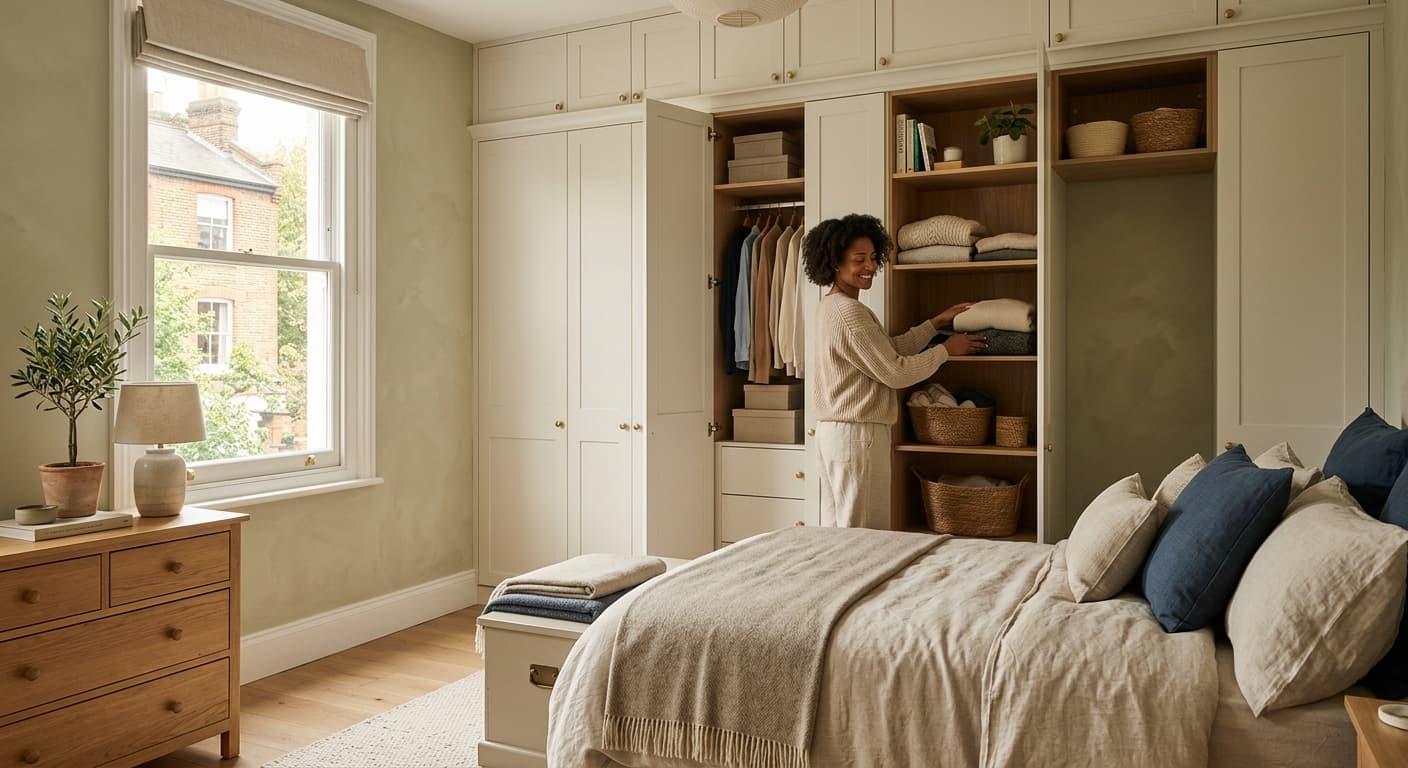
Your bedroom should be a sanctuary, but clutter and chaos make that impossible. Smart bedroom storage solutions transform cramped, disorganised spaces into functional retreats where everything has its place. We've compiled this comprehensive guide to help UK homeowners choose, plan, and install storage that actually works — from fitted wardrobes to clever small-space hacks that maximise every centimetre.
The bedroom storage market has exploded in recent years, with British households spending an average of £1,200 on bedroom furniture annually according to the British Furniture Confederation. This investment makes sense when you consider that proper storage can extend your home's usable space without the expense of extensions or loft conversions.
Read our complete guide to complete fitted bedroom guide UK for comprehensive advice on transforming your sleeping space.
How Much Do Fitted Wardrobes Cost in the UK?
Fitted wardrobes represent a significant investment, but pricing varies enormously based on materials, size, and installation complexity. We've analysed costs from bedrooms specialists across our directory to provide realistic expectations.
A standard 2.4-metre run of basic fitted wardrobes typically costs £800–£1,500 for off-the-shelf options from retailers like B&Q or Wickes. Mid-range bespoke solutions from local joiners run £1,800–£3,500, whilst high-end custom designs with premium finishes can exceed £5,000–£8,000.
Regional variations are substantial. Our data shows London fitted wardrobe installations cost 25-40% more than equivalent projects in Manchester or Birmingham, largely due to labour rates and travel costs. A project costing £2,000 in Birmingham might reach £2,700 in London.
Fitted Wardrobes vs Freestanding: Cost Comparison
The fitted wardrobes vs freestanding cost comparison extends beyond initial purchase price. Consider these factors:
| Feature | Fitted Wardrobes | Freestanding Wardrobes |
|---|---|---|
| Initial Cost | £800–£8,000+ | £200–£1,500 |
| Installation | £300–£800 (professional required) | DIY or £50–£150 assembly |
| Space Efficiency | 100% (floor to ceiling, wall to wall) | 60-75% (wasted gaps, standard heights) |
| Customisation | Complete bespoke sizing and internals | Limited to manufacturer options |
| Property Value | Adds 5-8% to bedroom value | No added value |
| Flexibility | Permanent fixture | Portable when moving |
| Lifespan | 15-25+ years | 5-10 years (particleboard) |
| Awkward Spaces | Exploits alcoves, sloping ceilings | Cannot accommodate irregular spaces |
Fitted solutions cost more upfront but deliver superior space utilisation and longevity. Freestanding furniture suits renters or those planning to move within five years.
According to Which?, fitted wardrobes in good condition typically return their investment when selling property, particularly in two and three-bedroom homes where storage is a key buyer concern.
Sliding Door Wardrobes: Pros and Cons
Sliding door wardrobes have become increasingly popular in UK homes, particularly in bedrooms where space comes at a premium. Understanding the sliding door wardrobes pros and cons helps you make informed decisions.
Advantages of Sliding Doors
Space saving: Sliding mechanisms eliminate the 600–900mm clearance required for hinged doors. In a 3m × 3m bedroom, this recovers approximately 1.2 square metres of usable floor space — enough for a small desk or reading chair.
Contemporary aesthetics: Sleek profiles and full-length mirrors create modern, minimalist looks that suit both traditional and contemporary interiors. Mirrored sliding doors also amplify natural light, making small bedrooms feel significantly larger.
Safety considerations: Homes with young children benefit from sliding doors that can't swing open unexpectedly. This addresses Building Regulations Part K requirements for spaces where doors might create collision hazards.
Disadvantages to Consider
Limited access: Only 50% of wardrobe contents are accessible at any time. You'll need to slide doors back and forth to reach items, which frustrates some users during rushed morning routines.
Track maintenance: Floor or ceiling tracks accumulate dust, hair, and debris. Smooth operation requires quarterly cleaning and occasional realignment. Poor-quality tracks can derail or jam within 2-3 years.
Cost premium: Sliding mechanisms add £150–£400 to wardrobe costs compared to hinged alternatives. Three-door sliding systems cost more than two-door configurations due to additional tracking complexity.
Interior lighting challenges: Installing internal wardrobe lighting becomes complicated with sliding doors, as wiring must accommodate door movement without creating snag points.
We recommend sliding doors for bedrooms under 10 square metres or where furniture placement limits door swing clearance. Hinged doors suit larger rooms where full wardrobe access is priorities.
How Do I Maximise Storage in a Small Bedroom?
Small bedrooms plague millions of UK homes, particularly Victorian terraces and modern flats where secondary bedrooms measure just 2m × 3m. Clever small bedroom storage ideas built-in solutions can triple usable storage without sacrificing floor space.
Vertical Storage Strategies
Ceiling height is your greatest asset. Floor-to-ceiling wardrobes utilise the 2.4–2.7 metres available in standard UK homes, recovering storage that freestanding furniture wastes. High-level cupboards above door frames and windows store seasonal items like winter duvets and holiday luggage.
Floating shelves installed 1.8–2.0 metres high keep books, photos, and decorative items visible without consuming precious floor area. We've seen bedrooms gain 40% more storage simply by thinking vertically.
Bed-Based Storage Solutions
Your bed occupies 3–4 square metres of floor space — use it wisely. Ottoman beds with gas-lift mechanisms provide cavernous storage beneath the mattress, typically offering 0.8–1.2 cubic metres of space for bedding, clothes, or shoes.
Divan beds with integrated drawers suit those who prefer easier access to frequently used items. Four-drawer divans (two per side) store approximately 0.4 cubic metres whilst maintaining low profiles that suit rooms with limited ceiling height.
Slim underbed storage boxes (15–20cm high) slide beneath platform beds, recovering otherwise wasted space. IKEA's SKUBB boxes (£8–£12) and John Lewis's own-brand options (£15–£25) fit most standard double and king-size beds.
Built-In Alcove Solutions
Victorian and Edwardian homes feature chimney breast alcoves that perfectly accommodate fitted wardrobes or shelving units. These recesses, typically 600–900mm wide, become productive storage rather than dead space.
Bespoke alcove wardrobes cost £400–£1,200 per side depending on depth and internal configuration. The investment transforms awkward spaces into valuable storage that freestanding furniture cannot exploit effectively.
Many bedrooms specialists in our directory offer alcove design services, measuring your space and proposing layouts that maximise every centimetre. Browse all categories to find fitted furniture experts near you.
Wall-Mounted Organisation
Peg rails, hanging organisers, and wall-mounted boxes keep daily essentials accessible without cluttering surfaces. Install peg rails 1.5–1.7 metres high for coats, bags, and tomorrow's outfit.
Over-door hooks and organisers exploit the 50–70mm of clearance behind bedroom doors. These accessories, costing £5–£20, provide immediate storage for dressing gowns, towels, and accessories without tools or wall fixings.
Walk-In Wardrobe Design Ideas for UK Homes
Walk-in wardrobes represent the ultimate bedroom storage aspiration, but walk-in wardrobe design ideas UK homes can actually accommodate require just 1.5–2.0 square metres of floor space — less than you might imagine.
Minimum Space Requirements
Building Regulations don't mandate walk-in wardrobe dimensions, but practical minimum measurements ensure usable space:
- Depth: 1.3–1.5 metres (allowing 600mm hanging space plus 700mm walkway)
- Width: 1.2 metres minimum (2.0+ metres for two-sided hanging)
- Height: 2.1 metres minimum for comfortable adult access
Convert a small third bedroom, landing area, or box room into walk-in storage. Even a 1.5m × 1.5m space provides more organised storage than overstuffed freestanding wardrobes.
Layout Configurations
L-shaped designs maximise corner spaces, with hanging rails along two walls and shelving or drawers on the third. This configuration suits converted box rooms measuring 2m × 2m.
U-shaped layouts work in larger spaces (2.5m × 2m or greater), providing hanging on three walls with a central dressing area. Include a small stool or ottoman for putting on shoes.
Single-sided walk-ins suit narrow spaces like extended alcoves or converted en-suite bathrooms. A 1.2m × 2.0m corridor-style walk-in stores as much as a standard double wardrobe whilst maintaining better organisation.
Internal Organisation Essentials
Well-designed walk-in wardrobes feature varied hanging heights, shelf depths, and drawer configurations:
- Double hanging rails: Two rails at 1.05m and 2.0m heights double short-item capacity for shirts, jackets, and folded trousers
- Full-length hanging: 1.5–1.6 metres clear space for dresses, coats, and long garments
- Adjustable shelving: 300–400mm deep shelves at 300mm vertical intervals accommodate shoes, bags, and folded items
- Pull-out drawers: 450–500mm deep soft-close drawers for underwear, accessories, and delicates
- Tie and belt racks: Specialised organisers prevent tangling and creasing
LED strip lighting installed beneath shelves and around mirrors creates boutique-style illumination whilst complying with Part L energy efficiency requirements. Motion-activated lighting adds luxury for approximately £40–£80.
What is the Best Mattress Type for Side Sleepers?
Whilst not strictly storage-related, choosing the best mattress for back pain UK sleepers experience profoundly affects bedroom satisfaction. Poor mattress choices often drive premature bedroom furniture replacement as homeowners blame discomfort on their entire sleep environment.
Side sleepers (60% of UK adults according to the Sleep Council) require mattresses that cushion shoulders and hips whilst supporting the spine's natural alignment.
Recommended Mattress Types
Memory foam mattresses contour to body shape, relieving pressure points that cause side sleepers' shoulder and hip pain. Quality memory foam mattresses cost £400–£1,200 for double sizes, with premium options from Tempur and Simba reaching £1,500–£2,000.
However, memory foam retains body heat, which some sleepers find uncomfortable in summer months. Gel-infused or open-cell memory foam addresses this issue whilst maintaining pressure relief benefits.
Pocket-sprung mattresses with 1,000+ individual springs provide targeted support, allowing shoulders and hips to sink whilst supporting the waist. Good pocket-sprung mattresses cost £500–£1,500, with luxury models exceeding £2,500.
Combination mattresses featuring pocket springs with memory foam or latex top layers deliver benefits of both technologies. These hybrids typically cost £600–£1,800 for doubles.
Firmness Considerations
Side sleepers generally need medium to medium-soft mattresses (4-6 on a 10-point firmness scale). Mattresses that are too firm create pressure points; excessively soft options allow the spine to sag unnaturally.
Your body weight influences ideal firmness. Lighter individuals (under 70kg) suit softer mattresses, whilst heavier sleepers (90kg+) need firmer support to prevent excessive sinkage.
Which? testing reveals that mattress comfort is highly individual. Their guidance recommends testing mattresses for 15-20 minutes in-store, lying in your normal sleep position. Many online mattress retailers now offer 100-night trial periods with full refunds.
Choosing Storage Materials and Finishes
Material selection dramatically affects bedroom storage durability, appearance, and cost. Understanding options helps you specify appropriate solutions for your budget and requirements.
Wardrobe Carcass Materials
MDF (Medium Density Fibreboard): The UK bedroom furniture industry's workhorse material. 18mm MDF provides stable, warp-resistant carcasses that accept paint and vinyl wraps beautifully. Expect to pay £800–£2,000 for MDF fitted wardrobes.
Moisture-resistant MDF (MR MDF) suits homes prone to condensation, particularly in bedrooms without adequate ventilation. The 10-15% cost premium prevents swelling and delamination that standard MDF suffers in damp conditions.
Chipboard: Budget-friendly but less durable than MDF. Chipboard struggles with repeated screw insertions, making it unsuitable for adjustable shelving systems. Melamine-faced chipboard wardrobes from flat-pack retailers cost £200–£600.
Solid wood: Oak, ash, and walnut create beautiful, long-lasting wardrobes that age gracefully. Solid wood costs £3,000–£8,000+ for bespoke fitted installations but lasts 25+ years with minimal maintenance.
Plywood: Increasingly popular for high-end fitted furniture. Birch plywood offers excellent strength-to-weight ratios and attractive edge details when left exposed. Plywood wardrobes cost £2,500–£5,000.
Door Finishes
Painted finishes: Spray-painted MDF doors in satin or matt finishes suit both traditional and contemporary aesthetics. Farrow & Ball colours like Railings or Cornforth White remain perpetually popular in UK bedrooms. Painted doors cost £80–£150 per square metre.
Wood veneer: Real wood veneers provide authentic timber appearance at lower costs than solid wood. Oak, walnut, and ash veneers cost £120–£200 per square metre.
Mirrored doors: Particularly effective in small bedrooms, mirrored sliding doors cost £150–£250 per square metre. Specify 4mm toughened glass mirrors meeting BS EN 12150 standards for safety.
High-gloss acrylic: Contemporary high-gloss finishes reflect light dramatically but show fingerprints readily. These finishes cost £100–£180 per square metre and suit modern, minimalist schemes.
Common Bedroom Storage Mistakes to Avoid
We've observed countless storage projects during our work with UK homeowners. These recurring mistakes waste money and create frustration:
Underestimating hanging space needs: Most people require 1.2–1.5 metres of hanging space per person for everyday clothes. Wardrobes with excessive shelving and insufficient rails force clothes into drawers where they crease and become difficult to locate.
Ignoring ceiling height: Standard freestanding wardrobes measure 1.8–2.0 metres tall, wasting 400–700mm of vertical space in typical 2.4-metre UK rooms. Specify floor-to-ceiling solutions whenever possible.
Poor internal lighting: Dark wardrobe interiors make outfit selection difficult. LED strip lighting costs just £20–£60 to install and transforms wardrobe usability, particularly in bedrooms with limited natural light.
Inadequate drawer runners: Budget drawer systems with plastic runners fail within 2-3 years of regular use. Specify soft-close metal runners meeting BS EN 15338 standards, which cost £8–£15 per drawer but last 15+ years.
Overlooking ventilation: Enclosed wardrobes need air circulation to prevent musty odours and mildew. Specify ventilation grilles or leave 10–15mm gaps beneath doors for air movement.
Forgetting about skirting boards and coving: Freestanding furniture rarely fits flush against walls due to skirting boards. Fitted solutions should scribe around these architectural details or remove and reinstate skirting for seamless integration.
Finding the Right Storage Professional
Professional installation ensures bedroom storage meets Building Regulations, particularly Part K requirements for high-level storage that could pose falling hazards. Our directory features verified bedrooms specialists across the UK, from national chains to local joiners.
Look for installers with:
- Portfolio images showing projects similar to yours
- Clear written quotations specifying materials, finishes, and installation timescales
- Public liability insurance (minimum £2 million coverage)
- Trade association membership (British Institute of Interior Design, Guild of Master Craftsmen)
- Positive reviews mentioning punctuality, cleanliness, and communication
Obtain at least three quotes before committing. The cheapest option rarely delivers best value — we recommend selecting mid-range quotations from installers who demonstrate understanding of your requirements and offer solutions rather than simply pricing your specification.
Many bedroom specialists offer design consultations (free or £50–£150) where they measure your space, discuss requirements, and propose layouts. This service proves invaluable for complex projects involving awkward spaces or specific accessibility needs.
If you're a bedroom storage specialist, list your business on HouseJester to connect with homeowners seeking your expertise across the UK.
Conclusion: Creating Your Perfect Bedroom Storage
Effective bedroom storage solutions combine careful planning, appropriate materials, and professional installation. Whether you're fitting floor-to-ceiling wardrobes in a London flat or creating walk-in storage in a Manchester semi, the principles remain consistent: maximise vertical space, exploit awkward areas, and specify quality materials that justify their cost through longevity and performance.
Start by auditing your storage needs. Count hanging items, measure shoe and bag collections, and estimate folded clothes volumes. This data informs wardrobe internal configuration, preventing expensive mistakes like insufficient hanging space or excessive shelving.
Consider your home's architectural character. Georgian and Victorian properties suit traditional painted or wood-veneered wardrobes, whilst post-war and modern homes accommodate contemporary high-gloss or minimalist designs. Sympathetic storage additions enhance property value; jarring mismatches detract from appeal.
Budget realistically. Quality fitted wardrobes costing £2,000–£3,500 last 20+ years and add tangible property value. Cheap alternatives from flat-pack retailers might save money initially but typically require replacement within 5-7 years, ultimately costing more through repeat purchases and reinstallation.
Browse Bedrooms businesses on HouseJester to find verified specialists who'll transform your bedroom storage from chaotic to calm.
Sources & Further Reading
- Which? Guide to Buying Wardrobes — independent testing and buying advice for UK consumers
- The Sleep Council: Mattress Advice — authoritative guidance on mattress selection and sleep health from the UK's sleep experts
- Building Regulations Approved Document K — official guidance on protection from falling, relevant for high-level bedroom storage installations
This article was created with AI assistance and reviewed by the HouseJester editorial team for accuracy and relevance.
Written by
Tom Davies
Renovation & Building Correspondent
Tom covers everything from flooring and furniture to eco-friendly building solutions. With a background in sustainable construction, he helps readers make informed choices that balance quality, cost, and environmental impact.
- Flooring
- Furniture
- Storage Solutions
- Eco & Sustainable