
Key Takeaways
- Bifold doors cost UK: Expect to pay £1,800–£5,000 for uPVC bifold doors, £2,500–£7,000 for aluminium, and £3,000–£10,000+ for premium timber options
- Window replacement: Standard uPVC double-glazed windows average £350–£600 per window including installation, with bay windows costing £1,500–£3,500
- Sash window repair vs replacement: Repairs typically cost £150–£400 per window, whilst full replacement ranges from £800–£1,500 per window
- Regional variations: London prices run 15-25% higher than national averages, with installation costs particularly inflated in the capital
- Triple glazing premium: Adds 20-30% to double glazing costs but may not deliver worthwhile returns in milder UK climates
Replacing windows and doors represents one of the most significant home improvement investments you'll make. The bifold doors cost UK homeowners face has risen considerably since 2020, with materials and labour pushing average prices up by 18-22% according to the Federation of Master Builders. Understanding these costs helps you budget realistically and identify where to spend—and where to save.
Read our complete guide to doors buying guide UK for comprehensive advice on choosing the right doors for your home.
Bifold Doors: What You'll Actually Pay
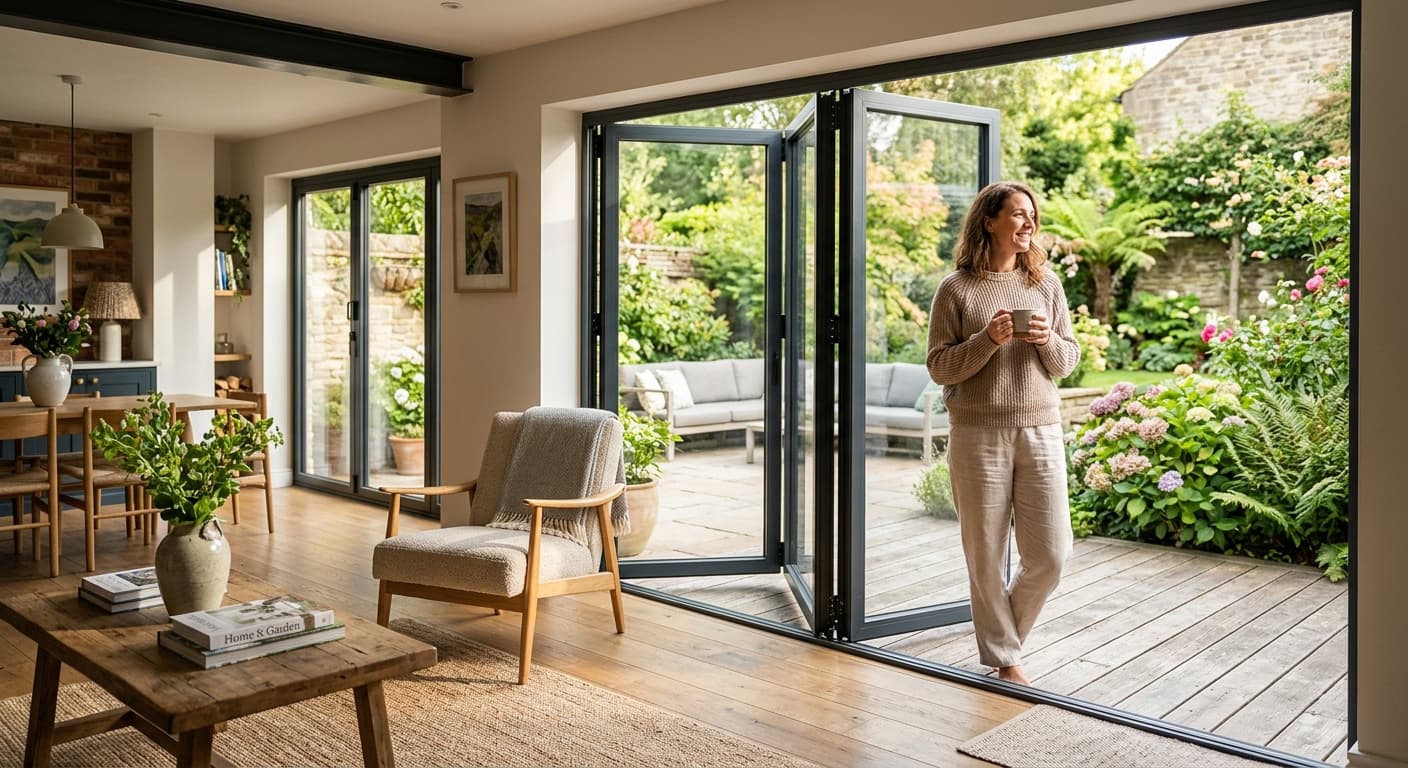
Bifold doors have become the default choice for garden room extensions and kitchen-diner projects across the UK. The bifold doors cost UK homeowners encounter varies dramatically based on material, size, and glazing specification.
Material Comparison for Bifold Doors
| Material | Cost Range (3-panel set) | Durability | Best Use Case |
|---|---|---|---|
| uPVC | £1,800–£5,000 | 15-20 years | Budget-conscious projects, rental properties |
| Aluminium | £2,500–£7,000 | 25-30 years | Modern extensions, coastal locations, slim sightlines |
| Timber (hardwood) | £3,000–£10,000+ | 20-25 years (with maintenance) | Period properties, conservation areas, bespoke designs |
| Composite | £2,200–£6,500 | 20-25 years | Low-maintenance option with timber aesthetics |
Our team has found that most UK homeowners installing bifold doors spend between £3,500 and £5,500 for a standard three-panel aluminium set with double glazing. That includes professional installation by qualified fitters.
The size dramatically affects price. A two-panel set (roughly 1.8 metres wide) starts around £1,500 for uPVC, whilst a five-panel set spanning 4 metres can easily exceed £8,000 in aluminium. London prices add another £500–£1,200 to these figures.
According to businesses listed on HouseJester, powder-coated finishes add £200–£400 to the base price, whilst low-threshold options (essential for level-access requirements under Building Regulations Part M) typically add £150–£300.
Factors Affecting Bifold Door Costs
Glazing specification matters enormously. Standard double glazing uses 24mm sealed units, but upgrading to acoustic glass (for busy urban locations) adds £300–£600. Toughened safety glass is mandatory for doors under Building Regulations, so ensure quotes include this—some suppliers quote base prices without proper safety glazing.
Hardware quality varies wildly. Budget bifolds use basic roller systems that struggle within 3-5 years. We recommend specifying stainless steel hardware from reputable manufacturers like Zoo Hardware or Carlisle Brass, which adds £100–£200 but extends operational lifespan significantly.
Installation complexity drives labour costs. A straightforward replacement into an existing opening costs £500–£800 in labour. Creating a new opening in a load-bearing wall requires structural calculations (£150–£350), steel beams (£400–£1,200), and Building Control fees (£300–£500), pushing total installation costs to £2,000–£3,500.
If you're planning major alterations, browse our windows & doors specialists who can manage the entire project including structural work.
How Much Do New Windows Cost UK Average?
The question "how much do new windows cost UK average?" depends heavily on window type, glazing, and frame material. Based on current market rates:
Standard casement windows (uPVC, double-glazed):
- Small (600mm x 900mm): £350–£500 installed
- Medium (1200mm x 1200mm): £450–£650 installed
- Large (1800mm x 1200mm): £550–£750 installed
Timber windows command a 40-60% premium over uPVC, with softwood frames starting around £600 per window and hardwood reaching £900–£1,400 for standard sizes.
Aluminium windows sit between uPVC and timber at £500–£850 for standard casements, but their slim profiles and longevity make them increasingly popular for contemporary renovations.
For a typical three-bedroom semi-detached house with 8-10 windows, complete replacement costs:
- uPVC double glazing: £4,000–£6,500
- Aluminium double glazing: £6,000–£9,500
- Timber double glazing: £7,500–£12,000
Bay Window Replacement Cost UK
Bay windows present unique challenges. The bay window replacement cost UK homeowners face reflects the complexity of multi-angled construction and additional structural considerations.
A standard three-facet bay window replacement (uPVC, double-glazed) costs £1,500–£2,500 for ground floor installations. First-floor bays require scaffolding, adding £400–£800 to the project. Box bay windows in London properties frequently exceed £3,000–£3,500 due to higher labour rates and restricted access.
Timber bay windows for period properties start around £2,500 and can reach £5,000–£7,000 for elaborate Victorian designs requiring bespoke joinery. We've seen quotes for heritage-specification hardwood bays in conservation areas exceed £10,000 when Listed Building Consent requirements demand historically accurate replication.
Sash Window Repair vs Replacement Cost
This decision frustrates many owners of period properties. The sash window repair vs replacement cost comparison isn't straightforward—it depends on the existing window condition and your property's heritage status.
Repair costs (per window):
- Draught-proofing and overhaul: £150–£280
- Sash cord replacement: £80–£150
- Full restoration with glass replacement: £300–£600
- Rot repair and timber splicing: £200–£450
Replacement costs (per window):
- uPVC sliding sash (double-glazed): £600–£900
- Timber sliding sash (double-glazed): £800–£1,500
- Accoya timber (premium durability): £1,000–£1,800
The Energy Saving Trust recommends repairing existing timber sashes where possible, as quality repairs with draught-proofing achieve comparable thermal performance to basic replacement windows at half the cost. Repairs also preserve original joinery in conservation areas where planning restrictions often prohibit uPVC.
For properties in Manchester and Birmingham, several specialists offer sympathetic sash window restoration. Check our directory of windows & doors professionals who understand period property requirements.
How Much Does Double Glazing Cost for a 3-Bed House?
Completely replacing all windows in a three-bedroom house involves significant outlay. How much does double glazing cost for a 3-bed house? The honest answer ranges from £3,500 to £12,000 depending on materials, glazing specification, and property type.
Typical 3-bed semi (8-10 windows, 1 back door):
- Budget uPVC (A-rated double glazing): £3,500–£5,000
- Mid-range uPVC (quality brand, better hardware): £5,000–£6,500
- Aluminium windows and doors: £6,500–£9,000
- Timber windows throughout: £8,000–£12,000+
1930s semi-detached with bay (10-12 windows, bay, back door):
- uPVC: £4,500–£6,000
- Aluminium with feature bay: £7,000–£10,000
These figures include VAT, professional installation, Building Regulations compliance, and disposal of old frames. Quotes significantly below these ranges warrant scrutiny—we've seen cheap installations fail within 5-7 years due to inferior sealed units and poor fitting.
Which? research indicates that quality installations from FENSA-registered installers deliver 20-25 year lifespans, whilst budget options often require remedial work or replacement within 12-15 years.
Are Aluminium Windows Better Than uPVC?
This depends entirely on your priorities and budget. Are aluminium windows better than uPVC? We'd argue that aluminium offers significant advantages for certain applications, but uPVC remains perfectly adequate for many homes.
Aluminium advantages:
- Slimmer sightlines (40% less frame bulk) maximise glass area
- Superior strength allows larger openings without additional reinforcement
- Powder-coated finishes available in any RAL colour
- 25-30 year lifespan versus 15-20 for uPVC
- Won't warp, discolour, or degrade in UV exposure
- Fully recyclable at end of life
uPVC advantages:
- 30-40% cheaper than equivalent aluminium
- Better thermal performance in standard specifications (though quality aluminium with thermal breaks matches this)
- Wider availability and installer base
- Familiar aesthetic acceptable in most planning contexts
For contemporary extensions, bifold doors, and properties where slim frames matter aesthetically, aluminium justifies the premium. For straightforward replacement windows in typical suburban housing, quality uPVC delivers excellent value.
The key differentiator is longevity. Aluminium's 25-30 year lifespan means it often represents better lifetime value despite higher initial cost. If you're planning to stay in your home long-term, we recommend aluminium. For shorter ownership horizons, uPVC makes economic sense.
Is Triple Glazing Worth the Extra Cost UK?
Triple glazing adds 20-30% to double glazing costs—roughly £60–£120 per square metre extra. Is triple glazing worth the extra cost UK homeowners pay? For most UK properties, we'd say no.
Triple glazing costs:
- Standard casement window: additional £80–£150 per window
- Bifold doors: additional £400–£800 for typical 3-panel set
- Full house upgrade: additional £800–£1,500 for typical 3-bed
The UK's relatively mild climate means triple glazing delivers marginal energy savings compared to quality A+ rated double glazing. Building Regulations Part L requirements don't mandate triple glazing—modern double glazing easily achieves required U-values of 1.6 W/m²K or better.
Where triple glazing makes sense:
- North-facing rooms in Scotland and northern England
- Properties on flight paths or near major roads (acoustic benefits)
- Passive House or deep retrofit projects targeting minimal heat loss
- Rooms where condensation proves problematic despite adequate ventilation
For standard UK housing stock, invest instead in improved airtightness, ventilation, and insulation rather than triple glazing. The Energy Saving Trust estimates triple glazing saves just £20–£30 annually versus quality double glazing in typical UK homes—a 30-40 year payback period.
Money-Saving Tips for Windows and Doors
Timing matters. January through March represents the quietest period for installers, when you'll secure better rates. We've seen discounts of 10-15% during these months compared to peak summer season.
Multiple quotes from FENSA-registered companies remain essential. Prices vary by 30-40% for identical specifications. Aim for 3-4 detailed quotes, ensuring each specifies:
- Frame material and manufacturer
- Glazing specification (U-value, thickness, gas fill)
- Hardware brand and specifications
- Installation methodology and guarantees
Consider phased replacement. Tackle the worst-performing windows first (typically single-glazed north-facing rooms) rather than borrowing heavily to replace everything simultaneously.
Explore finance carefully. Many window companies offer 0% finance, but some build interest into inflated prices. Cash prices often sit 8-12% below financed quotes.
DIY secondary glazing costs just £40–£80 per window using magnetic or clip-on systems from Wickes or Homebase. Whilst not as effective as replacement double glazing, it cuts heat loss by 50-60% at fraction of the cost—ideal for rental properties or temporary solutions.
If you're considering a complete home renovation, browse our browse all categories to find complementary specialists for a coordinated approach.
Regional Price Variations Across the UK
London pricing consistently runs 15-25% above national averages. A bifold door installation costing £4,000 in Birmingham typically costs £4,600–£5,000 in the capital. Labour rates drive much of this difference—London installers charge £250–£350 daily versus £180–£250 elsewhere.
Scottish prices generally align with northern England, though remote Highland and island locations face delivery surcharges of £100–£300. Northern Ireland prices tend towards the lower end of UK ranges, typically 5-10% below English averages.
Southeast England (Surrey, Kent, Berkshire) follows London pricing closely, whilst Wales, the North East, and Yorkshire offer the most competitive rates—often 10-15% below national averages.
Building Regulations and Standards
All replacement windows and doors require Building Regulations compliance. Most installers operate under Competent Person Schemes (FENSA, CERTASS, or equivalent), which provide self-certification without separate Building Control involvement.
Non-certified installers must notify Building Control and pay inspection fees (£150–£400), adding cost and administrative burden. Always verify FENSA registration before instructing any contractor.
Key standards:
- Part L (Conservation of Fuel and Power): Windows must achieve U-values of 1.6 W/m²K or better; whole window WER (Window Energy Rating) of C or above recommended
- Part Q (Security): Ground floor and accessible windows require enhanced security hardware
- Part M (Access): Level thresholds for bifolds and French doors where required
- BS EN 14351-1: European standard for windows and doors specifying performance criteria
Quality installers handle all compliance automatically. Budget operators sometimes cut corners—ensure certificates are provided on completion.
Finding Reputable Installers
Word-of-mouth recommendations from neighbours who've recently replaced windows remain invaluable. Failing that, search our company directory for verified local specialists with customer reviews.
Red flags to avoid:
- Pressure selling or limited-time offers requiring immediate decisions
- Quotes without detailed specifications
- No FENSA registration or equivalent
- Request for large upfront deposits (10% maximum is standard)
- Generic "double glazing" descriptions without specific U-values or ratings
We recommend focusing on established local companies rather than national chains. Local specialists typically provide better aftercare and remain accessible for warranty work.
If you operate a windows and doors business, you can list your business on HouseJester to connect with homeowners seeking qualified installers.
Warranties and Guarantees
Standard warranties cover:
- Sealed units (glass): 10 years against breakdown
- Frames: 10 years against warping, discolouration, or mechanical failure
- Hardware: 2-5 years depending on manufacturer
- Installation: 1-2 years labour warranty
Insurance-backed guarantees protect you if the installer ceases trading. FENSA and CERTASS provide this automatically. Independent installers should arrange insurance-backed warranties through providers like QANW or GGFi.
Always verify warranty terms before signing contracts. We've encountered cases where "10-year guarantees" only covered materials, excluding labour costs for remedial work.
Conclusion: Making Your Investment Count
The bifold doors cost UK homeowners face, alongside window replacement expenses, represents substantial investment. Typical spending of £4,000–£8,000 for complete window replacement or £3,000–£6,000 for quality bifold doors demands careful planning.
Prioritise quality over cheap pricing. Well-specified uPVC or aluminium windows from reputable manufacturers, professionally installed by FENSA-registered contractors, deliver 20-25 years of reliable service. Cheap alternatives fail within 10-12 years, requiring costly premature replacement.
The energy savings, improved comfort, enhanced security, and aesthetic transformation justify this investment. Just ensure you receive detailed specifications, multiple quotes, and comprehensive warranties before committing.
Browse Windows & Doors businesses on HouseJester to find qualified local installers with verified credentials and customer reviews.
Sources & Further Reading
- Energy Saving Trust - Windows and Doors - Comprehensive guidance on energy-efficient glazing options
- Which? - Double Glazing Costs and Buying Advice - Independent research on pricing and installer quality
- Glass and Glazing Federation - Industry trade body with consumer guidance and member directory
This article was created with AI assistance and reviewed by the HouseJester editorial team for accuracy and relevance.
