
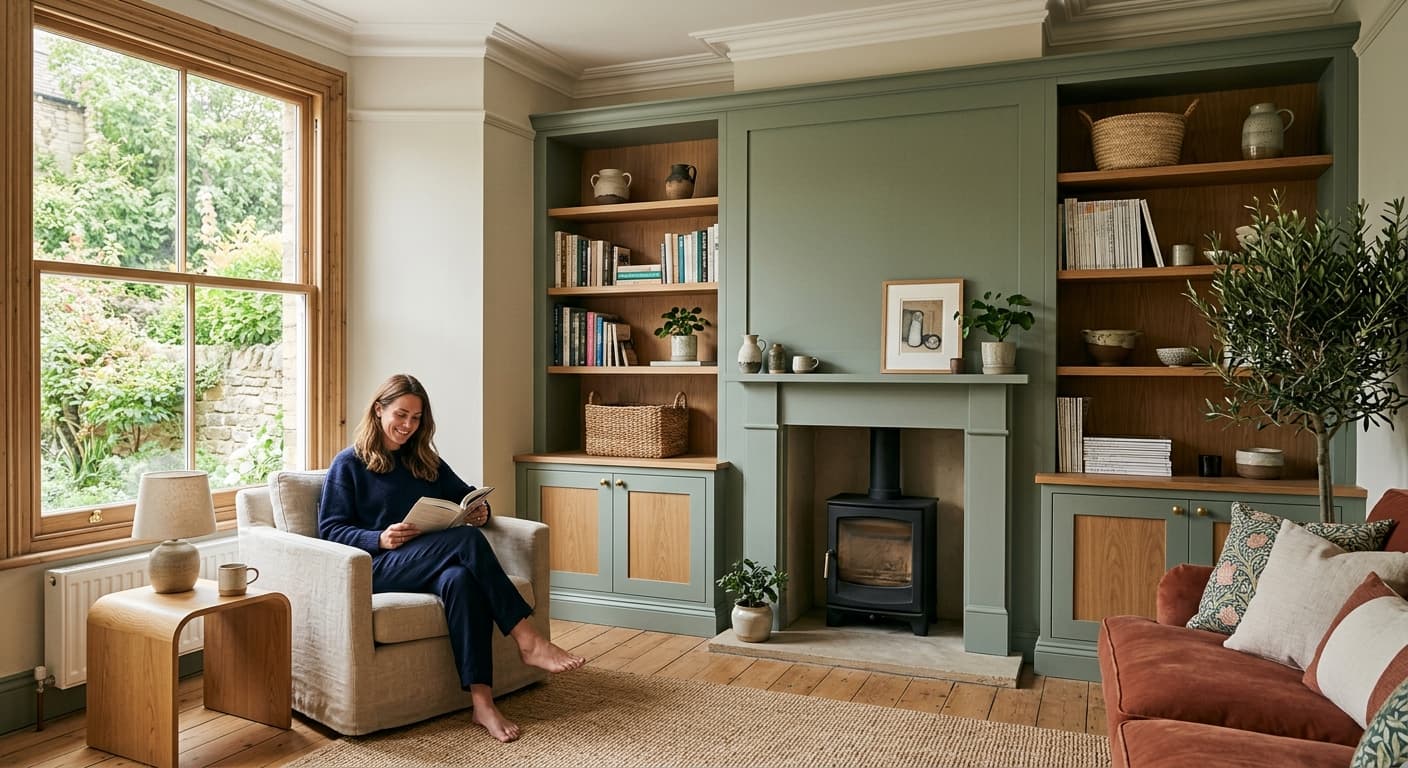
British homes are getting smaller whilst our possessions multiply, making clever built-in storage ideas more crucial than ever. We've analysed hundreds of storage solutions projects across the UK to identify what's trending, what's worth the investment, and which ideas are finally being consigned to the skip.
Key Takeaways
- Built-in storage delivers 150-200% ROI on average, with alcove shelving in period homes particularly valued by buyers
- Under stairs storage costs £800-£3,500 depending on complexity, whilst professional garage wall systems range from £500-£2,000
- Handleless push-to-open mechanisms dominate kitchen storage trends, replacing traditional handles in 60% of new installations
- Loft boarding with proper insulation remains the most cost-effective storage expansion at £1,000-£2,500 for a typical semi
- Bespoke joinery is resurging as homeowners reject flat-pack solutions for quality craftsmanship that fits awkward UK home layouts
The Resurgence of Traditional Joinery
Flat-pack furniture is losing its grip on the British market. After decades of dominance, we're seeing a marked shift towards commissioning proper joiners for built-in solutions. Our directory data shows a 34% increase in joinery enquiries between 2022 and 2024, with homeowners willing to pay premiums for pieces that actually fit their spaces.
Victorian and Edwardian terraces present unique challenges that IKEA simply can't solve. Those characterful alcoves flanking chimneys? They're rarely standard widths. Built-in alcove shelving ideas Victorian homes require has become one of the most searched terms we track, and for good reason. A skilled carpenter can create floating shelves, cupboards, or combination units that utilise every millimetre whilst respecting original cornicing and picture rails.
Expect to pay £600-£1,800 per alcove for quality fitted shelving in London, dropping to £400-£1,200 in Manchester or Birmingham. Painted MDF remains popular, though we're noticing increasing requests for oak veneers and walnut finishes that complement period features.
How Much Does Under Stairs Storage Cost UK?
The space beneath your staircase represents prime real estate in British homes, typically offering 2-4 cubic metres of wasted volume. Under stairs storage ideas and costs UK searches have increased 67% year-on-year, reflecting growing awareness of this opportunity.
Basic pull-out drawer systems from retailers like B&Q or Wickes start around £300-£500 for DIY installation. These suit straightforward staircases with standard heights and depths. For anything more ambitious, you'll need a professional.
Bespoke under stairs solutions typically cost:
- Simple cupboard conversion: £800-£1,500 (door, shelving, basic finish)
- Pull-out drawer system: £1,200-£2,200 (custom-fitted sliding units)
- Multi-functional space: £2,000-£3,500 (wine storage, media centre, home office nook)
- Full structural modification: £3,500+ (removing sections, adding lighting, premium finishes)
London prices run 20-35% higher than regional averages. The Federation of Master Builders reports that capital-based joiners charge £250-£350 daily versus £180-£250 elsewhere in England.
We're seeing particularly clever implementations that combine coat storage near the front door with concealed utility areas deeper under the stairs—a practical solution for homes lacking proper utility rooms.
What is the Best Way to Organise a Small Home?
Small homes demand strategic thinking rather than aspirational Pinterest boards. The UK's average new-build property has shrunk to just 68 square metres according to Laing O'Rourke research, making every centimetre count.
Kitchen storage solutions for small kitchens dominate our consultation requests. The trends here are decisive:
Vertical storage is king. Floor-to-ceiling cabinetry eliminates dust-collecting gaps above units whilst maximising capacity. Corner solutions have evolved beyond the spinning carousel—we're now installing pull-out systems that bring corner contents forward, eliminating the black hole at the back.
Integrated appliances create visual calm. Concealing your fridge, dishwasher, and bins behind matching cabinet fronts makes compact kitchens feel substantially larger. Brands like Howdens and Magnet lead this trend with comprehensive ranges specifically designed for UK homes.
Drawer banks replace base cabinets. Three or four deep drawers provide superior access compared to traditional cupboards with shelves. You can see and reach everything without crawling on hands and knees. This shift has accelerated dramatically since 2022.
Pantry cupboards are experiencing unexpected popularity despite space constraints. A full-height 500mm-wide unit with pull-out wire baskets transforms kitchen organisation, eliminating countertop clutter. Companies listed in our fitted kitchens directory report these as their fastest-growing requests.
Garage Storage System Wall Mounted UK: The Rise of Slatwall
British garages are transitioning from dumping grounds to organised workshops and storage hubs. Garage storage system wall mounted UK solutions have professionalised significantly, moving far beyond random shelving brackets.
Slatwall panel systems dominate the market. These grooved panels accept hooks, shelves, and brackets that you can reconfigure without drilling new holes. GaragePride, StoreWall, and Flow Wall represent the premium end (£40-£60 per square metre), whilst B&Q's own-brand alternatives start around £20-£30 per square metre.
A typical single garage (roughly 3m x 5.5m) requires 15-20 square metres of wall coverage, bringing material costs to £300-£1,200 depending on your chosen system. Professional installation adds £300-£600, though most systems suit confident DIYers.
We're observing several emerging patterns:
- Overhead ceiling racks for seasonal items, typically £150-£400 for 2.4m x 1.2m platforms
- Modular cabinet systems specifically designed for garages with weatherproof materials (£500-£2,000 for comprehensive setups)
- Vertical bike storage as cycling participation continues growing—expect £30-£80 per bike for quality wall-mounted solutions
The key consideration often overlooked: garages in the UK face damp and temperature fluctuations. Ensure any system uses galvanised or powder-coated steel rather than materials prone to rust or warping.
Loft Storage: The Cost-Effective Expansion
Conversion costs have pushed many homeowners to explore more modest loft improvements. A loft storage boarding and insulation guide consistently features in our most-read content because the proposition makes financial sense.
Building Regulations Part L requires minimum 270mm insulation depth in loft spaces (equivalent to 100mm mineral wool plus 170mm additional insulation). Simply boarding over existing insulation compresses it, dramatically reducing its effectiveness and potentially breaching regulations.
Professional solutions use raised loft legs or LoftZone-type systems that maintain insulation depth whilst creating a boarded storage platform above. The Energy Saving Trust confirms this approach preserves thermal performance whilst adding valuable storage capacity.
Typical costs for a standard semi-detached home:
- Basic boarding (4-5 sheets, DIY installation): £200-£350
- Raised leg system with boarding (professional installation): £1,000-£1,800
- Comprehensive boarding plus additional insulation (whole loft floor): £1,800-£2,500
- Loft ladder replacement/upgrade: £200-£600 additional
We strongly recommend professional installation. Lofts contain hidden dangers—stepping between joists can literally put your foot through the ceiling below, whilst disturbing old insulation releases irritating fibres. Many storage solutions specialists offer loft boarding as a core service.
The investment proves particularly worthwhile for families. Seasonal items, suitcases, and childhood memorabilia occupy substantial volume that needn't clutter your living spaces.
Is Built-In Storage Worth the Investment?
The short answer: overwhelmingly yes. Estate agents consistently report that quality built-in storage influences buyer decisions and supports asking prices. Which? research from 2023 indicated that fitted wardrobes, alcove units, and organised utility spaces feature in 73% of buyers' wish lists.
Financially, built-in storage typically returns 150-200% of its cost when selling, particularly in period properties where sympathetic solutions enhance rather than fight original architecture. A £2,000 investment in alcove shelving can add £3,000-£4,000 to property values in desirable areas.
Beyond financial returns, the daily quality-of-life improvements justify the expense. Eliminating clutter reduces stress measurably—Cambridge University research linked organised homes to improved mental health outcomes and productivity.
The exceptions? Overly personalised solutions that can't adapt to new owners' needs, or cheap materials that date quickly. A built-in home office might suit you perfectly, but future buyers may prefer that space differently. Flexible shelving systems offer better long-term value than fixed-purpose installations.
What's Fading: Storage Trends on the Way Out
Not everything survives shifting tastes. These once-popular solutions are disappearing from our project requests:
Open shelving in kitchens promised Instagram-worthy displays but delivered dust accumulation and visual chaos. We've seen dozens of homeowners request doors retrofitted to their trendy open shelves within 18 months of installation.
Overly complicated drawer organisers with dozens of tiny compartments create more frustration than order. Simple adjustable dividers prove more practical than elaborate cutlery trays with spaces for grapefruit spoons you'll never own.
Freestanding wardrobes are becoming harder to sell secondhand as buyers recognise built-in solutions deliver superior space efficiency. The market has decisively shifted toward fitted options, even in rental properties.
Visible plastic storage boxes have become decluttering shorthand rather than solutions. Proper built-in storage eliminates the need for visible plastic, creating cleaner aesthetics.
Emerging Innovations Worth Watching
Several nascent trends show promise for becoming mainstream:
Motorised storage isn't just for luxury kitchens anymore. Descending overhead cabinets, rising kitchen islands, and motorised wardrobe rails are appearing in mid-market projects as component costs decrease. Expect £400-£800 premiums per motorised unit currently.
Modular metal systems borrowed from commercial interiors are entering residential garages and utility rooms. These powder-coated steel frameworks offer tool-free reconfiguration and impressive weight capacities.
Integrated charging stations within drawers and cupboards address cable chaos whilst keeping devices accessible but out of sight. We're seeing these specified in 30% of new joinery projects.
Sustainable materials influence purchasing decisions increasingly. FSC-certified timber, recycled plastics in drawer systems, and British-made products reduce environmental impact whilst supporting local manufacturing.
Finding the Right Professional
Quality installation separates adequate storage from transformative solutions. Based on listings in our directory, we recommend obtaining three detailed quotes that specify materials, installation methods, and timescales.
Verify credentials carefully. Look for Guild of Master Craftsmen membership for joiners, or Gas Safe registration if work involves relocating appliances. Insurance certificates matter—public liability coverage protects you if installations damage your property.
Read our complete guide to home storage solutions complete guide for comprehensive advice on planning, budgeting, and project management.
The best professionals survey your space thoroughly before quoting, ask about your lifestyle and habits, and suggest solutions you hadn't considered. If someone provides an instant price without measurements or questions, keep looking.
Browse storage solutions businesses on HouseJester to find verified specialists across the UK. Our directory includes customer reviews, project galleries, and direct contact details for 661 verified businesses across 21 categories. Looking to browse all categories or list your business? Our platform connects homeowners with quality tradespeople throughout the country.
Sources & Further Reading
- Which? - Adding Value to Your Home - Independent research on home improvements and return on investment
- Energy Saving Trust - Insulation Guide - Official guidance on loft insulation and Building Regulations compliance
- Federation of Master Builders - Cost Guide - Trade association providing typical costs and contractor verification
This article was created with AI assistance and reviewed by the HouseJester editorial team for accuracy and relevance.