
On this page
The cost of home security has shifted dramatically in recent months, with CCTV installation cost UK figures falling by an average of 15% since late 2024 according to Checkatrade's Q1 2025 pricing survey. This decline comes as wireless systems dominate the market and competition intensifies among major brands.
Key Takeaways
- Average CCTV installation costs have dropped to £450-£850 for a 4-camera wireless system, down from £600-£1,200 in 2024
- Wireless systems now account for 68% of new installations, eliminating costly cabling work
- Smart home integration has become standard, with Ring, Arlo, and Google Nest leading market share
- Monthly monitoring costs remain steady at £10-£30, though self-monitoring options are gaining popularity
- DIY-friendly systems have forced professional installers to become more competitive on pricing
How Much Does CCTV Installation Cost UK?
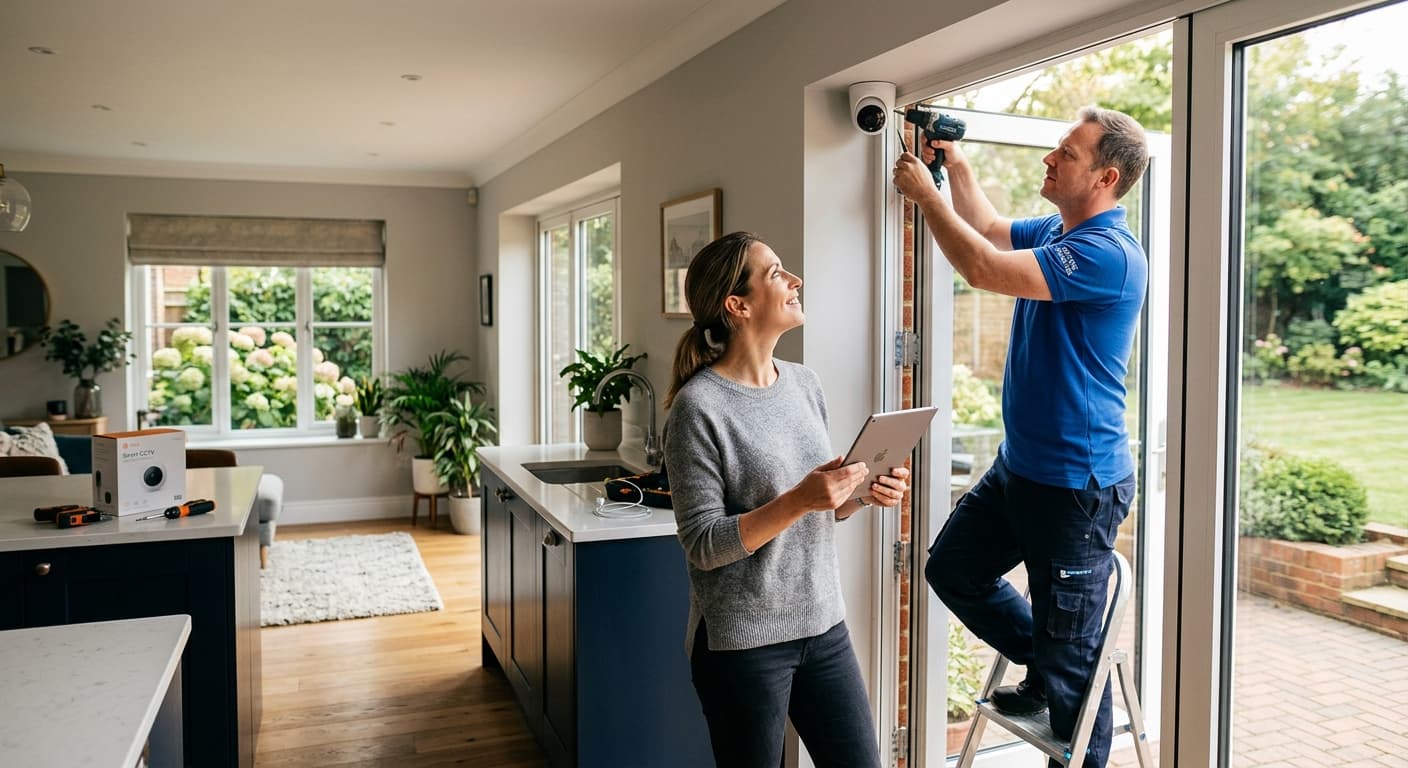
The shift towards wireless technology has transformed pricing across the board. A basic two-camera wireless system with professional installation now typically costs £350-£550 in most UK regions, whilst a comprehensive four-camera setup with professional-grade equipment runs £450-£850.
London prices remain 20-30% higher, with installers charging £600-£1,100 for similar four-camera installations. We've seen quotes from home security specialists in Birmingham and Manchester come in consistently lower than southern counterparts.
Here's what's included in typical packages:
- Wireless cameras with 1080p or 4K resolution
- Base station or hub with local storage
- Smartphone app with remote viewing
- Professional installation and setup
- 12-24 month manufacturer warranty
High-end systems with 8+ cameras, commercial-grade equipment, and extensive property coverage can reach £2,000-£4,500. These installations usually involve a mix of wired and wireless cameras, professional monitoring, and integration with existing alarm systems.
The major cost reduction stems from eliminated cabling work. Traditional wired systems required running cables through walls, lofts, and cavity spaces—labour that could add £400-£800 to installation costs. Modern wireless systems communicate via Wi-Fi or proprietary protocols, cutting installation time from two days to 3-4 hours.
What is the Best Home Security System UK?
The market has consolidated around three dominant players, each with distinct advantages. Our analysis of customer reviews and installer feedback across businesses in our directory reveals clear patterns.
Ring vs Arlo vs Google Nest Camera Comparison
Ring has captured approximately 35% of the UK market through aggressive pricing and Amazon integration. Their Video Doorbell remains the country's bestselling security camera, whilst the Ring Stick Up Cam Battery offers versatility at £89.99. The significant drawback? Ring Protect subscription costs £3.49/month per device or £8.99/month for unlimited devices—necessary for recording footage.
Arlo positions itself as the premium option, with superior image quality and longer battery life. The Arlo Pro 5S delivers exceptional 2K video and colour night vision, though individual cameras cost £179.99-£229.99. Arlo Secure plans start at £4.49/month per camera. Professional installers consistently rate Arlo's build quality highest, but the premium pricing limits market penetration.
Google Nest takes the middle ground with excellent smart home integration and intuitive interfaces. The Nest Cam (battery) at £179.99 includes three hours of free event recording, though the Nest Aware subscription (£6/month or £12/month for extended features) unlocks full functionality. Google's facial recognition technology outperforms competitors, reducing false alerts significantly.
For pure value, we recommend the best home CCTV systems UK wireless market currently offers come from Eufy and Reolink. Both provide local storage without mandatory subscriptions—a major advantage for cost-conscious homeowners. Eufy's SoloCam S40 includes solar charging, eliminating battery maintenance entirely.
Burglar Alarm Monitoring Cost UK Monthly
Whilst CCTV provides evidence, traditional burglar alarms remain the primary deterrent. The monitoring landscape has evolved considerably, with smart systems disrupting the traditional professional monitoring model.
Professional monitoring through companies like ADT or Verisure costs £15-£35 monthly. These services connect your alarm to a 24/7 monitoring centre that contacts emergency services when triggered. The British Security Industry Association (BSIA) reports that professionally monitored systems receive police response priority, particularly for verified alarms.
Self-monitoring via smartphone alerts has grown from 12% of installations in 2020 to 41% in 2025. Systems from Yale, Ring, and SimpliSafe send instant notifications when sensors trigger, letting homeowners verify incidents and contact police directly. Monthly costs drop to £0-£10 for cloud storage only.
The middle ground—hybrid monitoring—combines professional backup with self-monitoring. Companies like Verisure Smart Alarms offer tiered services where you receive alerts first, with professional monitoring escalating to emergency services if you don't respond within 60 seconds. Costs run £20-£28 monthly.
Building Regulations don't mandate alarm systems for residential properties, though insurance companies increasingly offer 5-15% premium discounts for professionally installed and monitored systems meeting British Standard BS EN 50131. Check your insurer's specific requirements before purchasing.
Are Smart Locks Safe and Reliable?
Smart locks represent the newest pillar of home security, though adoption remains cautious among UK homeowners. The technology has matured considerably since early reliability concerns plagued the category.
Smart Lock Yale vs August vs Nuki Comparison
Yale dominates the UK market with the Linus Smart Lock (£89.99) and more feature-rich Conexis L1 (£179.99). Both retrofit onto existing cylinders, avoiding replacement of the entire lock mechanism. Yale's integration with existing Yale alarm systems provides seamless whole-home security. The Conexis L1 meets British Standard BS 3621 and Sold Secure Diamond rating—critical for insurance validity.
August locks face UK availability challenges and require adapters for British cylinder sizes. The Wi-Fi Smart Lock works well but costs £229 and lacks the insurance certifications UK insurers require.
Nuki Smart Lock 3.0 Pro (£269) offers the most sophisticated features, including Matter compatibility and bridge integration for remote access. However, it requires installation onto existing cylinders and doesn't always play nicely with older British lock mechanisms. Insurance certification varies by configuration.
Reliability concerns centre on battery life and Wi-Fi connectivity. Modern smart locks typically run 6-12 months on batteries, with low-battery warnings providing ample replacement time. All reputable models include physical key backup for failure scenarios.
Security experts emphasise that smart locks meeting BS 3621 and featuring anti-snap cylinders provide equivalent security to traditional locks. The Which? 2024 smart lock testing found properly installed certified models resisted physical attacks comparably to conventional locks. The vulnerability lies in weak passwords and unpatched firmware—user problems rather than inherent design flaws.
Consider whether you need remote access (requiring Wi-Fi bridges) or whether Bluetooth-only operation suffices. Remote access adds convenience but increases potential attack surfaces.
Security Lighting PIR Motion Sensor Guide
Proper exterior lighting remains the most cost-effective security investment, with data showing well-lit properties face 30-40% fewer break-in attempts according to the Office for National Statistics crime survey.
Passive Infrared (PIR) motion sensors have evolved significantly. Modern units distinguish between cats, foxes, and humans—reducing nuisance activation. The key specifications to prioritise:
- Detection range: 10-12 metres for driveways, 6-8 metres for rear gardens
- Detection angle: 180° coverage for front doors, 240° for corner mounting
- Lux adjustment: Prevents activation during daylight, conserving bulb life
- Time delay: 30-second to 10-minute settings control how long lights remain on
Integrated LED floodlights with PIR sensors cost £25-£80 at B&Q and Screwfix, providing 2,000-4,000 lumens output. Professional installation adds £80-£150 if wiring doesn't exist at the mounting location.
Smart security lighting from Ring, Philips Hue, and Arlo integrates with cameras and alarms. The Ring Smart Lighting system (£24.99 per motion sensor, £49.99 per floodlight) creates coordinated responses—lights activate when cameras detect motion, whilst the siren sounds if doors open unexpectedly.
Solar-powered options have improved dramatically. Units from Litom and Aootek provide adequate brightness (1,000-1,500 lumens) for pathway and side access lighting at £30-£50 per fixture. They're ideal for locations where running mains power proves impractical.
Part L Building Regulations don't specifically address security lighting, though energy efficiency requirements apply. LED fixtures consuming under 100W per hour satisfy efficiency standards whilst providing security benefits.
Regional Price Variations and Installer Selection
Our analysis of businesses listed across the UK reveals substantial regional pricing differences. London commands the highest rates, with professional CCTV installation averaging £180-£220 per camera including labour. Scotland and Northern Ireland see rates 15-25% below the national average, whilst Southeast England excluding London falls 5-10% below.
Finding qualified installers has simplified considerably. The National Security Inspectorate (NSI) and BSIA maintain directories of certified professionals. Systems installed by NSI-approved contractors often satisfy insurance requirements without additional verification.
You can browse all categories on HouseJester to compare local security specialists, reading verified reviews and comparing quotes. We've seen homeowners save £200-£500 by obtaining three competitive quotes rather than accepting the first proposal.
DIY installation suits wireless systems if you're moderately handy. Ring, Arlo, and Eufy systems install in 1-2 hours using included mounting hardware. Professional installation makes sense for mixed wired/wireless systems, integration with existing alarms, or complex properties where optimal camera placement requires expertise.
The Insurance Factor
Home insurance discounts for security systems vary wildly. Aviva, Direct Line, and LV= offer 5-10% reductions for professionally installed burglar alarms, whilst CCTV typically warrants 2-5% discounts. Smart locks meeting BS 3621 rarely affect premiums—they're viewed as alternative access methods rather than security enhancements.
The critical requirement: certification and professional installation. DIY systems seldom qualify for discounts regardless of capability. Contact your insurer before purchasing to verify which systems and installers they accept.
High-value properties or those in elevated-risk postcodes may require specific security measures as a condition of coverage. These policies typically mandate Grade 2 or 3 alarm systems installed to BS EN 50131 standards, dramatically increasing costs to £1,200-£2,500.
Making Your Decision
The current market favours consumers. Falling prices, improved technology, and intense competition create opportunities to secure comprehensive protection affordably.
For most UK homeowners, we recommend starting with a wireless CCTV system covering entry points (front door, rear door, driveway) and security lighting with PIR sensors. This foundation costs £500-£900 installed and provides substantial deterrent value.
Add a smart doorbell (£89-£179) for visitor verification and package monitoring. The combined CCTV and doorbell coverage creates what security professionals call "visual verification"—the ability to confirm threats before responding.
Burglar alarms make sense if your insurance requires them or you live in higher-risk areas. Budget £600-£1,200 for professional installation with self-monitoring, or £800-£1,500 for systems with professional monitoring contracts.
Smart locks remain optional unless you need keyless access for rentals, elderly relatives, or service personnel. The convenience justifies the £180-£270 cost if you regularly grant temporary access.
Businesses offering home security solutions can list your business on HouseJester to connect with homeowners researching their options across the UK.
Browse Home Security businesses on HouseJester to compare local installers, read verified reviews, and request quotes from NSI-certified professionals in your area.
Sources & Further Reading
- Which? Home Security Reviews - Independent testing and ratings of CCTV, alarms, and smart locks
- Checkatrade Price Guides - Current UK installation costs for security systems
- British Security Industry Association - Industry standards, certified installers, and security best practices
This article was created with AI assistance and reviewed by the HouseJester editorial team for accuracy and relevance.
Written by
Tom Davies
Renovation & Building Correspondent
Tom covers everything from flooring and furniture to eco-friendly building solutions. With a background in sustainable construction, he helps readers make informed choices that balance quality, cost, and environmental impact.
- Flooring
- Furniture
- Storage Solutions
- Eco & Sustainable