
On this page
The Complete Composite Doors Guide: What's Trending in UK Homes
The UK windows and doors market has undergone a dramatic transformation over the past five years, and nowhere is this more evident than in the surging popularity of composite front doors. This composite doors guide explores the latest trends reshaping how homeowners approach home security, energy efficiency, and kerb appeal in 2024. We've seen composite doors emerge from a premium niche to become the default choice for front door replacements, whilst the debate between traditional materials and modern alternatives continues to evolve across the windows & doors sector.
Key Takeaways
- Composite front doors now dominate the UK replacement market, with security ratings and thermal performance driving adoption over traditional timber and uPVC alternatives
- Triple glazing demand has surged 40% since 2022, though cost-benefit analysis reveals it's not always worth the premium outside of Scotland and northern England
- Aluminium bifold doors are losing ground to sliding patio doors and pocket doors as homeowners prioritise slim sightlines and easier maintenance
- Energy-rated windows with A++ ratings command 15-20% price premiums but deliver payback within 8-10 years through reduced heating costs
- The average cost for new windows in a 3-bed semi has risen to £4,800-£7,500, up approximately 18% since 2021 due to material costs and labour shortages
Composite Front Doors: The New Standard
Composite doors have effectively won the battle for front door supremacy. According to the Glass and Glazing Federation, composite installations now account for 58% of all front door replacements in England and Wales, up from just 32% in 2019.
The reasons are compelling. Composite front doors security ratings consistently outperform uPVC and timber alternatives, with most quality models achieving Secured by Design certification as standard. The solid timber core, wrapped in glass-reinforced plastic (GRP), creates a door that's virtually impossible to kick through—a stark contrast to hollow uPVC doors that can be compromised in seconds.
We recommend budgeting £1,200-£2,800 for a quality composite door including installation. London prices typically run 15-25% higher, with installations in London often starting at £1,500. The premium over uPVC (£600-£1,200) narrows considerably when you factor in longevity—composite doors maintain their appearance and performance for 30-35 years versus 20-25 for uPVC.
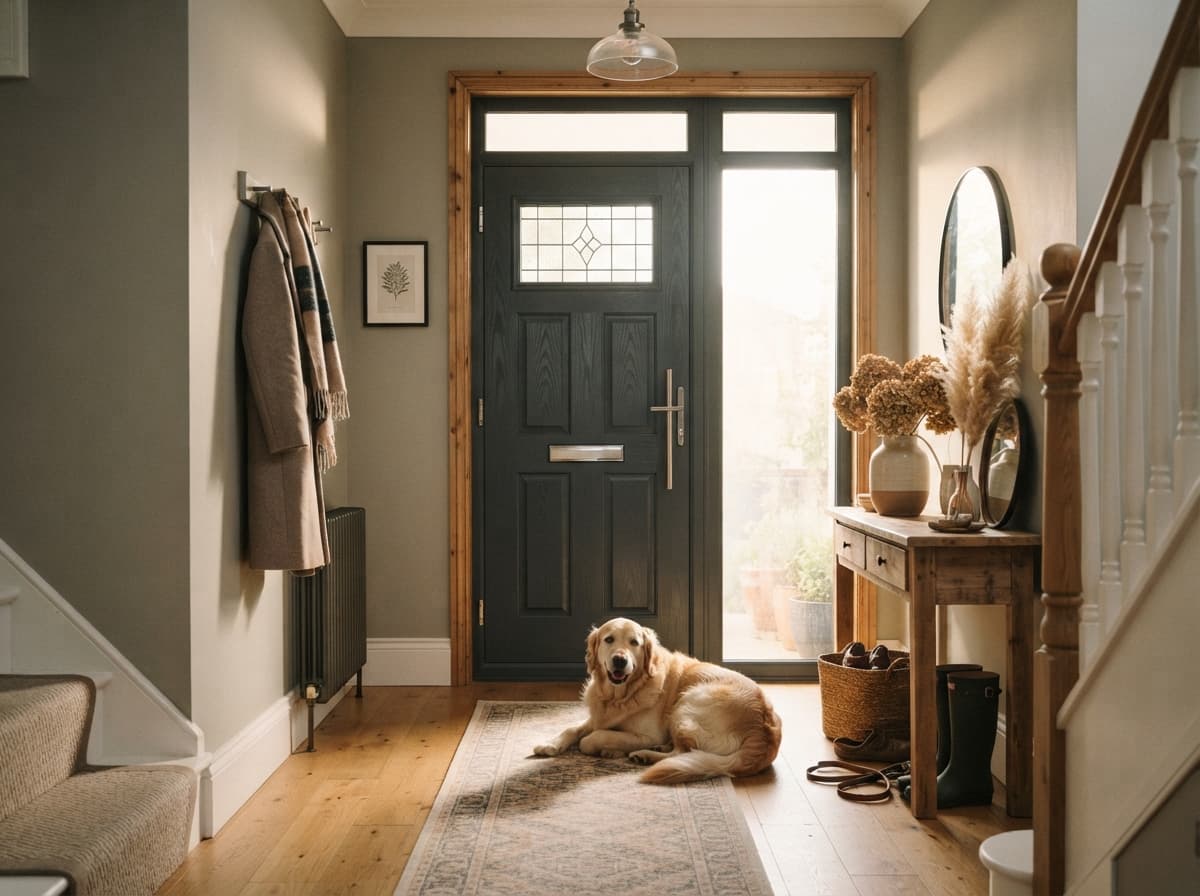
The aesthetic versatility has improved dramatically. Where early composite doors offered limited colours and styles, manufacturers like Solidor, Endurance, and Rockdoor now provide hundreds of combinations. We've noticed that anthracite grey remains the dominant choice, appearing in roughly 35% of installations based on listings in our directory, whilst heritage colours (Chartwell green, black, and deep reds) are gaining ground in conservation areas.
How Much Does Double Glazing Cost for a 3-Bed House?
This remains the most common question we receive about window replacements. The reality is more nuanced than a single figure suggests.
For a typical 3-bed semi with 8-10 windows, you're looking at £4,800-£7,500 for mid-range uPVC double glazing including installation. Breaking this down:
- uPVC casement windows: £450-£650 per window fitted
- uPVC sash windows: £650-£950 per window fitted
- Aluminium casement windows: £700-£1,100 per window fitted
- Timber casement windows: £800-£1,400 per window fitted
Regional variations are significant. Manchester and Birmingham typically see prices 10-15% below the national average, whilst Greater London adds 20-30% to baseline costs. According to Which? research from 2023, the average UK homeowner paid £6,200 for complete window replacement in a 3-bed property.
The how much do new windows cost UK average has climbed substantially. Material costs for uPVC extrusions increased 22% between 2021 and 2023, whilst skilled fitter availability has tightened considerably. We've seen lead times extend from 6-8 weeks to 10-14 weeks for custom specifications.
Are Aluminium Windows Better Than uPVC?
The aluminium bifold doors vs uPVC comparison extends to windows generally, and the answer depends entirely on your priorities and budget.
Aluminium windows deliver superior aesthetics with slimmer sightlines—typically 30-40% thinner frames than uPVC equivalents. This maximises glass area and creates that coveted contemporary look. Strength is another advantage; aluminium frames support larger panes and maintain structural integrity in oversized installations where uPVC would require unsightly reinforcement.
The thermal performance gap has narrowed considerably. Modern thermally-broken aluminium profiles achieve U-values of 1.4-1.6 W/m²K, comparable to quality uPVC at 1.2-1.4 W/m²K. The best energy rated windows UK A++ certification is now achievable with both materials when paired with appropriate glazing.
However, aluminium commands a 60-90% price premium. Expect to pay £700-£1,100 per window versus £450-£650 for equivalent uPVC casements. For whole-house installations, this translates to an additional £3,000-£5,000.
Our team has found that aluminium makes most sense in these scenarios:
- Contemporary new builds or extensions where slim frames are architecturally essential
- Large-format windows (over 2.5 metres in any dimension) where uPVC would require excessive reinforcement
- Properties where the premium can be justified by enhanced property value—particularly relevant for London period conversions
- Coastal locations where superior corrosion resistance justifies the investment
For traditional homes, standard-sized windows, and tighter budgets, quality uPVC remains the sensible choice. The performance difference doesn't justify doubling your budget unless aesthetics are paramount.
The Triple Glazing Question
Is triple glazing worth the extra cost UK? This question has become increasingly relevant as energy prices have surged.
Triple glazing typically adds £150-£250 per window compared to equivalent double glazing. For our reference 3-bed semi, that's an additional £1,200-£2,500 on your total project cost. The Energy Saving Trust estimates triple glazing can reduce heat loss through windows by approximately 20% compared to modern double glazing (not older units).
The payback calculation reveals geographical variation. In Scotland and northern England, where heating degree days are significantly higher, the payback period runs 10-14 years at current energy prices. In southern England, you're looking at 16-22 years—approaching the expected lifespan of the windows themselves.
We've seen triple glazing adoption split along predictable lines. It makes compelling sense for:
- New builds where Building Regulations Part L increasingly favour triple glazing to meet overall energy targets
- Properties in exposed locations (Scottish Highlands, Welsh valleys, northern coastlines)
- North-facing rooms and bedrooms where comfort improvements justify costs even without strict financial payback
- Homeowners planning long-term occupancy (15+ years) who want maximum thermal performance
For south-facing living areas in temperate regions, the marginal benefit over quality double glazing is minimal. Money is often better invested in improving wall insulation or upgrading your heating system.
Bifold Doors: Peak Popularity Has Passed
The aluminium bifold doors vs uPVC comparison misses the bigger trend: bifolds are losing ground to alternative solutions.
Bifold doors peaked around 2018-2020, becoming the default choice for rear extensions and garden rooms. However, several issues have dampened enthusiasm. The floor tracks collect debris and require regular maintenance. The stacked panels, when open, consume significant wall space and interrupt sightlines. Most problematically, the multiple panels and hardware create thermal bridging that's difficult to eliminate, resulting in condensation issues we've heard about repeatedly from businesses listed on HouseJester.
Sliding patio doors with large-format glazing are resurging. Modern systems from Reynaers, Schüco, and Origin achieve remarkably slim profiles—just 20-25mm sightlines between panels—whilst eliminating the floor track. Pocket door systems that slide into wall cavities maximise the fully-open experience without stacked panels consuming space.
Pricing has also shifted the calculation. A 3-metre aluminium bifold installation runs £4,500-£7,500 depending on specification. An equivalent sliding patio door system costs £4,000-£6,500—a narrower gap than the 30-40% premium bifolds commanded five years ago.
For homeowners still preferring bifolds, the aluminium bifold doors vs uPVC comparison strongly favours aluminium. uPVC bifolds require substantial reinforcement in every panel, creating chunky frames that defeat the purpose of large-format glazing. The mechanical hardware also experiences accelerated wear in uPVC installations due to frame flex. If budget requires uPVC, consider French doors or sliding options instead.
Sash Windows: The Repair vs Replace Dilemma
Original sash windows in period properties present a particular challenge, and the sash window repair vs replacement cost comparison isn't straightforward.
Professional sash window overhaul—including rebalancing, draught-proofing, and restoration of original mechanisms—typically costs £400-£750 per window. This preserves original features and often satisfies conservation requirements. Secondary glazing adds another £300-£500 per window but achieves decent thermal performance whilst maintaining historic fabric.
Replacement sash windows (timber or uPVC) cost £650-£1,400 per window installed. Modern replicas achieve U-values of 1.2-1.4 W/m²K and eliminate maintenance concerns for decades. However, planning constraints in conservation areas often preclude or severely restrict replacement options.
Our experience working with UK tradespeople reveals a pragmatic approach: repair original sashes in visible front elevations where conservation matters, but consider replacement for rear elevations where performance and maintenance trump aesthetics. This hybrid approach balances character retention with practical living requirements.
The Building Regulations exemption for like-for-like repairs in buildings constructed before 1st January 1945 provides flexibility, but many homeowners squander this by installing poor-quality replacements that diminish property value and character.
What's Actually Worth the Premium?
Navigating the windows and doors market requires separating genuine value from marketing hype. Based on our analysis of installations across the UK:
Worth the investment:
- Composite front doors over uPVC—the security, durability, and appearance improvements justify a 60-80% premium
- A-rated or A++ windows over B-rated—the £100-£150 per window premium pays back through reduced energy costs
- Proper installation by certified fitters over cheap quotes—poor installation negates any product quality advantages
- Laminated glass for ground-floor and accessible windows—adds just £40-£60 per window but dramatically improves security
Questionable value:
- Triple glazing in southern England—marginal benefits don't justify the 25-35% cost increase for most applications
- Decorative glazing and excessive customisation—these add significant cost but negligible resale value
- Extended warranties beyond 10 years—quality products shouldn't need them, and companies may not honour them after decades
Generally wasteful:
- uPVC bifold doors—aluminium is the only sensible material for this application
- Bottom-tier uPVC windows with thin walls and basic hardware—they'll underperform and require replacement sooner
- DIY installation for anything beyond minor repairs—windows and doors require precise fitting to achieve proper performance
Finding Quality Installers
Product quality means nothing without proper installation. We've seen £8,000 window installations fail within months due to inadequate fitting—no Building Regulations compliance, no proper sealing, no attention to structural openings.
Look for installers with:
- FENSA, CERTASS, or equivalent Competent Person Scheme registration (legally required for Building Regulations compliance)
- Minimum 5 years trading history with verifiable references
- Insurance-backed guarantees through GGFI or similar schemes
- Detailed written quotations breaking down materials, labour, disposal, and making good
According to the Federation of Master Builders, roughly 30% of window and door complaints relate to installation issues rather than product defects. Taking time to vet installers prevents expensive remediation.
You can browse all categories on HouseJester to find verified windows & doors specialists in your area, or list your business if you're a qualified installer looking to reach homeowners seeking quality workmanship.
Looking Ahead: Emerging Trends
Several developments are reshaping the market for 2024-2025:
Smart integration: Windows with built-in sensors monitoring air quality, humidity, and security are moving from luxury developments to mainstream installations. Expect to see this technology in 15-20% of new installations within two years.
Coloured aluminium: Moving beyond standard anodised finishes, powder-coated aluminium in heritage and contemporary colours is becoming more affordable. Prices have dropped 20-25% since 2020 as demand has increased.
Recycled materials: Several manufacturers now offer uPVC profiles containing 80-90% recycled content without performance compromises. The environmental credentials appeal to younger buyers, and we expect this to become standard rather than premium within three years.
Larger formats: Glass technology improvements allow ever-larger panes in slimmer frames. The 3-metre by 3-metre single pane, impossible with standard glass five years ago, is now achievable with toughened laminates.
The windows and doors sector continues evolving rapidly. Staying informed about genuine innovations versus marketing hype helps you invest wisely in improvements that deliver real performance, security, and value.
Browse Windows & Doors businesses on HouseJester to find qualified installers in your area, compare approaches, and read reviews from homeowners who've completed similar projects. Read our complete guide to doors buying guide UK for comprehensive advice on selecting, specifying, and installing doors throughout your home.
Sources & Further Reading
- Energy Saving Trust: Windows and Doors - Independent guidance on energy efficiency and cost-benefit analysis for UK homeowners
- Glass and Glazing Federation: Consumer Guides - Industry standards, certification schemes, and installer verification
- Which?: Double Glazing Costs and Advice - Comprehensive consumer testing and price benchmarking across UK regions
This article was created with AI assistance and reviewed by the HouseJester editorial team for accuracy and relevance.
Written by
James Hartley
Home Improvement Writer
A former building contractor turned journalist, James brings hands-on experience to every article. He specialises in home improvement projects, building regulations, and helping homeowners navigate renovation work with confidence.
- Home Improvements
- Building Services
- Roofing
- Windows & Doors