
On this page
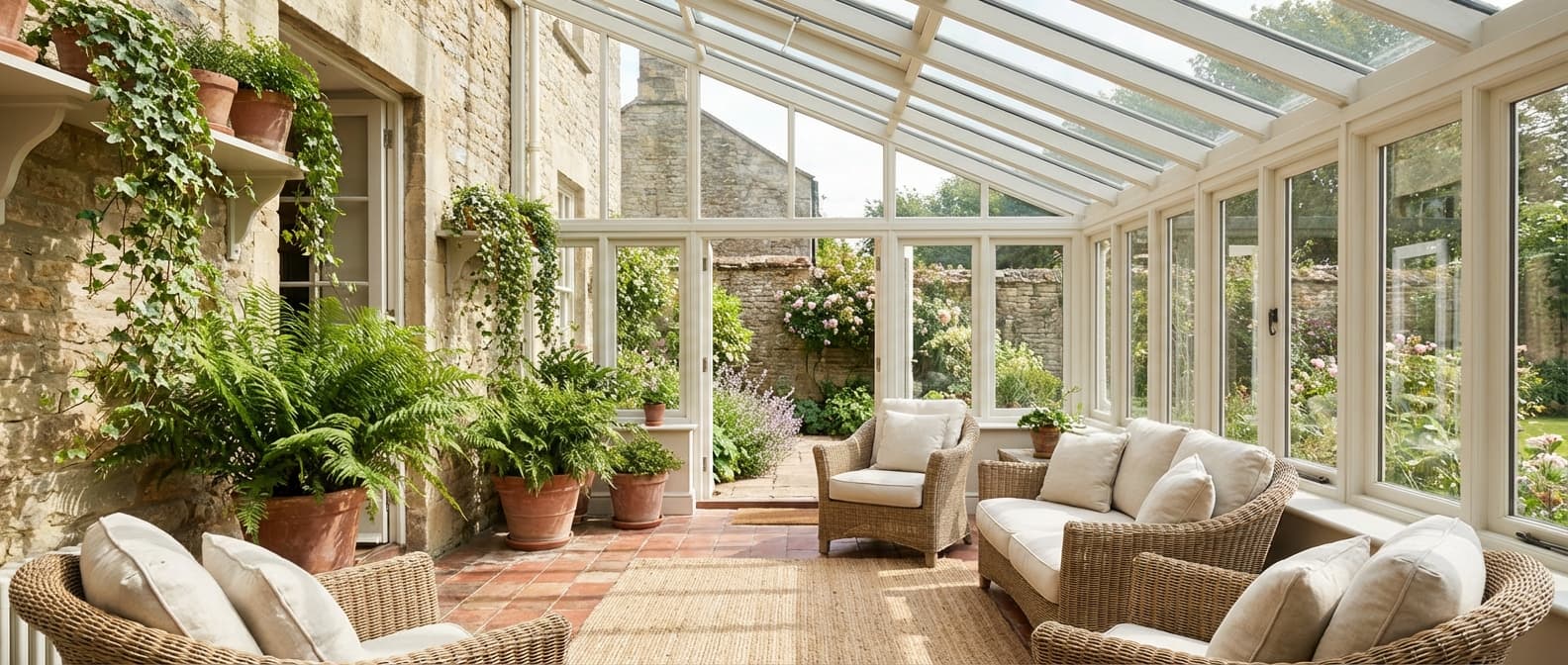
A conservatory, orangery, or garden room extends your living space, floods your home with natural light, and creates a versatile room that bridges indoor comfort with the garden beyond. Whether you want a classic Victorian conservatory, a contemporary flat-roof orangery, or a fully insulated garden room, the right company can design and build a structure that adds both living space and value to your property.
The UK conservatory market has evolved significantly. Traditional lean-to and dwarf-wall conservatories with polycarbonate roofs are giving way to more sophisticated designs with solid or glass roofs, full insulation, and year-round climate control. Orangeries (characterised by a flat roof perimeter with a central glass lantern) and insulated garden rooms have become increasingly popular as homeowners demand spaces that are comfortable in both summer and winter.
Material options include UPVC (most affordable), aluminium (contemporary, slim profiles), hardwood (traditional, beautiful), and hybrid systems. Roof options range from polycarbonate (budget, lightweight) and glass (bright, premium) to solid insulated roofs (warm year-round, reduces glare). The choice affects both appearance and the room's thermal performance, which is increasingly important under tightening energy standards.
Professional conservatory companies handle everything from initial design and planning through to groundworks, construction, roofing, electrics, heating, and internal finishing. Many offer 3D design tools that allow you to visualise the finished structure on your property before committing.
HouseJester's directory features verified conservatory and orangery companies across the UK. Browse, compare, and find the right specialist for your project.
Browse conservatory companies on HouseJester
How Much Does a Conservatory Cost in the UK?
| Type | Budget | Mid-range | Premium |
|---|---|---|---|
| Lean-to conservatory | £5,000 – £10,000 | £10,000 – £18,000 | £18,000 – £30,000+ |
| Victorian/Edwardian conservatory | £8,000 – £15,000 | £15,000 – £25,000 | £25,000 – £40,000+ |
| Orangery | £15,000 – £25,000 | £25,000 – £40,000 | £40,000 – £80,000+ |
| Garden room (insulated) | £10,000 – £20,000 | £20,000 – £35,000 | £35,000 – £60,000+ |
| Solid roof replacement | £3,000 – £5,000 | £5,000 – £8,000 | £8,000 – £12,000+ |
Prices include design, groundworks, construction, and basic electrics. Heating, flooring, and internal decoration are usually additional.
What to Look For When Choosing a Conservatory Company
- Planning and building regulations knowledge — The company should advise on permitted development rights and Building Regulations requirements.
- Structural design — Ensure the design includes adequate foundations, structural calculations, and drainage.
- Thermal performance — Ask about U-values for the roof, walls, and glazing. Year-round comfort depends on thermal performance.
- Roof options — Understand the differences between polycarbonate, glass, and solid roof options.
- Heating and ventilation — Discuss how the space will be heated in winter and ventilated in summer.
- 3D visualisation — Choose a company that offers 3D design so you can see how the structure looks on your property.
- Foundation expertise — Ground conditions vary. The company should assess soil type and design foundations accordingly.
- Guarantees — Expect 10-year structural guarantees and 5-10 year guarantees on glazing and roofing.
- FENSA/CERTASS — If the conservatory includes doors and windows that form part of the building envelope, these must be installed by a registered company.
- Reviews — Read reviews on HouseJester, focusing on build quality, project management, and thermal comfort.
Frequently Asked Questions
Do I need planning permission for a conservatory?
Most conservatories are built under permitted development rights and do not need planning permission, provided they meet the following criteria: the floor area does not exceed 50% of the curtilage around the original house, the structure does not extend beyond 3m (terraced) or 4m (detached) from the rear wall, the height does not exceed 4m (or 3m within 2m of a boundary), and the structure is not forward-facing. Listed buildings always require Listed Building Consent. Conservation areas may have additional restrictions. An orangery or garden room that exceeds these limits requires a full planning application.
What is the difference between a conservatory, an orangery, and a garden room?
A conservatory has a predominantly glazed roof and walls, creating a bright, light-filled space. An orangery has a solid flat roof perimeter (often with an internal pelmet and downlights) and a central glass lantern, creating a more substantial, room-like feel with better thermal performance. A garden room is a fully insulated structure with a solid roof, typically with bi-fold or sliding doors and large windows — it feels most like a conventional room extension. The key difference is the ratio of glass to solid structure, which affects light, warmth, and cost.
How do I make a conservatory comfortable year-round?
The three critical factors are roof insulation, heating, and ventilation. Upgrading to a solid insulated roof or high-performance glass roof dramatically reduces heat loss in winter and overheating in summer. Add radiators connected to your central heating, underfloor heating, or a split air-conditioning system for heating and cooling. Install roof vents or opening skylights for summer ventilation. Blinds or solar-reflective glass reduce solar gain. With these measures, a modern conservatory or orangery is as comfortable as any room in the house, 365 days a year.
Can I convert my conservatory into a proper room extension?
Yes. Replacing a polycarbonate or glass roof with a solid insulated roof system is one of the most popular home improvement projects in the UK. Companies like Guardian and Supalite offer lightweight solid roof systems specifically designed to retrofit onto existing conservatory frames. This upgrade typically costs £3,000-£8,000 and transforms the space from a seasonal room into a year-round living space. However, if you remove the glazed separation between the conservatory and the house, the space may be reclassified as an extension and require Building Regulations approval.
Will a conservatory add value to my property?
A well-built, thermally efficient conservatory or orangery typically adds 5-10% to a property's value, depending on size, quality, and how well it integrates with the house. Estate agents report that year-round usable spaces (orangeries and insulated garden rooms) add more value than traditional conservatories that are only comfortable in spring and autumn. The key factors are: quality of build, thermal performance, sympathetic design that complements the house, and how the space is finished and furnished. A poorly built or outdated conservatory can actually detract from a property's appeal.
This article was created with AI assistance and reviewed by the HouseJester editorial team for accuracy and relevance.
Written by
HouseJester Editorial
Editorial Team
The HouseJester editorial team brings together specialists in furniture, interior design, and home improvement to provide trusted guidance for UK homeowners.