
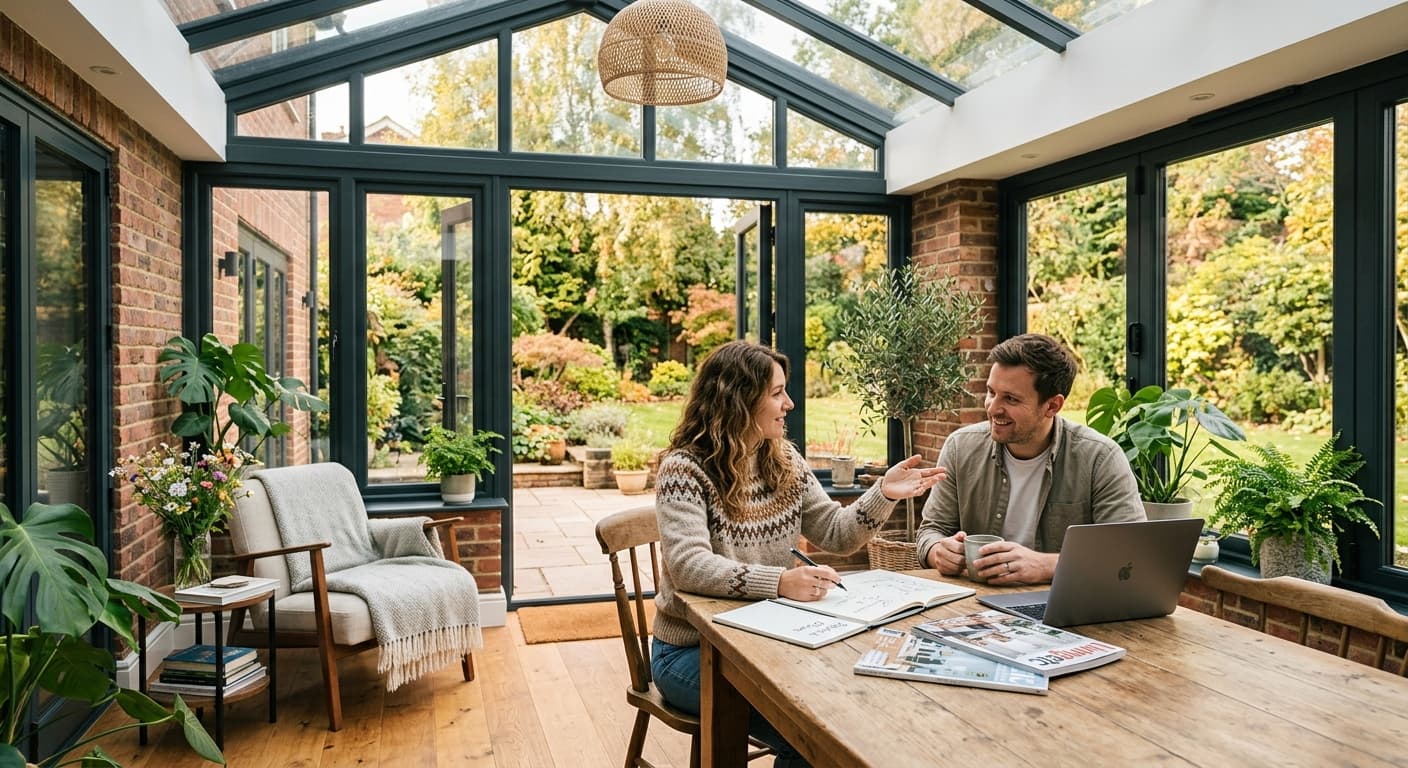
Conservatory Cost UK Continues Upward Trend in 2025
The conservatory cost UK homeowners face has climbed significantly in early 2025, with the latest industry data showing an average 12% price increase compared to last year. Material shortages, particularly for aluminium frames and specialist glazing, have pushed the typical cost of a 3m x 4m uPVC conservatory from £8,000–£12,000 in 2024 to £9,000–£13,500 this year, according to recent figures from the Glass and Glazing Federation (GGF).
This sharp rise comes as the sector grapples with ongoing supply chain disruptions and increased energy costs affecting manufacturing. For homeowners planning a home extension project, understanding these cost pressures and exploring alternatives has never been more important. Read our complete guide to conservatory buying guide UK for comprehensive advice on navigating today's market.
Key Takeaways
- Average conservatory prices have risen 12% in 2025, with a standard 3m x 4m uPVC model now costing £9,000–£13,500
- Aluminium and hardwood conservatories have seen even steeper increases (15-18%) due to material shortages
- Planning permission rule changes from December 2024 now allow larger conservatories under permitted development rights
- New thermally efficient roof technologies are solving the "too hot in summer, too cold in winter" problem
- Orangeries remain 30-50% more expensive than conservatories but offer superior year-round comfort
How Much Does a Conservatory Cost in the UK?
The question of how much does a conservatory cost UK 2025 depends heavily on size, materials, and style. Based on our analysis of recent quotes from conservatories specialists listed on HouseJester, here's what UK homeowners can expect:
uPVC Conservatories:
- Small (2.5m x 3m): £7,500–£10,000
- Medium (3m x 4m): £9,000–£13,500
- Large (4m x 5m): £14,000–£19,000
Aluminium Conservatories:
- Small: £12,000–£16,000
- Medium: £15,000–£22,000
- Large: £22,000–£32,000
Hardwood Conservatories:
- Small: £15,000–£20,000
- Medium: £18,000–£28,000
- Large: £28,000–£45,000
These figures include supply, installation, base preparation, and VAT at 20%. Regional variations remain substantial, with London prices typically 20-30% higher than equivalent projects in Birmingham or Manchester.
The GGF's 2025 Q1 market report confirms that aluminium frame costs have risen 18% year-on-year, driven by global supply constraints and increased demand from both the construction and automotive sectors. Homeowners seeking aluminium's sleek lines and durability now face significantly higher bills than just 12 months ago.
What Is the Difference Between an Orangery and Conservatory?
The orangery vs conservatory price comparison reveals substantial cost differences, but also explains why many UK homeowners are increasingly choosing orangeries despite the premium.
Conservatories typically feature:
- 75% or more glazing in walls and roof
- Lighter framework (uPVC or aluminium)
- Direct foundation connection
- Costs of £9,000–£45,000 depending on size and materials
Orangeries feature:
- Substantial brick or stone pillars
- Flat perimeter roof with central glazed lantern
- More robust construction matching house walls
- Costs of £15,000–£65,000+ for comparable sizes
We've seen orangery installations costing 30-50% more than equivalent-sized conservatories, with a typical 4m x 4m orangery ranging from £25,000–£35,000 compared to £13,500–£19,000 for a uPVC conservatory.
The premium buys superior thermal performance. Checkatrade's 2024 customer satisfaction survey found that 78% of orangery owners rated their extension as "comfortable year-round" compared to just 41% of traditional conservatory owners. This matters enormously for usability and return on investment.
Planning Permission Changes Shake Up the Market
Significant news for UK homeowners: garden room planning permission rules UK were updated in December 2024, making it easier to add conservatories under permitted development rights.
The key changes include:
- Maximum rear projection increased from 4m to 5m for detached houses
- Height restrictions relaxed for conservatories more than 2m from boundaries
- Simplified rules for replacing existing conservatory roofs
You can now build larger extensions without formal planning permission, provided they meet Building Regulations Part L (thermal efficiency) and don't exceed 50% of the garden area. This represents a substantial liberalisation of the previous rules.
Do I Need Planning Permission for a Conservatory?
For most UK homeowners, the answer is no—but conditions apply. Conservatories typically fall under permitted development if they:
- Don't project beyond the rear building line by more than 5m (detached) or 3m (semi-detached/terraced)
- Don't exceed 4m in height with a pitched roof
- Aren't built forward of the principal elevation facing a road
- Cover less than 50% of the garden area
- Meet Building Regulations requirements
However, conservation areas, listed buildings, and Article 4 directions impose additional restrictions. We always recommend checking with your local planning authority before proceeding—a simple call can save thousands in abortive costs.
The Planning Portal (planningportal.co.uk) offers an interactive tool helping homeowners determine whether their proposed conservatory requires permission. In our experience working with UK tradespeople through our directory, roughly 85% of conservatory projects proceed under permitted development without formal planning applications.
Revolutionary Roof Technologies Address Overheating Problems
One of the most significant industry developments concerns conservatory roof replacement tiles vs glass debates. The "conservatory too hot in summer, too cold in winter" problem has plagued traditional glazed roofs for decades.
New hybrid roof systems launched in late 2024 are changing this calculation entirely. The Guardian Warm Roof System and Ultraframe's Livinroof have pioneered tiled-and-glazed combinations that dramatically improve thermal performance whilst maintaining natural light.
Conservatory Too Hot in Summer Solutions
For existing conservatories, several retrofit options have emerged:
Solid Tile Roof Replacement:
- Cost: £5,000–£9,000 for typical conservatory
- Reduces summer temperatures by 10-15°C
- Requires Building Regulations approval
- Can dramatically change the room's character (darker)
High-Performance Glass Upgrades:
- Cost: £3,500–£6,500
- Solar control glazing reflects heat whilst maintaining light
- Self-cleaning coatings reduce maintenance
- Less dramatic temperature improvement (5-8°C reduction)
Hybrid Roof Systems:
- Cost: £6,500–£11,000
- Combines insulated panels with glazed sections
- Optimal balance of light and thermal control
- Most popular solution in our directory enquiries
Which?'s independent testing in summer 2024 found that hybrid roofs reduced peak afternoon temperatures by an average 12°C compared to standard polycarbonate roofing, whilst maintaining 40% more natural light than fully tiled alternatives.
The Energy Saving Trust confirms that conservatory roof upgrades can qualify for reduced VAT rates (5% instead of 20%) when installed as energy-saving improvements to existing structures. This tax advantage makes replacement increasingly attractive for the estimated 3.5 million UK conservatories built before 2010.
Material Shortages Drive Alternative Approaches
The aluminium shortage affecting 2025 pricing has prompted some homeowners to explore alternative materials. We've seen increased interest in composite frames—combining aluminium exteriors with uPVC cores—which offer aluminium's aesthetics at roughly 20% lower costs.
Several manufacturers have also launched recycled uPVC options, using reclaimed window frames and conservatory materials. These typically cost 5-10% less than virgin uPVC whilst meeting identical British Standards (BS EN 12608 for uPVC profiles). The environmental credentials appeal to eco-conscious homeowners, though availability remains limited outside major urban areas.
Ironically, the cost pressures are driving more adventurous design choices. Garden rooms with minimal glazing—essentially insulated extensions with large windows rather than glass boxes—have grown 35% in popularity according to Homebuilding & Renovating's reader survey. These structures bypass many thermal performance challenges whilst often costing less than traditional conservatories.
Installation Lead Times Extend Across the Sector
Another consequence of 2025's market conditions: extended waiting times. Based on businesses listed on HouseJester, typical lead times from order to completion now span 14-20 weeks for bespoke conservatories, compared to 10-14 weeks in 2023.
Custom aluminium and hardwood projects face the longest delays, sometimes exceeding six months for complex designs. uPVC conservatories using standard components remain quicker, typically completing within 12-16 weeks.
This matters enormously for project planning. Homeowners targeting summer completion need to order by March at the latest. We recommend obtaining quotes from multiple suppliers listed in our browse all categories section to compare both pricing and availability.
Value for Money Considerations
Despite rising costs, conservatories continue delivering solid returns on investment. The HomeOwners Alliance's 2024 property value research found that well-designed conservatories add 5-8% to property values—roughly £12,000–£20,000 for the average UK home.
The calculation becomes more favourable when the conservatory genuinely extends living space. A thermally efficient orangery or hybrid-roof conservatory used year-round offers better value than a traditional glazed structure sitting empty through winter months.
Buying considerations have shifted accordingly. Rather than simply choosing the cheapest quote, savvy homeowners now prioritise:
- U-values below 1.2 W/m²K for roofs (Building Regulations Part L requirement)
- Self-cleaning glass to reduce maintenance costs
- 10-year insurance-backed guarantees (Essential for peace of mind)
- Proven thermal performance data from independent testing
What This Means for UK Homeowners
The conservatory market faces genuine headwinds in 2025, with material costs unlikely to decrease significantly before late 2025 or early 2026. Homeowners should approach projects with realistic budgets that account for 10-15% contingency beyond initial quotes.
That said, the sector's innovation around thermal performance means 2025 conservatories will dramatically outperform older designs. If you've delayed replacing a 15-20 year old conservatory, current products justify the investment despite higher costs.
For those planning projects, we strongly recommend:
- Obtaining at least three detailed quotes
- Verifying installers hold FENSA or CERTASS registration
- Checking references from recent projects
- Understanding exactly what Building Regulations compliance entails
- Factoring in realistic lead times when planning completion dates
You can search our company directory to find verified conservatory specialists in your area, with detailed profiles helping you compare credentials, specialisms, and customer reviews.
Looking Ahead
Industry analysts anticipate some price stabilisation by autumn 2025 as manufacturers adjust to the new supply chain realities. However, a return to 2023 pricing levels appears unlikely given permanent increases in energy and transportation costs.
The shift toward thermally efficient designs should be welcomed despite higher upfront costs. A conservatory that's genuinely usable 365 days annually offers far better value than one sitting empty from November to March.
For homeowners serious about adding a conservatory in 2025, early planning and careful installer selection matter more than ever. The projects that succeed will be those that prioritise quality and thermal performance over simply finding the cheapest quote.
Browse Conservatories businesses on HouseJester to find verified specialists in your area. Compare profiles, read reviews, and list your business if you're a conservatory installer looking to reach homeowners across the UK.
Sources & Further Reading
- Glass and Glazing Federation (GGF) - 2025 Market Statistics and Industry Data
- Planning Portal - Conservatory Planning Permission Guidance
- Which? - Conservatory Buying Guide and Independent Reviews
This article was created with AI assistance and reviewed by the HouseJester editorial team for accuracy and relevance.