
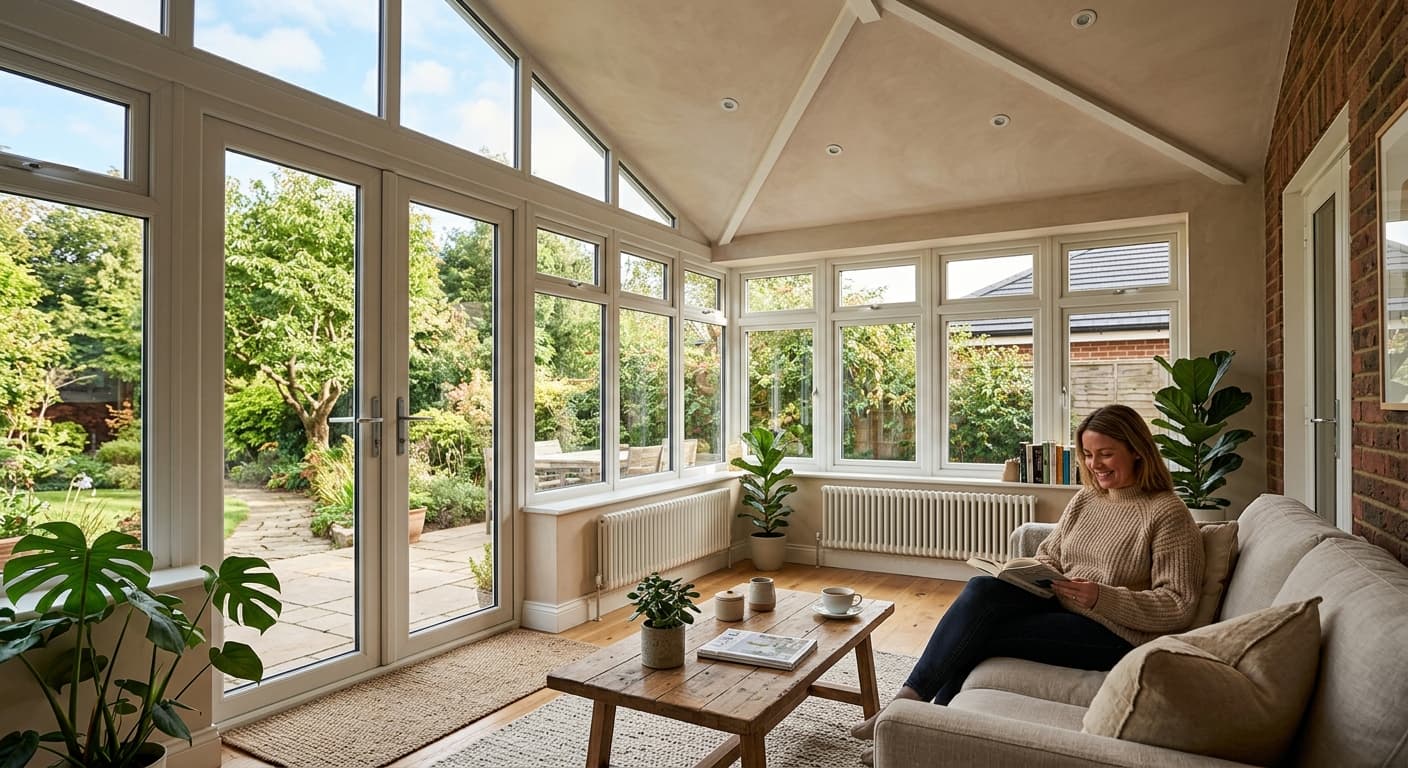
The UK conservatory market is experiencing a significant shift as thousands of homeowners replace tired polycarbonate and glass roofs with modern tiled and hybrid alternatives. Recent data from the Glass and Glazing Federation suggests that conservatory roof replacement now accounts for over 40% of all conservatory-related work undertaken in 2024, overtaking new installations for the first time since records began.
This trend reflects a growing recognition that replacing an outdated conservatory roof offers better value than demolishing and rebuilding entirely. With energy costs remaining high and Building Regulations becoming increasingly stringent, the focus has shifted from simply adding space to creating genuinely usable, thermally efficient rooms.
Key Takeaways
- Conservatory roof replacement typically costs £3,500–£7,500 for a standard 3m x 4m structure, significantly less than a full rebuild
- Tiled roofs offer superior thermal performance but require structural assessment; glass roofs provide better light transmission but can struggle with solar gain
- Planning permission is rarely needed for replacement roofs if maintaining existing footprint and height, though Building Regulations approval is mandatory
- Modern replacement roofs can reduce heating costs by up to 60% compared to polycarbonate alternatives
- Consider garden rooms or orangeries if your existing conservatory structure cannot support heavier roofing materials
Why the Conservatory Roof Replacement Boom?
We've seen a dramatic uptick in enquiries to conservatories specialists listed on HouseJester, with roof replacement projects dominating the conversation. The reasons are straightforward: older conservatories with polycarbonate or single-glazed roofs are uncomfortable for much of the year, too hot in summer and freezing in winter.
The introduction of lightweight tiled roof systems around 2010 created a viable alternative to complete demolition. Products from manufacturers like Ultraframe, Guardian Warm Roof, and Equinox have matured significantly, offering U-values as low as 0.15 W/m²K—comparable to a properly insulated house roof.
Prices have become more competitive too. According to our analysis of businesses in our directory, the typical cost for a tiled conservatory roof replacement ranges from £3,500 for a small lean-to to £8,000+ for a larger Edwardian or Victorian design. That's substantially less than the £15,000–£30,000 you'd spend on a complete replacement structure.
Conservatory Roof Replacement: Tiles vs Glass
The debate between conservatory roof replacement tiles vs glass remains one of the most common questions we encounter from homeowners. Both options have distinct advantages depending on your priorities.
Tiled Replacement Roofs
Tiled roofs (more accurately, insulated panel systems with tile-effect cladding) deliver exceptional thermal performance. The sandwich construction typically includes 100mm+ of insulation between aluminium or composite panels, topped with lightweight tiles or slate effect finishes.
Advantages include:
- Superior insulation values (U-values of 0.15–0.18 W/m²K)
- Elimination of solar gain issues that plague glass roofs
- Reduced noise from rain and hail
- Traditional aesthetic that often enhances property value
- Compatibility with integrated LED lighting and speakers
The downsides? Reduced natural light—though this is mitigated by including glazed panels or roof lanterns—and structural considerations. Your existing conservatory frame may require strengthening to support the additional weight, typically adding £800–£2,000 to the project cost.
Glass Replacement Roofs
Modern glass roofs bear little resemblance to the single-glazed panels of the 1990s. Contemporary systems use high-performance double or triple glazing with solar-control coatings, argon gas fills, and warm-edge spacers.
Benefits include:
- Maximum natural light transmission
- Lighter weight, often compatible with existing frames
- Self-cleaning coatings reduce maintenance
- Contemporary aesthetic
The persistent challenge remains managing conservatory too hot in summer solutions. Even with solar-control glass, south-facing conservatories can overheat. Blue-tinted solar glass (typically adding £500–£1,200 to the project) helps but doesn't eliminate the problem. We recommend combining glass roofs with external shading, good ventilation, and possibly air conditioning if you're serious about year-round use.
Glass replacement roofs typically cost £4,000–£9,000 depending on size and specification, roughly comparable to tiled alternatives.
How Much Does a Conservatory Cost in the UK?
Looking beyond roof replacements, understanding how much does a conservatory cost UK 2025 provides useful context for deciding between repair and replacement.
Current market rates for new conservatories:
- Lean-to conservatory: £8,000–£16,000 for a basic 3m x 3m uPVC structure
- Victorian/Edwardian conservatory: £12,000–£22,000 for a standard 4m x 3m design
- Gable-fronted conservatory: £15,000–£28,000 depending on size and glazing specification
- Bespoke hardwood or aluminium: £20,000–£50,000+
Pricing in London typically runs 15–25% higher than the national average, with premium installers charging even more. We've seen quotes in Manchester and Birmingham come in notably lower for comparable specifications.
These figures explain why roof replacement remains attractive. Spending £5,000 to transform an existing £15,000 conservatory makes more financial sense than demolishing and starting from scratch.
Read our complete guide to conservatory buying guide UK for comprehensive advice on choosing the right option for your home.
What Is the Difference Between an Orangery and Conservatory?
As conservatory roof replacement projects become more sophisticated, the line between conservatories and orangeries blurs. Many homeowners now ask about orangery vs conservatory price comparison when considering their options.
An orangery typically features:
- More brickwork or masonry than glazing (often 50% solid walls)
- A flat roof perimeter with a central glazed lantern
- Integrated columns or pilasters
- A more substantial, permanent appearance
Conservatories traditionally have:
- Predominantly glazed walls (typically 75%+ glass)
- Full glass or polycarbonate roofs, or modern tiled alternatives
- Lighter frame construction
- Faster installation
Price-wise, orangeries command a premium. Expect to pay £18,000–£35,000 for a modest orangery versus £12,000–£22,000 for an equivalent conservatory. The thermal performance advantages of an orangery's solid walls often justify the cost difference for year-round living spaces.
Interestingly, fitting a tiled replacement roof to a traditional conservatory creates a hybrid that shares many characteristics with an orangery—substantial insulated roof, excellent thermal performance—at a fraction of the cost. It's a popular approach among our listed businesses.
Do I Need Planning Permission for a Conservatory?
Garden room planning permission rules UK can be complex, but conservatory roof replacements generally fall under simpler regulations.
For roof replacement projects specifically, you typically don't need planning permission if:
- The replacement roof doesn't exceed the height of the existing structure
- You maintain the existing footprint
- The conservatory itself was built under permitted development rights
- The property isn't listed or in a conservation area
However, you do need Building Regulations approval for any roof replacement that alters the thermal envelope of the building. This covers structural adequacy, thermal performance, ventilation, and glazing safety standards.
Reputable installers handle Building Regulations submissions as part of their service. The process typically costs £300–£600 in fees and requires structural calculations if you're installing a heavier tiled roof. Upon completion, you'll receive a Building Control certificate—essential for future property sales.
For new conservatory installations, permitted development allows structures up to 4 metres high (or 3 metres if within 2 metres of a boundary) without planning permission, provided they:
- Don't exceed 50% of the original garden area
- Are single-storey
- Use appropriate materials
Always check with your local authority before proceeding, especially in conservation areas where permitted development rights may be restricted.
Solving the Overheating Problem
Beyond replacement, several conservatory too hot in summer solutions deserve consideration:
Solar control film: Retrofit tinting costs £300–£800 for a typical conservatory and blocks up to 80% of solar heat. The downside is reduced winter light.
External shading: Exterior blinds or awnings prevent solar gain before it penetrates the glass. Budget £1,500–£4,000 for motorised systems.
Ventilation upgrades: Adding roof vents or upgrading to automated ventilation systems improves air circulation. Costs range from £200 for manual vents to £1,500+ for solar-powered automated systems.
Air conditioning: Split-system air conditioning units cost £1,200–£2,500 installed and provide heating in winter too. Running costs are significant though—expect £200–£400 annually for typical use.
Strategic planting: Deciduous trees or climbing plants on south-facing aspects provide summer shade whilst allowing winter sun through. The slowest solution but often the most attractive.
Our experience working with UK tradespeople suggests that combining a tiled replacement roof with improved ventilation delivers the best results for problematic conservatories. The transformation is genuinely dramatic—spaces that were unusable six months of the year become comfortable year-round.
Choosing the Right Installer
The conservatory and glazing sector includes everyone from national franchises to local one-person operations. We've compiled verified businesses across the UK in our directory to help homeowners compare options.
Look for installers who:
- Are members of FENSA, CERTASS, or Competent Person Schemes (ensures Building Regulations compliance)
- Offer insurance-backed guarantees (typically 10 years for structures, 5 years for components)
- Provide detailed written quotations breaking down materials and labour
- Can show previous examples of similar roof replacement projects
- Include Building Regulations submission in their pricing
Beware of pressure selling tactics. Legitimate businesses won't demand immediate decisions or offer suspiciously large "today only" discounts.
Prices vary considerably. We've seen quotes for identical specifications differ by 40% or more. Always obtain at least three quotations, but don't automatically choose the cheapest—quality of materials and installation matters enormously for longevity.
Browse conservatories specialists on HouseJester to find vetted installers in your area. If you're a conservatory business looking to reach more customers, list your business on our platform.
The Future of Conservatory Design
The conservatory market continues evolving. We're seeing increased interest in:
- Hybrid structures that blend conservatory glazing with garden room solid construction
- Aluminium frames replacing uPVC for slimmer sightlines and contemporary aesthetics
- Smart glass that can switch between transparent and opaque states
- Integrated technology including underfloor heating, integrated speakers, and automated blinds
The planning system may change too. The government's ongoing review of permitted development could affect what homeowners can build without planning permission, potentially simplifying or complicating the process depending on final recommendations.
One trend seems certain: the era of poorly insulated, uncomfortable conservatories is ending. Modern replacement roofs, improved glazing technology, and stricter Building Regulations mean new and refurbished conservatories perform far better than their predecessors.
For homeowners with existing conservatories, roof replacement offers a cost-effective path to creating genuinely usable space. For those planning new installations, the message is clear: invest in proper thermal performance from the start. The modest additional cost pays back rapidly in comfort and reduced energy bills.
Whether you're replacing, renovating, or installing new, take time to research thoroughly, obtain multiple quotations, and choose installers carefully. The right conservatory or garden room adds significant value and enjoyment to your home. The wrong one becomes an expensive liability.
Explore our browse all categories to find related specialists including fitted kitchens if you're planning a broader home improvement project.
Sources & Further Reading
- Glass and Glazing Federation: Consumer Guides - Industry body providing technical standards and consumer advice
- Planning Portal: Conservatories & Permitted Development - Official government guidance on planning requirements
- Which?: Conservatory Buying Guide - Independent consumer advice and price comparisons
This article was created with AI assistance and reviewed by the HouseJester editorial team for accuracy and relevance.