
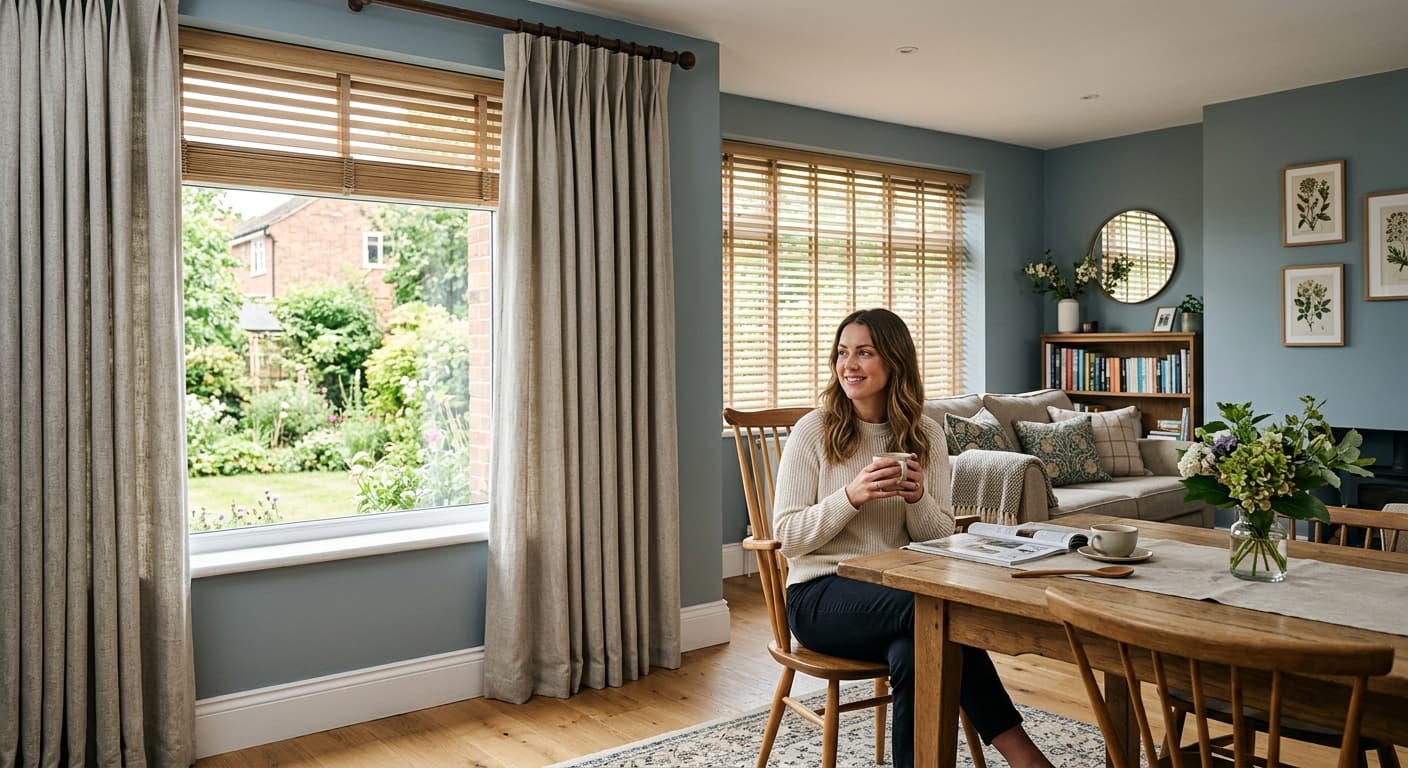
Choosing the right window treatments can transform a room's appearance whilst dramatically improving energy efficiency and privacy. This comprehensive curtains and blinds guide UK homeowners can trust covers everything from selecting fabrics to understanding cost differences, helping you make informed decisions that suit your budget and lifestyle.
Key Takeaways
- Made to measure curtains typically cost £80-£250 per window versus £20-£80 for ready-made, but offer superior fit and finish
- Thermal curtain linings can reduce heat loss by up to 25%, making them essential for UK homes aiming to meet Building Regulations Part L energy efficiency standards
- Roman blinds suit period properties and formal rooms, whilst roller blinds excel in contemporary spaces and moisture-prone areas like bathrooms
- Curtains should puddle (1-2cm on the floor), kiss (just touch), or float (1-2cm above) depending on fabric type and room function
- Choosing the right upholstery fabric durability rating prevents costly replacements, with ratings of 25,000+ rubs recommended for high-traffic family homes
Made to Measure Curtains vs Ready Made: Understanding the Cost
The debate between bespoke and off-the-shelf window treatments boils down to budget, window dimensions, and quality expectations. We've analysed pricing across businesses in our soft furnishings directory to provide realistic cost comparisons.
Ready-made curtains from high street retailers like John Lewis, Dunelm, or Next Home typically range from £20-£80 per pair for standard sizes (typically 168cm x 183cm or 228cm x 228cm). They're ideal for rental properties or temporary solutions but rarely fit perfectly.
Made to measure curtains present a different value proposition entirely. Expect to pay £80-£150 per window for mid-range fabrics, rising to £200-£400 for luxury materials like velvet or heavyweight linen. London specialists often charge 20-30% more than regional providers, though the quality gap has narrowed considerably in recent years.
The made to measure curtains vs ready made cost comparison becomes more favourable when you factor in longevity. Bespoke curtains typically last 10-15 years versus 3-5 years for ready-made equivalents, making the per-year cost surprisingly competitive. Our experience working with UK tradespeople suggests that homeowners planning to stay in their property for more than five years should seriously consider made to measure options.
How Much Do Made to Measure Curtains Cost?
Pricing for bespoke curtains varies enormously based on fabric choice, lining options, header styles, and regional location. Here's what you can realistically expect to pay in 2024:
Budget range (£80-£120 per window):
- Basic cotton or polyester fabrics
- Standard pencil pleat or eyelet headings
- Single lining or blackout lining
- Suitable for bedrooms and secondary rooms
Mid-range (£120-£250 per window):
- Quality linens, cotton blends, or lighter wools
- Pinch pleat or goblet headings
- Thermal interlining plus lining
- Ideal for reception rooms and main bedrooms
Premium range (£250-£500+ per window):
- Luxury fabrics including silk, velvet, or designer prints
- Hand-finished headings and detailing
- Multiple linings including bump or domette interlining
- Perfect for period properties or statement rooms
These prices typically include fabric, making, and basic fittings but exclude poles, tracks, and installation. Professional fitting adds £50-£150 depending on complexity and location. Birmingham and Manchester pricing tends to sit 10-15% below London rates whilst maintaining comparable quality standards.
What Curtain Fabric Is Best for Insulation?
Energy efficiency has become paramount for UK homeowners facing rising heating costs and stricter Building Regulations Part L requirements. The Energy Saving Trust estimates that proper window treatments can reduce heat loss through windows by up to 25%.
The best curtain fabrics for insulation UK homes need aren't necessarily the heaviest. Effectiveness depends on three factors: fabric density, lining quality, and how well the curtain seals around the window.
Top performing fabrics for thermal efficiency:
- Heavy cotton or linen (450-600gsm): Natural fibres with tight weaves create excellent barriers. Prices range from £25-£60 per metre.
- Wool or wool blends: Outstanding natural insulators that regulate moisture. Expect to pay £40-£90 per metre.
- Velvet (cotton or synthetic): The pile structure traps air effectively. Cotton velvet costs £35-£75 per metre, whilst synthetic versions start around £20.
- Thermal-backed fabrics: Purpose-designed materials with foam or acrylic backings. Available from £18-£40 per metre.
Fabric alone tells only half the story. The how to choose curtain lining types decision significantly impacts thermal performance. Standard cotton lining adds minimal insulation, whilst thermal or blackout linings create genuine energy savings. Interlining (bump or domette) inserted between fabric and lining delivers the best results, creating a layered barrier that traps air.
Full-length curtains that extend beyond the window frame by 15-20cm on each side prevent heat escaping around edges. Curtain pelmets or tracks with returns (L-shaped ends) further improve performance by sealing the top gap where warm air typically escapes.
Should Curtains Touch the Floor?
This seemingly simple question divides interior designers, but practicality should guide your decision. We recommend three approaches depending on room function and fabric type:
Floating (1-2cm above floor): Ideal for kitchens, bathrooms, and utility rooms where moisture and dirt accumulation pose problems. Also sensible for high-traffic hallways or homes with pets. This approach works particularly well with roller or roman blind vs roller blind comparison installations where fabric sits closer to the window.
Kissing (just touching): The safe middle ground that suits most homes. Curtains barely graze the floor, creating a tailored appearance without puddling fabric that collects dust. Perfect for lightweight linens, cotton blends, and contemporary interiors. This length also simplifies cleaning—you can vacuum underneath without moving furniture.
Puddling (1-2cm pooled on floor): Reserved for formal reception rooms, period properties, and luxury bedrooms. Heavy fabrics like velvet, silk, or interlined wool create elegant puddles that add drama and grandeur. The downside? They're dust magnets and impractical in family homes with children or pets.
Measure from the track or pole to your desired floor position, then add 15cm for hems and adjustments. Professional makers always include this tolerance, but ready-made curtains offer limited flexibility. If your ceiling height falls between standard ready-made sizes, made to measure becomes the only viable option for achieving the correct finish.
Roman Blinds vs Roller Blinds: Choosing the Right Style
Both window treatments offer distinct advantages, and the roman blind vs roller blind comparison often comes down to aesthetic preferences and practical requirements.
Roman blinds create horizontal folds when raised, offering a softer, more traditional appearance. They suit period properties, country interiors, and rooms where you want fabric to feature as a design element. Expect to pay £120-£300 for made to measure roman blinds in mid-range fabrics.
Advantages include:
- Luxurious appearance suitable for reception rooms
- Wide fabric choice including patterns and heavy materials
- Excellent light control when fully lowered
- Can be lined and interlined for insulation
Disadvantages:
- More expensive than roller blinds (typically 30-50% higher)
- Require more maintenance due to folding mechanisms
- Less suitable for moisture-prone areas
- Deeper stack height when raised (15-30cm)
Roller blinds offer streamlined functionality that complements contemporary interiors. They're moisture-resistant, easy to clean, and available in blackout, dimout, or translucent fabrics. Prices range from £40-£150 for made to measure versions in standard fabrics.
Advantages include:
- Compact design ideal for small windows or shallow reveals
- Perfect for bathrooms, kitchens, and modern spaces
- Lower cost and simpler mechanisms
- Easy to operate and maintain
- Some fabrics meet fire safety standards for commercial use
Disadvantages:
- Limited fabric choices compared to curtains or romans
- Can look stark in traditional settings
- Less effective at insulation without side channels
- Cheaper mechanisms may fail within 3-5 years
Our team has found that many homeowners benefit from combining both types: roller blinds for privacy and light control with curtains over the top for aesthetics and insulation. This layered approach maximises flexibility whilst creating depth and interest.
Understanding Curtain Lining Types
Lining transforms curtains from decorative panels into functional elements that protect fabrics, improve insulation, and control light. The how to choose curtain lining types decision depends on room requirements and budget constraints.
Standard cotton lining (£4-£8 per metre): Basic protection that extends fabric life by shielding it from UV damage. Adds minimal weight or insulation but sufficient for lightweight curtains in low-priority rooms.
Blackout lining (£8-£15 per metre): Essential for bedrooms, home cinemas, or shift workers needing daytime darkness. Modern blackout linings use 2-3 pass technology (multiple coating layers) to block 100% of light. White or cream options prevent the grey appearance that older blackout materials created.
Thermal lining (£10-£18 per metre): Purpose-designed for energy efficiency, featuring acrylic foam or aluminium coating that reflects heat back into rooms. The Energy Saving Trust confirms that thermal linings reduce window heat loss by 15-25%, making them worthwhile investments for draughty period properties or single-glazed windows.
Interlining (bump or domette) (£6-£12 per metre): Inserted between face fabric and lining to create the ultimate luxury finish. Bump (brushed cotton) adds body and insulation, whilst domette (flannel-type material) offers similar benefits at lower cost. Interlining makes curtains hang beautifully and dramatically improves sound absorption—valuable for rooms facing busy roads.
Professional curtain makers in our directory typically recommend thermal lining for main reception rooms and bedrooms, with interlining reserved for properties where energy bills and comfort justify the 40-60% cost premium.
Upholstery Fabric Durability: Making Sense of the Numbers
Upholstery fabric durability ratings explained through the Martindale test—the industry-standard abrasion resistance measurement. A mechanical arm rubs fabric samples in figure-of-eight patterns until two threads break, with the number of rubs indicating durability.
Understanding Martindale ratings:
- 0-10,000 rubs: Delicate fabrics suitable only for decorative cushions or occasional chairs
- 10,000-15,000 rubs: Light domestic use in low-traffic guest bedrooms
- 15,000-25,000 rubs: General domestic use for dining chairs and secondary seating
- 25,000-30,000 rubs: Heavy domestic use—family sofas, breakfast bar stools, daily-use furniture
- 30,000+ rubs: Intensive commercial-grade fabrics for contract use or homes with pets and young children
Most high street retailers don't prominently display Martindale ratings, but specialist upholstery suppliers and businesses listed on HouseJester typically provide this information. For family sofas expecting daily use, we strongly recommend fabrics rated 25,000+ rubs minimum.
Natural versus synthetic fibres present different durability profiles. Wool rates highly for resilience and recovery (bouncing back after compression), typically achieving 20,000-40,000 rubs. Cotton performs moderately at 10,000-25,000 rubs but excels at breathability and comfort. Polyester and solution-dyed acrylics can exceed 50,000 rubs whilst resisting staining and fading.
Leather and faux leather sidestep Martindale testing entirely, using different metrics for tear strength and surface abrasion. Quality leather improves with age, whilst faux leather (polyurethane or PVC) typically lasts 5-8 years before cracking or peeling—a crucial consideration when comparing price points.
Finding the Right Soft Furnishings Specialist
The UK soft furnishings market ranges from one-person operations working from home workshops to established firms with showrooms and installation teams. According to businesses listed on HouseJester, finding the right supplier involves assessing three key factors:
Portfolio and specialisation: Review completed projects similar to your requirements. Period property curtains require different skills than contemporary blind installations. Ask for local references you can visit—seeing fabric quality and workmanship firsthand beats photos every time.
Consultation process: Reputable specialists offer home consultations (often free within reasonable travel distances) where they assess windows, discuss lifestyle requirements, and present fabric samples in your actual lighting conditions. This service distinguishes professionals from online-only retailers.
Pricing transparency: Detailed quotes should itemise fabric, making, hardware, and installation costs separately. This breakdown helps you understand where money goes and identify potential savings. Some suppliers offer supply-only options if you're confident handling installation yourself—curtain poles and tracks rarely require professional fitting unless dealing with bay windows or complex arrangements.
You can browse all categories on HouseJester to compare specialists across different regions, or search our company directory to find providers near you. Many soft furnishing businesses also offer related services, so it's worth checking whether they can help with other projects you're planning.
Ready to Transform Your Windows?
Selecting curtains and blinds involves balancing aesthetics, functionality, and budget across multiple decisions—fabric types, lining options, measuring approaches, and installation methods. The investment ranges from £200-£500 for DIY ready-made solutions to £2,000-£5,000+ for professionally made and fitted treatments throughout a typical three-bedroom home.
Start by prioritising rooms based on usage and visibility. Reception rooms and main bedrooms justify higher investment in made to measure curtains with quality linings, whilst secondary bedrooms and home offices work perfectly well with ready-made solutions or simple roller blinds.
Measure carefully, request multiple quotes, and don't hesitate to ask suppliers about fabric performance characteristics—any reputable professional will happily discuss Martindale ratings, thermal properties, and maintenance requirements.
Browse soft furnishings businesses on HouseJester to find specialists in your area. Our directory includes verified suppliers across the UK, from independent curtain makers to established blind specialists. If you're a soft furnishings professional looking to reach more customers, you can list your business on our platform.
Sources & Further Reading
- Energy Saving Trust - Energy Efficient Windows - Official guidance on reducing heat loss through windows
- Which? - How to Buy Curtains and Blinds - Independent consumer advice on selecting window treatments
- British Blind and Shutter Association - Trade association representing UK blind manufacturers and retailers
This article was created with AI assistance and reviewed by the HouseJester editorial team for accuracy and relevance.