
On this page
Transforming a room from bland to beautiful often comes down to the details. Mastering cushion and throw styling is one of the quickest ways to refresh your space without breaking the bank. But soft furnishings extend far beyond scatter cushions — curtains, blinds, upholstery fabrics, and textile choices can dramatically impact both the aesthetics and functionality of your home.
Key Takeaways
- Cushion arrangements work best in odd numbers (3, 5, or 7) with varying sizes and textures for visual interest
- Made to measure curtains typically cost £150-£400 per window compared to £30-£100 for ready-made, but offer superior fit and insulation
- Thermal-lined curtains can reduce heat loss by up to 25%, according to the Energy Saving Trust
- Upholstery fabrics are rated by martindale rub counts — aim for 25,000+ for high-traffic areas
- Layer different soft furnishing elements (curtains, cushions, throws, rugs) to create depth and warmth
The Art of Cushion and Throw Styling
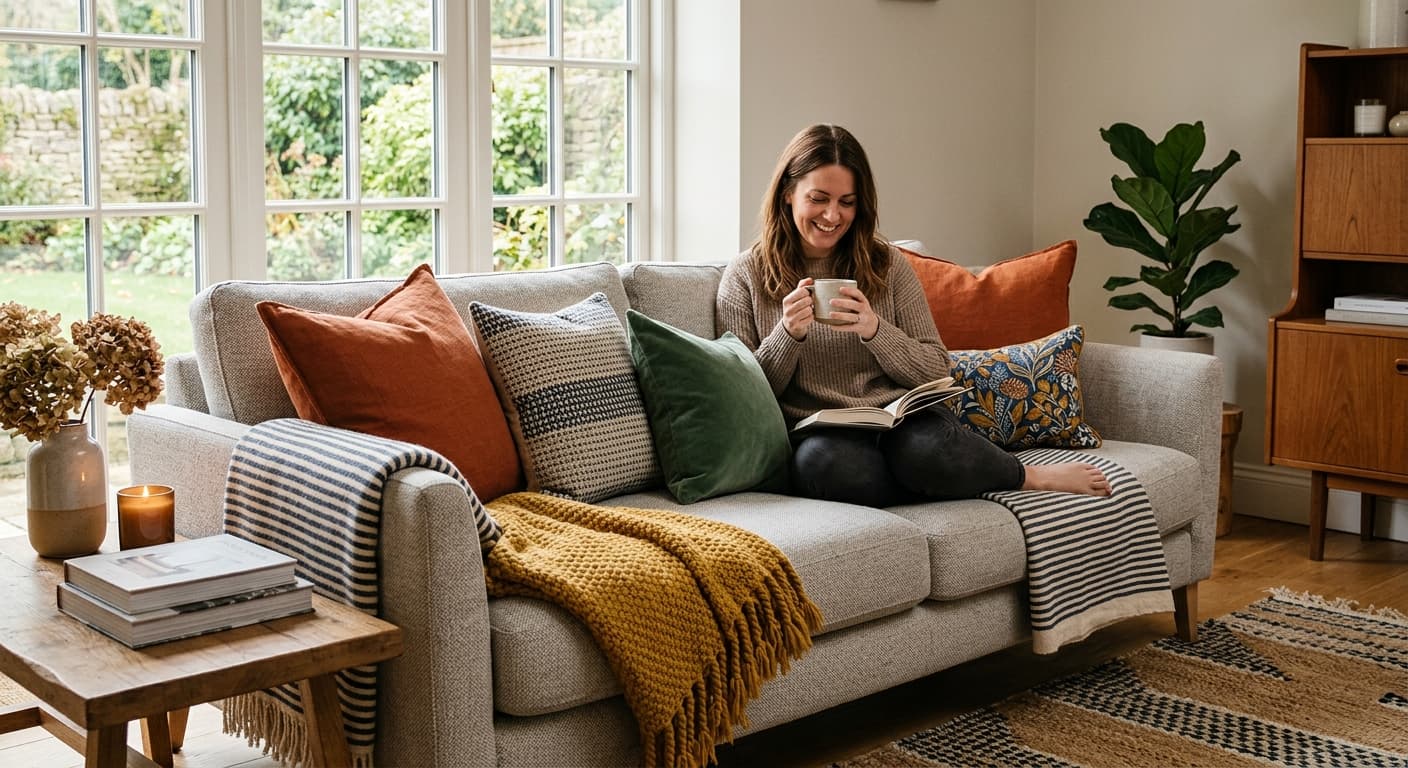
The golden rule? Odd numbers create visual harmony. We've seen countless homes transformed by simply arranging three cushions instead of two, or layering five different textures across a sofa.
Start with your largest cushions at the back (typically 50-60cm square), then layer medium sizes (40-45cm) in front, finishing with smaller accent cushions or bolsters. Mix patterns confidently — combine one large-scale print, one geometric, and one textured solid for a designer look without the designer price tag.
Throws deserve equal attention. Drape them asymmetrically over sofa arms rather than folding them militarily across the back. Cashmere and merino wool blends (expect to pay £80-£200 from retailers like John Lewis or The White Company) offer superior warmth and longevity compared to acrylic alternatives.
For sourcing quality soft furnishings, our directory includes specialists who can create bespoke pieces tailored to your exact requirements.
How Much Do Made to Measure Curtains Cost?
This question dominates homeowner searches, and the answer varies considerably across the UK. Understanding the made to measure curtains vs ready made cost comparison helps you budget appropriately.
Ready-made curtains from B&Q, Dunelm, or IKEA typically range from £30-£100 per pair for standard window sizes. They're fine for rental properties or temporary solutions, but rarely fit perfectly and often compromise on fabric quality.
Made to measure curtains start around £150 per window for basic fabrics and simple headings, rising to £300-£400 for mid-range designer fabrics with thermal linings. Expect to pay £500-£800 per window for premium fabrics like silk or heavyweight velvets with interlined construction.
London pricing runs approximately 20-30% higher than national averages. We've seen quotes in Chelsea and Kensington reaching £1,000+ per window for full-service installations with hand-sewn details.
The investment makes sense when you consider longevity. Quality made to measure curtains last 15-20 years with proper care, compared to 3-5 years for ready-made alternatives. The superior fit also delivers better insulation and light control — crucial for meeting Building Regulations Part L requirements in new builds and extensions.
What Curtain Fabric Is Best for Insulation?
The Energy Saving Trust confirms that well-fitted, thermally-lined curtains can reduce heat loss through windows by up to 25%. That's significant in a UK climate where heating costs dominate household budgets.
When exploring best curtain fabrics for insulation UK homeowners should consider:
Heavyweight natural fabrics like wool, velvet, and thick cotton inherently trap air better than synthetic alternatives. Look for fabrics weighing 300gsm or higher.
Thermal or blackout linings add an insulating layer between the fabric and the window. Interlining (a thick blanket-like layer sewn between the face fabric and lining) offers the best performance but adds £80-£150 per window to costs.
Cellular or honeycomb fabrics create air pockets that resist heat transfer. These work particularly well for blinds in conservatories or south-facing rooms.
The British Blind and Shutter Association recommends combining curtains with secondary glazing or cellular blinds for maximum energy efficiency in single-glazed properties — particularly relevant for period homes where replacing windows isn't feasible.
Understanding how to choose curtain lining types impacts both performance and price. Standard cotton linings cost around £15-£25 per metre, whilst thermal or blackout linings add £10-£15 per metre to material costs. Bump interlining (the heavyweight option) adds another £12-£20 per metre but transforms curtains into genuine thermal barriers.
Should Curtains Touch the Floor?
Absolutely — and ideally puddle slightly. This isn't just aesthetic preference; it's practical.
Curtains that hover 2-3 inches above the floor look unfinished and create gaps that allow cold air to circulate around window areas. For optimal insulation and a polished appearance, curtains should either just kiss the floor or puddle 2-5cm.
The "break" style — where curtains gently touch the floor without excess fabric — suits contemporary interiors and minimises dust collection. The "puddle" style creates luxury and drama but requires more frequent cleaning, making it better suited to formal sitting rooms than kitchens.
Full-length curtains also make rooms appear taller. Mount curtain poles or tracks as close to the ceiling as possible, ideally 15-20cm above the window frame, to maximise this effect.
For practical spaces like bathrooms or kitchens, sill-length curtains (finishing 1cm below the sill) make more sense. Just ensure they're properly weighted to hang straight.
Roman Blind vs Roller Blind Comparison
Blinds offer sleek alternatives to curtains, particularly in kitchens, bathrooms, and contemporary spaces. The roman blind vs roller blind comparison hinges on aesthetics, functionality, and budget.
Roman blinds create soft, horizontal folds when raised. They suit both traditional and contemporary interiors, work beautifully in dining rooms and bedrooms, and can be lined or interlined for insulation. Expect to pay £120-£300 per window for made to measure romans in quality fabrics.
The downside? More moving parts mean more maintenance. Cords and mechanisms can fail after 5-8 years, particularly in moisture-prone areas like bathrooms. Cleaning is complex — most require professional dry cleaning.
Roller blinds offer simplicity and durability. They suit kitchens, bathrooms, and minimalist spaces perfectly. Made to measure roller blinds cost £80-£200 per window, and many fabrics can be wiped clean — essential near sinks or cookers.
Modern roller blinds come with moisture-resistant fabrics, blackout options, and even smart home integration. The Louvolite and Luxaflex ranges available through specialists listed in our company directory offer five-year mechanisms warranties.
For insulation, cellular or honeycomb blinds outperform both romans and rollers. Available in various cell depths, they trap air effectively and look remarkably contemporary. Prices start around £150 per window for made to measure options.
Many homeowners combine solutions — installing roller or venetian blinds for privacy and light control, then adding curtains for warmth and softness. This layered approach works particularly well in Birmingham and Manchester properties where maximising insulation matters year-round.
Understanding Upholstery Fabrics
Reupholstering furniture costs £400-£1,200 for a standard armchair and £800-£2,500 for a three-seater sofa, making fabric choice crucial. Getting upholstery fabric durability ratings explained helps avoid expensive mistakes.
The martindale rub test measures abrasion resistance — essentially how long before fabric wears through. Here's what the numbers mean:
- 10,000-15,000 rubs: Light domestic use only (occasional bedroom chairs)
- 15,000-25,000 rubs: General domestic use (dining chairs, moderate-use sofas)
- 25,000-30,000 rubs: Heavy domestic or light contract use (family sofas, home offices)
- 30,000+ rubs: Heavy contract use (commercial settings, extremely high-traffic homes)
For family sofas with children or pets, we recommend minimum 25,000 martindale ratings. Fabrics like performance velvets, tight-weave linens, and synthetic blends typically meet this threshold whilst offering stain resistance.
Natural fabrics like wool, cotton, and linen breathe better and age more gracefully than polyester, but require more careful maintenance. Crypton and similar performance fabrics combine natural aesthetics with synthetic durability — worth the 20-30% price premium for high-traffic pieces.
The Association of Master Upholsterers and Soft Furnishers (AMUSF) provides a searchable directory of qualified professionals who can advise on appropriate fabrics for your specific needs. Many businesses in our soft furnishings category are AMUSF members, ensuring professional standards.
Layering for Impact
Professional interior designers know that layering different soft furnishing elements creates depth and interest. Start with your largest pieces (curtains or blinds), add upholstered furniture, then layer cushions, throws, and rugs.
Texture matters more than colour matching. Combine smooth silks with nubby linens, sleek velvets with chunky knits. This approach works across all design styles — from country cottages to urban apartments.
Don't forget often-overlooked elements like door curtains (brilliant for draughty period properties), cushioned window seats, and fabric wall panels for acoustic control. These details distinguish thoughtfully designed homes from simply decorated ones.
For those seeking professional guidance, consider consulting specialists who can coordinate entire schemes. Many offer design services alongside their products, and you can browse all categories to find complementary services like interior designers or upholsterers.
Making It Work for Your Budget
Soft furnishings suit all budgets when approached strategically. Splurge on items you'll use daily (sofa upholstery, bedroom curtains) and economise on occasional-use spaces (guest bedrooms, home offices).
Mix high and low — pair Dunelm cushions with a John Lewis throw, or combine IKEA ready-made curtains with a made to measure blind. The contrast often creates more interest than matchy-matchy schemes.
Timing matters too. January sales at major retailers typically offer 30-50% discounts on soft furnishings. End-of-roll fabric remnants from specialists can save 40-60% on upholstery projects.
If you're a soft furnishing professional looking to reach more customers, consider how you can list your business on HouseJester to connect with homeowners actively searching for your services.
Finding the Right Specialist
Quality soft furnishing specialists combine technical expertise with design flair. Look for businesses offering:
- Free home consultations with fabric samples
- Clear written quotations breaking down labour and materials
- Evidence of professional accreditations (AMUSF, Guild of Master Craftsmen)
- Portfolio of completed projects similar to yours
- Transparent lead times (typically 4-8 weeks for made to measure curtains)
Local specialists often provide better value than national chains, particularly outside London. We've seen excellent work from independent makers charging £120-£180 per day labour compared to £200-£250 from larger companies.
Request fabric swatches to view at home in your actual lighting conditions before committing. Colours and textures appear dramatically different in showrooms versus north-facing living rooms.
Browse soft furnishing businesses on HouseJester to compare local specialists, read verified reviews, and request quotes from multiple providers. Our directory includes detailed profiles helping you find professionals whose style and pricing match your requirements.
Sources & Further Reading
This article was created with AI assistance and reviewed by the HouseJester editorial team for accuracy and relevance.
Written by
Sarah Mitchell
Interior Design Editor
Sarah has spent over 12 years covering UK interiors and design trends. She works closely with interior designers and soft furnishings specialists across the country to bring readers expert insights on creating beautiful, functional living spaces.
- Interior Design
- Soft Furnishings
- Paint & Wallpaper
- Lighting