
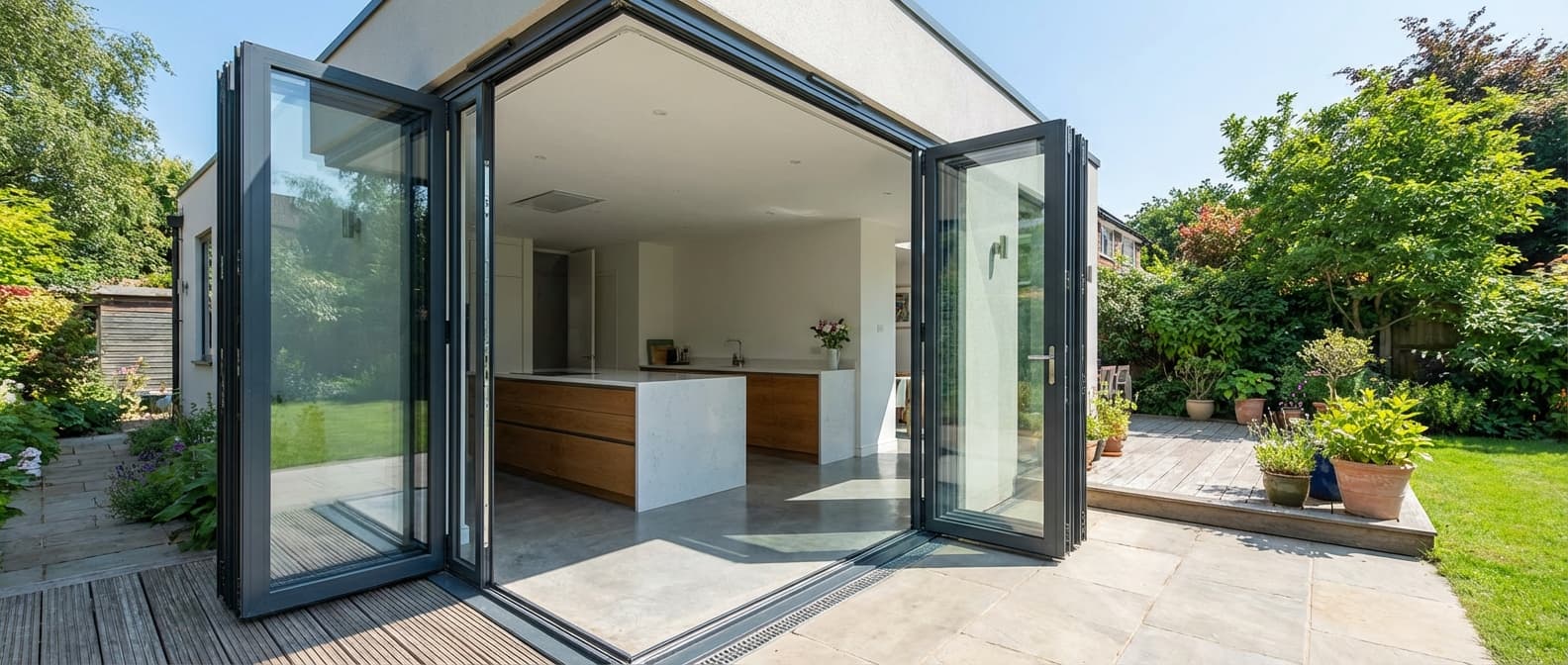
Doors and windows are among the most important elements of any home. They define the architectural character of a property, control natural light and ventilation, provide security and weather protection, and play a critical role in energy efficiency. Replacing or upgrading doors and windows is a significant investment that delivers both immediate aesthetic impact and long-term savings on energy bills.
The UK doors and windows market offers a wide range of materials, styles, and performance levels. For windows, the main options are UPVC (the most popular and affordable), aluminium (slimline, contemporary, highly durable), timber (traditional, beautiful, sustainable), and composite (combining materials for optimal performance). For doors, options include UPVC, composite, aluminium, timber, bi-fold, sliding, and French styles.
Energy performance is now the dominant factor in door and window specification. Under the 2026 Future Homes Standard, windows in new-build homes must achieve a minimum U-value of 1.2 W/m²K, with triple glazing becoming increasingly standard. For replacement windows in existing homes, Building Regulations Part L requires a U-value of 1.4 W/m²K or better. These requirements mean that outdated single-glazed or early double-glazed windows are increasingly urgent candidates for replacement.
Professional door and window companies offer site surveys, technical specification, manufacture to exact dimensions, and professional installation including making good internally and externally. Many also handle Building Regulations notifications, planning applications (for conservation areas and listed buildings), and FENSA or CERTASS certification — the legal requirement for replacement window installations.
HouseJester's directory features verified door and window companies across the UK. Browse, compare, and find the right specialist for your project.
Browse door and window companies on HouseJester
How Much Do Doors and Windows Cost in the UK?
| Product | Budget | Mid-range | Premium |
|---|---|---|---|
| UPVC window (standard) | £300 – £500 | £500 – £800 | £800 – £1,200+ |
| Aluminium window | £500 – £800 | £800 – £1,200 | £1,200 – £2,000+ |
| Timber window | £400 – £700 | £700 – £1,200 | £1,200 – £2,500+ |
| Composite front door | £800 – £1,200 | £1,200 – £2,000 | £2,000 – £4,000+ |
| Bi-fold doors (3-panel) | £2,000 – £3,500 | £3,500 – £6,000 | £6,000 – £10,000+ |
| Sliding patio doors | £1,500 – £3,000 | £3,000 – £5,000 | £5,000 – £8,000+ |
Prices include supply and professional installation. A full house window replacement (8-10 windows) costs £4,000-£8,000 UPVC, £7,000-£15,000 aluminium, or £6,000-£20,000+ timber.
What to Look For When Choosing a Door and Window Company
- FENSA or CERTASS registration — A legal requirement for companies installing replacement windows and doors in England and Wales.
- Energy ratings — Look for windows rated A+ or higher on the Window Energy Rating scale, with U-values of 1.4 W/m²K or better.
- Material expertise — Choose a company that specialises in your preferred material (UPVC, aluminium, timber).
- Security standards — Windows and doors should meet PAS 24 security standards. Look for Secured by Design accreditation.
- Guarantees — Expect 10-year guarantees on frames and 5-10 years on sealed units (against misting).
- Survey quality — A thorough site survey should check structural openings, lintels, and any access issues before quoting.
- Planning knowledge — For conservation areas and listed buildings, the company should understand planning requirements.
- Installation quality — Ask about installation methods, foam filling, internal plastering, and external finishing.
- Aftercare — Check the after-sales service — adjustments may be needed in the first year as the building settles.
- Reviews — Read reviews on HouseJester, focusing on product quality, installation neatness, and after-sales response.
Frequently Asked Questions
Is it worth upgrading from double to triple glazing?
Triple glazing offers improved thermal performance (U-values of 0.8-1.0 W/m²K vs 1.2-1.4 for standard double), better sound insulation, and reduced condensation. However, it costs 20-40% more than equivalent double-glazed units. The energy savings depend on your existing windows — upgrading from old double glazing yields modest savings, while replacing single glazing delivers substantial returns. Triple glazing is most worthwhile for north-facing rooms, bedrooms near busy roads (noise reduction), and new-build or whole-house renovation projects where it aligns with Future Homes Standard requirements.
Do I need planning permission to replace windows?
In most cases, no. Replacement windows are generally permitted development in England. However, you must obtain planning permission if your property is in a conservation area (materials and style may be restricted), if it is a listed building (Listed Building Consent is required), or if the replacement significantly alters the property's appearance. All replacement windows must comply with Building Regulations and be installed by a FENSA or CERTASS registered company (or you must apply for Building Control approval separately).
How long do UPVC windows last?
Quality UPVC windows last 20-30 years with minimal maintenance. Signs of ageing include yellowing or discolouration, warping, draughts around seals, and condensation between the panes (indicating sealed unit failure). Most manufacturers guarantee frames for 10 years and sealed units for 5-10 years. Modern UPVC formulations are more UV-resistant and durable than those used in the 1990s and early 2000s. Regular cleaning with warm soapy water and lubricating hinges and locks annually extends the lifespan. Sealed units can be replaced individually without replacing the entire frame.
What is the best front door material?
Composite doors are the most popular choice for UK front doors — they combine a solid core (polyurethane or timber), a GRP (fibreglass) skin, and high-security locking systems. They are extremely secure, well-insulated, weather-resistant, and available in a wide range of styles and colours. Timber doors offer unmatched traditional beauty but require periodic repainting or re-staining. Aluminium doors suit contemporary homes with their slim profiles and large glass panels. UPVC doors are the most affordable but lack the solidity and visual appeal of composite or timber.
How much can new windows save on energy bills?
Replacing old single-glazed windows with A-rated double glazing can save £100-£175 per year on heating bills according to the Energy Saving Trust. Replacing older double glazing (installed before 2002) with modern A-rated units saves £30-£60 per year. Triple glazing adds a further £10-£20 in savings over double glazing. The payback period for replacement windows is typically 15-25 years based on energy savings alone — but the additional benefits of improved comfort, reduced noise, enhanced security, and increased property value make the investment worthwhile beyond pure energy economics.
This article was created with AI assistance and reviewed by the HouseJester editorial team for accuracy and relevance.