
1. How much does a quality dining table cost in the UK?
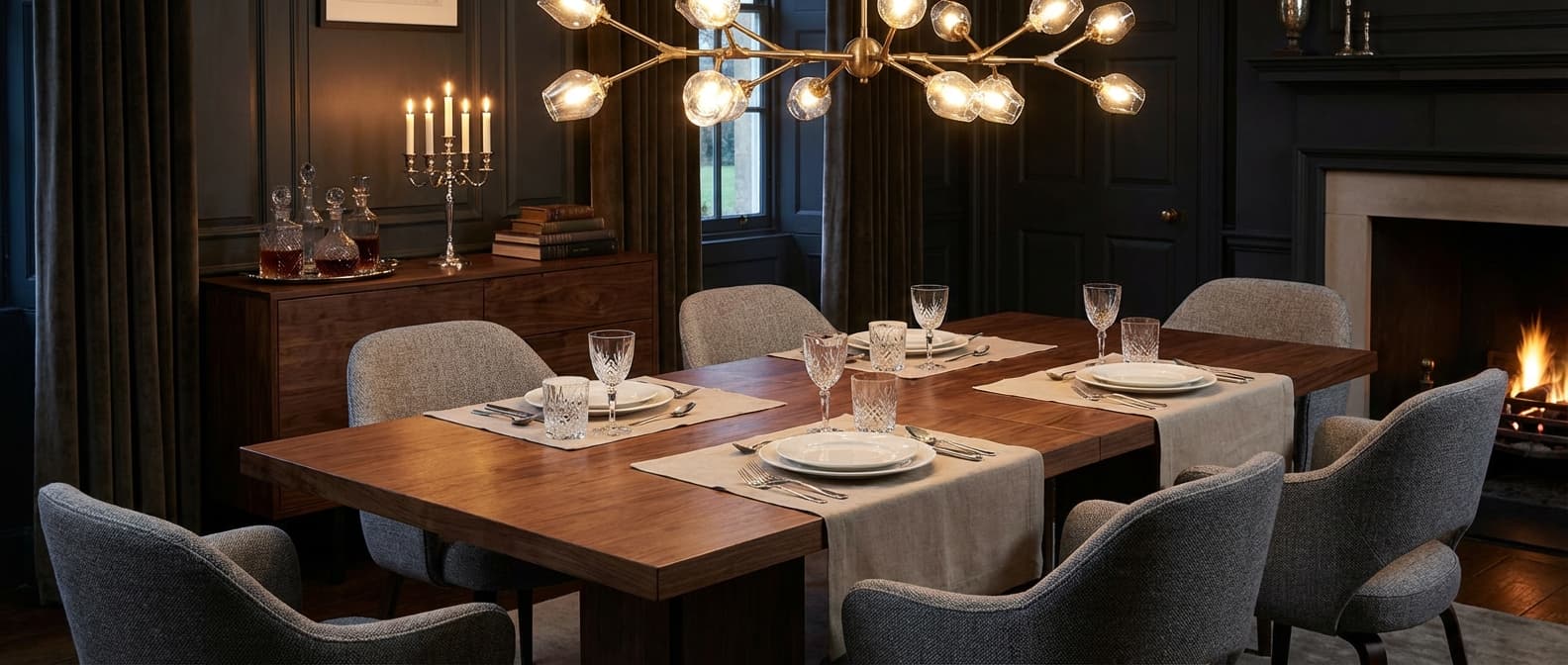
A quality dining table that seats 6 costs £500-£1,500 in the mid-range, where you can expect solid wood or high-quality veneered construction with a durable finish. Budget tables (£200-£500) are typically made from engineered wood or pine and may lack the durability for heavy daily use. Premium solid hardwood tables from specialist makers cost £1,500-£5,000+, with bespoke commissions reaching £8,000-£10,000 for large tables in premium timbers like walnut or live-edge oak. Chairs add significantly to the total — budget £100-£300 each for comfortable, well-made dining chairs. A complete dining set (table and 6 chairs) at a mid-range level typically costs £1,500-£4,000. Compare verified suppliers on HouseJester.
2. What is the best wood for a dining table?
Oak is the most popular choice in the UK — it is extremely durable, has a beautiful natural grain, and suits both traditional and contemporary settings. European oak is slightly finer-grained than American white oak. Walnut is prized for its rich, dark colour and sophisticated appearance but is softer than oak and more expensive. Ash is similar in durability to oak with a lighter, more contemporary look. Pine is affordable and charming for rustic styles but dents and scratches easily. Elm has distinctive grain patterns and is often used for farmhouse-style tables. For extreme durability, iroko and teak are excellent but more expensive. Whichever wood you choose, ensure it is properly kiln-dried (moisture content under 12%) to prevent warping.
3. Round or rectangular dining table — which is better?
Round tables encourage conversation because everyone faces each other at equal distance — ideal for smaller groups of 4-6. They work particularly well in square rooms and open-plan spaces as they create a softer visual flow. However, they become impractical above 150cm diameter (seating 8+) because the centre becomes unreachable. Rectangular tables are more space-efficient against walls, seat larger numbers more practically, and suit the proportions of most UK dining rooms. Oval tables offer a compromise — the social benefits of curves with better seating capacity. For families of 4-6 who value conversation, round is excellent. For regular entertaining of 8+, rectangular is more practical.
4. How do I choose comfortable dining chairs?
Seat height should be 28-30cm below the table surface (typically 44-46cm for a standard 75cm table). Seat depth should be 40-45cm — too deep and shorter guests will not reach the backrest comfortably. A slightly angled backrest (5-10 degrees) is more comfortable than perfectly upright. Padded seats significantly improve comfort for meals lasting over 30 minutes. Armchairs add comfort and elegance but require 10-15cm more width per seat and may not fit under the table when pushed in. Test chairs by sitting for at least 5 minutes — initial impressions can be misleading. Consider chairs with washable seat covers if you have young children.
5. Are extendable dining tables sturdy enough for regular use?
Modern extendable tables have improved significantly. The best extension mechanisms — such as butterfly leaves, synchronised slides, and hidden leaf systems — are smooth, stable, and virtually invisible when closed. Look for tables where the extension slides on metal runners rather than wood-on-wood, as these are smoother and more durable. When extended, the table should not wobble — test this in the showroom. The joint between the main table and extension is the potential weak point, so check the alignment and gap when extended. Quality extendable tables from reputable manufacturers are absolutely suitable for regular daily use and occasional extension for entertaining.
6. What is the ideal height for a dining table?
Standard dining table height is 73-76cm, which works with standard chair seat heights of 44-46cm. This provides approximately 28-30cm of clearance between the seat and the table surface, allowing comfortable leg room and natural arm positioning for eating. Bar-height tables (100-110cm) are used with bar stools (65-75cm seat height) for breakfast bars and informal dining areas. Counter-height tables (86-91cm) with counter stools (60-65cm) offer a middle ground. If family members are particularly tall or short, consider a table at the extremes of the standard range or a height-adjustable option.
7. How do I fit a dining table into a small room?
Choose a round or oval table — they accommodate more people in less space because there are no wasted corners. A round table of 100cm diameter seats 4 comfortably and fits a room as small as 2.8m x 2.8m. Drop-leaf tables fold down when not in use, converting from a full dining table to a slim console. Wall-mounted fold-down tables are ideal for very tight spaces — they provide a full dining surface during meals and fold flat against the wall afterwards. Benches instead of chairs save space as they tuck completely under the table. Glass-topped tables create an illusion of more space because you can see the floor through them.
8. How do I match dining furniture to an open-plan kitchen-diner?
The dining table should complement the kitchen without matching it exactly — a matching set can look showroom-like and lack personality. Instead, find common elements: if your kitchen has oak worktops, an oak dining table creates continuity; if your kitchen is modern with handleless cabinets, choose clean-lined dining furniture. Use dining chairs to introduce colour or texture that bridges the kitchen and living area — upholstered chairs in a colour drawn from your sofa cushions, for example. Maintain a consistent flooring material through both zones. The dining area should feel like a natural transition between cooking and relaxing spaces.
9. How do I care for a solid oak dining table?
For oiled oak tables: wipe up spills immediately with a dry cloth. Clean regularly with a damp cloth and mild soap, drying thoroughly. Apply maintenance oil (Osmo, Rubio Monocoat, or the manufacturer's recommended product) every 6-12 months — more frequently in high-use areas. Sand lightly with fine sandpaper (240-grit) before re-oiling if the surface feels rough. For lacquered oak tables: clean with a damp cloth and occasional furniture polish. Lacquered finishes are more stain-resistant but cannot be locally repaired — if the lacquer is damaged, the entire surface needs professional refinishing. Both finishes benefit from consistent use of placemats, coasters, and trivets.
10. Is it worth investing in a bespoke dining table?
A bespoke dining table is worth considering if you have unusual room dimensions that standard sizes do not suit, if you want a specific timber or finish that is not available off the shelf, or if you want a unique piece that becomes a family heirloom. Bespoke tables from independent furniture makers typically cost £1,500-£5,000 for a standard 6-seater, with larger or more complex designs reaching £8,000-£10,000+. Lead times are usually 8-16 weeks. The advantages include perfect sizing for your room, choice of any timber species, customised details (edge profiles, leg designs, finish), and the satisfaction of owning a one-of-a-kind piece. For standard requirements, a quality production table offers excellent value.
This article was created with AI assistance and reviewed by the HouseJester editorial team for accuracy and relevance.