
1. How much does it cost to replace all windows in a UK house?
For a typical 3-bedroom semi-detached house with 8-10 windows, a full replacement costs £4,000-£8,000 for UPVC (the most popular choice), £7,000-£15,000 for aluminium, or £6,000-£20,000+ for timber. These prices include supply, professional installation, and disposal of old windows. Individual window costs depend on size and style: a standard casement window costs £300-£800 UPVC, £500-£1,200 aluminium. Bay windows cost significantly more — £1,500-£4,000 depending on size and material. Add £800-£2,000 for a new front door. Finance options are widely available, with 0% interest deals common. Get quotes from FENSA-registered companies on HouseJester.
2. What is the difference between UPVC, aluminium, and timber windows?
UPVC is the most popular choice in the UK — it is affordable, low-maintenance (no painting), thermally efficient, and available in a range of colours and woodgrain finishes. It is the best value option for most homes. Aluminium windows have slimmer frames (allowing more glass area), a contemporary aesthetic, superior strength (enabling larger opening panels), and a longer lifespan (40+ years). They cost 40-80% more than UPVC. Timber windows offer unmatched traditional beauty, are the most sustainable option (wood is renewable and recyclable), and are often required in conservation areas. They require periodic painting or staining (every 5-8 years) and cost similar to or more than aluminium. Composite windows combine materials — typically a timber interior with an aluminium or UPVC exterior — offering the aesthetic benefits of wood with low maintenance.
3. What is FENSA and why does it matter?
FENSA (Fenestration Self-Assessment Scheme) is a government-authorised scheme that allows registered window installers to self-certify that their installations comply with Building Regulations. When a FENSA-registered company installs your windows, they notify the local authority on your behalf and issue a FENSA certificate. This certificate is legally required and needed when you sell your property — without it, you may face difficulties and costs during conveyancing. CERTASS is an equivalent scheme. If you use a non-registered installer, you must apply for Building Control approval separately (costing £200-£400 and involving inspections). Always verify a company's FENSA or CERTASS registration before engaging them.
4. Are bi-fold doors worth the investment?
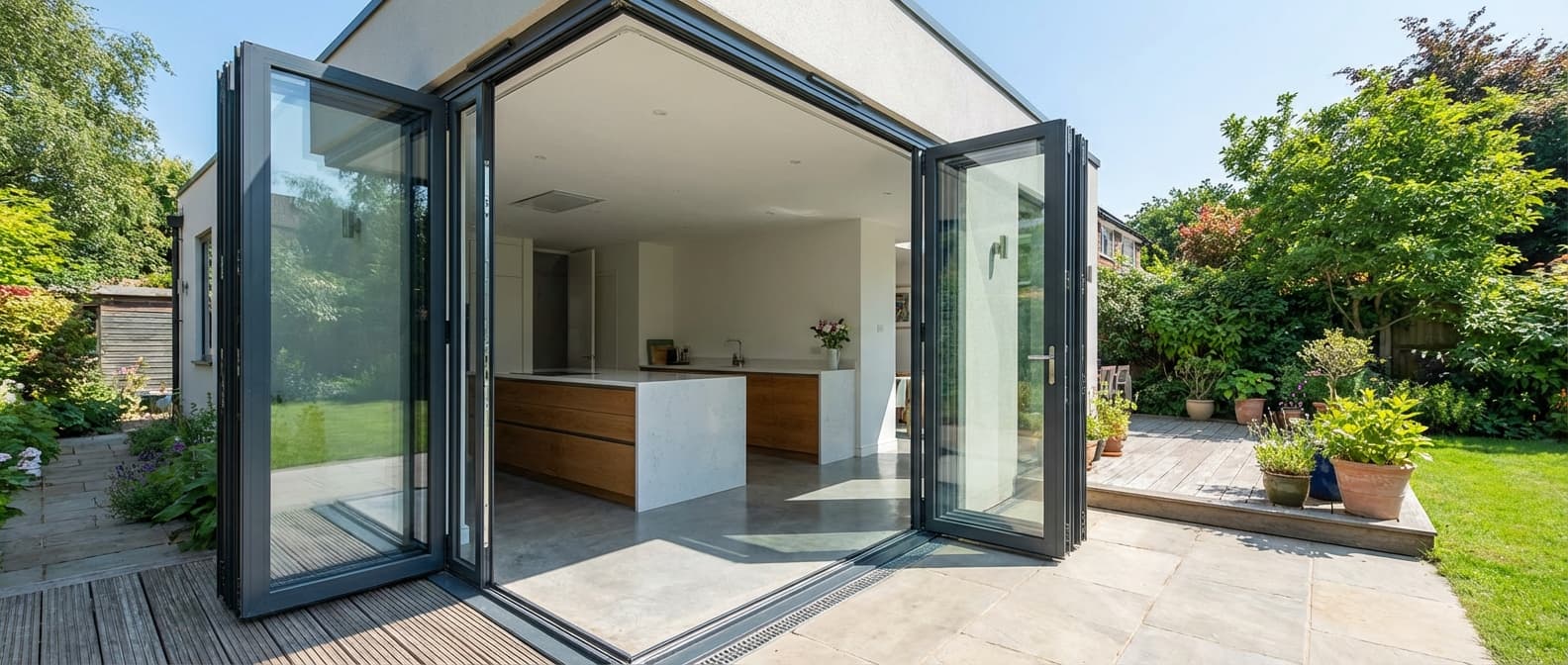
Bi-fold doors transform the relationship between indoor and outdoor spaces, creating a wide opening (up to 6 metres or more) when fully folded back. They flood rooms with natural light, improve ventilation, and create a stunning visual connection to the garden. Costs range from £2,000-£10,000+ depending on size and material. They are particularly effective in kitchen-diners and living rooms that open onto a patio or deck. Considerations include: they require a clear wall run for the stacked panels when open, the threshold must be flat (or a low threshold is available for step-free access), and a canopy or overhang is helpful to protect the opening from rain. Alternatives include large sliding doors (fewer panel stack issues) and pivot doors.
5. How do Window Energy Ratings work?
Window Energy Ratings (WER) grade windows from G (lowest) to A++ (highest) based on three factors: the U-value (thermal transmittance — lower is better), solar gain (free heat from the sun passing through the glass), and air leakage (draughts around seals). An A-rated window has a U-value of approximately 1.4 W/m²K, while an A++ window achieves 0.8 W/m²K or better (triple glazed). Building Regulations currently require a minimum C rating for replacement windows, but most companies now supply A-rated or better as standard. Higher-rated windows cost more but deliver greater energy savings over their lifetime. The WER rainbow label is displayed on all rated windows, similar to the energy labels on appliances.
6. What type of glass should I choose?
Standard double glazing uses two panes of 4mm glass with a 16-20mm gas-filled gap (argon is standard, krypton is premium). Low-E (low emissivity) glass has an invisible metallic coating that reflects heat back into the room — this is standard on all modern double glazing. Toughened (tempered) glass is required in certain locations: next to doors, below 800mm from floor level, and in bathrooms. Laminated glass (two layers bonded with an interlayer) provides superior security and sound insulation. Acoustic glass adds mass for noise reduction — ideal for homes on busy roads. Self-cleaning glass has a coating that breaks down organic dirt with UV light and washes clean in rain. Specify the right glass for each window based on its location and function.
7. How long does a window installation take?
A professional team typically installs 4-6 standard windows per day. A full house replacement (8-10 windows) takes 2-3 days. Bi-fold doors require 1 day per set. The installation process involves removing the old window, preparing the structural opening, fitting the new frame, installing the glass, sealing externally, and making good internally (plastering, beading). Most companies install one window at a time, so your home is never left open overnight. Factor in an additional day for any structural work (enlarging or reducing openings, installing new lintels). Discuss the schedule with your installer to plan around weather and household disruption.
8. Do I need special windows for a conservation area?
Conservation areas typically require windows that match the style, proportions, and materials of the original windows. Timber sash windows are often mandatory, though some conservation officers accept high-quality timber-alternative UPVC or aluminium sash windows that closely replicate the original design. Planning permission is usually required for window replacement in conservation areas. Submit your application early — approval can take 8-12 weeks. Work with a window company experienced in conservation area projects and consider engaging them to assist with the planning application. Heritage-style hardware, slim sightlines, and authentic glazing bar profiles are typically required.
9. How do I improve the security of my doors and windows?
Modern windows and doors should meet PAS 24 security standard, which tests resistance to physical attack. Look for Secured by Design accreditation — a police-backed initiative. Key security features include: multi-point locking systems (3-5 locking points on windows, 3-7 on doors), laminated glass (harder to break through than standard glass), anti-snap, anti-pick, anti-bump lock cylinders (TS007 3-star rated), security hinges with dog bolts (prevent hinge-side forced entry), and reinforced frames. For additional security, consider window restrictors (limiting opening width), sash jammers, and smart locks with app-controlled access. Most insurance companies recognise and may discount for PAS 24 and Secured by Design products.
10. How does the Future Homes Standard affect window specification?
The Future Homes Standard, phasing in from 2025-2026, requires significantly improved thermal performance from windows in new-build homes. Key requirements include: U-values of 1.2 W/m²K or better (driving adoption of triple glazing), improved airtightness standards (requiring higher-quality seals and installation), and whole-building energy performance calculations where window specification plays a crucial role. For replacement windows in existing homes, Building Regulations Part L currently requires 1.4 W/m²K but is expected to tighten. The Standard is accelerating the shift to triple glazing, which offers U-values of 0.8-1.0 W/m²K. Homeowners replacing windows now should consider future-proofing by specifying triple-glazed units, which may improve EPC ratings and property value.
This article was created with AI assistance and reviewed by the HouseJester editorial team for accuracy and relevance.