
1. How much should I budget for accessorising a room?
A general guideline is to allocate 10-15% of the total room budget to accessories. For a living room furnished at £5,000, budget £500-£750 for accessories. At minimum, a well-accessorised living room needs: cushions (£60-£200), a throw (£30-£100), a rug (£100-£500), artwork (£50-£300), table lamp(s) (£40-£200), candles and scent (£30-£80), and a decorative object or vase (£20-£100). This totals £330-£1,480, demonstrating that effective accessorising does not require huge expenditure. The key is being selective — a few well-chosen pieces create more impact than dozens of cheap items. Browse unique accessories from independent retailers on HouseJester.
2. What are the biggest home accessories trends for 2026?
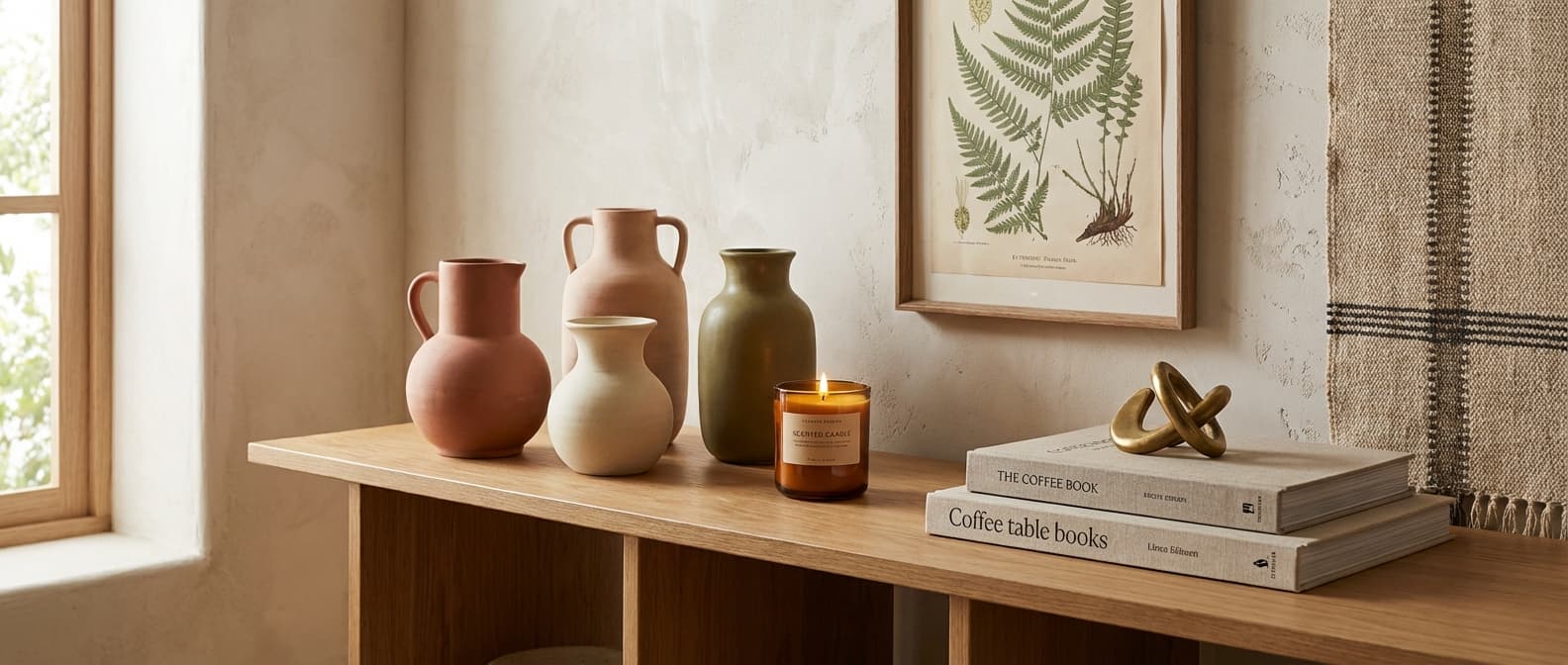
Key trends include textured ceramics in earthy tones (handmade pottery, terracotta, raw stoneware), organic shapes (irregular vases, sculptural objects), warm metallics (brushed brass and aged bronze replacing cool chrome), chunky knitted and bouclé textiles, dried and preserved botanicals alongside living plants, artisanal glassware in amber and olive tones, and sustainable, handcrafted pieces with visible maker's marks. Maximalism continues to grow, with layered patterns, bold colour mixing, and curated collections of meaningful objects replacing the bare minimalism of previous years. However, the emphasis is on thoughtful curation rather than excess — each piece should have presence and purpose.
3. How do I style a coffee table?
Use the rule of three: create three groupings of objects at different heights. A classic arrangement includes a stack of 2-3 books (these act as a plinth), a decorative object or vase on top, and a candle alongside. Keep the arrangement asymmetric for a natural, unstudied look. Leave at least one-third of the table surface clear for practical use (drinks, remotes). Use a tray to corral smaller items — it contains the arrangement and makes it easy to clear the table. Scale matters: on a small table, fewer, smaller items work best; on a large table, bolder pieces and taller elements prevent the arrangement from looking lost.
4. How do I choose a rug for my living room?
Size is the most important factor — a rug that is too small looks like a postage stamp and makes the room feel disconnected. In a living room, the front legs of the sofa and chairs should sit on the rug at minimum; ideally, all furniture legs sit on it. For a typical 3-seat sofa arrangement, a 200x290cm or 240x340cm rug works well. Material matters: wool is durable, naturally stain-resistant, and available in a vast range of colours and patterns. Polypropylene is affordable and easy to clean but looks and feels synthetic. Jute and sisal are natural and textured but not soft underfoot. Cotton flatweaves are affordable and washable but less durable. Choose a rug that complements rather than matches your sofa — contrast creates interest.
5. What is the best way to display collections?
Curate ruthlessly — display your best pieces rather than everything you own. Group objects by a common theme (colour, material, era, or subject) for a cohesive look. Use odd numbers (3, 5, 7) as these create more dynamic, visually pleasing arrangements. Vary heights within the group using books, stands, or wall-mounted shelves at different levels. Negative space (gaps between objects) is as important as the objects themselves — overcrowding diminishes the impact of individual pieces. Open shelving, display cabinets, and mantelpieces are classic display surfaces. Rotate collections seasonally to keep the display fresh and prevent your eye from glazing over familiar arrangements.
6. How do I choose the right size mirror for a room?
Mirrors serve both decorative and practical purposes. Above a fireplace or console table, the mirror should be two-thirds to three-quarters the width of the furniture below it. A large floor-standing mirror (150cm+ tall) leaned against a wall creates drama and reflects light into the room. In narrow hallways, a full-length mirror makes the space feel wider. Position mirrors opposite windows to maximise natural light reflection. Avoid placing mirrors where they reflect unattractive views or create visual clutter by reflecting too many objects. Round mirrors soften rooms with lots of angular furniture and architecture. The frame should complement other metallic finishes in the room.
7. Are artificial plants worth buying?
Quality artificial plants have improved enormously and can be virtually indistinguishable from real plants. They are ideal for rooms with insufficient natural light, for people who travel frequently, or for high shelves and areas that are difficult to maintain. The key is quality — cheap artificial plants look cheap. Invest in premium faux plants with realistic detailing (varied leaf colour, visible veining, natural irregularities) and display them in quality pots. Mix artificial plants with a few easy-care real plants (pothos, snake plant, ZZ plant) for the most natural effect. Prices range from £15-£30 for small stems to £100-£300 for realistic artificial trees and large arrangements.
8. How do I layer lighting with accessories?
Lighting accessories create atmosphere that overhead lighting alone cannot achieve. Table lamps provide pools of warm light that make seating areas feel inviting — use them on side tables, console tables, and windowsills. Floor lamps behind or beside sofas provide reading light and add height to an arrangement. Candles add warmth and scent at a lower level. String lights and LED candles create ambient background glow. The key is multiple sources at multiple heights: overhead for general illumination, table lamps at mid-level, and candles or low accent lights near the floor. Use warm white bulbs (2700K) in all table and floor lamps for a cosy, cohesive atmosphere.
9. What home accessories make the best gifts?
Quality candles are the most universally appreciated home accessory gift — they are consumable (so they do not create clutter), personal (fragrance preferences vary, but fresh, botanical, and warm-woody scents are generally safe), and indulgent (most people will not buy a £40 candle for themselves). Other excellent gifts include: premium throws in cashmere or merino wool, artisan ceramics (hand-thrown mugs, vases), framed art prints from independent artists, quality linen napkins or table runners, and scented reed diffusers. The best gifts combine quality with personality — something the recipient would love but would not buy for themselves.
10. How do I make my home look more expensive with accessories?
A few strategies create a premium look regardless of budget: invest in quality textiles — a good cushion cover in quality linen or velvet looks more expensive than its price suggests. Choose fewer, larger accessories rather than many small ones — a single large vase makes more impact than five small ornaments. Edit ruthlessly — clutter looks cheap, while carefully curated arrangements look intentional and expensive. Use metallic accents sparingly (brass, aged gold) for warmth and sophistication. Frame artwork properly (a quality mount and frame elevates even an inexpensive print). Keep surfaces clean and uncluttered. Fresh flowers or a quality potted plant adds life and luxury. Ultimately, taste and curation cost nothing and make the biggest difference.
This article was created with AI assistance and reviewed by the HouseJester editorial team for accuracy and relevance.