
1. How much does it cost to hire an interior designer in the UK?
Interior design fees vary widely based on the designer's experience, location, and fee model. Hourly rates typically range from £50-£150, with London designers charging £100-£250 per hour. Fixed fees per room range from £1,500-£5,000 for a full design service including sourcing, specification, and project management. For whole-house projects, many designers charge 10-20% of the total project spend. E-design (remote) packages start from £200-£800 per room. Most designers offer a free or low-cost initial consultation. Trade discounts they secure on furniture and materials (typically 20-40% off retail) can partially or fully offset their fees, making professional design more cost-effective than it first appears.
2. What qualifications should an interior designer have?
Look for a degree or diploma in interior design, interior architecture, or a related discipline from an accredited institution. Membership of professional bodies demonstrates credibility: BIID (British Institute of Interior Design) requires a portfolio review and professional experience, while SBID (Society of British and International Design) offers accredited designer status. For projects involving structural changes, an interior designer with architectural training or collaboration with a structural engineer is essential. Professional indemnity insurance is a must — it protects you if a design specification causes problems. On HouseJester, designer profiles indicate their qualifications and accreditations.
3. What is the difference between interior design and interior architecture?
Interior architecture involves more significant structural changes to a building's interior — removing or adding walls, changing floor levels, reconfiguring staircases, and altering spatial volumes. Interior architects typically hold an architecture or interior architecture degree and can produce technical drawings and structural specifications. Interior design focuses on the aesthetic and functional design within the existing structure — layouts, colour schemes, furniture, lighting, materials, and finishes. Many practices offer both disciplines. For a loft conversion or period property reconfiguration, you need interior architecture. For decorating and furnishing a space, interior design is sufficient.
4. How does the design process typically work?
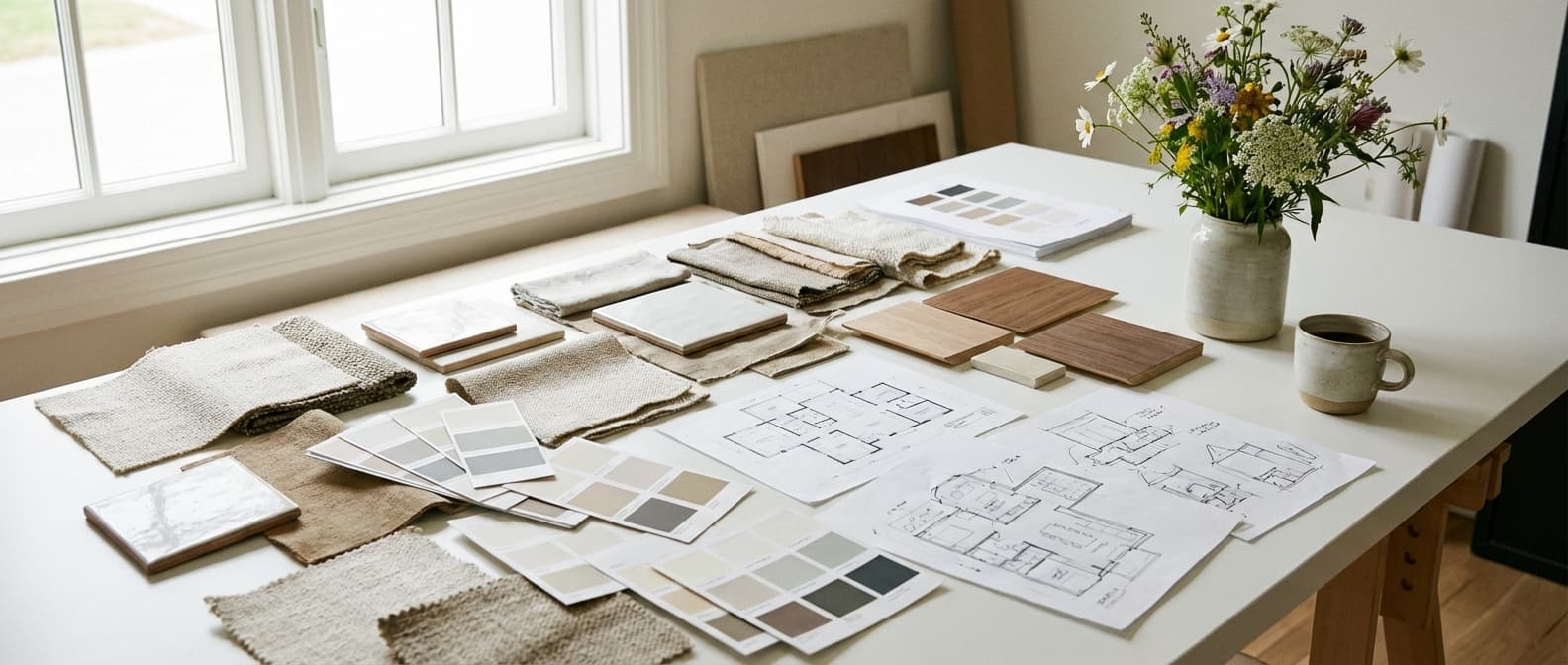
A typical design process follows these stages: (1) Initial consultation — the designer visits your home, discusses your brief, lifestyle, and budget. (2) Concept development — mood boards, colour palettes, and initial layouts are presented for feedback. (3) Design development — detailed floor plans, elevations, 3D renders, and material specifications are produced. (4) Procurement — the designer sources furniture, fittings, and materials, often at trade prices. (5) Implementation — the designer manages contractors and oversees installation. (6) Styling — final placement of furniture, art, and accessories. Not all projects require every stage — a consultation-only service may cover just stages 1 and 2, while a full-service engagement covers all six.
5. Can I hire an interior designer for just one room?
Absolutely. Single-room projects are common, especially for rooms that are used most frequently such as living rooms, master bedrooms, and home offices. Most designers are happy to work on individual rooms, and it can be a good way to test the working relationship before committing to a larger project. Expect to pay £1,500-£5,000 for a full single-room design service, or £200-£500 for a consultation that provides a design direction you can implement yourself. Some designers offer tiered packages — from a mood board and shopping list to a fully managed room transformation.
6. How do interior designers charge for their services?
The four main fee models are: hourly rate (£50-£150/hour, best for consultations and small projects), day rate (£400-£1,200/day, suited to intensive design days or shopping trips), fixed fee per room (£1,500-£5,000+, covering the full design and procurement process), and percentage of project cost (10-20%, used for large renovations). Some designers use a hybrid model — a fixed design fee plus a percentage commission on items purchased through them. Always ask for a written fee proposal before engaging, and clarify whether expenses such as travel, samples, and shipping are included or additional.
7. Will an interior designer respect my budget?
A professional designer should work within whatever budget you set. In fact, working creatively within constraints is a core skill. Be upfront about your budget from the initial consultation — there is no point commissioning a designer who only works with budgets twice yours. A good designer will allocate your budget strategically, investing in key pieces (sofa, lighting, joinery) and finding cost-effective solutions for less impactful elements (accessories, artwork, textiles). They should present options at different price points and be transparent about costs. If a designer consistently pushes beyond your budget, it is a red flag.
8. What is e-design, and is it worth it?
E-design (online or remote interior design) involves working with a designer virtually — you share photos, measurements, and a brief online, and receive a design package including mood boards, floor plans, product links, and styling guidance. Prices typically range from £200-£800 per room, making it significantly cheaper than in-person services. E-design is ideal for straightforward room refreshes, rental properties, or clients in areas without many local designers. The tradeoff is less bespoke service — the designer cannot physically assess the space, light, or acoustics. For complex renovations involving structural changes, in-person design is preferable.
9. How do I find the right interior designer for my style?
Start by defining your style — browse platforms like Pinterest and Instagram to identify common themes in the rooms you are drawn to. Then search for designers whose portfolio aligns with your aesthetic on HouseJester. Read reviews from clients with similar project types. Most designers offer an initial consultation where you can assess chemistry and communication style — this is as important as their portfolio. Ask to see projects similar in scope and budget to yours. Do not hire a designer solely based on their most impressive project if it was ten times your budget. The best match is a designer who has delivered excellent results at your scale and in your style.
10. Can an interior designer help with the 2026 Future Homes Standard?
Yes, and this is becoming increasingly relevant. The Future Homes Standard affects material choices, ventilation, energy efficiency, and lighting in residential interiors. An informed designer will specify low-VOC paints and finishes, recommend energy-efficient LED lighting schemes, work with sustainably sourced materials (FSC-certified timber, recycled textiles), and ensure ventilation requirements are met in design layouts — particularly for bathrooms and kitchens. For new-build homes subject to the Standard, an interior designer coordinates with architects and M&E engineers to ensure that aesthetic choices comply with performance requirements. For renovations, they can advise on voluntary upgrades that improve energy efficiency and indoor air quality.
This article was created with AI assistance and reviewed by the HouseJester editorial team for accuracy and relevance.