
On this page
Creating a stunning feature wall can transform any room without the expense of a full redecoration. Whether you're considering bold paint colours, textured wallpaper, or innovative techniques, understanding the fundamentals of paint and wallpaper application will help you achieve professional results. This comprehensive FAQ answers the most common questions UK homeowners ask when planning their feature wall ideas and broader decorating projects.
Key Takeaways
- Feature walls work best with contrasting colours or bold wallpaper patterns, typically costing £50-£200 for materials depending on your choice
- Matt finishes suit most living areas, whilst eggshell and satin perform better in high-traffic or moisture-prone rooms
- Premium brands like Farrow & Ball (£89-£125 per 2.5L) offer superior depth of colour but mid-range options from Dulux Heritage (£45-£60 per 2.5L) deliver excellent results
- Wallpapering over painted walls requires proper preparation; painting over wallpaper is rarely recommended by professionals
- Professional room painting costs £150-£400 in most UK regions, rising to £250-£600 in London
What Makes an Effective Feature Wall?
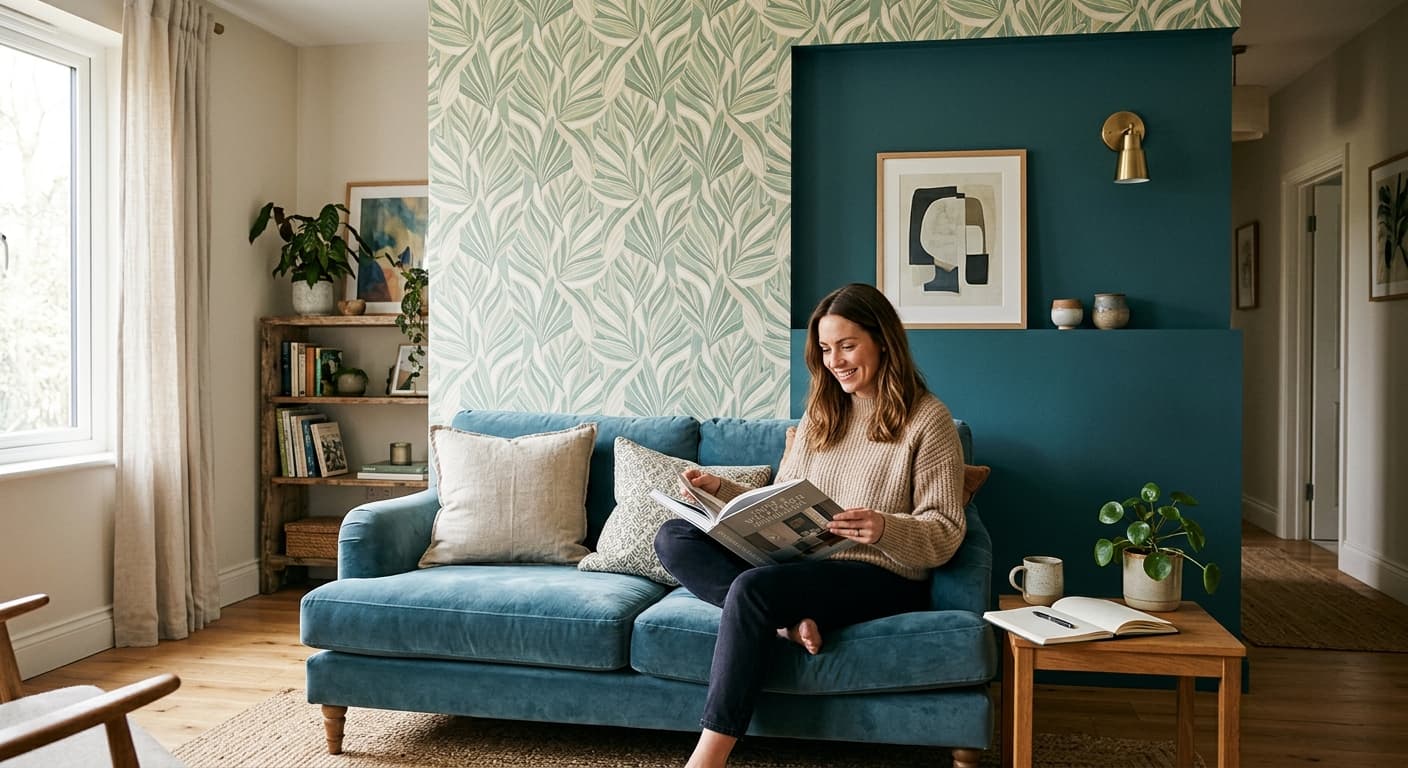
A feature wall should create visual interest without overwhelming your space. We recommend choosing the wall you naturally look at when entering a room—typically the one behind your bed, sofa, or fireplace.
The most successful feature wall ideas combine contrast with cohesion. If your room uses neutral tones like Farrow & Ball's Elephant's Breath or Dulux's Natural Calico, consider deep jewel tones or dramatic wallpaper patterns for impact. According to Homebuilding & Renovating magazine, feature walls remain one of the most cost-effective ways to update interiors, with materials typically ranging from £50-£200 depending on whether you choose paint or wallpaper.
Dark colours actually make walls appear closer, creating cosy intimate spaces in bedrooms and dining rooms. Lighter feature walls with textured wallpaper add dimension without reducing perceived room size. Read our complete guide to wallpaper guide UK for detailed pattern selection advice.
What is the Best Paint for Interior Walls UK?
The best interior paint brands UK compared depends on your budget and expectations. Premium paints offer superior coverage, durability, and colour depth, but mid-range options have improved dramatically.
Premium Tier
Farrow & Ball leads the premium market at £89-£125 per 2.5L tin. Their Estate Emulsion contains higher pigment levels than standard paints, delivering exceptional colour depth with often just one coat. Little Greene follows closely at £65-£85 per 2.5L, offering equally sophisticated colours with slightly better coverage rates.
Mid-Range Excellence
Dulux Heritage (£45-£60 per 2.5L) bridges the gap between premium and standard ranges beautifully. We've found the colour complexity rivals Farrow & Ball whilst maintaining Dulux's reliable coverage. Crown Period Collection (£40-£55 per 2.5L) offers another excellent mid-range option with historically-inspired colours.
Budget-Friendly Options
Standard Dulux Trade (£25-£35 per 5L) and Crown Trade (£22-£32 per 5L) provide reliable results for larger projects. Both require two coats but deliver good durability. According to Which? testing, these performed well for washability and stain resistance—crucial for family homes.
Many paint & wallpaper specialists in our directory stock trade-only brands like Dulux Trade Diamond at discounted rates, potentially saving 20-30% compared to retail prices.
Matt vs Eggshell vs Satin Paint Finish: Which Should I Choose?
The matt vs eggshell vs satin paint finish debate fundamentally comes down to location, light, and lifestyle.
Matt Finish
Matt emulsion absorbs light, hiding minor wall imperfections whilst creating sophisticated, contemporary spaces. It's our top recommendation for low-traffic areas like bedrooms, dining rooms, and ceilings. However, matt finishes mark easily and resist washing poorly, making them unsuitable for hallways or children's rooms.
Modern "washable matt" formulations from Dulux and Crown improve durability but still can't match eggshell for scrubbability.
Eggshell Finish
Eggshell strikes the perfect balance for most UK homes. The subtle sheen (around 15-20% gloss level) provides wipeable surfaces whilst minimising the flat appearance of matt. We recommend eggshell for living rooms, hallways, kitchens, and any wall requiring regular cleaning.
Farrow & Ball's Modern Eggshell offers exceptional toughness, though their Traditional Oil-Based Eggshell delivers unmatched depth for period properties. Building Regulations Part L now restricts VOC levels, making water-based eggshells the practical choice for most applications.
Satin Finish
Satin (20-35% gloss) works brilliantly in bathrooms, kitchens, and commercial settings requiring maximum durability. The increased sheen highlights wall imperfections, so surface preparation becomes critical. Dulux Trade Diamond Satinwood provides outstanding moisture resistance for bathroom walls.
For feature walls, we typically recommend matt for dramatic dark colours and eggshell for lighter tones requiring durability.
Is Farrow and Ball Worth the Price?
The Farrow and Ball vs Dulux Heritage comparison generates endless debate amongst decorators and homeowners.
Farrow & Ball's premium pricing (roughly double Dulux Heritage) reflects several factors: exceptional pigment quality, unique colour formulations developed over decades, and genuinely superior one-coat coverage on most colours. Their paint contains 30% more pigment than standard emulsions, creating unmatched depth.
However, Dulux Heritage challenges this premium positioning effectively. Launched specifically to compete with Farrow & Ball, Heritage colours demonstrate similar complexity and richness at nearly half the price. Our experience working with paint & wallpaper professionals across Birmingham and Manchester suggests most clients cannot distinguish between Farrow & Ball and Dulux Heritage once applied—particularly in eggshell finishes.
Where Farrow & Ball truly excels:
- Unique historical colours unavailable elsewhere (String, Jitney, Dead Salmon)
- Exceptional matt emulsion depth and chalky finish
- Prestige factor for high-end renovations and resale value
- Environmentally conscious formulations with minimal VOCs
Dulux & Heritage offers better value when:
- Budget constraints matter (savings of £40-60 per room)
- You're painting large areas requiring multiple tins
- Coverage and durability outweigh prestige
- You prefer slightly easier application (Heritage flows more readily)
For feature walls, the smaller quantities involved often make Farrow & Ball's premium worthwhile, particularly for show-stopping colours like Hague Blue or Railings.
Can You Wallpaper Over Painted Walls?
Yes, wallpapering over painted walls works excellently provided you prepare surfaces correctly. This represents the standard approach for most UK homes.
Essential Preparation Steps
- Clean thoroughly - Remove grease, dust, and grime using sugar soap solution
- Fill and sand - Address cracks, holes, and imperfections with appropriate filler
- Prime if necessary - Silk and gloss finishes require light sanding and primer/sealer application
- Test adhesion - Apply wallpaper paste to a small section and check it grabs properly
Matt and vinyl matt emulsions accept wallpaper paste readily. Silk, satin, and gloss paints create moisture-resistant barriers requiring Zinsser Gardz or similar sealers before papering.
Wallpaper Paste Types and Application Guide
Understanding wallpaper paste types and application guide principles prevents common installation failures.
Paste Varieties
Standard cellulose paste suits lightweight papers and costs £3-£6 per packet mixing to 5-7 rolls. Mix to manufacturer's specifications—too thick causes bubbles, too thin allows slippage.
Heavy-duty/ready-mixed paste (£8-£15 per tub) handles heavyweight papers, vinyls, and non-woven wallpapers. Ready-mixed varieties eliminate mixing errors and contain fungicides preventing mould.
Paste-the-wall adhesives revolutionised wallpapering by eliminating soaking tables. Simply roll paste onto walls, then hang dry wallpaper. This only works with non-woven wallpapers—never traditional pulp papers.
Application Technique
Traditional paste-the-paper method requires 3-5 minutes soaking time ("booking") allowing paper to expand fully before hanging. Insufficient soaking causes seams to open as paper expands on the wall.
Non-woven wallpapers never require soaking. Apply paste generously to walls using a large roller, then hang panels immediately. We've found this method 40% faster than traditional techniques.
Always follow manufacturer's specifications—using wrong paste voids warranties and causes failures.
How to Paint Over Wallpaper UK: Should You?
The how to paint over wallpaper UK question receives a firm "avoid if possible" from professional decorators. However, specific circumstances make it viable.
When It Might Work
Painting over wallpaper succeeds only when:
- Paper adheres perfectly with zero lifting edges or seams
- It's vinyl-coated or non-porous (requiring primer)
- Textured/embossed patterns enhance rather than detract from your vision
- Removing it risks damaging plaster beneath
- Budget or time constraints prevent proper stripping
The Process
Prime wallpaper with oil-based primer-sealer (Zinsser B-I-N or Cover Stain) preventing moisture penetration. Water-based primers may activate wallpaper paste, causing bubbling.
Apply two coats of quality emulsion after priming. Seams and patterns will likely remain visible, particularly in angled light.
Why Professionals Recommend Against It
Trapped moisture between paint and wallpaper eventually causes peeling and bubbling. Pattern show-through creates uneven surfaces. Future decorators face double work removing both paint and wallpaper.
Budget £150-£300 for professional wallpaper stripping in an average bedroom—worthwhile investment for long-term results. Many businesses in our search our company directory offer stripping services alongside decoration.
What Paint Finish is Best for Living Rooms?
Matt emulsion remains the preferred choice for living room walls, creating sophisticated spaces with excellent light absorption. The lack of sheen suits contemporary and traditional schemes equally.
However, homes with children or pets benefit from eggshell's improved durability. Modern "scrubbable matt" formulations like Dulux Easycare attempt bridging this gap, though performance doesn't quite match true eggshell.
For living room feature walls, we recommend:
- Deep dramatic colours (navy, forest green, charcoal) - Matt finish for maximum depth
- Lighter accent walls - Eggshell for subtle sophistication and durability
- Textured wallpaper - Creates natural variation without competing finishes
Ceilings should always receive matt finish paint, ideally specific ceiling formulations containing higher solids for better opacity.
How Much Does It Cost to Paint a Room UK?
Professional room painting costs vary significantly by region, room size, and preparation requirements.
National Averages
- Small bedroom (3m x 3m): £150-£250 materials and labour
- Medium living room (4m x 5m): £250-£400 materials and labour
- Large open-plan space: £400-£700+ materials and labour
Regional Variations
London pricing typically runs 40-60% higher than national averages, with day rates reaching £200-£250 for experienced decorators. Manchester and Birmingham trades charge £120-£180 daily.
According to Checkatrade's 2023 pricing survey, average UK decorator rates sit at £140-£200 per day, with materials adding £50-£150 depending on paint quality and room size.
DIY Costs
Materials for a standard bedroom feature wall:
- 2.5L premium paint: £45-£125
- Brushes, rollers, trays: £15-£30
- Filler, sandpaper, sugar soap: £10-£20
- Dust sheets and masking tape: £10-£15
Total DIY materials: £80-£190 depending on paint choice.
Wallpaper feature walls range £40-£150 for materials (single roll covers approximately 5m², standard feature walls need 2-3 rolls) plus paste and tools.
What Are the Most Popular Paint Colours UK?
Paint colour trends shift gradually, but certain shades maintain enduring popularity across UK homes.
Timeless Neutrals
Farrow & Ball's Elephant's Breath, Cornforth White, and Slipper Satin dominate middle-class renovations. These warm greys work brilliantly as base colours allowing bolder feature wall ideas to shine.
Dulux's Natural White remains Britain's best-selling paint colour, though we recommend their warmer Natural Calico for north-facing rooms avoiding stark coldness.
Contemporary Favourites
Deep blues—particularly Farrow & Ball's Hague Blue and Dulux's Sapphire Salute—lead feature wall choices. These sophisticated navies create dramatic backdrops without overwhelming spaces.
Forest greens (Studio Green, Vardo, Deep Brunswick Green) reflect biophilic design trends connecting interiors with nature. Sage greens like Vert de Terre offer softer alternatives maintaining this connection.
Bold Choices Gaining Traction
Terracotta and warm ochres reference 1970s nostalgia whilst feeling contemporary. Colours like Red Earth and Charlotte's Locks add warmth to modern minimalist spaces.
Deep charcoals and blacks—once considered daring—now appear regularly in sophisticated dining rooms and studies. Railings and Down Pipe create enveloping, intimate atmospheres.
According to Homebuilding & Renovating's annual survey, green has overtaken grey as Britain's favourite interior colour for the first time in a decade, with 34% of respondents choosing green-based schemes.
Finding the Right Professional Help
Complex wallpaper installations and specialist paint finishes often justify professional expertise. Browse paint & wallpaper specialists on HouseJester to find qualified decorators in your area.
Our directory includes verified businesses across the UK offering:
- Professional wallpaper hanging and removal
- Specialist paint finishes and feature walls
- Complete room decoration packages
- Colour consultation services
- Period property restoration
Reputable decorators provide detailed quotes, hold public liability insurance (minimum £2 million coverage), and offer guarantees on workmanship. Many also provide paint at trade prices, potentially offsetting labour costs.
Consider browse all categories if your project extends beyond decoration—many renovations benefit from coordinating with fitted kitchens or bathroom specialists simultaneously.
Professionals in our network can also advise on complementary improvements maximising your investment. If you're a qualified decorator or paint specialist, list your business to connect with homeowners seeking your expertise.
Sources & Further Reading
- Which? Paint Reviews and Testing - Independent testing of paint brands for coverage, durability, and value
- Homebuilding & Renovating Magazine - UK's leading home improvement publication with regular paint and wallpaper features
- Checkatrade Pricing Guides - Regularly updated UK tradesperson pricing data including decorators
This article was created with AI assistance and reviewed by the HouseJester editorial team for accuracy and relevance.
Written by
Sarah Mitchell
Interior Design Editor
Sarah has spent over 12 years covering UK interiors and design trends. She works closely with interior designers and soft furnishings specialists across the country to bring readers expert insights on creating beautiful, functional living spaces.
- Interior Design
- Soft Furnishings
- Paint & Wallpaper
- Lighting