
On this page
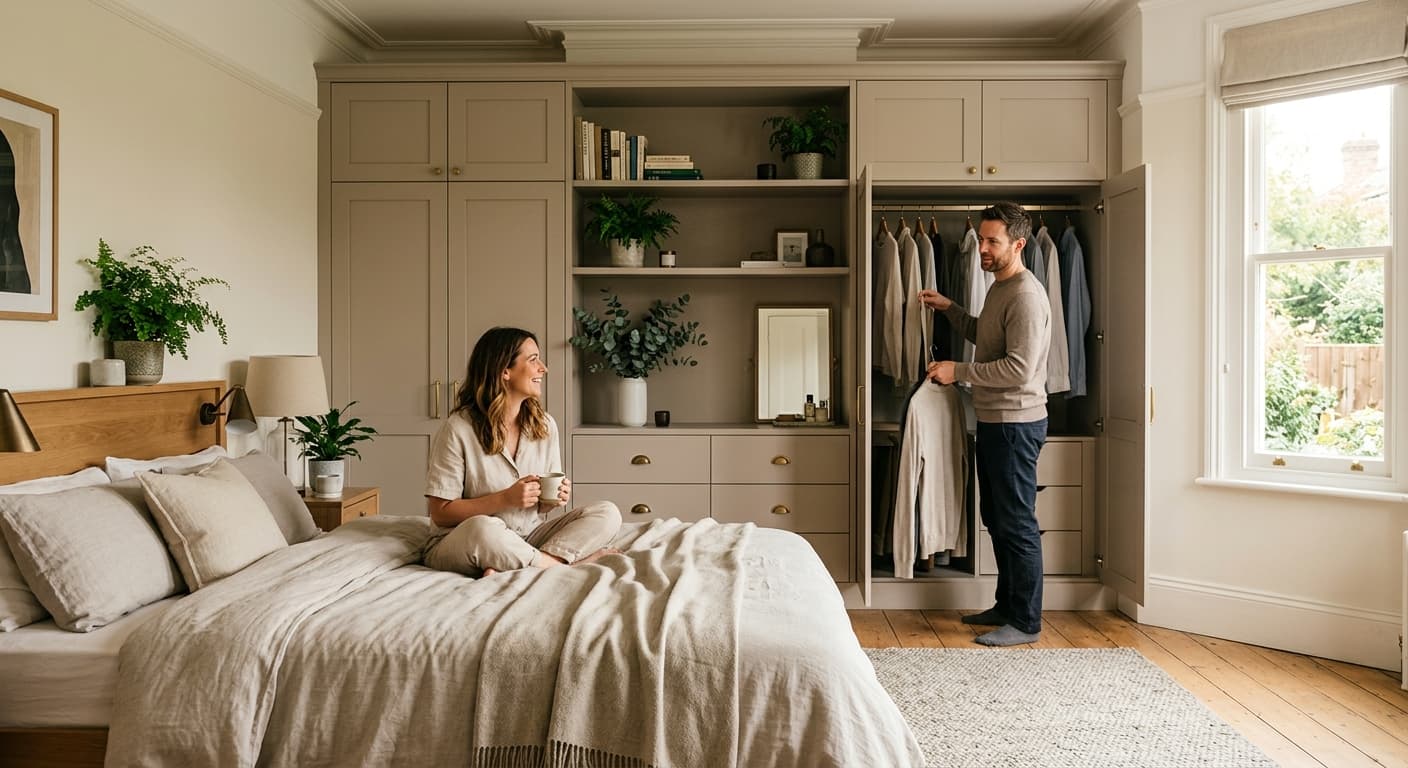
Creating the perfect bedroom means balancing comfort, storage, and style. For UK homeowners, fitted bedrooms UK solutions have become increasingly popular, offering bespoke storage that maximises every centimetre of available space. Unlike freestanding furniture, fitted solutions work around awkward alcoves, sloping ceilings, and challenging room shapes that characterise British homes.
We've seen demand for fitted bedroom furniture surge over the past five years, particularly in cities where space comes at a premium. The investment pays dividends in both property value and daily functionality.
Key Takeaways
- Fitted wardrobes typically cost £1,500–£6,000 depending on size, materials, and location, with London prices 20-30% higher
- Built-in storage solutions can increase usable space by up to 40% compared to freestanding furniture in small bedrooms
- Sliding door wardrobes save approximately 1 metre of floor space compared to hinged doors
- Memory foam and pocket sprung hybrid mattresses receive highest recommendations for back pain from UK physiotherapists
- DIY fitted bedroom installations can save 40-50% on labour costs but require intermediate carpentry skills
How Much Do Fitted Wardrobes Cost in the UK?
Budgeting for fitted wardrobes requires understanding the variables that drive pricing. Based on listings in our bedrooms directory, we've identified typical cost ranges across different specification levels.
Basic fitted wardrobes with melamine finishes and simple hanging rails start around £800–£1,500 for a 2-metre run. Mid-range options featuring quality laminate doors, internal drawer units, and soft-close mechanisms typically cost £2,000–£4,000. Premium installations with solid wood fronts, bespoke internal configurations, and integrated lighting can reach £5,000–£8,000 or more.
According to research from Checkatrade, London and South East England prices run 20-30% higher than the national average. A fitted wardrobe costing £2,500 in Manchester might reach £3,250 in London.
Labour accounts for roughly 40% of total costs. Professional installation for a standard double wardrobe takes 1-2 days, with fitters charging £150–£250 per day outside London and £200–£350 within the capital.
Fitted Wardrobes vs Freestanding: Cost Comparison
The fitted wardrobes vs freestanding cost comparison reveals interesting trade-offs. A decent quality freestanding wardrobe from retailers like John Lewis or IKEA costs £400–£1,200. You'll need 2-3 units for equivalent storage to a fitted solution.
Total outlay for freestanding furniture: £1,200–£3,600. Fitted equivalent: £2,000–£4,000.
The price difference narrows when you factor in longevity. We've seen well-installed fitted wardrobes last 15-20 years, whilst freestanding units typically need replacing after 7-10 years. Fitted solutions also add more value when selling your property—estate agents consistently report that quality fitted bedrooms appeal strongly to buyers.
Freestanding furniture wins on flexibility. Moving house? Take it with you. Fancy a room refresh? Rearrange at will. But for awkward spaces—that alcove beside the chimney breast, the area under the eaves—fitted storage remains unbeatable.
Sliding Door Wardrobes: Pros and Cons
Sliding door wardrobes have become the default choice for fitted bedroom installations, but they're not perfect for every situation. Understanding the sliding door wardrobes pros and cons helps you make an informed decision.
Advantages:
- Space efficiency: No door swing means you can position furniture right up to the wardrobe
- Clean, contemporary aesthetic that suits modern British homes
- Floor-to-ceiling designs maximise storage volume
- Mirrored panels create illusion of space in compact rooms
- Easier accessibility in tight spaces
Disadvantages:
- You can only access half the wardrobe width at any time
- Bottom tracks collect dust and require regular cleaning
- Cheaper mechanisms can stick or derail after a few years
- More expensive than hinged doors (typically £200-400 more per door)
- Repair costs higher when mechanisms fail
Our team has found that sliding mechanisms vary enormously in quality. Budget installations from high-street retailers often use lightweight aluminium tracks that wear quickly. Specify heavy-duty German or UK-manufactured mechanisms—brands like Häfele or Spacepro—for longevity.
For bedrooms smaller than 2.5 metres wide, sliding doors make practical sense. Larger rooms with generous circulation space work well with traditional hinged doors, which offer full wardrobe access and simpler, more reliable mechanisms.
What is the Best Mattress Type for Side Sleepers?
Side sleepers—roughly 74% of UK adults according to the Sleep Council—need mattresses that cushion shoulders and hips whilst supporting the spine. The best mattress for back pain UK specialists recommend depends on body weight and personal preference, but certain types consistently outperform.
Memory foam mattresses contour to body shape, relieving pressure points. Medium-firm memory foam (5-6 on a 10-point scale) suits most side sleepers. Tempur and Simba offer excellent options in the £600–£1,200 range for a UK double.
Pocket sprung mattresses provide responsive support with good breathability—important in the UK's variable climate. Individual springs move independently, preventing partner disturbance. Quality pocket sprung mattresses from Hypnos or Vispring start around £800.
Hybrid mattresses combine pocket springs with memory foam or latex layers. We've seen these deliver the best of both worlds: support from springs, pressure relief from foam. The Emma Premium Hybrid and Simba Hybrid Pro receive strong recommendations from UK physiotherapists, costing £800–£1,400.
Latex mattresses offer natural, hypoallergenic support with excellent durability. They're cooler than memory foam and more responsive. Natural latex options from John Lewis or specialist retailers cost £900–£2,000.
Avoid very soft mattresses that let hips sink excessively, creating spinal misalignment. Equally, overly firm surfaces force shoulders and hips to bear uncomfortable pressure. Medium-firm works for most side sleepers, but try before buying—mattress preferences remain highly individual.
How Do I Maximise Storage in a Small Bedroom?
Small bedroom storage ideas built-in solutions transform cramped spaces into functional retreats. UK bedrooms average just 3.2 x 3.5 metres according to LABC Warranty data, making efficient storage essential.
Floor-to-ceiling fitted wardrobes utilise vertical space that freestanding furniture wastes. The gap above a typical wardrobe stores suitcases, seasonal bedding, and rarely-used items. Ceiling heights in UK homes vary—2.4 metres in modern builds, often 2.7-3 metres in Victorian and Edwardian properties. Exploit every centimetre.
Under-bed storage offers surprising capacity. Ottoman beds with gas-lift mechanisms provide easy access to the entire bed footprint. A standard UK double (135 x 190 cm) yields roughly 0.4 cubic metres of storage—equivalent to four large suitcases. Prices start around £400 from retailers like Dreams or Bensons for Beds.
Built-in alcove wardrobes turn architectural quirks into assets. Most period properties have chimney breast alcoves measuring 60-90 cm wide—perfect for shallow wardrobes or shelving units. Custom solutions from bedroom specialists typically cost £600–£1,500 per alcove.
Corner wardrobes exploit dead space where walls meet. L-shaped configurations or triangular corner units access areas that freestanding furniture can't reach. These work particularly well in box rooms and converted lofts.
Overhead storage above the bed creates shelving for books and decorative items without consuming floor space. Ensure proper fixing into wall studs or use specialist plasterboard fixings rated for the load.
Fitted headboards with storage combine form and function. Compartments hold books, phones, and reading glasses within arm's reach. Bespoke options from Birmingham furniture makers start around £300-600.
Paint fitted storage in the same colour as walls to create visual cohesion. White or pale grey makes small rooms feel larger—a crucial consideration in compact UK properties.
Walk-in Wardrobe Design Ideas for UK Homes
Walk-in wardrobes represent the ultimate bedroom luxury, but walk-in wardrobe design ideas UK homeowners can actually implement often require creative space planning. Converting a box room, utilising loft space, or subdividing a large bedroom all work.
Minimum viable dimensions for a walk-in wardrobe are approximately 1.5 x 2 metres—tight but functional with careful planning. Comfortable walk-ins measure 2 x 2.5 metres or larger. Building Regulations don't specifically govern walk-in wardrobes, but if you're removing walls or adding windows, Part L (conservation of fuel and power) and structural considerations apply.
Layout configurations:
- Single-sided: Hanging rails and shelving along one wall, minimum 1.2m width
- Double-sided: Storage on opposite walls with 80cm minimum circulation space between
- L-shaped: Maximises corner rooms or converted box rooms
- U-shaped: Premium layout requiring 2.5 x 2.5m minimum
Lighting matters enormously. LED strip lighting under shelves eliminates shadows when selecting clothes. We recommend warm white (2700-3000K) for accurate colour rendering. Ceiling-mounted LED panels provide ambient light. Budget £200-500 for proper walk-in wardrobe lighting including installation.
Ventilation prevents musty odours in enclosed spaces. A simple passive vent maintains air circulation. Mechanical extraction becomes necessary if you're creating a windowless walk-in within a larger bedroom.
Materials and finishes should match your bedroom aesthetic. Painted MDF offers cost-effective custom solutions (£1,500-3,500 for a small walk-in). Melamine provides durable, easy-clean surfaces at moderate cost (£2,000-4,500). Solid wood delivers premium aesthetics but expect £4,000-8,000+.
If you're considering converting a bedroom into a walk-in wardrobe, remember this reduces your property's bedroom count on listings—potentially affecting resale value. Estate agents consistently report that buyers prefer higher bedroom counts over luxury storage in most UK markets outside prime London locations.
Finding the Right Bedroom Specialist
Choosing between national chains, independent bedroom specialists, and local carpenters significantly impacts both cost and quality. National retailers like Sharps, Hammonds, or Wren offer showroom experiences, consistent quality, and comprehensive warranties. Expect to pay premium prices—typically 20-40% more than independent specialists.
Local fitted bedroom companies provide more competitive pricing with comparable quality. Many use the same hardware suppliers as national chains. Check reviews carefully and ask for recent customer references. The Federation of Master Builders recommends obtaining three detailed quotes for comparison.
Experienced local carpenters can create truly bespoke solutions for unusual spaces. Hourly rates run £25-40 outside London, £40-65 within the capital. Supply your own materials to control costs.
For those seeking bedroom specialists in their area, you can browse all categories on HouseJester or search our company directory to compare local providers. If you're a bedroom specialist yourself, consider getting your business listed—you can easily list your business to reach homeowners across the UK.
Making Your Bedroom Investment Count
Fitted bedrooms UK installations represent significant investments—typically £3,000-8,000 for a complete room transformation. Quality matters more than speed. Rush jobs lead to poorly aligned doors, inadequate internal layouts, and premature wear.
Allocate roughly 60% of your budget to storage, 30% to the bed and mattress, and 10% to finishing touches like lighting and window treatments. This balance creates both functional and aesthetically pleasing spaces.
Consider resale implications. Neutral colours and classic designs appeal to broader buyer demographics than bold personal statements. You can always add personality through easily changed elements like bedding, artwork, and accessories.
The bedroom market continues evolving. We've seen growing demand for integrated charging stations, LED mood lighting, and sustainable materials. Plywood and FSC-certified timber increasingly replace cheaper chipboard options as environmental awareness grows.
Your bedroom should serve you for 10-15 years minimum. Choose quality over trendy designs that date quickly. A well-planned fitted bedroom transforms daily life whilst adding genuine value to your property.
Browse Bedrooms businesses on HouseJester to find verified specialists in your area.
Sources & Further Reading
- The Sleep Council - Sleep Better Guide - Independent UK advice on mattresses and sleep health
- Checkatrade - Fitted Wardrobe Cost Guide - Trade-verified pricing data for UK fitted bedroom installations
- Which? - Best Mattress Reviews - Independent testing and reviews of UK-available mattresses
This article was created with AI assistance and reviewed by the HouseJester editorial team for accuracy and relevance.
Written by
Tom Davies
Renovation & Building Correspondent
Tom covers everything from flooring and furniture to eco-friendly building solutions. With a background in sustainable construction, he helps readers make informed choices that balance quality, cost, and environmental impact.
- Flooring
- Furniture
- Storage Solutions
- Eco & Sustainable