
On this page
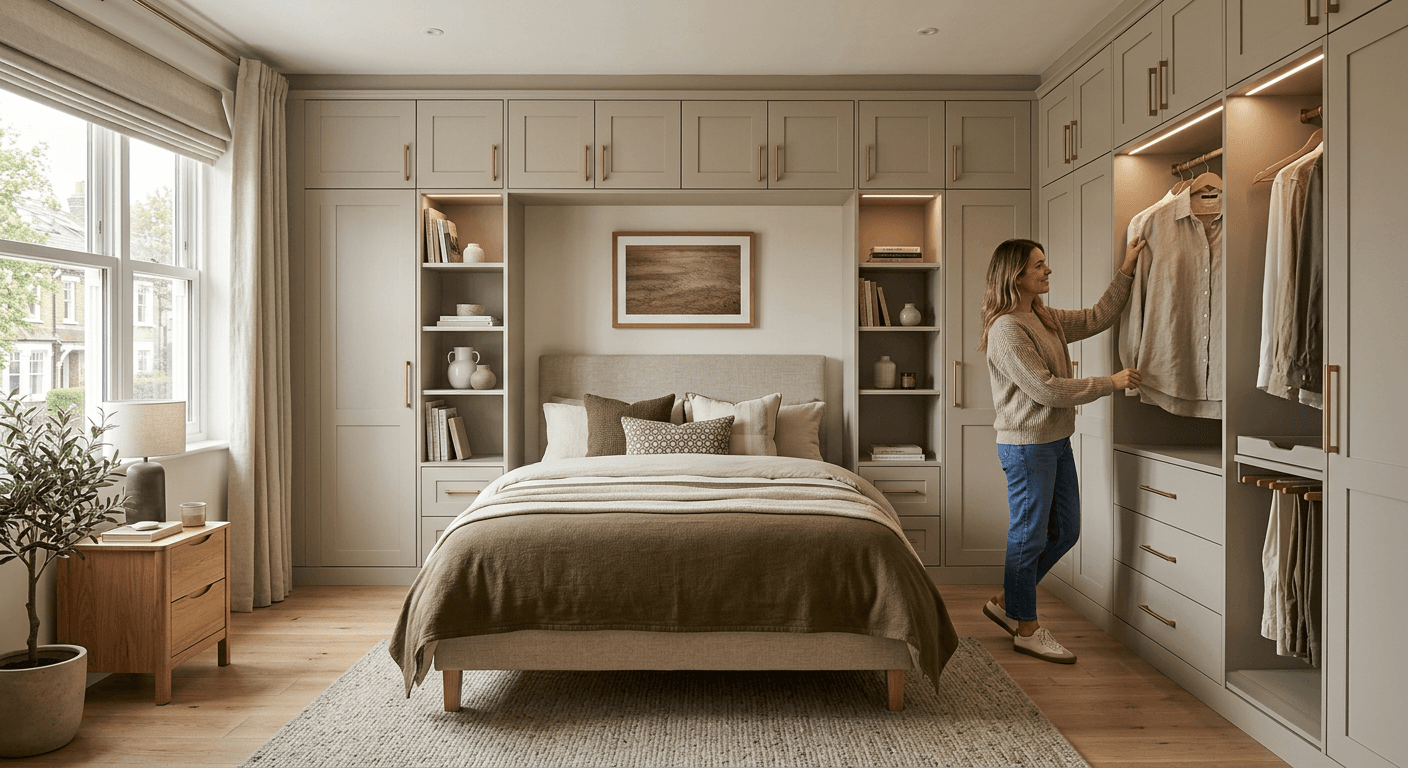
The landscape of fitted bedrooms UK has shifted dramatically over the past two years. Gone are the days when bulky, floor-to-ceiling beige melamine dominated British homes. Today's homeowners want smarter storage, sustainable materials, and bedroom furniture that actually earns its keep in our increasingly compact living spaces.
We've seen a fundamental change in how people approach bedroom design. The pandemic-driven reassessment of our homes has made the bedroom more than just a place to sleep—it's become a multifunctional sanctuary that needs to work harder than ever.
Key Takeaways
- Fitted wardrobes now cost £1,200–£4,500 for average UK bedrooms, with London prices 20-30% higher
- Sliding door systems have overtaken hinged doors as the default choice for space-conscious homeowners
- Sustainable materials and modular designs are replacing traditional MDF as buyers demand flexibility
- Built-in storage solutions deliver significantly better value per cubic metre than freestanding furniture in rooms under 3.5m wide
- Walk-in wardrobes are no longer just for luxury homes—clever partitioning makes them viable in standard 3m × 4m bedrooms
What's Dominating the Fitted Bedrooms Market Right Now
Handless designs have swept through the bedrooms sector with remarkable speed. The clean, push-to-open mechanisms borrowed from contemporary fitted kitchens now account for roughly 60% of new installations according to businesses in our directory. These aren't just aesthetic choices—they're genuinely practical in narrow bedrooms where protruding handles create collision hazards.
Textured finishes have displaced the glossy doors that dominated 2015–2020. Matt surfaces in deep greens, terracotta, and warm greys have become the safe middle-ground choice. We're seeing far fewer requests for high-gloss white, which now reads as dated rather than contemporary.
The quality gap between budget and premium fitted furniture has narrowed considerably. Even mid-range suppliers now offer soft-close mechanisms as standard—something that cost £15–£20 extra per door just five years ago. Dovetail drawer joints and full-extension runners have become baseline expectations rather than premium upgrades.
How Much Do Fitted Wardrobes Cost in the UK?
Pricing remains one of the most opaque aspects of the fitted bedroom industry, but we can offer realistic brackets based on recent quotes from suppliers listed on HouseJester.
For a standard single wall of fitted wardrobes (2.4m wide × 2.3m high):
- Budget range: £1,200–£2,000 for rigid carcass systems from national suppliers like Sharps or Hammonds during promotional periods
- Mid-range: £2,000–£3,500 for good quality materials with some customisation
- Premium: £3,500–£6,000+ for bespoke joinery with premium internals and finishes
A complete bedroom with three walls of storage, including bridging units above the bed, typically runs £4,500–£12,000 depending on specification and location. London installers charge 20–30% more than equivalent services in Birmingham or Manchester.
The fitted wardrobes vs freestanding cost comparison shifts dramatically when you factor in longevity. While a decent freestanding wardrobe from John Lewis costs £800–£1,500, fitted systems last 15–20 years versus 7–10 for freestanding units. The per-year cost often favours fitted storage, especially when you account for the superior space efficiency.
Building Regulations don't typically apply to fitted bedroom furniture unless you're creating new structural openings or affecting fire escape routes. However, any electrical work for integrated lighting must comply with Part P and should be completed by a qualified electrician.
Sliding Door Wardrobes: Pros and Cons
Sliding door wardrobes have become the default recommendation for any bedroom under 4m wide, but they're not universally superior.
Advantages:
- Save 50–60cm of floor space compared to hinged doors
- Create a clean, hotel-like aesthetic
- Can incorporate mirror panels without the safety concerns of hinged mirror doors
- Better suited to awkward ceiling angles or sloped ceilings
- Allow furniture placement closer to wardrobe fronts
Drawbacks:
- Only provide access to half the wardrobe width at any time
- Track systems require periodic maintenance and cleaning
- Bottom tracks can be trip hazards and collect dust
- Typically cost £200–£400 more than hinged equivalents
- Cannot open both sides simultaneously when sharing a wardrobe
The sliding door wardrobes pros and cons balance has shifted as track technology improved. Modern top-hung systems eliminate the bottom track entirely, addressing the dust and trip issues that plagued older designs. We recommend specifying top-hung mechanisms despite the £150–£250 premium—they're worth every penny.
Mirror panels remain controversial. They're brilliant for small rooms and create the illusion of space, but they also require regular cleaning and show every fingerprint. Opt for one or two mirror panels rather than an entire run—you'll thank yourself when cleaning day arrives.
Walk-in Wardrobe Design Ideas UK
Walk-in wardrobes have democratised significantly. You don't need a country estate—just smart planning and about 1.5m × 2m of floor space.
The most successful small bedroom storage ideas built-in to create walk-in functionality involve borrowing space from adjacent rooms. We've seen brilliant conversions where homeowners sacrifice a small box room or partition off the end of a double bedroom to create dedicated dressing space. The minimum viable walk-in measures roughly 1.2m wide (to allow 60cm hanging space each side plus 60cm central access).
L-shaped layouts work best in compact walk-ins. Position hanging rails on the two long sides with a shoe rack or drawer unit at the far end. The minimum comfortable depth for clothes hanging is 55cm, but 60cm provides better clearance for coat hangers and reduces clothes creasing.
Lighting makes or breaks walk-in spaces. Building Regulations Part L requires any new fixed lighting to be LED and achieve minimum efficacy standards. Motion-sensor LED strips have dropped to £25–£40 for 2m lengths from Screwfix or Toolstation—install them on overhead shelving to eliminate dark corners.
Ventilation deserves serious consideration. Walk-in wardrobes without windows can develop moisture and musty odours, particularly in properties with limited whole-house ventilation. A simple 4-inch inline extractor fan costs £30–£60 and prevents most issues, though it may require Building Control notification depending on your local authority's interpretation of Part F.
What Is the Best Mattress Type for Side Sleepers?
Mattress technology has fragmented into dozens of subcategories, making straightforward recommendations increasingly difficult. For side sleepers specifically, medium-soft to medium-firm mattresses (4–6 on a 10-point scale) typically provide the best pressure relief for shoulders and hips.
Pocket sprung mattresses remain the gold standard for side sleepers in the UK. The individually wrapped springs contour to body shape more effectively than traditional open-coil systems. Expect to pay £400–£800 for a decent quality king-size pocket sprung mattress from UK manufacturers like Harrison Spinks or Millbrook Beds.
Memory foam has split into two camps: traditional temperature-sensitive foam and newer gel-infused versions. The best mattress for back pain UK specialists often recommend combines pocket springs with a memory foam comfort layer—this hybrid approach provides support where needed while cushioning pressure points. The Dreams "Rest" range and similar mid-market options (£500–£900) hit this sweet spot.
According to Which? testing from 2023, mattress lifespan varies dramatically by construction type. Budget memory foam mattresses (under £400) typically show significant degradation after 4–5 years, while quality pocket sprung options maintain support for 8–10 years.
The mattress-in-a-box phenomenon has matured considerably. Early entrants like Eve and Simba have been joined by dozens of competitors, driving prices down but also creating quality variation. The 100-night trial periods these companies offer provide genuine risk-free testing—something traditional retailers rarely match.
How Do I Maximise Storage in a Small Bedroom?
Small bedroom storage ideas built-in deliver dramatically better space efficiency than any freestanding solution. The key principle: use every cubic centimetre from floor to ceiling.
Over-bed storage bridging units add 40–60% more storage capacity without consuming additional floor space. Modern designs have moved away from the claustrophobic box-above-head aesthetic of the 1990s. Contemporary bridging units sit 30–40cm above the headboard with open shelving or discreet cupboards that don't loom over sleepers.
Under-bed storage remains chronically underutilised. Beds with hydraulic lift mechanisms (ottoman beds) provide access to 0.3–0.4 cubic metres of sealed storage—enough for seasonal clothing, spare bedding, or luggage. These cost £300–£600 more than standard bed frames but eliminate the need for additional furniture in constrained spaces.
Corner units deserve special mention. The triangular dead space in bedroom corners accounts for roughly 0.2 square metres per corner—multiply that by four corners and you've lost nearly a square metre. Fitted systems with angled corner units or pull-out carousel mechanisms (£120–£200 per corner) reclaim this wasted space.
The vertical divide principle works brilliantly in small bedrooms: use the lower 1.2m for frequently accessed items with full-depth storage, then switch to shallower shelving above for occasional-access items. This prevents the arms-fully-extended struggle to reach items at the back of high shelves.
Slim-profile furniture has emerged as a micro-trend. Wardrobes with 45cm depth instead of the standard 60cm sacrifice some hanging space but can mean the difference between a navigable room and an obstacle course. You'll lose approximately 15% hanging capacity but gain much more valuable floor space for movement.
Emerging Trends to Watch
Modular systems are eating into traditional fitted bedroom territory. Companies like IKEA's PAX and John Lewis's Elstra ranges offer semi-fitted solutions that split the difference between bespoke joinery and flat-pack furniture. These typically cost 30–40% less than fully fitted equivalents while offering reasonable customisation.
Sustainability has moved from nice-to-have to deal-breaker for a growing segment. FSC-certified timber, formaldehyde-free boards, and water-based finishes now feature prominently in marketing materials. Several UK manufacturers have achieved Furniture Industry Sustainability Programme (FISP) certification—look for this when comparing suppliers.
Integrated charging stations and cable management have become standard requests. USB sockets built into bedside units cost £8–£15 per double outlet and eliminate trailing cables. Wireless charging pads integrated into bedside surfaces represent the next evolution, though these add £40–£60 per unit.
The multifunctional bedroom concept has gained serious traction. Fitted furniture that incorporates fold-down desks, concealed dressing tables, or hidden TV units reflects how bedrooms now serve multiple purposes. These integrated solutions typically add 15–25% to baseline costs but eliminate the need for additional furniture.
What's Fading Away
High-gloss finishes have fallen dramatically from favour. The mirror-like surfaces that dominated 2010–2018 now read as dated and show every fingerprint and smudge. Matt and textured finishes have comprehensively won this battle.
Matching bedroom sets—the coordinated bed frame, wardrobes, and bedside tables sold as packages—have virtually disappeared from contemporary design. Today's approach mixes fitted storage with statement bed frames and eclectic bedside pieces for a more collected, personal aesthetic.
Ornate detailing like raised panels, decorative mouldings, and cathedral-arch doors have largely vanished except in traditional country-house settings. Clean lines and minimal hardware dominate current aesthetics.
The massive floor-to-ceiling mirrored wardrobes of the 1980s and 1990s occasionally resurface during house clearances, triggering collective shudders. These relics are expensive to remove (£200–£400 including disposal) and impossible to sell secondhand—a cautionary tale about following trends too enthusiastically.
Taking Action
The fitted bedroom market has matured into a sophisticated industry offering genuine value for homeowners willing to invest in quality. Start by measuring your space accurately—height, width, and depth at multiple points, as older properties rarely have perfectly square rooms.
Get at least three quotes from different suppliers. Price variation can reach 40–50% for identical specifications. Be specific about what's included: does the quote cover installation, removal of old furniture, electrical work for lighting, and final decoration around the units?
Timing matters for pricing. January and February typically offer the best deals as suppliers chase quiet-period sales with genuine discounts of 15–25%. Avoid peak summer months when lead times extend and negotiation room shrinks.
Check whether your chosen supplier carries adequate insurance and belongs to a relevant trade body. The Furniture Ombudsman scheme provides dispute resolution for members—worth checking before committing to expensive installations.
Browse verified bedrooms specialists on HouseJester to compare local suppliers, read reviews, and find businesses with proven track records. Our directory covers the full spectrum from budget-friendly options to luxury bespoke joinery across all major UK regions. If you're a bedroom specialist looking to reach more customers, list your business on our platform.
Sources & Further Reading
- Which? - Best Mattress Buying Guide - Independent testing and recommendations for UK mattress buyers
- Homebuilding & Renovating - Fitted Bedroom Furniture Guide - Comprehensive advice on planning and installing fitted bedrooms
- Building Regulations Approved Documents - Planning Portal - Official guidance on Part L (lighting efficiency), Part P (electrical safety), and Part F (ventilation)
This article was created with AI assistance and reviewed by the HouseJester editorial team for accuracy and relevance.
Written by
Tom Davies
Renovation & Building Correspondent
Tom covers everything from flooring and furniture to eco-friendly building solutions. With a background in sustainable construction, he helps readers make informed choices that balance quality, cost, and environmental impact.
- Flooring
- Furniture
- Storage Solutions
- Eco & Sustainable