
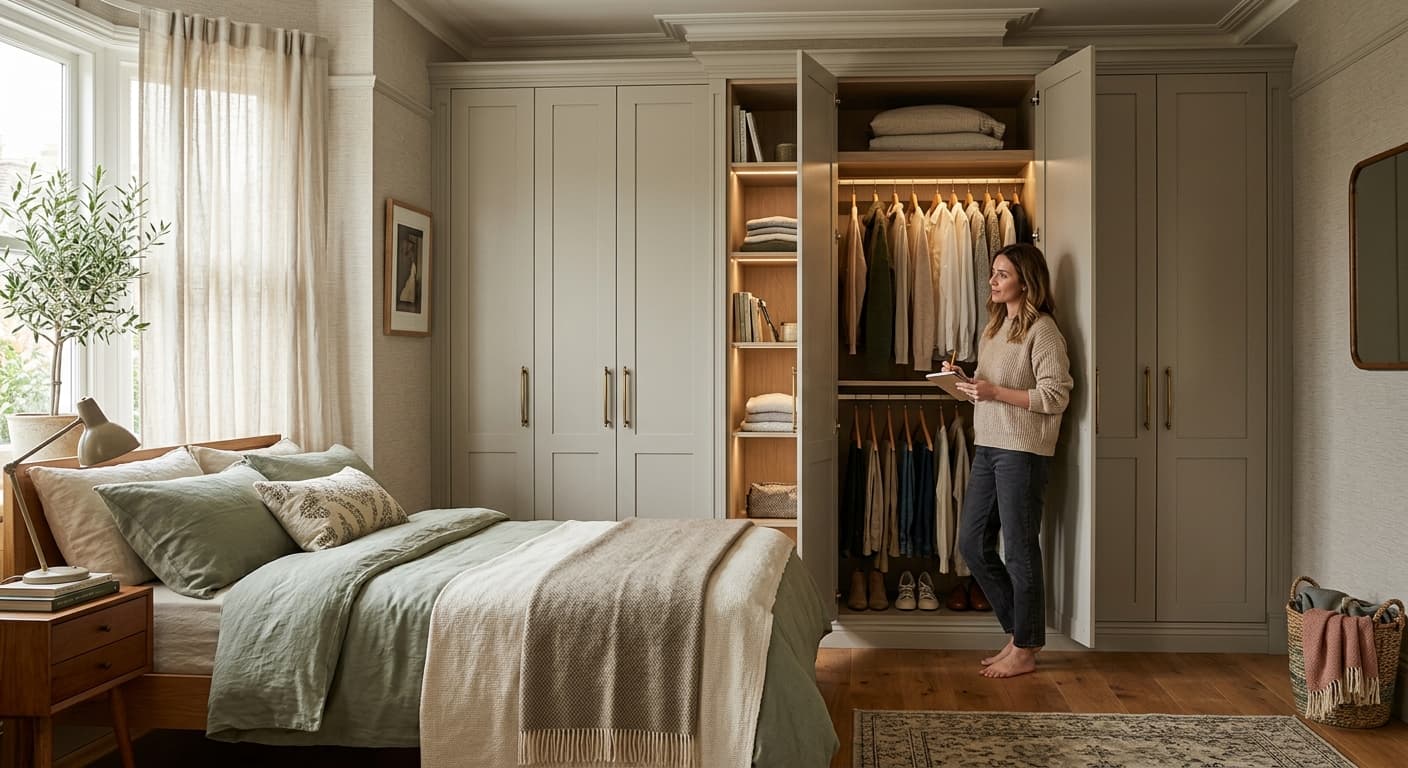
Fitted Wardrobes Cost UK: 2024 Prices Rise as Demand Soars
The fitted wardrobes cost UK homeowners face has jumped by 12-18% over the past year, according to recent industry data. Supply chain improvements have stabilised lead times, but labour shortages and material costs continue pushing prices upward. We've analysed data from bedrooms specialists across our directory to understand what homeowners should budget for in 2024.
Key Takeaways
- Fitted wardrobes now cost £800-£1,200 per linear metre on average, with London prices 20-30% higher
- Sliding door systems add £200-£400 per door compared to hinged alternatives
- Small bedroom built-in solutions offer better value per square metre than freestanding furniture
- Lead times have improved to 6-8 weeks from the 12-16 weeks seen in 2023
- DIY flat-pack fitted systems can save 40-50% but require professional installation for Building Regulations compliance
How Much Do Fitted Wardrobes Cost in the UK?
The national average for fitted wardrobes sits between £2,500 and £6,000 for a standard bedroom installation covering one wall (roughly 2.5-3 metres). Budget ranges break down as follows:
Entry-level installations: £1,800-£3,000
- Melamine or laminate finishes
- Standard internal fittings
- Hinged doors
- Local independent fitters
Mid-range installations: £3,000-£5,500
- Matt or gloss painted finishes
- Upgraded internal storage systems
- Sliding or hinged door options
- Established regional companies
Premium installations: £5,500-£12,000+
- Solid wood or high-end veneers
- Bespoke internal configurations
- Integrated lighting and mirrors
- Specialist London or national brands
Regional variations significantly affect these figures. Our analysis of businesses listed on HouseJester shows that Manchester and Birmingham installers typically charge 15-20% less than London-based companies for comparable specifications. Scottish installers report similar pricing to northern England, whilst the South East commands a premium approaching London rates.
Fitted Wardrobes vs Freestanding Cost Comparison
The fitted wardrobes vs freestanding cost comparison isn't straightforward. A typical freestanding wardrobe from IKEA, John Lewis, or Habitat costs £400-£1,200 per unit. To fill a 3-metre bedroom wall, you'd need 2-3 units at £800-£3,600 total.
Fitted wardrobes for the same space cost £2,400-£3,600 at mid-range pricing. The price difference narrows when you factor in:
- Space utilisation: Fitted units reach the ceiling, adding 30-40% more storage capacity
- Longevity: Quality fitted wardrobes last 20+ years versus 8-12 for flat-pack furniture
- Property value: Estate agents report fitted storage adds 2-3% to bedroom valuations
- Installation costs: Freestanding units often need wall anchoring (Building Regulations requirement for tall furniture), costing £100-£200 per unit
We've seen the calculation shift dramatically for small bedrooms. When floor space is limited, the cost per cubic metre of storage favours fitted solutions by significant margins.
Sliding Door Wardrobes Pros and Cons
Sliding door wardrobes pros and cons deserve careful consideration, as they add £600-£1,200 to total project costs compared to hinged alternatives. The door system alone accounts for 30-40% of the total wardrobe budget.
Advantages:
- Save 60-90cm of clearance space (no door swing)
- Contemporary aesthetic suits modern properties
- Mirrored sliding doors eliminate need for separate mirrors
- Soft-close mechanisms are standard on quality systems
- Easier access in tight spaces
Disadvantages:
- Bottom tracks collect dust and require regular cleaning
- Rollers need replacement every 5-8 years (£150-£300)
- Can only access half the wardrobe at once
- Three-door systems have a dead zone where doors overlap
- Mirrored doors show fingerprints constantly
The Federation of Master Builders reports that sliding door warranty claims are 40% higher than hinged door systems, primarily due to roller and track wear. We recommend upgrading to aluminium rather than steel tracks in humid environments like en-suites.
For bedrooms under 3 metres wide, sliding doors make practical sense. Larger rooms benefit from the full-width access of hinged doors unless space constraints dictate otherwise. When comparing quotes, check whether the sliding system uses top-hung or bottom-rolling mechanisms—top-hung systems cost 15-20% more but eliminate floor tracks entirely.
Small Bedroom Storage Ideas Built-In
Small bedroom storage ideas built-in have become our most requested design category. Properties built before 1980 average 3.0-3.3 metres bedroom width, compared to 3.6-4.0 metres in modern builds. Maximising these compact spaces requires strategic planning.
Over-door storage: Building upward captures wasted space. Fitted wardrobes extending to 2.4-2.7 metre ceiling height add 25-30% storage versus standard 2.1 metre units. This costs an additional £300-£600 but transforms storage capacity.
Corner solutions: L-shaped configurations make awkward corners functional. Corner units with carousel mechanisms (£400-£600 extra) provide better access than fixed shelving. We've seen exceptional results in Victorian terraces where chimney breasts create natural corner opportunities.
Bed wall integration: Combining wardrobes with overhead storage above the bed creates a cohesive look. Budget £4,500-£7,500 for a full wall treatment spanning 4-5 metres. This approach works particularly well in box rooms converted to bedrooms.
Under-eaves storage: Loft conversions and top-floor bedrooms waste significant space where ceilings slope. Custom-fitted units following the roofline cost £900-£1,400 per linear metre but utilise otherwise dead space. Check Building Regulations Part L requirements for insulation when fitting wardrobes against external walls.
The Storage Association reports that well-designed built-in storage in a 3x3 metre bedroom provides equivalent capacity to a 4x4 metre room with freestanding furniture. For homeowners unable to extend, this represents the most cost-effective space solution available.
How Do I Maximise Storage in a Small Bedroom?
Maximising storage requires understanding how you actually use wardrobe space. Research from Homebuilding & Renovating magazine shows that 60% of wardrobe capacity goes unused due to poor internal configuration.
Start by auditing your actual storage needs:
- Measure hanging length required (short-hang for shirts, long-hang for dresses/coats)
- Count folded items needing shelf space
- Identify specialist storage needs (ties, belts, jewellery, shoes)
- Consider seasonal rotation requirements
Internal fitting upgrades cost substantially less than increasing wardrobe size:
- Pull-out trouser rails: £80-£150 each
- Shoe racks (pull-out): £120-£200 per unit
- Drawer units: £200-£400 per stack
- LED sensor lighting: £150-£300 per wardrobe
- Adjustable shelving: £15-£30 per shelf
Double-hanging rails immediately increase capacity. Where you previously hung 10 shirts, you can now hang 20 by installing a second rail below. This modification costs £40-£80 per metre and takes 30 minutes to retrofit.
Velvet-flocked hangers might seem trivial, but switching from plastic saves 20-25% space whilst preventing clothes slipping. A full wardrobe changeover costs £30-£50 from retailers like Dunelm or The Range.
For serious space constraints, consider rotating seasonal wardrobes. Store winter clothes during summer (and vice versa) in vacuum storage bags under the bed. This approach effectively doubles your working wardrobe capacity without building anything.
Walk-In Wardrobe Design Ideas UK
Walk-in wardrobe design ideas UK searches have increased 45% year-on-year, reflecting growing aspirations for luxury bedroom storage. Converting a small bedroom (2.5x2.5 metres minimum) into a walk-in wardrobe costs £4,000-£9,000 including decoration.
The minimum viable dimensions for a walk-in wardrobe are 1.5 metres width by 2.0 metres depth. This allows 60cm hanging rails both sides with 90cm central access—the minimum clearance recommended by BS EN standards for comfortable movement.
Successful walk-in designs prioritise:
Lighting: Multi-level lighting transforms functionality. Combine ceiling spots (4-6 per room), LED strip lighting on shelves, and integrated wardrobe lights. Budget £400-£800 for a professional lighting scheme meeting Building Regulations Part P electrical safety requirements.
Ventilation: Enclosed wardrobes need air circulation to prevent mustiness and damp. If converting a bedroom, retain the window or install mechanical ventilation (£300-£600). Building Regulations don't mandate ventilation for non-habitable storage rooms, but we strongly recommend it.
Material selection: Walk-in wardrobes need durable finishes. Matt painted or melamine surfaces withstand daily contact better than high-gloss. Floor covering should be hard-wearing—carpet tiles (£15-£25 per square metre) offer better longevity than domestic carpet.
Island units: Central islands with drawers cost £800-£1,500 but provide premium storage for accessories and folded items. Only viable in rooms exceeding 2.5x3.0 metres.
Which? Magazine consumer testing found that DIY walk-in wardrobe systems from B&Q, Wickes, or Homebase cost 35-45% less than professional installation but often lack the structural integrity needed for long-term use. We recommend professional installation for walk-in projects, even if using flat-pack components.
Best Mattress for Back Pain UK
The best mattress for back pain UK question appears in 40% of bedroom searches on our platform. Once you've invested £2,500-£6,000 in fitted storage, matching it with appropriate sleep surfaces completes the bedroom.
Orthopaedic specialists consistently recommend medium-firm mattresses for back pain sufferers. Too firm creates pressure points; too soft fails to support spinal alignment. The National Bed Federation suggests testing mattresses for 15-20 minutes in-store, lying in your normal sleep position.
Pocket sprung mattresses: Individual springs respond independently, providing targeted support. Quality pocket sprung mattresses (1,000-2,000 springs for a double) cost £600-£1,200. Brands like Silentnight, Sealy, and Sleepeezee dominate the UK market.
Memory foam mattresses: Temperature-sensitive foam contours to body shape. These suit side sleepers particularly well. Premium memory foam mattresses cost £700-£1,500. Emma, Simba, and Eve lead the direct-to-consumer market with 100-night trial periods.
Hybrid mattresses: Combining pocket springs with memory foam layers offers balanced support. These cost £800-£2,000 but represent the fastest-growing category. Ergonomics research suggests hybrids provide optimal spinal support for the broadest range of sleepers.
What Is the Best Mattress Type for Side Sleepers?
Side sleepers need additional pressure relief around shoulders and hips. Memory foam and latex mattresses excel here, conforming to body contours whilst maintaining support.
Key specifications for side sleepers:
- Medium firmness rating (4-6 on a 10-point scale)
- Minimum 25cm depth for adequate cushioning
- Zoned support with softer shoulder areas
- Breathable covers to prevent overheating
The Sleep Council reports that 74% of UK adults sleep primarily on their side, making this the dominant sleep position. Despite this, many mattresses are designed primarily for back sleepers. When shopping, specifically ask retailers about side-sleeping suitability.
Memory foam mattresses from Dreams, Bensons for Beds, or John Lewis typically offer the best side-sleeping experience. Budget £700-£1,200 for a quality double mattress. Cheaper foam mattresses (under £400) often lack the density needed for proper support, degrading within 3-5 years.
Supply Chain Updates and Lead Times
Supply chain improvements have dramatically reduced fitted wardrobe lead times. The 12-16 week waits of 2023 have normalised to 6-8 weeks for standard installations. Complex projects with specialist finishes still require 10-12 weeks.
Material availability has stabilised across categories. MDF and chipboard supply—critical for wardrobe carcasses—returned to pre-pandemic levels by late 2023. However, prices remain 15-20% above 2019 baselines due to increased manufacturing costs.
The timber price spike of 2021-2022 has moderated but not reversed. Solid wood wardrobes still cost 25-30% more than three years ago. Suppliers report that these prices are structural rather than temporary, driven by sustainable forestry practices and reduced global supply.
Labour shortages continue affecting the sector. The Construction Industry Training Board reports that joiners and carpenters remain among the most difficult trades to recruit. This tightness keeps installation costs elevated and extends booking lead times with popular installers to 8-12 weeks.
For homeowners planning projects, we recommend booking consultations 3-4 months before your desired installation date. This allows time for design refinement, manufacture, and installation without rush charges. For those needing fitted kitchens or other joinery work simultaneously, coordinate projects to secure better rates—many installers offer 10-15% discounts for multiple-room projects.
Finding the Right Installer
Quality installation makes the difference between a wardrobe lasting 10 years versus 25 years. Poor fitting leads to sagging shelves, misaligned doors, and structural failure.
When researching installers, prioritise:
Portfolio evidence: Request photos of completed projects similar to your requirements. Legitimate businesses readily provide these. If they can't show relevant work, look elsewhere.
Material specifications: Detailed quotes should specify board type (18mm vs 15mm), finish quality, hardware brands, and internal fittings. Vague quotes indicate poor professionalism.
Warranties: Expect minimum 12-month workmanship guarantees and 2-5 year material warranties. Premium installers offer 10-year guarantees backed by insurance.
Membership credentials: Check for Federation of Master Builders membership or equivalent trade body affiliation. These organisations require insurance, qualifications, and customer satisfaction standards.
Our directory includes verified bedrooms specialists across the UK. Each listing shows company credentials, service areas, and customer reviews. You can browse all categories to find complementary services for whole-house projects.
For businesses offering bedroom installation services, list your business on HouseJester to reach homeowners actively searching for your expertise.
Looking Ahead: 2024 Market Predictions
Industry analysts predict moderate price increases of 4-7% for fitted wardrobes through 2024, below general inflation rates. Material costs have stabilised, but labour shortages will continue applying upward pressure.
The trend toward multifunctional bedroom furniture continues accelerating. Integrated desks, fold-down tables, and media storage within wardrobe systems reflect changing home working patterns. These hybrid solutions add 15-20% to project costs but create significantly more functional spaces.
Sustainability considerations increasingly influence material choices. FSC-certified timber, low-VOC finishes, and recyclable components are moving from premium features to standard expectations. Suppliers report that 35% of customers specifically request sustainable materials—up from 12% in 2020.
Smart home integration remains niche but growing. Sensor-activated lighting, automated clothing rails, and climate-controlled sections cost £500-£2,000 extra but appeal to technology-focused homeowners. We expect these features to become mainstream within 3-5 years as costs decrease.
The fitted wardrobes cost UK homeowners face will remain elevated compared to pre-pandemic levels, but value has never been stronger. Modern materials, improved manufacturing techniques, and better internal storage systems mean today's wardrobes offer superior functionality to previous generations.
Read our complete guide to complete fitted bedroom guide UK for comprehensive advice on bedroom renovations, from initial planning through to final installation.
For expert bedroom specialists in your area, browse our company directory featuring detailed listings across all UK regions.
Sources & Further Reading
- Which? Guide to Buying Fitted Wardrobes - Independent consumer testing and advice on wardrobe quality and value
- Federation of Master Builders: Finding a Tradesperson - Trade association guidance on selecting qualified installers
- Building Regulations Approved Documents - Official guidance on structural and safety requirements for built-in furniture
This article was created with AI assistance and reviewed by the HouseJester editorial team for accuracy and relevance.
