
On this page
Introduction
Choosing the right flooring can transform your home whilst representing one of the most significant investments in any renovation project. With so many flooring options UK homeowners face today—from traditional hardwoods to modern luxury vinyl—understanding the costs, durability, and suitability for your lifestyle is essential before committing to a purchase.
We've compiled this comprehensive cost guide based on current market prices, trade surveys, and insights from flooring specialists across the country. Whether you're renovating a single room or your entire property, this guide will help you make an informed decision that balances budget, aesthetics, and practicality.
Key Takeaways
- Laminate and vinyl flooring offer the most budget-friendly options (£10-£40 per m²), whilst solid hardwood can exceed £100 per m² plus installation
- Installation costs typically add £10-£30 per m² depending on complexity, with London prices running 15-25% higher than national averages
- Engineered wood provides better moisture resistance and underfloor heating compatibility than solid wood, making it more versatile for UK homes
- Family homes benefit most from luxury vinyl tile (LVT) or engineered oak, combining durability with easy maintenance
- Always factor in subfloor preparation costs (£5-£15 per m²), which many homeowners overlook in initial budgets
Understanding UK Flooring Costs in 2024
Flooring costs break down into three main components: materials, installation labour, and preparation work. According to recent Checkatrade data, the average UK homeowner spends between £1,200 and £4,500 on flooring a standard three-bedroom house, though this varies enormously depending on material choice and property location.
Material costs have increased by approximately 12-18% since 2021 due to supply chain pressures and increased shipping costs. Installation labour has similarly risen, with skilled fitters now charging £150-£300 per day depending on region and complexity.
London and the South East consistently command premium prices. We've seen identical projects cost 20-30% more in central London compared to regions like the North West or Wales. A project costing £3,000 in Manchester might reach £3,900 in the capital.
Flooring Material Comparison: Costs and Suitability
| Flooring Type | Cost per m² (Material) | Installation Cost | Lifespan | Best Use Case |
|---|---|---|---|---|
| Laminate | £10-£35 | £10-£15 per m² | 10-25 years | Bedrooms, low-traffic areas |
| Luxury Vinyl Tile (LVT) | £20-£55 | £15-£25 per m² | 15-25 years | Kitchens, bathrooms, family homes |
| Engineered Oak | £30-£80 | £20-£30 per m² | 20-40 years | Living rooms, dining rooms, hallways |
| Solid Hardwood | £50-£120+ | £25-£40 per m² | 50+ years | Prestige rooms, long-term investments |
| Carpet (mid-range) | £15-£40 | £5-£10 per m² | 8-15 years | Bedrooms, stairs |
| Porcelain Tiles | £25-£100 | £30-£50 per m² | 50+ years | Kitchens, conservatories, wet rooms |
Engineered Oak Flooring Cost per m²
Engineered oak represents one of the most popular choices for UK homeowners, and for good reason. The engineered oak flooring cost per m² typically ranges from £30 for basic 3mm wear layer products to £80+ for premium 6mm wear layer options from manufacturers like Kahrs, Boen, or V4 Woodflooring.
Installation adds another £20-£30 per m² for a professional fitting. For a standard 4m x 5m living room (20m²), you're looking at:
- Budget engineered oak: £600-£800 (materials) + £400-£500 (installation) = £1,000-£1,300 total
- Premium engineered oak: £1,200-£1,600 (materials) + £500-£600 (installation) = £1,700-£2,200 total
These prices assume a level subfloor. If you need screed levelling or damp-proof membrane installation, add £200-£400 to the total.
Luxury Vinyl Tile vs Laminate Comparison
The luxury vinyl tile vs laminate comparison represents one of the most common dilemmas for budget-conscious homeowners. Both offer wood-effect aesthetics at accessible price points, but they differ significantly in performance.
Laminate flooring consists of a photographic layer under a protective coating on a fibreboard core. Prices range from £10 per m² for basic 6mm thickness to £35 per m² for 12mm AC5-rated commercial-grade products. B&Q and Wickes stock extensive laminate ranges in the £15-£25 bracket.
Laminate performs well in dry environments but struggles with moisture. We don't recommend it for kitchens or bathrooms unless specifically rated for wet areas. It's not compatible with underfloor heating unless explicitly stated by the manufacturer.
Luxury vinyl tile (LVT) uses multiple PVC layers with a photographic design and polyurethane wear layer. Quality ranges from £20 per m² for 2mm click-system products to £55 per m² for 5mm+ commercial-grade options like Karndean or Amtico.
LVT excels in moisture resistance, making it ideal for kitchens, bathrooms, and utility rooms. It's 100% waterproof, warmer underfoot than laminate, and significantly quieter. According to Which?, LVT outperforms laminate in durability tests for high-traffic areas.
For families seeking the best flooring for pets and children UK specialists recommend, LVT wins decisively. It withstands spills, scratches, and heavy traffic whilst remaining simple to clean.
What is the Most Durable Flooring for a Family Home?
Family homes demand flooring that tolerates the inevitable chaos: muddy footprints, dropped toys, pet accidents, and constant foot traffic. After reviewing feedback from our directory of flooring specialists and independent testing data, we rank family-friendly options as follows:
Best overall: Luxury Vinyl Tile (LVT)
LVT combines exceptional durability with practical benefits. It's completely waterproof, scratch-resistant (especially 0.55mm+ wear layer products), and requires only sweeping and occasional mopping. Karndean's K-Guard+ coating or Amtico's Quantum Guard provide additional protection against scuffs and stains.
Expect to pay £35-£50 per m² for quality family-grade LVT with installation.
Runner-up: Engineered Oak (3mm+ wear layer)
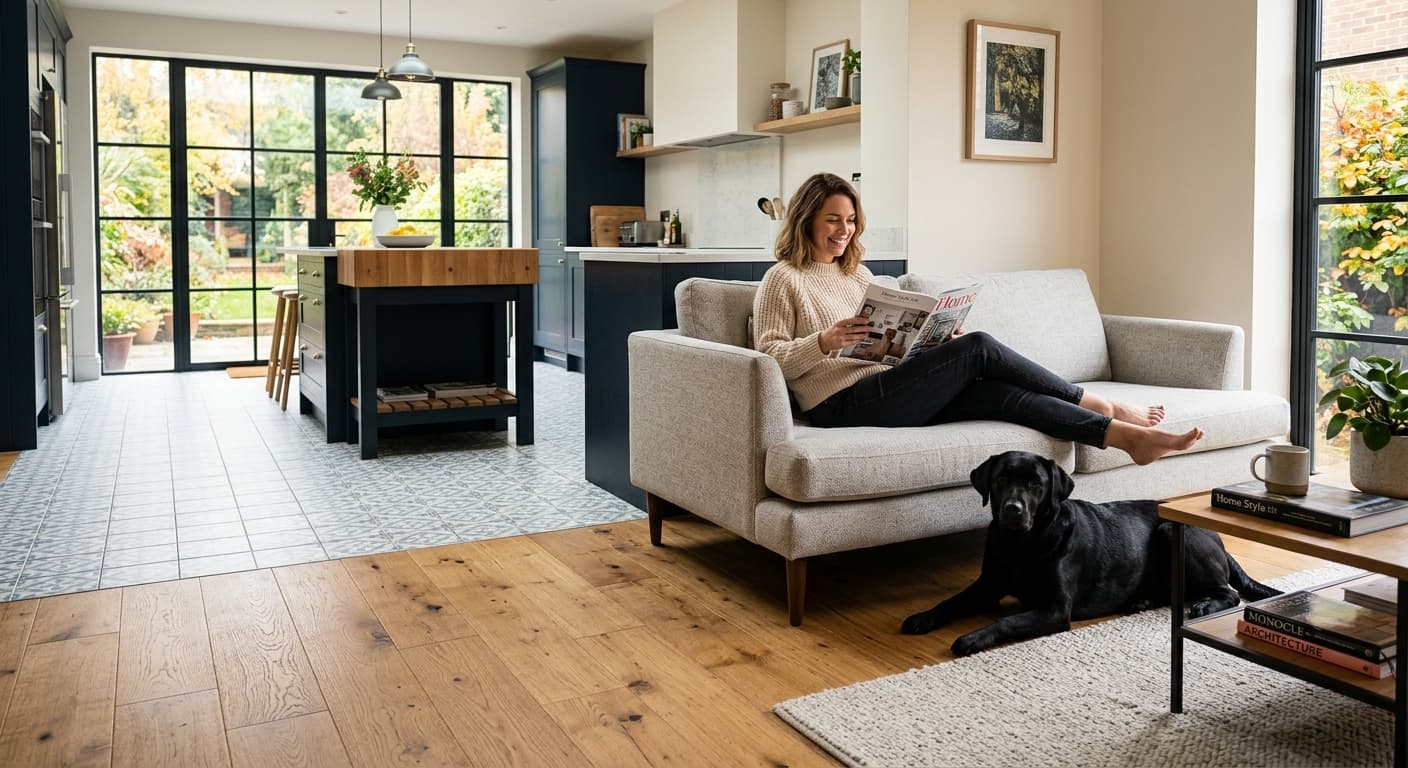
Engineered oak with a robust wear layer and factory-applied lacquer finish provides authentic wood aesthetics with superior stability. Unlike solid wood, it won't cup or warp from moisture fluctuations—crucial in Britain's damp climate.
Brush-finished or distressed oak hides minor scratches better than smooth finishes. Budget £50-£80 per m² including installation for family-appropriate grades.
Budget option: Quality Laminate (AC4 or AC5 rated)
High-grade laminate rated AC4 (general commercial) or AC5 (heavy commercial) handles family traffic admirably in dry areas. Quick-Step, Pergo, and Egger produce excellent ranges at £20-£30 per m².
Avoid it in kitchens or bathrooms. One burst pipe or persistent leak will destroy laminate flooring irreversibly.
Best Flooring for Hallways High Traffic
Hallways represent the highest-traffic area in most homes, collecting outdoor dirt, moisture, and constant footfall. The best flooring for hallways high traffic areas must balance durability, ease of cleaning, and aesthetic appeal.
Porcelain tiles provide unmatched durability and water resistance. Textured or matt finishes prevent slipping when wet—essential for British weather. Prices range from £25-£60 per m² for materials, plus £30-£50 per m² for professional installation. The investment pays off with 50+ year lifespans and minimal maintenance.
Engineered oak offers warmth and elegance whilst handling traffic better than solid wood. Choose wider planks (190mm+) in darker tones or distressed finishes that camouflage wear. The engineered construction prevents seasonal movement common with solid wood in temperature-fluctuating hallways.
LVT excels for families with children or pets. It tolerates wet shoes, muddy paws, and dropped bags whilst remaining comfortable underfoot. Wood-effect LVT replicates oak or walnut aesthetics at half the price of real wood.
We recommend avoiding carpet in hallways unless you're prepared for frequent professional cleaning. Pale laminate also shows every scuff and scratch.
Underfloor Heating Compatible Flooring Types
Underfloor heating (UFH) systems have become increasingly popular in UK homes, particularly with new builds and renovations. However, not all flooring works efficiently with these systems. Understanding underfloor heating compatible flooring types prevents expensive mistakes.
Can you put underfloor heating under laminate?
Yes, but with important caveats. Laminate flooring can work with UFH if it meets specific criteria:
- Maximum thickness of 18mm (laminate plus underlay combined)
- TOG rating below 0.15 for the complete floor build-up
- Explicit manufacturer approval for UFH use
- Proper acclimatisation period before installation
Many budget laminates fail these requirements. The fibreboard core acts as insulation, reducing heating efficiency and potentially causing delamination from temperature cycling. Always check manufacturer specifications before proceeding.
Best UFH-compatible options:
Engineered wood (particularly oak) works excellently with UFH when properly installed. The thinner construction (14-15mm typical) conducts heat better than solid wood's 18-22mm thickness. Maximum surface temperature should remain below 27°C to prevent wood damage.
LVT and vinyl provide optimal heat conductivity. Their thin profile (2-5mm) and plastic composition transfer heat efficiently without risking damage. This makes them ideal for kitchens and bathrooms with UFH.
Porcelain and ceramic tiles offer the best heat conductivity of any flooring. Stone and tiles feel noticeably warmer underfoot with UFH than wood alternatives, making them perfect for bathroom specialists incorporating heated floors.
Avoid solid wood flooring over UFH unless you're working with an experienced installer. The combination creates stability issues and reduced heating efficiency.
Is Engineered Wood Better Than Solid Wood?
This question divides opinion among traditionalists and modernists, but the practical answer depends on your specific circumstances.
Engineered wood advantages:
- Superior dimensional stability prevents cupping and warping from moisture or temperature changes
- Compatible with underfloor heating systems
- Can be installed on concrete subfloors (solid wood requires battens)
- Faster installation using click-lock systems
- More affordable (typically 30-40% less expensive)
- Wider boards available (up to 260mm) without stability concerns
Solid wood advantages:
- Can be sanded and refinished multiple times (engineered wood limited by wear layer thickness)
- Longer potential lifespan (100+ years with proper care)
- Higher resale value and prestige factor
- Completely natural material for environmentally-conscious buyers
For most UK homes, we recommend engineered wood. Britain's climate creates moisture fluctuations that challenge solid wood flooring. Ground floors with concrete subfloors particularly benefit from engineered products.
Solid wood makes sense for upper floors in period properties, prestige installations, or when you plan to remain in the property long-term and value the ability to refinish repeatedly.
Money-Saving Tips for Flooring Projects
Flooring costs add up quickly, but strategic decisions can significantly reduce expenditure without sacrificing quality.
Buy during sale periods. Major retailers like Carpetright, ScS, and independent flooring specialists run substantial sales in January, July, and November. We've seen 30-40% discounts on premium products during these periods.
Consider DIY installation for click-lock systems. Modern engineered wood and LVT with click-lock mechanisms require minimal tools and experience. A confident DIYer can save £300-£600 on a typical room by self-installing. Watch manufacturer tutorial videos before starting.
Order 10% extra, not 15%. Many retailers recommend 15% wastage allowance, but 10% suffices for rectangular rooms without complex cuts. This saves £100-£200 on larger projects.
Prepare the subfloor yourself. Removing old flooring, cleaning, and basic levelling compound application are manageable DIY tasks that save £200-£400 in labour costs.
Compare like-for-like specifications. A £60 per m² engineered oak from a boutique supplier might match a £40 per m² product from Wickes in wear layer thickness and finish quality. Focus on specifications rather than branding.
Time your purchase strategically. Ordering flooring in autumn when construction activity slows can yield better prices and faster availability than spring's peak renovation season.
Source through trade connections. If you're completing multiple trades through a renovation, ask your builder about purchasing flooring through their trade accounts. Typical trade discounts run 15-25% below retail.
Regional Price Variations Across the UK
Flooring costs vary considerably depending on location. Our analysis of flooring businesses across the UK reveals consistent regional patterns:
London and South East: 20-30% above national average
South West: 10-15% above national average
Midlands: 5-10% below national average
North West and Yorkshire: 10-15% below national average
Scotland, Wales, Northern Ireland: 10-20% below national average
A flooring project costing £2,500 in Birmingham might reach £3,000-£3,250 in London for identical materials and scope. Labour costs drive most of this variation, though material delivery charges also contribute.
For major projects, some homeowners in South East England source fitters from neighbouring regions, though this only makes economic sense for projects exceeding £5,000.
Finding Reliable Flooring Specialists
Quality installation matters as much as material choice. Poor fitting ruins even premium flooring, causing gaps, squeaks, and premature failure.
When searching for flooring professionals, verify:
- Membership in trade associations (National Institute of Carpet and Floorlayers, Contract Flooring Association)
- Portfolio of completed projects similar to yours
- Written quotations detailing materials, labour, and preparation work separately
- Insurance coverage (minimum £2 million public liability)
- References from recent local projects
Our directory includes verified flooring specialists across the UK. You can browse all categories or specifically search for flooring professionals in your area. If you're a flooring business owner, you can list your business to reach homeowners actively seeking your services.
Always obtain three written quotations before committing. Price variations of 30-40% between quotes aren't unusual, reflecting differences in material quality, preparation work included, and installer experience.
Final Recommendations
Choosing flooring represents a balance between budget, lifestyle, aesthetics, and longevity. Based on current UK market conditions and price trends:
For young families: LVT in living areas and hallways (£35-£50 per m² installed) provides unbeatable durability and easy maintenance.
For premium homes: Engineered oak with 4mm+ wear layer (£60-£90 per m² installed) delivers authentic wood character with modern reliability.
For rental properties: Quality laminate (£25-£35 per m² installed) offers the best cost-to-lifespan ratio for properties experiencing tenant turnover.
For resale-focused renovations: Engineered wood in reception rooms and LVT in kitchens maximises buyer appeal across demographics.
Remember that flooring influences daily comfort for years. Choosing purely on price often leads to regret. Investing an extra £500-£1,000 in quality materials and professional installation typically proves worthwhile over the flooring's lifespan.
Browse Flooring businesses on HouseJester to find verified specialists in your area who can provide detailed quotations and professional advice tailored to your specific project requirements.
Sources & Further Reading
- Which? Flooring Buying Guide - Independent testing and reviews of UK flooring products
- Homebuilding & Renovating Flooring Cost Guide - Comprehensive UK pricing data and material comparisons
- Checkatrade Flooring Installation Costs - Current UK labour rates and project costs based on trade surveys
This article was created with AI assistance and reviewed by the HouseJester editorial team for accuracy and relevance.
Written by
Tom Davies
Renovation & Building Correspondent
Tom covers everything from flooring and furniture to eco-friendly building solutions. With a background in sustainable construction, he helps readers make informed choices that balance quality, cost, and environmental impact.
- Flooring
- Furniture
- Storage Solutions
- Eco & Sustainable