
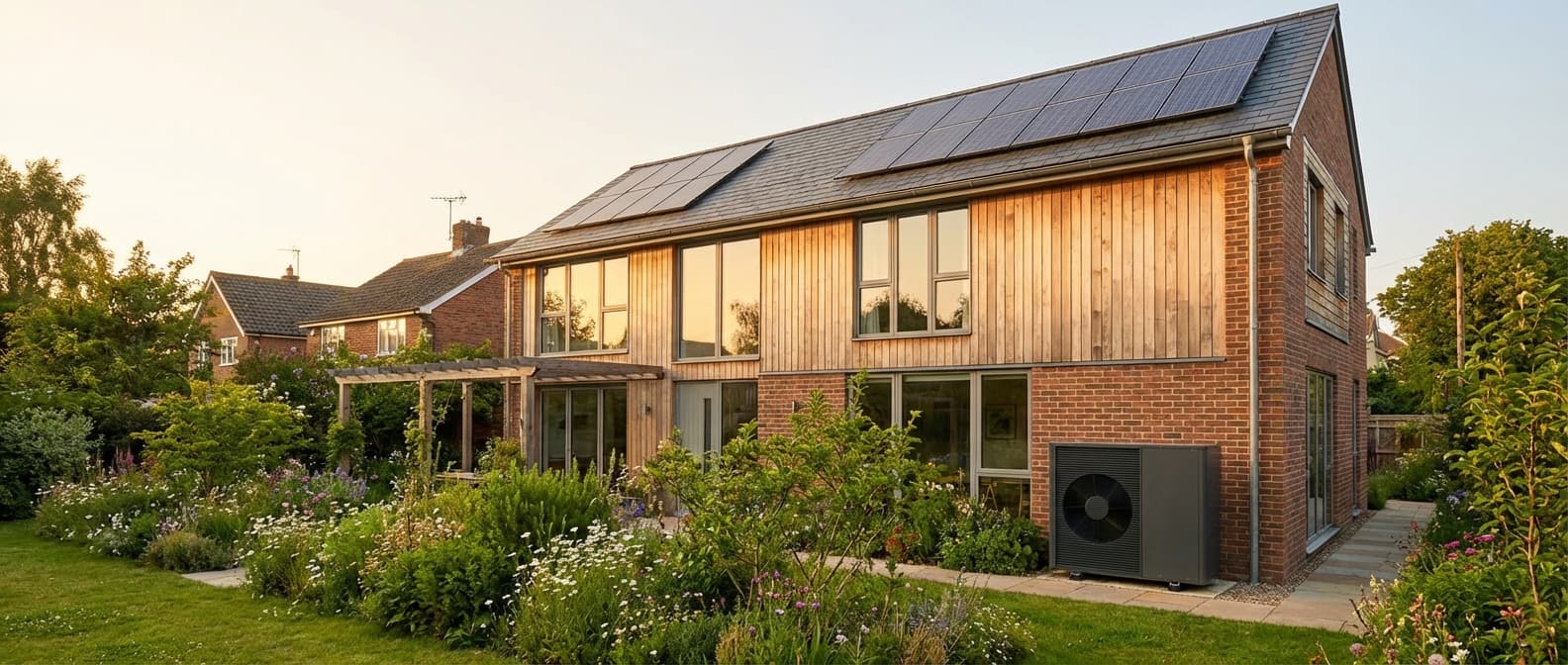
The Future Homes Standard (FHS) is the most significant overhaul of building regulations in a generation. Taking full effect in December 2026, it will reshape how homes are built, renovated, and furnished across the United Kingdom. Whether you are planning an extension, a loft conversion, or simply updating your interiors, understanding these regulations is essential.
This guide breaks down the key changes, explains how they affect homeowners and tradespeople, and outlines what the furniture and interior design industry needs to know.
What Is the Future Homes Standard?
The Future Homes Standard is a set of updated Building Regulations (primarily Part L — Conservation of Fuel and Power, and Part F — Ventilation) designed to ensure that new homes built from late 2026 onwards produce 75-80% less carbon emissions than those built under current regulations. The goal is to make all new-build homes "zero carbon ready" — meaning they will not require retrofitting to meet net-zero targets by 2050.
While the Standard primarily applies to new-build properties, the updated Part L and Part F requirements also apply to extensions, conversions, and major renovations of existing buildings.
Key Changes at a Glance
Gas Boiler Ban in New Builds
From December 2026, new-build homes will no longer be fitted with gas boilers. The government is pushing a transition to low-carbon heating systems, principally air-source and ground-source heat pumps. The heat pump market is expected to triple, with installations reaching 300,000 units per year by 2028, up from approximately 100,000 in 2024.
The Boiler Upgrade Scheme (BUS) provides grants of up to £7,500 towards the cost of a heat pump installation, making the transition more affordable for homeowners retrofitting existing properties.
Triple Glazing and Enhanced Insulation
New-build homes will require significantly higher levels of insulation and airtightness. Triple glazing is expected to become the default standard, and wall insulation U-values will tighten. For homeowners planning extensions or loft conversions, this means thicker wall build-ups and more attention to thermal bridging.
Improved Ventilation
With homes becoming more airtight, mechanical ventilation with heat recovery (MVHR) systems are replacing traditional trickle vents and extractor fans. These systems recover heat from stale outgoing air and use it to warm fresh incoming air, improving energy efficiency without sacrificing air quality.
Renewable Energy Integration
New homes will be expected to incorporate renewable energy generation — typically rooftop solar PV panels. Battery storage is increasingly paired with solar to maximise self-consumption and reduce reliance on the grid.
How Does the FHS Affect Renovations and Extensions?
If you are building an extension, converting a loft, or undertaking a major renovation, the updated Part L and Part F requirements apply to the new work. This means:
- Higher insulation standards for new walls, floors, and roofs
- Low-carbon heating for any new heating systems installed
- Improved ventilation in the new or altered spaces
- Energy-efficient glazing — double glazing as an absolute minimum, with triple glazing encouraged
The estimated cost increase for meeting the updated regulations is 3-7% above current building costs. For a typical single-storey rear extension costing £40,000, this translates to an additional £1,200-£2,800.
Impact on the Furniture and Interior Design Industry
The Future Homes Standard does not only affect bricks and mortar. It has significant implications for the furniture and interiors sector.
Extended Producer Responsibility (EPR)
The government is introducing Extended Producer Responsibility for furniture and mattress manufacturers. Under EPR, producers will be financially responsible for the end-of-life disposal and recycling of their products. This is expected to encourage manufacturers to design furniture for longevity, repairability, and recyclability — and may add a small surcharge to retail prices.
Simpler Recycling Reforms
New Simpler Recycling regulations require businesses, including furniture retailers and manufacturers, to separate waste into defined streams (paper/card, plastics, metals, glass, food, textiles). These reforms aim to increase recycling rates and reduce landfill, and they require compliance from businesses of all sizes.
Circular Economy Strategy
The government's Circular Economy Strategy encourages the furniture industry to move away from a "take-make-dispose" model. Expect to see more brands offering take-back schemes, refurbishment services, and products made from recycled or sustainably sourced materials.
Design Considerations
Interior designers and kitchen specialists are adapting to accommodate the physical requirements of new building services. Heat pump units, MVHR ducting, and battery storage all require space within the home, which affects furniture layouts and storage planning. Designers listed on HouseJester are increasingly experienced in working around these systems.
What Should Homeowners Do Now?
-
Plan ahead — If you are considering a major renovation or extension, factor the updated regulations into your budget and timeline. Consult a qualified architect or building surveyor who understands the 2026 changes.
-
Consider heat pumps early — Even if your existing home is not subject to the FHS, installing a heat pump now (with the BUS grant) can reduce your energy bills and carbon footprint. Use HouseJester to find qualified heating engineers in your area.
-
Choose sustainable furniture — Look for products made from FSC-certified timber, recycled materials, and low-VOC finishes. Ask retailers about their EPR compliance and take-back policies.
-
Improve insulation — Upgrading insulation in your existing home is one of the most cost-effective ways to reduce energy consumption, regardless of whether you are legally required to meet the new standards.
-
Ventilation matters — If you are sealing up draughts and improving insulation, ensure adequate ventilation to prevent condensation and maintain indoor air quality.
Finding the Right Professionals
Navigating new building regulations requires experienced professionals. Whether you need an architect who understands Part L compliance, a heating engineer certified to install heat pumps, or an interior designer who can work around MVHR systems, finding the right specialist is essential.
Browse verified professionals on HouseJester to compare portfolios, read reviews, and request quotes from companies that are up to speed with the 2026 regulations.
Key Dates
| Date | Milestone |
|---|---|
| 2025 | Interim uplift to Part L and Part F takes effect |
| December 2026 | Full Future Homes Standard comes into force for new builds |
| 2028 | Heat pump installations expected to reach 300,000/year |
| 2050 | UK net-zero carbon target |
The Future Homes Standard represents a fundamental shift in how the UK builds and lives. For homeowners, tradespeople, and the furniture industry alike, preparation is key. Start planning now, choose sustainable options where possible, and work with professionals who understand what is coming.
This article was created with AI assistance and reviewed by the HouseJester editorial team for accuracy and relevance.