
On this page
Introduction
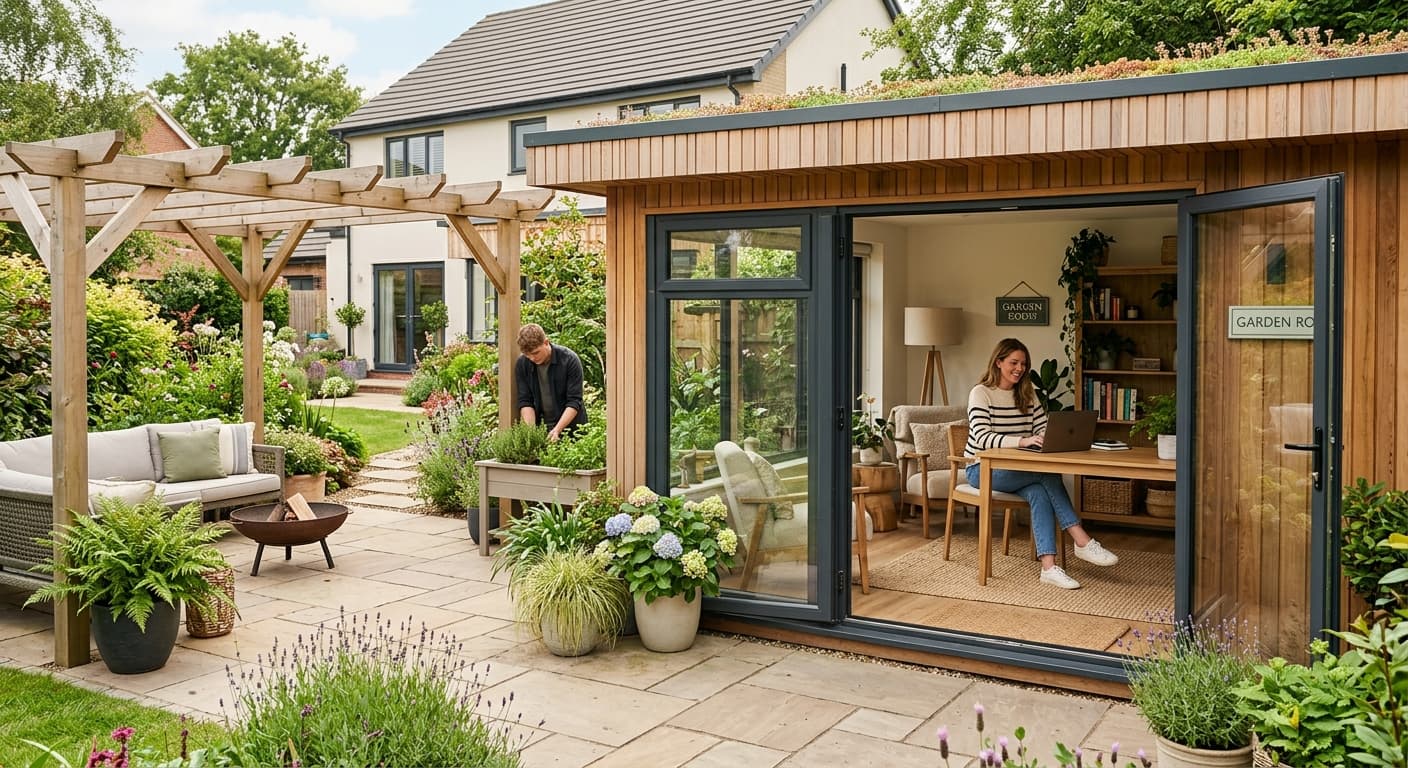
Garden room ideas are dominating UK outdoor spaces in 2024, transforming once-neglected lawns into year-round living areas that rival indoor extensions. We've seen a fundamental shift in how British homeowners approach their gardens, driven by hybrid working patterns and the desire for flexible space. The garden room market has exploded, with everything from insulated home offices to luxe entertaining pods popping up in properties from London to Manchester. But garden rooms are just one piece of the puzzle. Outdoor furniture choices, decking materials, and patio designs are all evolving rapidly, with sustainability and low-maintenance solutions leading the charge.
Key Takeaways
- Garden rooms remain the hottest trend, with prices ranging from £8,000 for basic timber structures to £40,000+ for fully insulated, wired buildings — planning permission typically required above 2.5m height or if over 50% of garden area
- Composite decking has overtaken timber as the UK's preferred choice, costing 30-50% more upfront but lasting 25+ years with minimal maintenance
- Patio installation costs average £50-100 per m² for basic materials, rising to £120-150 per m² for premium porcelain or natural stone in London and the South East
- Low-maintenance gardens featuring composite materials, artificial grass, and rattan furniture are replacing high-upkeep lawns and timber structures across all age groups
- Garden fence regulations allow 2m height without planning permission (1m if adjacent to highways), but many homeowners are opting for contemporary alternatives like render walls and metal screens
The Garden Room Revolution Continues
Garden rooms aren't slowing down. The trend that accelerated during lockdown has matured into a permanent fixture of UK property improvement. We're seeing more sophisticated builds in 2024, with proper insulation meeting Building Regulations Part L requirements and year-round usability becoming standard rather than luxury.
The sweet spot for budget sits between £15,000 and £25,000. This typically gets you a 3m x 4m insulated structure with proper electrics, double glazing, and composite decking. Cheaper pods under £10,000 exist, but our experience working with UK tradespeople suggests these often lack adequate insulation for British winters or require significant additional work to become truly functional.
Premium garden rooms from specialists like Crown Pavilions or Johnsons Garden Buildings can easily exceed £40,000, but you're getting bespoke design, superior materials, and buildings that genuinely add value to your property. According to research from Homebuilding & Renovating magazine, a well-executed garden room can add 5-10% to property value, making it one of the better ROI home improvements.
Do I Need Planning Permission for a Garden Room?
Most garden rooms fall under permitted development rights, but there are strict parameters. Your structure must be:
- Single-storey with a maximum eaves height of 2.5m and overall height of 4m for pitched roofs (3m for flat roofs)
- Positioned at least 2m from any boundary if over 2.5m high
- Not covering more than 50% of your garden area
- Not used as primary living accommodation
Building Regulations approval is separate from planning permission. Any garden room with electrical installation requires Part P compliance, and if you're adding insulation and heating, you'll need to meet thermal efficiency standards under Part L. We recommend engaging an electrician registered with NICEIC or NAPIT from the start.
Flood risk areas and conservation zones have additional restrictions. Several garden & outdoor specialists listed on HouseJester offer free planning guidance as part of their service, which saves considerable time and potential costly mistakes.
Decking Decisions: The Great Material Debate
Is Composite Decking Worth the Extra Cost?
Composite decking has won the battle for UK hearts and wallets. Timber decking installations have dropped noticeably in our directory enquiries, whilst composite requests have surged.
The composite decking vs timber comparison UK homeowners are making breaks down like this:
Timber Decking:
- Material cost: £15-30 per m² for pressure-treated softwood
- Installation: £40-60 per m² (total cost £55-90 per m²)
- Lifespan: 10-15 years with annual treatment
- Maintenance: Annual cleaning, oiling/staining (£200-400 yearly)
- Total 20-year cost: approximately £7,500-10,000 for a 20m² deck
Composite Decking:
- Material cost: £50-90 per m² for quality brands like Millboard or Trex
- Installation: £40-70 per m² (total cost £90-160 per m²)
- Lifespan: 25+ years, typically warranted for 25-30 years
- Maintenance: Occasional wash, no treatment needed (minimal ongoing cost)
- Total 20-year cost: approximately £5,800-7,200 for a 20m² deck
Composite wins on long-term value. The upfront premium of 30-50% disappears when you factor in maintenance time and costs. Composite doesn't splinter, fade significantly, or harbour mould the way timber does in damp British weather.
The environmental argument isn't clear-cut. Timber is renewable but requires chemical treatment and frequent replacement. Quality composite uses recycled materials and lasts decades. Cheap composite from DIY sheds can fade badly and contain less recycled content — stick with established brands.
We've seen composite become genuinely better-looking too. Early versions screamed "artificial", but current ranges from Millboard and Lumi offer convincing wood grain textures and natural colour variation. The colour range extends beyond timber imitations into contemporary greys and charcoals that suit modern garden designs.
Patio Trends: Porcelain Takes Over
How Much Does a New Patio Cost UK?
Patio installation cost per m2 UK varies enormously based on material choice and location. Based on listings in our directory and recent quotes from verified installers, expect:
Budget Options (Concrete Slabs):
- Materials: £10-20 per m²
- Installation: £40-60 per m²
- Total: £50-80 per m²
Mid-Range (Indian Sandstone, Block Paving):
- Materials: £25-40 per m²
- Installation: £50-70 per m²
- Total: £75-110 per m²
Premium (Porcelain, Granite, Limestone):
- Materials: £50-90 per m²
- Installation: £70-100 per m²
- Total: £120-190 per m²
London and South East prices run 20-30% higher. A 30m² patio in Birmingham might cost £2,700 in sandstone, whilst the same spec in London could hit £3,500.
Porcelain paving has genuinely disrupted the market. Five years ago, it was a niche premium option. Now it's mainstream, and we understand why. Porcelain doesn't absorb water, so it's frost-proof and stain-resistant. It doesn't grow algae or moss like natural stone. It comes in enormous format tiles (900mm x 600mm is common) that reduce joint lines and give contemporary clean looks.
Brands like Marshalls and Bradstone have invested heavily in porcelain ranges that mimic natural stone convincingly. The 20mm thick versions are specifically designed for outdoor use and can be laid on pedestals for ultra-low-maintenance installation over existing surfaces.
The downside? Porcelain requires careful installation. It can't be cut with traditional block splitters — you need diamond cutting equipment. This pushes installation costs up slightly, but the long-term durability justifies the premium for most homeowners.
Low-Maintenance Gardens: Less Lawn, More Living
Low maintenance garden ideas UK searches have climbed steadily, and the trend is reshaping suburban gardens nationwide. Traditional lawn-and-border layouts are giving way to designs that prioritise usability over upkeep.
Key elements we're seeing:
-
Artificial grass: No longer the preserve of show homes. Quality artificial grass (£20-35 per m² installed) has improved dramatically. The 35-40mm pile height ranges look remarkably natural and eliminate mowing entirely. Brands like Namgrass and LazyLawn offer 10-year guarantees.
-
Hardscaping dominance: Generous patio areas (40-50% of garden space rather than 20-30%) reduce planting maintenance whilst creating flexible outdoor rooms. Gravel gardens with structural planting (architectural grasses, evergreen shrubs) deliver year-round interest with minimal input.
-
Automated irrigation: Drip irrigation systems (£300-800 for average gardens) connected to timers eliminate watering chores. Several suppliers on HouseJester now offer smart systems controllable via smartphone.
-
Raised beds: Timber or composite raised beds concentrate planting in manageable areas. They're easier to maintain than traditional borders and suit the contemporary aesthetic most homeowners want.
The shift isn't just about laziness. Water conservation matters increasingly, and low-maintenance designs using drought-tolerant plants and efficient irrigation use far less water than traditional lawns. The RHS has promoted this approach through its "Greening Grey Britain" campaign, encouraging hard landscaping that includes permeable surfaces rather than total concrete coverage.
Furniture Wars: Rattan Reigns Supreme
Rattan vs metal garden furniture durability debates fill our comment sections, but rattan has decisively won the popularity contest. Synthetic rattan (actually woven polyethylene) dominates UK garden centres and online retailers.
The appeal is obvious: rattan looks relaxed and contemporary, withstands British weather when properly made, and requires zero maintenance beyond occasional cleaning. A decent rattan dining set (6 seats) costs £400-800, whilst luxury ranges from Kettler or Bramblecrest run £1,500-3,000.
Metal furniture — particularly aluminium — offers superior longevity. Powder-coated aluminium frames last 15-20 years easily and can be reupholstered when fabrics wear. But metal feels less "homey" and doesn't suit the garden-as-outdoor-room aesthetic that dominates current design thinking.
Quality matters enormously with rattan. Budget sets from supermarkets (under £300) use thin PE weave and lightweight frames that rarely survive more than 3-4 seasons. Mid-range options (£600-1,200) from garden specialists offer significantly better weather resistance and comfort. Look for:
- Aluminium frames rather than steel (rust-proof)
- UV-resistant PE rattan rated to 5,000+ hours
- Removable, washable cushion covers
- UK-based warranty support
Wooden furniture is fading. Teak remains beautiful but requires annual oiling and costs considerably more than comparable rattan. Cheaper woods like eucalyptus need even more maintenance. For most UK homeowners, the maintenance burden doesn't justify the aesthetic gain.
Boundaries and Fencing: Beyond the Panel
Garden fence regulations height UK remain straightforward: you can install fencing up to 2m high without planning permission (reduced to 1m if the fence borders a road or footpath used by vehicles). But we're seeing homeowners move beyond standard fence panels towards more permanent and attractive boundary solutions.
Lap panel fencing (the ubiquitous overlapping timber boards) still accounts for the majority of installations due to cost (£25-40 per panel plus £40-60 per metre installation). But several trends are emerging:
Composite Fencing: Following composite decking's success, composite fence panels are gaining traction. They cost roughly double timber (£50-80 per panel) but last 25+ years and require no treatment. The aesthetic is divisive — some find them too uniform — but they suit contemporary garden designs.
Rendered Walls: Particularly in urban areas, brick walls with smooth rendered finish are replacing fencing. Initial costs are higher (£150-250 per linear metre), but rendered walls last indefinitely and create genuine privacy without the "overlooked" feel of see-through fencing. They're especially popular in London terraced properties.
Metal Screens: Laser-cut metal screens and horizontal slatted aluminium fencing deliver contemporary looks. Costs run £120-200 per linear metre, positioning them as premium options. They work brilliantly as feature panels within otherwise traditional fencing, adding visual interest without full replacement costs.
Willow and Hazel Hurdles: The sustainability-conscious are rediscovering traditional woven hurdles. They're not cheap (£40-70 per 1.8m panel) and last just 8-10 years, but they're completely natural and suit cottage gardens beautifully.
Fencing installers listed in our garden & outdoor category increasingly offer these alternatives alongside traditional panels, reflecting changing customer preferences.
What's Fading Away
Some garden trends are quietly disappearing:
Decking Oil: Annual decking maintenance is driving homeowners away from timber. The ritual of cleaning and re-oiling every spring has become unacceptable to time-poor families.
High-Maintenance Planting: Traditional herbaceous borders requiring deadheading, dividing, and seasonal replanting are out. Structural, evergreen, low-input planting is in.
Separate Sheds: The traditional garden shed is losing ground to integrated storage solutions and garden rooms that combine storage with usable space. Why have a shed and a summer house when a garden room can do both?
Pea Gravel: Small decorative gravel (10mm and under) has fallen from favour. It migrates everywhere, becomes a weed trap, and cats use it as a toilet. Larger aggregate (20-40mm) or self-binding gravel offers better performance.
Gas Patio Heaters: Rising energy costs and environmental concerns have accelerated the decline of gas patio heaters. Electric infrared heaters and fire pits have taken over the outdoor heating market.
Regional Variations Worth Noting
London and the South East push trends 12-18 months ahead of other regions. Garden rooms appeared in London suburbs 2-3 years before becoming mainstream in Yorkshire or Wales. Premium materials like porcelain and composite also gain traction in affluent Southern areas first.
Pricing gaps are substantial. The same garden room installation that costs £18,000 in Manchester might hit £24,000 in Richmond or Dulwich. Labour accounts for most of this difference — skilled installers in high-cost areas charge accordingly.
Northern homeowners show more willingness to DIY garden projects, possibly reflecting lower household incomes and stronger DIY culture. Our directory data shows proportionally more tool hire enquiries from Manchester, Leeds, and Newcastle compared to Southern cities.
Weather influences material choices too. Scottish and Northern Irish homeowners favour composite materials and porcelain paving more heavily than Southern England, likely because they offer superior performance in wetter climates. The South West's milder winters allow more adventurous planting and timber construction remains popular in Cornwall and Devon.
Getting Started: Finding the Right Installer
Quality installation matters more than material choice for most garden projects. Brilliant composite decking installed poorly will fail within years. Average paving laid by skilled professionals will last decades.
When searching for garden specialists, prioritise:
- Membership in trade bodies: Marshalls Register, BALI (British Association of Landscape Industries), Checkatrade verification
- Insurance coverage: Minimum £2 million public liability
- Portfolio evidence: Photos of completed work, ideally including projects similar to yours
- Detailed written quotes: Itemised material and labour costs, clear timescales, payment structure
You can browse all categories on HouseJester to find verified garden & outdoor specialists across the UK, or search our company directory to compare local options. If you're a garden designer or installer, you can list your business to reach homeowners planning their outdoor improvements.
Get three quotes for any significant project (over £3,000). Price shouldn't be the only factor — we've seen too many homeowners choose the cheapest quote only to face remedial work within two years. Mid-range quotes often represent the best value, balancing reasonable pricing with professional expertise.
Final Thoughts
UK gardens in 2024 reflect fundamental lifestyle changes. We're treating outdoor space as genuine living area, not decorative backdrop. Garden room ideas continue evolving from luxury additions to expected features in family homes. Materials technology — particularly in composite decking and porcelain paving — has reached the point where synthetic options genuinely outperform traditional materials on durability and maintenance.
The trends that matter most aren't about fashion. They're about creating outdoor spaces that work harder, last longer, and demand less ongoing attention. That's not a temporary shift. That's the future of UK gardens.
Browse Garden & Outdoor businesses on HouseJester to find verified specialists for your project.
Sources & Further Reading
- Planning Portal: Permitted Development Rights for Outbuildings — Official government guidance on when planning permission is required for garden rooms and outbuildings
- Homebuilding & Renovating: Garden Room Cost Guide — Comprehensive pricing information and design guidance from the UK's leading self-build magazine
- RHS Greening Grey Britain — Royal Horticultural Society guidance on sustainable, low-maintenance garden design principles
This article was created with AI assistance and reviewed by the HouseJester editorial team for accuracy and relevance.
Written by
Tom Davies
Renovation & Building Correspondent
Tom covers everything from flooring and furniture to eco-friendly building solutions. With a background in sustainable construction, he helps readers make informed choices that balance quality, cost, and environmental impact.
- Flooring
- Furniture
- Storage Solutions
- Eco & Sustainable