
On this page
Introduction
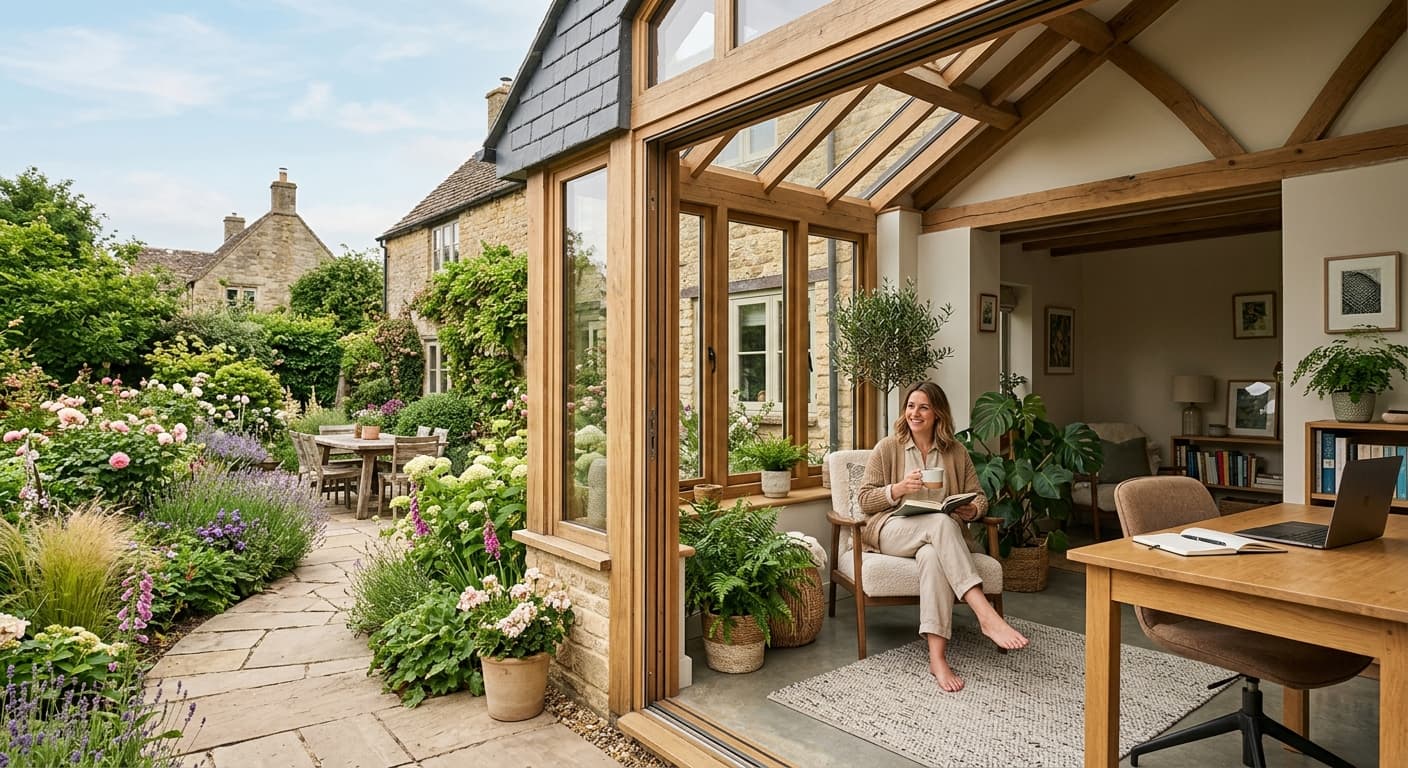
Exploring garden room ideas UK homeowners are searching for has never been more relevant. Whether you're looking to add a home office, gym, or year-round entertaining space, conservatories, orangeries, and modern garden rooms offer practical solutions that add genuine value to your property. We've compiled this comprehensive cost guide to help you understand exactly what you'll pay in 2025, which factors affect pricing, and how to get the best return on your investment.
Read our complete guide to garden rooms and orangeries UK guide for broader inspiration and planning advice.
Key Takeaways
- Standard uPVC conservatories typically cost £8,000–£20,000, whilst premium orangeries range from £25,000–£50,000+
- Your choice of materials, size, glazing specification, and location dramatically affect final costs — London prices run 15-20% higher than regional averages
- Insulated roof upgrades (£5,000–£9,000) transform unusable conservatories into year-round living spaces
- Most conservatories fall under permitted development rights, but rules changed in October 2023 — always check with your local planning authority
- Obtaining three detailed quotes from verified conservatories specialists ensures competitive pricing and quality workmanship
How Much Does a Conservatory Cost in the UK?
The question "how much does a conservatory cost UK 2025" depends heavily on specification and size. Based on listings in our directory and recent industry surveys, here's what UK homeowners are paying:
Budget Range (£8,000–£12,000): Small lean-to or Victorian-style uPVC conservatory (3m x 3m), standard double glazing, polycarbonate roof, basic finishes. Suitable for occasional use in spring and summer.
Mid-Range (£12,000–£25,000): Medium-sized Edwardian or P-shaped conservatory (4m x 4m), quality uPVC or timber frames, energy-efficient glass roof or tiled roof system, proper insulation, integrated heating and lighting.
Premium Range (£25,000–£50,000+): Large orangery-style structure with brick pillars, aluminium bi-fold doors, vaulted glazed lantern, underfloor heating, high-performance glazing meeting Part L Building Regulations. These genuinely function as year-round extensions.
According to the Federation of Master Builders, the average UK conservatory project in 2024 cost £16,500, representing a 12% increase from 2022 figures. Material costs have stabilised after pandemic-era supply chain disruptions, but labour rates continue rising — particularly in London and the South East where skilled installers command premium rates.
Price Comparison by Conservatory Style
| Style | Size Range | Typical Cost | Best For |
|---|---|---|---|
| Lean-to | 3m x 3m | £8,000–£14,000 | Compact gardens, modern properties, budget-conscious projects |
| Victorian | 3m x 4m | £10,000–£18,000 | Traditional homes, medium gardens, classic aesthetic |
| Edwardian | 4m x 4m | £12,000–£20,000 | Maximum floor space, versatile layout, period properties |
| P-shaped | 5m x 4m | £18,000–£30,000 | Large gardens, dual-purpose spaces, impressive entertaining areas |
| Gable-fronted | 4m x 4m | £15,000–£25,000 | High ceilings, grand appearance, properties with height restrictions |
| Orangery | 4m x 5m | £25,000–£50,000+ | Luxury finish, year-round use, maximum property value increase |
What is the Difference Between an Orangery and Conservatory?
The orangery vs conservatory price comparison often confuses homeowners. Both extend your living space, but construction differs significantly.
Conservatories feature predominantly glazed walls and roofs (typically 75%+ glass), with minimal brickwork limited to dwarf walls around the base. They're lighter, airier, and more affordable — but historically suffered from overheating in summer and losing heat in winter.
Orangeries incorporate substantial brick or stone pillars between glazed sections, with flat roofs featuring a glazed lantern or rooflight in the centre. This construction provides better insulation, creates a more room-like feel, and typically requires full Building Regulations approval rather than permitted development.
Price-wise, orangeries cost 40-60% more than equivalent-sized conservatories. A 4m x 4m conservatory might cost £15,000, whilst a similar-sized orangery runs £25,000–£35,000. That premium buys superior thermal performance, more wall space for furniture placement, and a structure that feels less like an add-on and more like an integral extension.
We've seen property valuations increase by £18,000–£25,000 for well-executed orangeries in desirable areas — making them genuine investments rather than expenses. Conservatories typically add £8,000–£15,000 to property value, depending on condition and usability.
Factors Affecting Conservatory Costs
Size and Complexity
Every additional square metre adds approximately £800–£1,500 to your total cost. A simple rectangular footprint costs significantly less than complex shapes requiring bespoke fabrication. P-shaped and T-shaped designs need custom manufacturing, increasing both material and labour expenses.
Frame Materials
uPVC (£8,000–£18,000): Most popular choice offering good insulation, minimal maintenance, and competitive pricing. Modern uPVC systems from Ultraframe, Ultrasky, and Atlas match traditional aesthetics convincingly. We recommend checking any conservatories installer uses quality profiles with multi-chambered designs.
Timber (£15,000–£30,000): Hardwood frames deliver authentic period appearance and excellent environmental credentials. Requires regular maintenance — expect to repaint or re-stain every 3-5 years. Popular in conservation areas where planning authorities prefer traditional materials.
Aluminium (£18,000–£40,000): Slimmest sightlines, contemporary aesthetics, virtually maintenance-free. Powder-coated finishes in any RAL colour. Origin, Schüco, and Reynaers manufacture premium systems favoured by architects. Higher initial cost but exceptional longevity — 40+ year lifespan typical.
Glazing Specification
Cheap polycarbonate roofs (£2,000–£3,500) make conservatories unbearably hot in summer and freezing in winter. They also generate drumming noise during rainfall. Energy-efficient glass adds £3,000–£6,000 but transforms usability.
Modern specifications include argon-filled double glazing with low-emissivity coatings, solar control glass reducing heat gain, and self-cleaning coatings minimising maintenance. These technologies enable year-round comfort whilst meeting Building Regulations Part L requirements for thermal efficiency.
Insulated Conservatory Roof Panels Cost
Retrofitting an insulated conservatory roof panels cost typically ranges £5,000–£9,000 for an average-sized structure. This single upgrade delivers the biggest improvement to existing conservatories, converting unusable spaces into comfortable rooms.
Solid roof systems from Guardian, Ultrasky, and Equinox incorporate 100mm+ insulation between aluminium external sheets and plastered internal ceilings. They achieve U-values of 0.15 W/m²K — better than most house roofs. Vaulted designs with integrated LED lighting and glazed sections maintain natural light whilst dramatically improving thermal performance.
The Energy Saving Trust estimates insulated roofs reduce conservatory heating costs by 60-70% compared to polycarbonate alternatives. Based on our experience working with UK tradespeople, installation takes 3-5 days with minimal disruption.
Do I Need Planning Permission for a Conservatory?
Most conservatories fall under permitted development rights, avoiding formal planning applications. However, rules tightened significantly in October 2023 when new regulations brought conservatories under the same Building Regulations regime as full extensions.
You can proceed without planning permission if your conservatory:
- Extends no more than 3 metres from the rear wall of a semi-detached or terraced house (4 metres for detached properties)
- Doesn't exceed 4 metres in height with a dual-pitched roof, or 3 metres with any other roof type
- Includes no balconies, verandas, or raised platforms
- Doesn't cover more than 50% of your garden area
- Isn't positioned on the front or side elevation facing a highway
Building Regulations approval is now mandatory for most conservatory projects. Your installer must demonstrate compliance with thermal efficiency standards (Part L), structural integrity (Part A), and drainage requirements (Part H). Expect building control fees of £400–£800 depending on your local authority.
Properties in conservation areas, listed buildings, or Areas of Outstanding Natural Beauty face stricter controls. Always check with your local planning department — our team has found rules vary considerably between authorities, particularly in Birmingham and Manchester where local policies differ from national guidelines.
Cost Comparison: Materials and Specifications
| Material/Feature | Cost Impact | Durability | Best Use Case |
|---|---|---|---|
| Polycarbonate roof | Base cost | 10-15 years | Budget projects, temporary structures |
| Glass roof (standard) | +£2,500–£4,000 | 25+ years | General use, improved aesthetics |
| Insulated solid roof | +£5,000–£9,000 | 40+ years | Year-round living space, maximum comfort |
| uPVC frames | Base cost | 25-30 years | Low maintenance, cost-effective projects |
| Timber frames | +£4,000–£8,000 | 30-40 years (with maintenance) | Period properties, traditional aesthetics |
| Aluminium frames | +£6,000–£12,000 | 40-50 years | Contemporary design, minimal maintenance |
| Standard double glazing | Base cost | 20-25 years | Moderate climate control |
| High-performance glazing | +£1,500–£3,000 | 25-30 years | Energy efficiency, year-round comfort |
| Basic foundations | Included | 50+ years | Standard ground conditions |
| Engineered foundations | +£1,500–£3,500 | 50+ years | Poor soil, sloping sites, large structures |
Money-Saving Tips for Conservatory Projects
Time Your Purchase Strategically: Conservatory companies offer significant discounts during quieter winter months (January-February, November). We've seen reductions of 15-25% compared to peak spring pricing. Installation during colder weather also means you'll benefit from the new space immediately come summer.
Consider Smaller Dimensions: Reducing length or width by just 500mm can save £1,500–£2,500 without dramatically affecting usability. Work with your designer to optimise layout rather than simply maximising size.
Choose Standard Colours: White or cream uPVC costs significantly less than woodgrain effects, anthracite grey, or custom colours. Standard options suit most properties perfectly well.
Bundle Multiple Quotes: Obtain at least three detailed quotes from verified installers. Companies listed in our browse all categories directory provide transparent pricing and verified credentials. Comparing specifications carefully often reveals where companies pad quotes with unnecessary extras.
DIY Base Preparation: If you're competent with groundwork, preparing the base yourself saves £1,000–£2,000. Most installers happily work from customer-prepared foundations meeting their specifications. Get written confirmation of dimensions and depth requirements before starting.
Retrofit Rather Than Replace: Existing conservatories in decent structural condition benefit enormously from replacement roofs and upgraded glazing at 40-50% the cost of complete replacement. This approach particularly suits homeowners wanting improved year-round usability without full renovation.
Finance Carefully: Interest-free credit over 12-24 months costs nothing extra, whilst longer-term finance at 7-12% APR substantially increases total expenditure. Compare personal loans from high-street banks — rates of 3-5% APR typically beat installer finance packages.
Regional Price Variations
Conservatory costs vary significantly across the UK. London and South East prices run 15-20% above national averages due to higher labour rates, increased material delivery costs, and premium land values. A £16,000 conservatory in Leeds might cost £19,000 in Surrey.
Scotland, Wales, and Northern England generally offer better value, with Edinburgh, Glasgow, and Newcastle prices typically 10-15% below London rates. However, finding experienced installers in remote rural areas sometimes proves challenging, potentially increasing costs through limited competition.
Your specific location also affects foundation requirements. Clay-heavy soils in parts of Essex and Kent require deeper foundations with engineering solutions adding £2,000–£4,000. Conversely, properties with existing solid ground conditions in areas like Derbyshire or Cumbria need minimal preparation work.
Choosing the Right Installer
Quality installation matters enormously. Poor workmanship causes leaks, drafts, and structural problems costing thousands to rectify. We recommend:
Verify Credentials: Look for FENSA or CERTASS registration (mandatory for self-certification under Building Regulations), membership of the Glass and Glazing Federation, and positive reviews from recent customers.
Detailed Written Quotes: Insist on itemised quotations specifying frame materials, glazing specification, foundation details, and exact dimensions. Vague quotes suggesting "supply and fit" without detail should raise concerns.
Insurance and Guarantees: Check public liability insurance (minimum £5 million), deposit protection schemes, and insurance-backed guarantees covering both materials and workmanship for 10+ years.
Visit Completed Projects: Reputable installers gladly arrange viewings of recent work. Seeing actual installations helps assess quality and realistic timescales far better than sales brochures.
Businesses listed on HouseJester undergo verification checks before appearing in our directory. List your business if you're a conservatory installer meeting quality standards.
Modern Alternatives to Traditional Conservatories
Whilst this guide focuses on conservatory costs, modern garden room alternatives deserve consideration. Insulated garden rooms with full plastered interiors, proper electrics, and contemporary aesthetics cost £15,000–£40,000 depending on size and specification.
These structures often achieve better thermal performance than traditional conservatories whilst avoiding some Building Regulations complexities. They suit homeowners prioritising minimalist contemporary design over Victorian or Edwardian styling.
Hybrid designs combining traditional conservatory benefits with modern construction techniques now dominate the market. Structures featuring substantial dwarf walls, insulated solid roofs with glazed sections, and high-performance aluminium frames bridge the gap between conservatories and full extensions — delivering excellent value and year-round usability.
Browse Conservatories Businesses on HouseJester
Finding the right conservatory installer transforms your project from stressful to straightforward. Our verified directory includes experienced professionals across all UK regions, from national companies to specialist local installers who understand regional planning requirements and architectural styles.
Compare detailed business profiles, read verified reviews, and contact multiple installers directly through our platform. Taking time to research properly ensures you'll enjoy your new garden room for decades to come, avoiding the regret and expense of choosing poorly.
Start exploring options today by visiting our search our company directory page to find conservatory specialists in your area.
Sources & Further Reading
- Federation of Master Builders: UK Extension and Conservatory Cost Survey 2024
- Building Regulations Approved Document L: Conservation of Fuel and Power
- Which? Trusted Traders: How to Choose a Conservatory Installer
This article was created with AI assistance and reviewed by the HouseJester editorial team for accuracy and relevance.
Written by
James Hartley
Home Improvement Writer
A former building contractor turned journalist, James brings hands-on experience to every article. He specialises in home improvement projects, building regulations, and helping homeowners navigate renovation work with confidence.
- Home Improvements
- Building Services
- Roofing
- Windows & Doors