
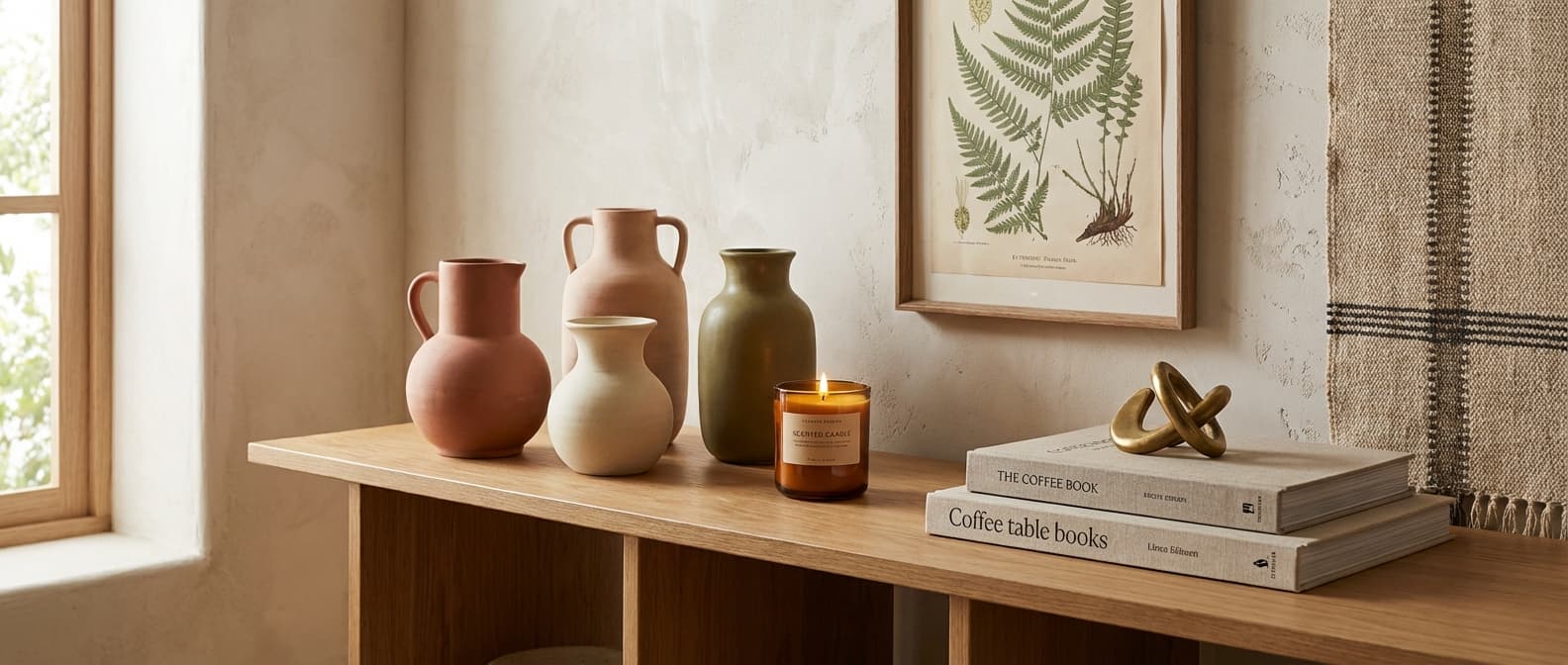
Home accessories are the finishing touches that bring a room to life. They add personality, colour, texture, and warmth to spaces that might otherwise feel flat or incomplete. From cushions and throws to vases, candles, artwork, mirrors, and decorative objects, accessories are the layer that transforms a furnished room into a home with character.
The beauty of home accessories is their versatility and affordability. While major furniture purchases require significant investment and commitment, accessories can be changed seasonally, swapped to suit your mood, and updated to keep pace with trends — all without breaking the bank. A new set of cushions, a statement mirror, or a collection of artisan ceramics can completely refresh a room for a fraction of the cost of new furniture.
The UK home accessories market is rich and diverse, encompassing everything from high-street retailers and online marketplaces to independent artisan makers, gift boutiques, and specialist design studios. Many of the most interesting and distinctive accessories come from smaller, independent businesses — exactly the kind of companies you will find on HouseJester's directory.
Professional home accessories retailers and stylists offer more than just products. Many provide styling advice, helping customers curate collections that work together harmoniously. Interior stylists specialise in accessorising spaces — arranging objects, layering textiles, and adding the decorative details that make a room feel complete. This service can be hired independently or as the final stage of an interior design project.
HouseJester's directory features verified home accessories shops and suppliers across the UK. Browse by location, discover unique artisan makers, and find the perfect finishing touches for your home.
Browse home accessories shops on HouseJester
How Much Do Home Accessories Cost in the UK?
| Item | Budget | Mid-range | Premium |
|---|---|---|---|
| Cushion covers | £8 – £20 | £20 – £50 | £50 – £150+ |
| Throws and blankets | £15 – £40 | £40 – £100 | £100 – £300+ |
| Vases | £5 – £20 | £20 – £60 | £60 – £200+ |
| Candles (quality) | £10 – £25 | £25 – £50 | £50 – £80+ |
| Wall art/prints (framed) | £20 – £60 | £60 – £200 | £200 – £1,000+ |
| Mirrors (decorative) | £20 – £80 | £80 – £250 | £250 – £800+ |
| Rugs (medium, 160x230cm) | £50 – £150 | £150 – £500 | £500 – £2,000+ |
Accessorising a typical living room costs £200-£500 budget, £500-£1,500 mid-range, or £1,500-£5,000+ premium.
What to Look For When Choosing a Home Accessories Supplier
- Curated range — The best accessories shops have a point of view — a curated selection rather than an overwhelming jumble.
- Quality materials — Check the quality of textiles (thread count, fabric weight), ceramics (finish, glaze quality), and metals.
- Unique products — Independent shops and artisan makers offer pieces you will not find in every other home.
- Styling advice — Some retailers offer styling consultations or social media inspiration to help you visualise products in your space.
- Gift packaging — Quality accessories shops often offer attractive gift wrapping and packaging.
- Ethical sourcing — Ask about supply chains, fair trade credentials, and sustainability practices.
- Return policy — Accessories often look different in your home compared to the shop. Check the returns policy before purchasing.
- Online presence — A good website with accurate product photography helps you browse from home.
- Local makers — Supporting local artisans adds character to your home and supports the community.
- Reviews — Read reviews on HouseJester, focusing on product quality, value, and customer experience.
Frequently Asked Questions
How do I choose a colour scheme for accessories?
Start with the largest fixed elements in the room — the sofa, carpet, or wall colour — and draw accent colours from there. The 60-30-10 rule is a reliable guide: 60% of the room in a dominant neutral, 30% in a secondary colour, and 10% in an accent colour. Use accessories to introduce the accent colour through cushions, throws, vases, and artwork. Limit yourself to 2-3 accent colours to avoid a cluttered look. For a cohesive scheme, pick colours that appear in the same area of the colour wheel (analogous colours) or directly opposite for high contrast (complementary colours).
How many cushions should I put on a sofa?
For a 3-seat sofa, 3-5 cushions is the sweet spot. Use odd numbers for a more natural, relaxed arrangement. Vary the sizes — a combination of 50x50cm and 40x40cm cushions with one lumbar (30x50cm) creates visual interest. Coordinate cushions by colour family rather than matching identically — mix textures (velvet, linen, knitted) in related tones. Avoid overwhelming the sofa with so many cushions that there is no room to sit. For a 2-seater, 2-3 cushions is sufficient; for a large corner sofa, 5-7 works well.
What makes a good quality candle?
A quality candle burns evenly across the entire surface (no tunnelling), has a strong but not overpowering scent throw, lasts for the stated burn time, and produces minimal soot. Look for natural waxes — soy wax and rapeseed wax burn cleaner and longer than paraffin. Cotton or wood wicks are preferable to metal-cored wicks. Quality fragrance oils or essential oils produce a more nuanced scent than cheap synthetic fragrances. UK-made candles from artisan makers often use higher-quality ingredients than mass-produced imports. Expect to pay £25-£50 for a quality candle with 40-60 hours of burn time.
How do I choose artwork for my walls?
Consider scale first — a single large piece (at least 60x80cm) makes more impact than a cluster of small prints. Hang artwork so the centre is at eye level (approximately 145-155cm from the floor). Gallery walls (groups of framed prints and photographs) are popular but need careful planning — lay the arrangement on the floor first and start hanging from the centre outward. Original artwork from local galleries and open studios supports artists directly and gives you a unique piece. Art prints from quality print studios are an affordable alternative. Frame consistently — matching or complementary frames create cohesion, while mixed frames suit a more eclectic style.
What are the best home accessories for rental properties?
Focus on easily removable, high-impact pieces: large floor mirrors (lean against the wall rather than mounting), statement rugs, quality cushions and throws, table lamps (no hardwiring needed), plants (real or quality artificial), and artwork hung with removable hooks (Command strips). These pieces transform a neutral rental without permanent changes and travel with you to your next home. Avoid anything that requires drilling, plastering, or permanent installation. Quality textiles (cushions, throws, bedding) make the biggest difference per pound spent in a rental property.
This article was created with AI assistance and reviewed by the HouseJester editorial team for accuracy and relevance.