
On this page
The UK home lighting industry has undergone significant transformation in recent months, with updated Building Regulations, surging smart lighting adoption, and manufacturer innovations reshaping how we approach home lighting design UK projects. Recent data from the Lighting Industry Association shows that 68% of UK homeowners now prioritise energy efficiency in lighting choices, whilst smart lighting system sales have jumped 42% year-on-year.
Key Takeaways
- Building Regulations Part L amendments from June 2023 mandate tighter efficacy standards for fixed lighting (75 lumens per watt minimum)
- Smart lighting systems now account for £890 million of the UK lighting market, with prices dropping 30% since 2021
- The layered lighting design approach has become standard practice, combining ambient, task, and accent lighting layers
- Bathroom lighting must comply with IP rating zones – IP65 minimum for Zone 1, IP44 for Zone 2
- LED running costs average £2-£4 annually per bulb versus £12-£18 for halogen equivalents
Building Regulations Drive LED Adoption
The Building Regulations Part L 2023 update has fundamentally changed specification requirements for new builds and major renovations. Fixed lighting installations must now achieve minimum efficacy levels that effectively rule out halogen fittings in most applications.
We've seen this translate into a complete shift in product offerings from UK lighting retailers. John Lewis reported that LED fixtures now represent 94% of their lighting sales, up from 67% in 2020. Wickes discontinued their halogen downlight range entirely in September 2023.
The Energy Saving Trust estimates that upgrading ten halogen downlights to LED equivalents saves the typical household £180 annually. For businesses listed in our lighting directory, this regulatory change has meant substantial investment in new product lines and staff training on LED technology.
Smart Lighting Systems Compared UK Market
The smart lighting systems compared UK market has matured considerably. Three ecosystems now dominate: Philips Hue, LIFX, and the emerging Matter protocol that promises cross-platform compatibility.
Philips Hue remains the market leader, with starter kits from £69.99 and individual smart bulbs at £44.99. LIFX offers comparable functionality at slightly lower price points (£39.99 per bulb) without requiring a separate hub. The new Matter standard, supported by major manufacturers including Nanoleaf and Yeelight, launched properly in UK retail channels in early 2024.
Our research across HouseJester listings shows installation costs for whole-home smart lighting systems typically range from £800-£2,500 depending on property size, with London installers charging 15-20% premiums over regional rates.
The practical benefits extend beyond novelty. Voice control via Alexa or Google Assistant provides genuine accessibility improvements for elderly or disabled homeowners. Scheduling and automation can reduce energy consumption by 15-25% according to Which? testing conducted in 2023.
How Do I Plan Lighting for a Room?
The layered lighting design approach explained by lighting designers has become the industry standard methodology. This three-tier system creates flexibility and atmosphere whilst ensuring adequate illumination for all activities.
Ambient lighting forms the base layer, providing overall illumination. Ceiling-mounted fixtures, recessed downlights, or large pendants typically fill this role. Calculate approximately 25 watts of LED lighting per square metre for living spaces, 30-35 watts for kitchens.
Task lighting targets specific work areas. Under-cabinet kitchen strips, desk lamps, bathroom mirror lights, and reading lights fall into this category. These fixtures should provide 50-75% more illumination than ambient levels in their focused area.
Accent lighting adds drama and highlights architectural features or artwork. Picture lights, spotlights on textured walls, and LED strip lighting in alcoves create visual interest.
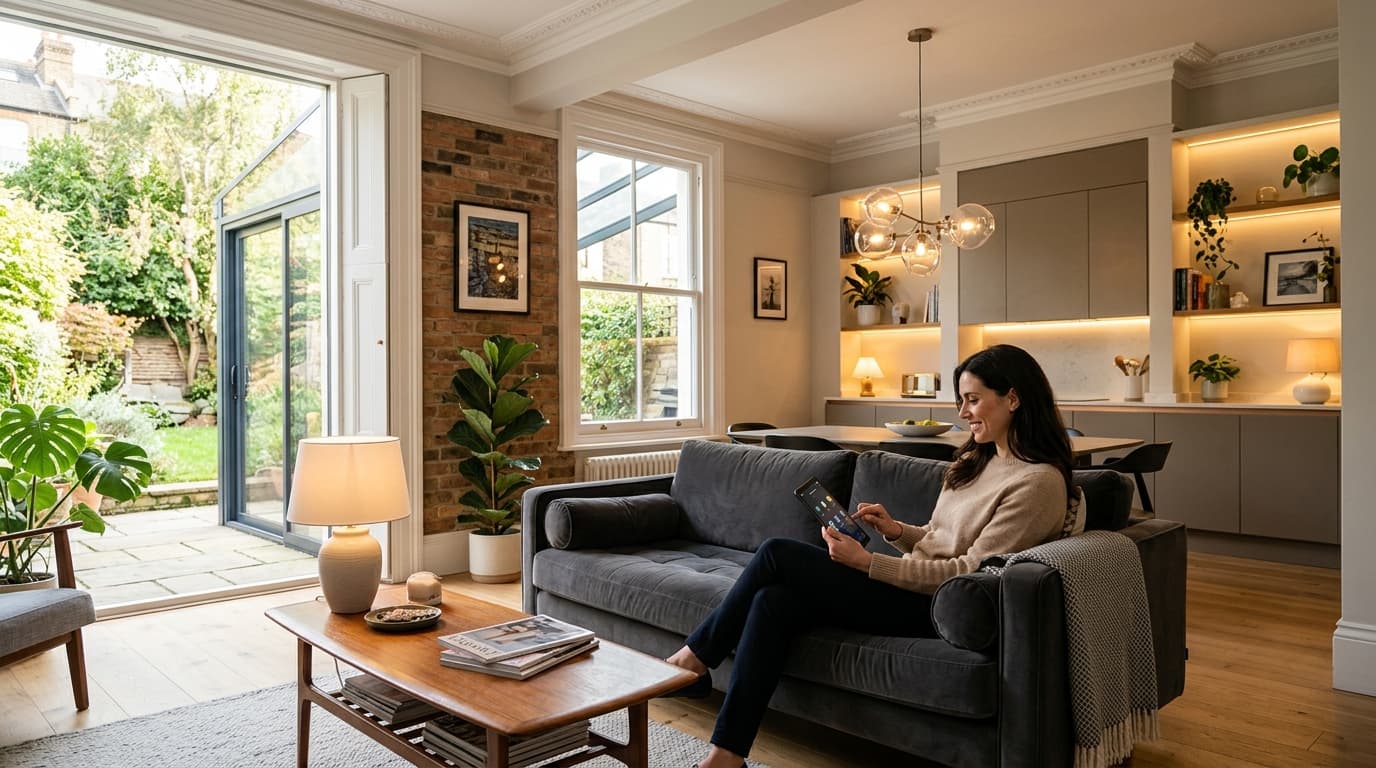
When planning lighting for a room, we recommend mapping out furniture placement first, then identifying which activities occur where. A living room might need reading light by the sofa, accent lighting on a fireplace, and ambient overhead illumination – each on separate circuits or smart controls.
Kitchen Island Pendant Lighting Ideas Transform Spaces
Kitchen renovations have driven particular innovation in pendant lighting. The kitchen island pendant lighting ideas we've observed across UK projects in 2024 emphasise scale, material quality, and careful spacing.
Current design trends favour oversized single pendants (40-50cm diameter) or rows of two to three medium fixtures (25-30cm) rather than the small multiple pendants popular five years ago. Tom Raffield's sculptural steam-bent wood designs (£395-£795) and Original BTC's industrial Hector collection (£229-£349) appear frequently in mid-to-high-end refurbishments.
Spacing matters enormously. Hang pendants 70-80cm above island worktop height. For multiple fixtures over a 2-metre island, position them 60-75cm apart. This prevents head-bumping whilst ensuring even illumination across the work surface.
Dimmer controls are non-negotiable for kitchen islands that serve both food preparation and casual dining functions. Dimming LED fixtures requires compatible LED dimmer switches – standard rotary dimmers cause flickering and reduced bulb lifespan. Varilight V-Pro and Lutron Diva are reliable options, typically £35-£65 per switch.
Finding experienced installers through our fitted kitchens category ensures proper pendant positioning and electrical planning during the design phase.
LED Colour Temperature Guide Warm vs Cool
The LED colour temperature guide warm vs cool conversation confuses many homeowners. Measured in Kelvin (K), colour temperature dramatically affects room atmosphere and functionality.
Warm white (2700K-3000K) mimics traditional incandescent bulbs, creating cosy, relaxing environments. Specify this for living rooms, bedrooms, and dining areas. Most UK retailers label these as "warm white" or "soft white".
Neutral white (3500K-4000K) offers balanced, natural-feeling light. Suitable for kitchens, bathrooms, and home offices where colour accuracy matters but excessive coldness feels clinical.
Cool white (5000K-6500K) delivers crisp, energising illumination. Appropriate for garages, utility rooms, and detailed task work, but generally too stark for main living spaces in residential settings.
Mixing colour temperatures within connected sight lines creates disjointed, uncomfortable lighting. We recommend choosing one temperature for each floor or open-plan area, then maintaining consistency across all fixtures.
Purchasing bulbs from different manufacturers, even at the same stated Kelvin rating, can produce noticeably different results. Philips, Osram, and Integral LED maintain tighter quality control and more consistent colour rendering than budget alternatives from B&Q or Screwfix own-brands.
What IP Rating Do I Need for Bathroom Lights?
Bathroom lighting regulations cause considerable confusion. The bathroom IP rating lighting zones explained system divides bathrooms into four zones with specific IP (Ingress Protection) rating requirements.
Zone 0 (inside the bath or shower enclosure) requires IP67 minimum – practically, this means sealed LED strip lighting or specialist shower lights only.
Zone 1 (directly above the bath/shower to 2.25m height) requires IP65 minimum. Recessed downlights must have specific zone 1 ratings – standard GU10 fittings are insufficient regardless of IP rating.
Zone 2 (within 60cm horizontally of bath/shower and up to 2.25m height) requires IP44 minimum. Most bathroom downlights and wall lights achieve this easily.
Outside zones (beyond 60cm from water sources) technically has no IP requirement, though IP20 minimum remains sensible given humidity levels.
The bathroom specialists in our directory report that overspecifying IP ratings is safer than cutting corners – using IP65-rated fixtures throughout bathrooms costs marginally more but eliminates any ambiguity about zone boundaries.
Common pitfalls include assuming that IP ratings printed on bulbs protect the entire fixture (they don't – the housing must provide appropriate protection) and neglecting to consider steam and condensation even in areas technically outside defined zones.
HiB, Sensio, and JCC manufacture reliable bathroom lighting ranges with clear zone ratings, available through electrical wholesalers and specialist bathroom retailers. Budget for £35-£85 per downlight for quality zone 1-rated fixtures.
Are LED Lights Cheaper to Run Than Halogen?
The economics overwhelmingly favour LED technology. A typical 50W halogen bulb consumes 50 watts of electricity per hour. The LED equivalent producing similar light output (typically labelled "50W equivalent") uses just 5-7 watts.
Running costs calculated at current UK electricity rates (average 27p per kWh as of January 2024):
- 50W halogen: 50 watts × 4 hours daily × 365 days = 73 kWh annually = £19.71
- 6W LED equivalent: 6 watts × 4 hours daily × 365 days = 8.76 kWh annually = £2.37
Annual saving per bulb: £17.34. For a home with 20 downlights, that's £347 yearly.
LED bulbs also last 15,000-25,000 hours compared to 2,000-3,000 hours for halogens. Reduced replacement frequency saves both money and inconvenience.
The upfront cost difference has narrowed considerably. Quality LED GU10 bulbs now retail for £4-£8 at Homebase or Screwfix, whilst halogen equivalents cost £2-£4. The payback period is under three months of normal use.
Heat generation presents another advantage. Halogen bulbs waste approximately 90% of their energy as heat, making rooms uncomfortably warm and potentially damaging nearby materials. LEDs run cool enough to touch when illuminated.
Regional Price Variations and Finding Installers
Labour costs for lighting installation vary significantly across UK regions. Our analysis of HouseJester directory listings shows average electrician day rates ranging from £180-£250 in Manchester and Birmingham, rising to £250-£350 in London and the South East.
A typical whole-room lighting installation including 6-8 downlights, dimmer switches, and new circuits costs:
- Regional UK: £600-£950
- London/South East: £850-£1,400
- Premium design-led installation: £1,500-£3,000+ (specialist lighting designers, architectural fixtures)
Material costs remain relatively consistent nationally, though London-based retailers sometimes command premiums on designer fixtures.
Finding qualified, reliable installers requires checking NICEIC or NAPIT registration for electrical compliance certification. All work must comply with Part P Building Regulations covering electrical installations. Reputable electricians provide completion certificates automatically – if an installer suggests this is unnecessary, walk away.
Browse our company directory to compare qualified lighting specialists and read verified reviews before committing to projects.
Future-Proofing Your Lighting Investment
The lighting industry continues evolving rapidly. Several developments merit consideration when planning installations:
Matter protocol adoption promises to end smart home ecosystem fragmentation. Lighting purchased in 2024 should ideally support Matter to ensure long-term compatibility.
Human-centric lighting that adjusts colour temperature throughout the day to support circadian rhythms is transitioning from commercial to residential applications. Expect this technology to become mainstream within 2-3 years.
Integrated lighting where LED strips and panels are built into architectural elements during construction or renovation creates seamless, modern aesthetics impossible with traditional fixtures.
For homeowners planning major renovations, we recommend oversupplying circuits and neutral wiring to accommodate future smart lighting additions. The marginal cost during initial installation is minimal compared to retrofitting later.
Take Action on Your Lighting Project
Whether you're planning a complete home renovation or upgrading individual rooms, professional guidance ensures compliance with current regulations whilst achieving your aesthetic goals.
Browse Lighting businesses on HouseJester to find verified suppliers and installers across the UK. Our directory includes 661 businesses across 21 categories, helping you compare options and read genuine reviews before making decisions.
For complex projects involving multiple trades, exploring our full browse all categories directory helps coordinate lighting with broader renovation work. Many homeowners successfully integrate lighting upgrades with kitchen, bathroom, or extension projects for cohesive results.
Businesses offering lighting design and installation services can list your business on HouseJester to connect with homeowners actively researching projects.
Sources & Further Reading
- Lighting Industry Association - UK Market Statistics – Trade body representing UK lighting manufacturers and suppliers
- Energy Saving Trust - Lighting Guidance – Independent advice on energy-efficient lighting choices
- Electrical Safety First - Bathroom Lighting Zones – Detailed guidance on IP ratings and bathroom electrical safety
This article was created with AI assistance and reviewed by the HouseJester editorial team for accuracy and relevance.
Written by
Sarah Mitchell
Interior Design Editor
Sarah has spent over 12 years covering UK interiors and design trends. She works closely with interior designers and soft furnishings specialists across the country to bring readers expert insights on creating beautiful, functional living spaces.
- Interior Design
- Soft Furnishings
- Paint & Wallpaper
- Lighting