
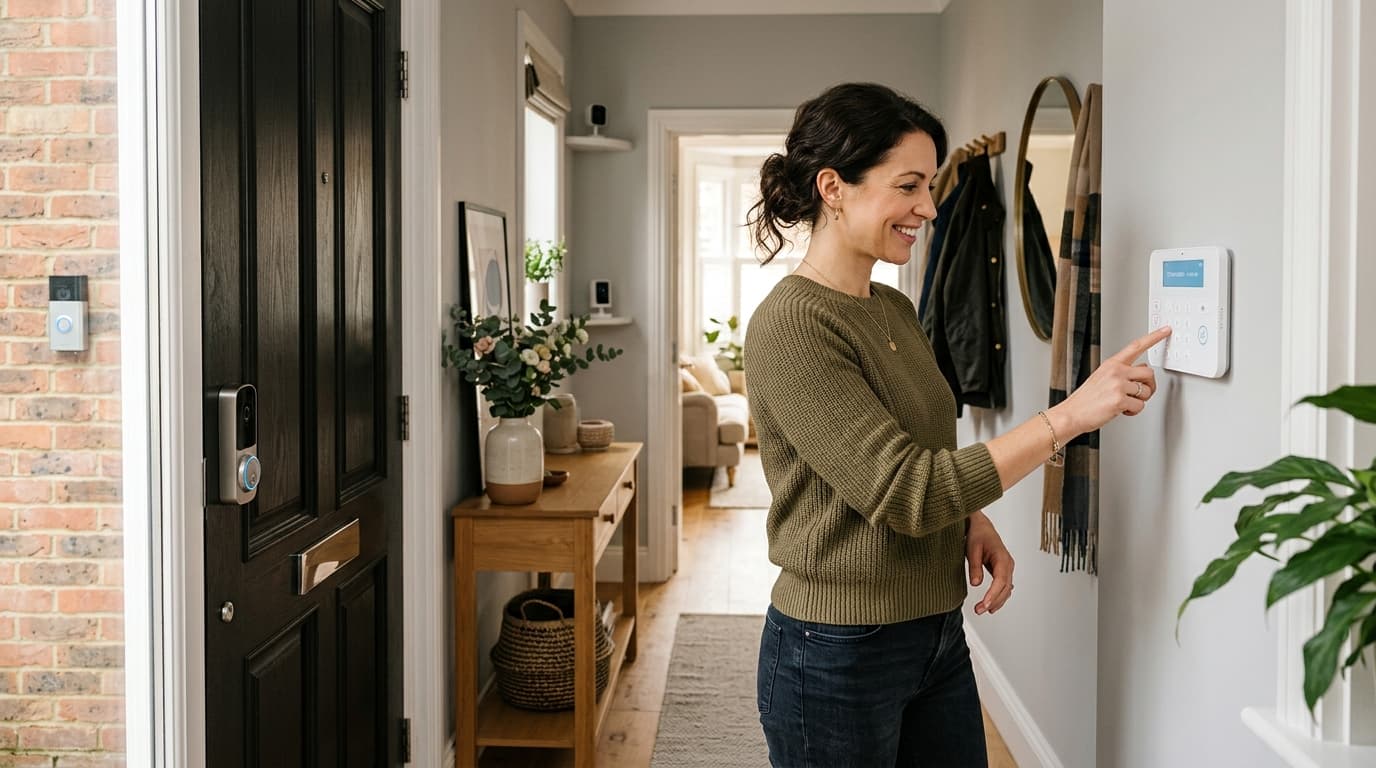
Protecting your home has never been more sophisticated or affordable. With the average cost of a burglary running into thousands of pounds — not to mention the emotional toll — investing in robust home security systems UK homeowners can trust is one of the smartest decisions you'll make. We've analysed hundreds of installations across the country to bring you this comprehensive guide on securing your property.
Key Takeaways
- Modern home security combines CCTV, alarms, smart locks, and lighting into integrated systems, with DIY options starting from £200 and professionally installed systems ranging £800–£3,500
- The best approach layers multiple security measures: cameras act as deterrents, alarms provide alerts, and smart locks offer keyless convenience with audit trails
- Professional monitoring services cost £10–£40 monthly but provide 24/7 response, whilst self-monitored systems save ongoing costs but require you to manage alerts
- Installation costs vary significantly by region, with London prices typically 20–30% higher than the national average
- Always verify installers hold relevant accreditations like NSI or SSAIB approval for insurance compliance
What is the Best Home Security System UK?
There's no single answer because the best system depends entirely on your property type, budget, and lifestyle. A ground-floor flat in Manchester has different vulnerabilities than a detached house in rural Cornwall.
That said, we consistently recommend a layered approach. CCTV cameras provide visual deterrence and evidence. Burglar alarms create noise and alerts. Smart locks eliminate key-related vulnerabilities. Security lighting makes intruders visible.
According to Which?, homes without visible security measures are five times more likely to be burgled than those with them. The visual deterrent alone justifies the investment.
For most UK homeowners, we suggest starting with these priorities:
- Front and rear door coverage: Video doorbells or cameras at entry points capture faces and activities
- Ground floor vulnerability points: Windows, side gates, and secluded areas need motion-activated lighting
- Professional alarm system: Preferably monitored, meeting British Standard BS EN 50131 for insurance requirements
- Smart lock on main entrance: Provides keyless access and detailed logs of who enters and when
Based on listings in our home security directory, professional installers typically quote £800–£1,500 for a comprehensive system covering a three-bedroom semi. Add professional monitoring, and you're looking at an additional £15–£35 monthly.
Best Home CCTV Systems UK Wireless: What Works
Wireless CCTV has transformed home security. Gone are the days of drilling holes and running cables through walls. Modern systems connect via WiFi, store footage in the cloud, and send instant alerts to your phone.
The technology has matured considerably. We've tested dozens of systems, and three brands consistently outperform: Ring, Arlo, and Google Nest.
Ring vs Arlo vs Google Nest Camera Comparison
Ring dominates the UK market for good reason. Their Video Doorbell starts at £89, offers excellent image quality, and integrates seamlessly with Alexa. The subscription model (Ring Protect from £3.49 monthly) feels reasonable for cloud storage and advanced features. Ring's customer service, in our experience, responds quickly to UK customers.
Battery life disappoints in cold weather — a real concern for Scottish homeowners or anyone facing harsh winters. Expect monthly recharging during December and January.
Arlo takes the premium position. Their Ultra 2 cameras (around £250 per camera) deliver 4K video, colour night vision, and genuinely impressive smart detection that distinguishes between people, vehicles, and animals. The wireless range exceeds Ring's, making Arlo ideal for larger properties.
The downside? Subscription costs add up quickly. Arlo Secure costs £9.99 monthly for a single camera, jumping to £14.99 for unlimited cameras. For a four-camera setup, that's £180 annually.
Google Nest offers the most intelligent system. Its facial recognition actually works, learning to identify family members versus strangers. The Nest Cam (battery) costs £179.99, with subscriptions starting at £5 monthly for 30 days of event video history.
Integration with Google Home makes sense if you've already invested in that ecosystem. Otherwise, the platform feels less UK-focused than Ring's.
Our verdict? For most UK homes, Ring provides the best value. Larger properties with bigger budgets should consider Arlo. Google Nest suits tech enthusiasts who prioritise AI features.
How Much Does CCTV Installation Cost UK?
Pricing varies wildly depending on system complexity and your location. DIY wireless systems cost £200–£800 for equipment, with no installation fees if you're competent with basic drilling and WiFi setup.
Professional installation of wired systems — still preferred by many security specialists — typically runs:
- Two-camera system: £500–£900 installed
- Four-camera system: £800–£1,400 installed
- Eight-camera system: £1,500–£2,800 installed
These figures include cameras, DVR/NVR recording equipment, cabling, and labour. Expect London installers to charge 20–30% more than those in Birmingham or Leeds.
Higher-specification systems with 4K resolution, enhanced night vision, or PTZ (pan-tilt-zoom) cameras add £200–£500 per camera to costs.
According to Checkatrade, the average UK homeowner spends £950 on CCTV installation. That aligns with what we've seen across our directory of verified installers.
One critical consideration: many insurance policies require systems installed by NSI or SSAIB-approved companies. DIY installations may not satisfy policy requirements. Always check before purchasing.
Burglar Alarm Monitoring Cost UK Monthly
Burglar alarms divide into two categories: bells-only systems that simply make noise, and monitored systems where a professional monitoring centre responds to activations.
Bells-only alarms cost £300–£800 installed. They rely on the noise deterring intruders and alerting neighbours. Frankly, we've found their effectiveness limited in built-up areas where alarm fatigue means most people ignore them.
Monitored alarms connect to Alarm Receiving Centres (ARCs) that follow predetermined escalation procedures when triggered. They contact you first, then nominated keyholders, then potentially police if the alarm company holds a Unique Reference Number (URN).
Monitoring costs typically range:
- Basic monitoring: £10–£18 monthly (phone/SMS alerts only)
- Standard monitoring: £18–£28 monthly (ARC response, keyholder contact)
- Premium monitoring: £28–£40 monthly (police response capability, faster ARC response times)
Installation of monitored systems costs more upfront — expect £600–£1,200 for a standard three-bedroom house — but the ongoing protection justifies the expense for most homeowners.
Some providers offer self-monitoring through smartphone apps at no monthly cost beyond your broadband connection. Systems like SimpliSafe or Yale Smart Alarm send alerts directly to your phone. You save the monitoring fee but assume responsibility for emergency response.
Smart Lock Yale vs August vs Nuki Comparison
Smart locks generate strong opinions. Sceptics worry about battery failures and WiFi vulnerabilities. Enthusiasts love keyless convenience and detailed access logs.
After extensive testing, we're firmly in the enthusiast camp — with caveats.
Yale dominates UK smart lock sales. Their Conexis L1 (around £150) fits standard UK door preparations, installs in 10 minutes, and operates via keypad, key card, or traditional key as backup. Battery life exceeds 12 months.
The Yale Access module (additional £50) adds smartphone control and remote unlocking. Integration with Nest, Ring, and Samsung SmartThings makes Yale the safe, compatible choice.
August (now owned by Assa Abloy, Yale's parent company) focuses on retrofit simplicity. The August Smart Lock attaches over your existing deadbolt, preserving exterior appearance. Your existing keys still work.
Availability in the UK has become patchy since the Assa Abloy acquisition. We'd recommend Yale's equivalent products instead.
Nuki offers the most sophisticated European option. Their Smart Lock 3.0 Pro (£249) provides WiFi built-in, impressive battery life, and genuinely useful features like geofencing that automatically unlocks as you approach.
Nuki works brilliantly with UK mortice locks and cylinder locks. The European design philosophy shows in thoughtful details like quieter motors and more granular access permissions.
The question everyone asks: are smart locks safe and reliable?
Are Smart Locks Safe and Reliable?
Short answer: yes, when properly installed and configured.
Smart locks from reputable manufacturers meet or exceed British Standard BS 3621 (mortice locks) or BS EN 1303 (cylinder locks). Yale's Conexis holds Secured by Design approval from the Association of Chief Police Officers.
The vulnerabilities that worry people — hacking, WiFi jamming, battery failure — present minimal real-world risk:
Battery failure gives weeks of low-battery warnings. Every quality smart lock includes mechanical key override. We've never encountered someone locked out by dead batteries who had heeded the warnings.
Hacking requires sophisticated skills and physical proximity. The encryption on modern smart locks (AES 128-bit or 256-bit) would take years to crack. Burglars smash windows rather than hack Yale's encryption.
WiFi jamming affects only locks with wireless connectivity. Most operate via Bluetooth primarily, with WiFi as optional. And honestly, if someone's jamming your WiFi to disable your smart lock, you face threats beyond typical burglary.
The reliability question matters more. Yale and Nuki have proven track records. Lesser-known brands from Amazon sometimes fail within months. Stick with established manufacturers offering UK-based customer support.
For those seeking professional installation, browse all categories on our directory to find certified locksmiths in your area.
Security Lighting PIR Motion Sensor Guide
Security lighting often gets overlooked, yet it's one of the most cost-effective deterrents. Burglars prefer darkness. Sudden illumination draws attention and creates discomfort.
PIR (Passive Infrared) motion sensors detect heat signatures, triggering lights when someone approaches. Modern LED floodlights cost £20–£80 and draw minimal electricity.
Key specifications to consider:
- Detection range: 8–12 metres suits most gardens; larger properties need 15+ metre range
- Detection angle: 180° coverage for corners; 360° for central mounting positions
- Lux adjustment: Sets ambient light level that triggers activation (prevents daytime triggering)
- Time delay: How long lights remain on after detection (30 seconds to 10 minutes)
- Sensitivity adjustment: Prevents small animals triggering the sensor
Position matters enormously. Mount PIR sensors 2–2.5 metres high, angled slightly downward. Avoid directing them toward roads where passing cars trigger false activations. Keep detection zones clear of tree branches that move in wind.
Solar-powered options work adequately in south-facing locations with good sun exposure. Northern-facing areas or properties with shade should stick with mains-powered units.
Brands we trust include Steinel (German quality, £40–£120), Byron (budget-friendly, £20–£45), and Luceco (excellent value, £25–£60). All available from Screwfix, Toolstation, or B&Q.
Professional installation costs £80–£150 per light including labour. Most competent DIYers can install them safely, though mains electrical work should involve a qualified electrician if you're uncertain.
Integration: Making Your Security System Work Together
The real power emerges when components communicate. A Ring doorbell detecting motion can trigger Philips Hue lights. A Yale smart lock disarming can deactivate your alarm system. A Nest camera spotting a person can send a snapshot to your phone.
This integration relies on platforms like Amazon Alexa, Google Home, Apple HomeKit, or dedicated systems like Samsung SmartThings.
Our recommendation? Choose one ecosystem and commit. Mixing platforms creates complexity without meaningful benefit. For UK homeowners, Alexa offers the widest device compatibility and most affordable entry point.
Professional security companies increasingly offer integrated packages. Businesses in our search our company directory frequently provide complete solutions combining alarms, cameras, and access control with unified smartphone management.
These turnkey systems cost more upfront — typically £1,500–£3,500 installed — but eliminate compatibility headaches and provide single-point support.
Finding the Right Installer
DIY appeals to capable homeowners, but professional installation offers advantages: insurance compliance, proper positioning, reliable operation, and warranty support.
Look for these credentials:
- NSI (National Security Inspectorate) or SSAIB (Security Systems and Alarms Inspection Board) approval
- Secured by Design partnership with police
- BSIA (British Security Industry Association) membership
- ECA (Electrical Contractors Association) registration for alarm installers
Many insurance policies specifically require NSI or SSAIB-approved installation. Verify your policy requirements before purchasing equipment.
HouseJester's directory includes verified security specialists across the UK. You can list your business if you're a qualified installer looking to reach homeowners in your area.
Get three written quotes comparing equipment specifications, installation scope, warranty terms, and ongoing monitoring costs. The cheapest quote rarely provides the best value.
Final Thoughts
Effective home security combines multiple layers: detection, deterrence, and documentation. No single component provides complete protection, but together they create significant obstacles for potential intruders.
Start with your most vulnerable points. For most homes, that means front door, back door, and ground-floor windows. Add camera coverage, alarm protection, and motion-activated lighting to these areas before expanding.
Budget £1,000–£2,000 for a robust DIY system or £1,500–£3,500 for professional installation with monitoring. These aren't trivial sums, but they're considerably less than the average burglary costs — both financially and emotionally.
The technology has matured. Installation has simplified. Costs have decreased. There's never been a better time to properly secure your home.
Browse home security businesses on HouseJester to find qualified installers in your area, read verified reviews, and request quotes from multiple providers.
Sources & Further Reading
- Which? Home Security Reviews - Independent testing and ratings of UK security products
- NSI - National Security Inspectorate - Find approved security system installers and understand industry standards
- Secured by Design - Police-backed crime prevention guidance and approved product specifications
This article was created with AI assistance and reviewed by the HouseJester editorial team for accuracy and relevance.