
On this page
Introduction
Protecting your property doesn't require a fortune or a security degree. With burglaries costing UK homeowners an estimated £480 million annually according to the Office for National Statistics, understanding practical home security tips has never been more important. We've spent years working with security professionals across the UK, and the good news is that most break-ins are opportunistic — meaning simple, cost-effective measures can dramatically reduce your risk.
The average burglar spends less than five minutes attempting entry before moving on. Your goal isn't to create a fortress, but to make your property sufficiently difficult that criminals choose an easier target.
Key Takeaways
- Layer your defences: Combine visible deterrents (CCTV, alarms) with physical barriers (quality locks, reinforced doors) for maximum protection
- Smart technology delivers: Modern wireless systems cost £200-800 and offer remote monitoring without professional installation fees
- Certification matters: Always choose locks meeting BS 3621 and alarms conforming to BS EN 50131 standards for insurance validity
- Lighting works: Properties with well-placed security lighting experience 30% fewer attempted break-ins
- Regular maintenance essential: The best system is worthless if batteries die or cameras aren't positioned correctly
What is the Best Home Security System UK?
There's no single "best" system because security needs vary enormously. A terraced house in Birmingham faces different risks than a detached property in rural Cornwall. We recommend a layered approach combining multiple security elements rather than relying on one technology.
The most effective strategy includes:
- Visible deterrents that make criminals think twice
- Physical barriers that slow or prevent entry
- Detection systems that alert you or authorities
- Smart monitoring that lets you respond remotely
According to Which?, properties with visible burglar alarms are 300% less likely to be targeted. The psychological deterrent often matters more than the sophistication of the actual system.
Building Your Security Foundation
Start with the basics before investing in expensive technology. We've seen homeowners spend £2,000 on CCTV whilst leaving basic locks substandard — don't make this mistake.
Essential first steps:
- Replace all external door locks with BS 3621 certified models (£80-150 per lock)
- Fit window locks on all accessible windows (£15-30 per window)
- Install a door viewer or video doorbell (£40-200)
- Secure side gates with lockable bolts (£20-60)
- Trim vegetation blocking windows from view
These fundamentals typically cost £300-600 to implement across an average three-bedroom home but prevent the majority of opportunistic attempts. When you're ready to upgrade, browse home security specialists who can assess your specific vulnerabilities.
Choosing CCTV: Best Home CCTV Systems UK Wireless
Wireless CCTV has revolutionised home security. Gone are the days of paying installers to thread cables through walls. Modern systems take an hour to set up and integrate with your smartphone.
Ring vs Arlo vs Google Nest Camera Comparison
We've tested all three major players extensively. Here's how they stack up:
| Feature | Ring | Arlo | Google Nest |
|---|---|---|---|
| Initial cost | £50-180 per camera | £80-250 per camera | £90-200 per camera |
| Monthly subscription | £3.49-8.99 | £2.79-12.99 | £5-10 |
| Video quality | 1080p standard | Up to 2K/4K | 1080p HDR |
| Battery life | 6-12 months | 3-6 months | Wired only (Cam) |
| Weather resistance | IP65 rated | IP65 rated | IP54 rated |
| Smart features | Alexa native | Works with most | Google Assistant native |
| Storage | Cloud only | Cloud + local hub | Cloud only |
| Best for | Budget-conscious, Alexa users | Premium features, flexibility | Google Home ecosystem |
Ring offers the best value for most UK homeowners. Their Spotlight Cam Battery (£179 at Argos) provides excellent deterrent value with a bright LED that activates on motion. The £3.49 monthly subscription seems reasonable compared to traditional alarm monitoring.
Arlo excels if you want top-tier video quality and local storage options. Their Pro 4 system delivers genuinely impressive 2K footage that makes number plate identification possible. Prices start around £180 per camera but quickly escalate.
Google Nest works beautifully if you've already invested in their smart home ecosystem. The Nest Cam (battery) at £179.99 provides reliable performance, though the lack of local storage option disappoints some users.
How Much Does CCTV Installation Cost UK?
DIY wireless systems cost £150-800 depending on how many cameras you need. A typical setup includes:
- 2-camera starter kit: £150-350
- 4-camera comprehensive coverage: £400-700
- 6+ camera large property: £800-1,500
Professional wired installations cost significantly more. Expect £800-2,500 for a complete system including:
- Site survey and security assessment
- Hard-wired cameras with superior reliability
- Professional-grade DVR/NVR recording
- Cable installation through walls
- Configuration and testing
London pricing typically runs 15-25% higher than national averages. We've seen quotes in London reach £3,500 for comprehensive six-camera systems, whilst the same specification costs £2,200 in Manchester.
Most domestic installations don't require Building Regulations approval unless you're drilling through fire-rated walls or external insulation systems. Always check with your local authority if unsure.
Smart Locks: Yale vs August vs Nuki Comparison
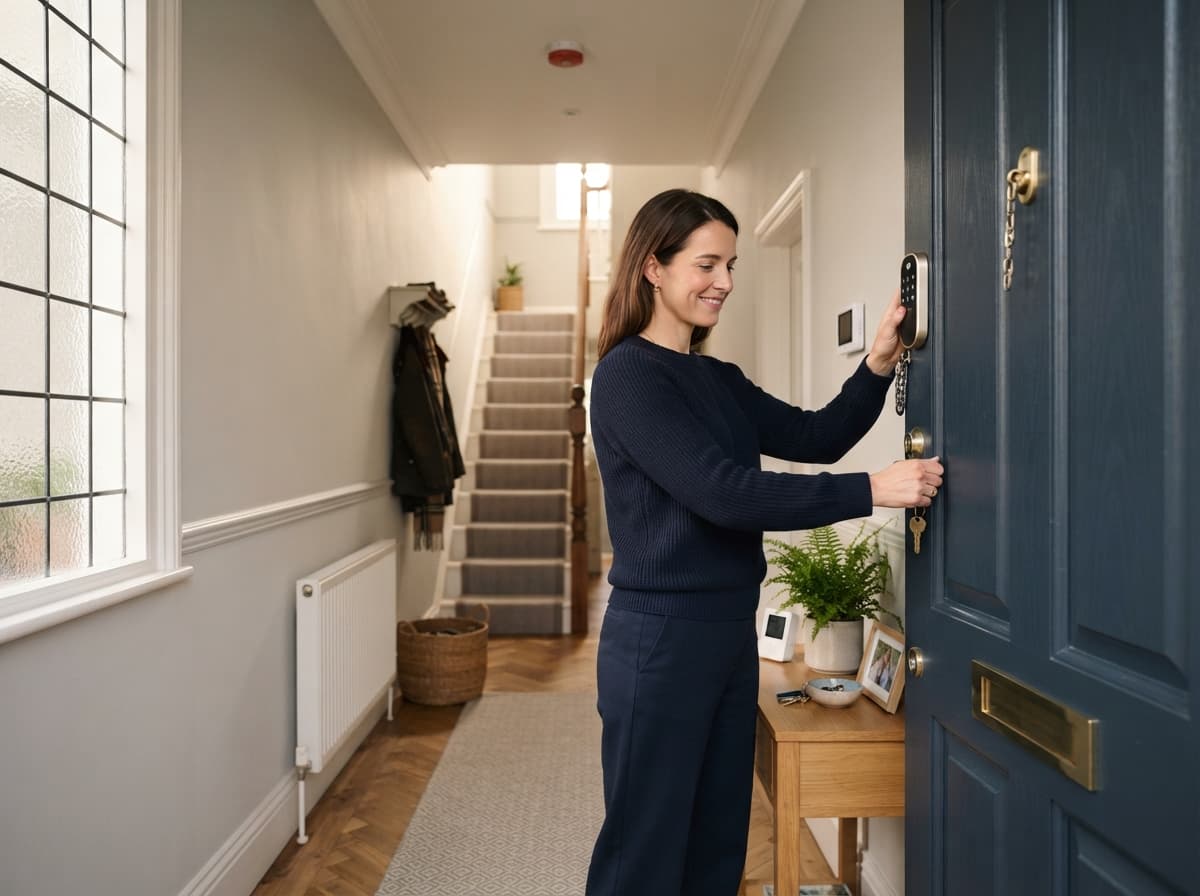
Smart locks divide opinion. Some homeowners swear by the convenience of keyless entry; others worry about digital vulnerabilities. Having installed and tested numerous models, we believe quality smart locks from reputable manufacturers are both safe and practical.
Are Smart Locks Safe and Reliable?
Yes, when properly installed and from established brands. The critical requirement: ensure any smart lock meets BS 3621 certification. Without this, your home insurance may be invalidated.
| Brand | Yale Linus | August Smart Lock Pro | Nuki Smart Lock 3.0 |
|---|---|---|---|
| Price | £100-130 | £180-220 | £230-270 |
| Installation | Replaces internal side only | Replaces internal side only | Full lock replacement |
| BS 3621 certified | Yes (with approved cylinder) | No (insurance issues) | Yes (with approved cylinder) |
| Battery life | 8-12 months | 6-9 months | 4-6 months |
| Remote access | Requires bridge (£50) | Included | Requires bridge (£90) |
| Key override | Yes, standard key | Yes, standard key | Yes, standard key |
| Voice control | Alexa, Google | Alexa, Google, Siri | Alexa, Google, Siri |
| Auto-unlock | Yes | Yes | Yes |
| Best for | UK homeowners prioritising insurance compliance | Tech enthusiasts (accept insurance risk) | Maximum features, premium budget |
Yale Linus wins for UK homeowners because it maintains compatibility with BS 3621 approved cylinders whilst adding smart functionality. At £130, it's affordable and works with your existing keys. The auto-unlock feature genuinely improves daily life — no more fumbling with keys when carrying shopping.
August locks aren't officially BS 3621 certified, creating potential insurance complications despite being excellent products. Always check your policy wording before installation.
Nuki offers the most sophisticated European design with excellent app integration. The higher price reflects Swiss engineering quality, but the complex installation and frequent battery changes frustrate some users.
Burglar Alarm Systems and Monitoring
Traditional burglar alarms remain highly effective deterrents. The distinctive bell box signals protection, whilst the piercing siren typically sends intruders fleeing within seconds.
Burglar Alarm Monitoring Cost UK Monthly
Professional monitoring adds significant protection but comes with ongoing costs:
- Basic monitoring: £15-25 monthly (police not automatically notified)
- Police response monitoring: £25-40 monthly (requires certificate from NSI or SSAIB installer)
- Premium monitoring with app: £30-50 monthly (includes video verification and smart home integration)
Annual contracts typically offer 10-15% savings compared to monthly billing. Many providers charge £99-200 installation fees plus equipment costs of £300-800 for a professionally installed system meeting BS EN 50131 Grade 2 standards.
DIY alarm kits from Yale, Ring, or SimpliSafe cost £200-500 with optional self-monitoring through smartphone apps at no monthly fee. Whilst cheaper, these don't qualify for police response and insurers may not recognise them for premium discounts.
Our recommendation? Start with a quality DIY system for most urban properties. Save professional monitoring for isolated rural locations or high-value homes where the monthly cost justifies the peace of mind. You can always find qualified installers in our home security directory when you're ready to upgrade.
Security Lighting PIR Motion Sensor Guide
Outdoor lighting dramatically improves security whilst adding practical illumination for daily use. Passive Infrared (PIR) motion sensors detect body heat, triggering lights when someone approaches.
Key considerations when choosing security lighting:
- Detection range: Quality PIR sensors detect movement from 10-15 metres
- Adjustment controls: Better models allow sensitivity and duration customisation
- Light output: Minimum 1000 lumens for effective deterrent value
- Energy efficiency: LED bulbs cost £2-5 annually to run vs £25+ for halogen
- Weather rating: Choose IP44 minimum for UK weather; IP65 for exposed coastal locations
Wickes and Screwfix stock excellent options from £18-80. The LAP LED PIR floodlight (£35 at Screwfix) offers superb value with adjustable sensitivity and 3-year warranty. Position lights above 2.5 metres to prevent tampering but below 3 metres for optimal detection.
Common installation mistakes we see repeatedly:
- Pointing sensors towards heat sources (boilers, air conditioning units)
- Installing too close to reflective surfaces causing false triggers
- Forgetting to angle downward, reducing coverage
- Using inadequate cable ratings for outdoor installation
DIY installation is straightforward for competent homeowners, but exterior electrical work requires Part P Building Regulations compliance. Unless you're a qualified electrician, hire a professional for anything beyond replacing existing fittings. Expect £80-150 labour for installing two exterior PIR lights.
Common Home Security Mistakes to Avoid
We've consulted with police crime prevention officers and security professionals to identify the most frequent errors:
Advertising your absence: Overflowing bins, uncollected post, and permanently closed curtains signal empty properties. Use timer switches for lights (£8-15 at B&Q) and ask neighbours to help maintain appearances during holidays.
Neglecting rear security: Front doors typically feature quality locks whilst back doors remain vulnerable. Burglars know this and target rear access. Budget equal attention to all entry points.
Ignoring ladders and tools: Storing ladders, tools, or bins near walls provides criminals with access to upper floors. Secure these items or store them away from the property perimeter.
Failing to mark valuables: Forensic marking (invisible UV pens cost £5-10) dramatically improves recovery chances and deters theft. Register items on the free Immobilise database.
Cheap, non-certified locks: That £15 lock from eBay probably won't meet BS 3621 standards. Your insurer may refuse claims if entry occurs through non-certified locks. Always verify certification before purchasing.
Poor CCTV positioning: Cameras pointing at the sky or obscured by vegetation waste money. Position cameras at entry points, not randomly around the property. Aim for face-height coverage at doorways.
Taking Action: Your Security Upgrade Path
Don't feel overwhelmed by trying to implement everything simultaneously. We recommend this phased approach:
Phase 1 (£300-600): The Essentials
- Upgrade all locks to BS 3621 standard
- Fit window locks
- Install basic outdoor lighting
- Secure gates and side access
Phase 2 (£200-500): Visible Deterrents
- Add wireless doorbell camera
- Install 2-3 outdoor cameras at entry points
- Consider a smart lock for main entrance
Phase 3 (£300-1,000): Comprehensive Protection
- Expand CCTV to full property coverage
- Add burglar alarm system
- Upgrade to smart lighting with remote control
- Consider professional monitoring if appropriate
You can spread these investments over months or years. Even partial implementation significantly improves your security posture.
When you're ready to work with professionals, browse all categories to find qualified tradespeople. Many security companies offer free assessments, providing personalised recommendations based on your property's specific vulnerabilities. Local specialists understand regional crime patterns and can advise on the most relevant precautions for your area.
Finding the Right Security Professional
Quality varies dramatically across security installers. Before commissioning work, verify:
- Certification: NSI Gold or SSAIB approval for systems qualifying for police response
- Insurance: Minimum £2 million public liability coverage
- Reviews: Check multiple platforms including Checkatrade and Which? Trusted Traders
- Warranties: Reputable firms offer minimum 12-month workmanship guarantees
- Transparent pricing: Detailed written quotes without pressure tactics
Meet at least three installers before deciding. Ask specific questions about equipment brands, certification standards, and ongoing support. Anyone unwilling to provide references or detailed specifications should be avoided.
If you run a security business and want to connect with homeowners seeking professional installation, you can list your business in our directory of verified UK tradespeople.
Conclusion
Effective home security doesn't require massive investment or technical expertise. Start with certified locks and basic deterrents, then gradually add technology as budget permits. The layered approach we've outlined provides far better protection than expensive equipment covering just one vulnerability.
Remember that most burglaries are opportunistic. Simply making your property slightly more difficult to enter dramatically reduces your risk. That £50 camera or £80 lock represents exceptional value when preventing thousands in losses and the emotional trauma of home invasion.
Browse home security businesses on HouseJester to find qualified professionals in your area. Our verified directory includes specialists across all UK regions who can assess your specific needs and provide expert installation.
Sources & Further Reading
- Which? Home Security Guide - Comprehensive testing and reviews of security equipment
- Metropolitan Police Crime Prevention - Official advice on preventing residential burglary
- NSI (National Security Inspectorate) - Find approved security installers meeting industry standards
This article was created with AI assistance and reviewed by the HouseJester editorial team for accuracy and relevance.
Written by
Tom Davies
Renovation & Building Correspondent
Tom covers everything from flooring and furniture to eco-friendly building solutions. With a background in sustainable construction, he helps readers make informed choices that balance quality, cost, and environmental impact.
- Flooring
- Furniture
- Storage Solutions
- Eco & Sustainable