
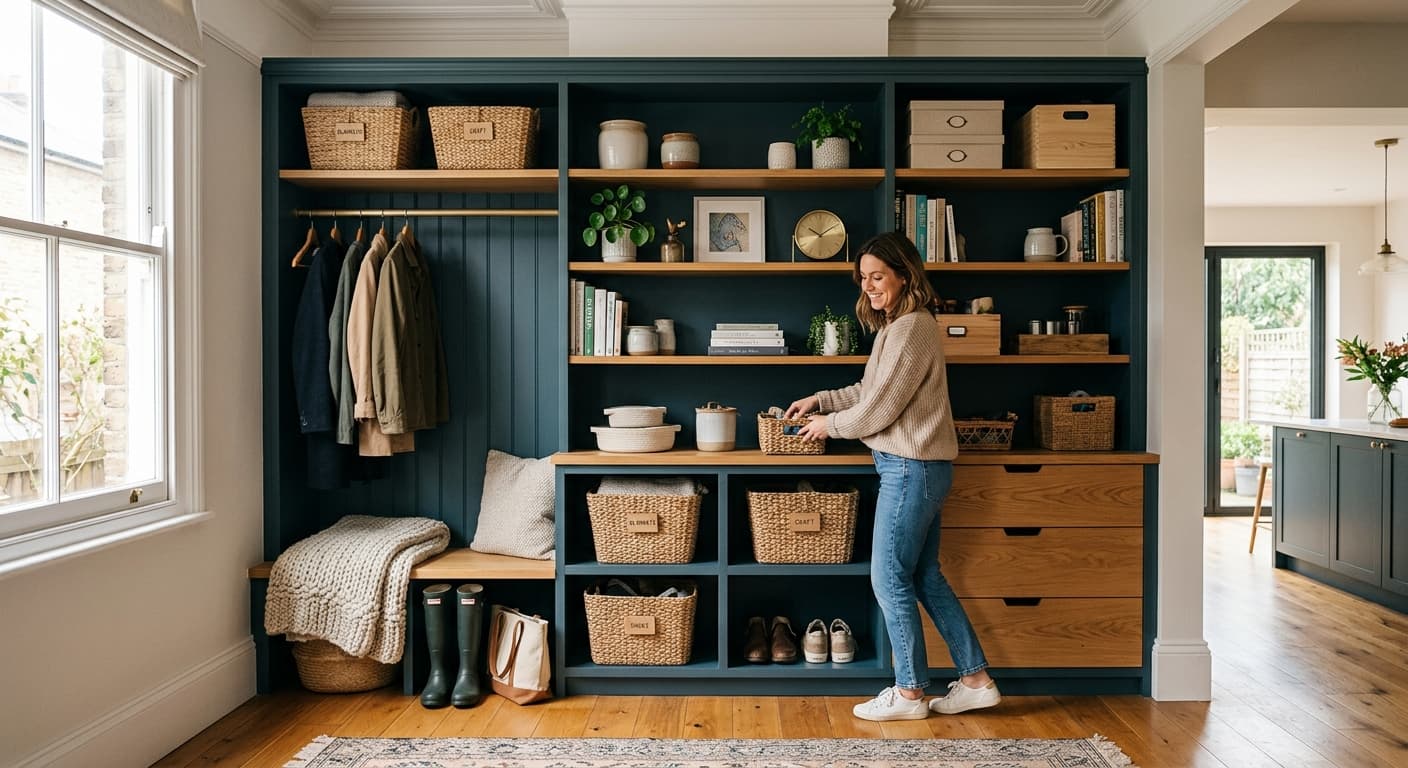
Introduction
Clever home storage solutions UK homeowners are investing in today can transform cramped living spaces into organised havens — but what should you expect to pay? From under stairs cupboards to loft boarding, the right storage system can add thousands to your property value whilst making daily life significantly easier. We've compiled this comprehensive pricing guide based on real quotes from verified suppliers, including businesses listed in our storage solutions directory, to help you budget accurately and avoid overpaying.
Key Takeaways
- Basic DIY storage solutions start from £100–£300, whilst bespoke built-in units range from £800–£5,000+ depending on complexity and materials
- Under stairs storage typically costs £600–£2,500 for professional installation, with pull-out systems commanding premium prices
- Location significantly impacts costs: expect to pay 15–25% more in London compared to regional cities like Manchester or Birmingham
- Built-in storage solutions offer excellent ROI, often returning 75–100% of investment when selling your property
- Combining multiple storage projects with one contractor can reduce overall costs by 10–20%
Understanding Storage Solution Pricing Tiers
Storage costs vary dramatically depending on whether you choose off-the-shelf, semi-custom, or fully bespoke solutions. We've seen prices range from under £100 for basic modular units to over £8,000 for comprehensive fitted wardrobes.
Budget vs Premium: What You're Actually Paying For
| Solution Type | Typical Cost Range | Durability | Best Use Case |
|---|---|---|---|
| Flat-pack/DIY units | £50–£400 | 3–5 years | Temporary storage, rental properties |
| Semi-custom (standard sizes) | £400–£1,500 | 8–12 years | Alcoves, standard wardrobes |
| Bespoke built-in | £1,500–£5,000+ | 15–25+ years | Period properties, awkward spaces |
| Designer/luxury | £5,000–£15,000+ | 20–30+ years | Whole-room installations, high-end finishes |
The quality of materials, fitting time, and level of customisation account for most price differences. MDF with laminate finishes sits at the budget end, whilst solid oak or walnut with soft-close mechanisms commands premium pricing.
How Much Does Under Stairs Storage Cost UK?
Under stairs storage ideas and costs UK homeowners frequently ask about represent excellent value for money. This dead space can be transformed into highly functional storage for remarkably reasonable prices.
Basic pull-out drawer systems start around £600–£1,200 for materials and fitting. These typically include three to four deep drawers running on industrial runners, perfect for shoes, cleaning supplies, or children's toys.
Full cupboard conversions with bespoke carpentry range from £1,200–£2,500. This price includes:
- Custom door matching your existing woodwork
- Internal shelving or hanging rails
- Lighting (usually LED strips)
- Electrical work if required
- Professional decoration
For Victorian or Edwardian properties with higher ceilings and deeper staircases, expect to add 20–30% to these figures. The additional headroom allows for more sophisticated storage systems but requires more materials and labour.
We recommend getting at least three quotes. According to Checkatrade's 2023 pricing data, under stairs storage quotes can vary by up to 40% between contractors in the same postcode.
Kitchen Storage Solutions for Small Kitchens
Kitchen storage solutions for small kitchens have become increasingly sophisticated. Corner carousel units now start from £180–£350 for decent quality mechanisms, whilst premium German-made systems reach £600–£800.
Pull-out larder units represent exceptional value. A 500mm-wide unit costs £400–£800 supply-only, or £800–£1,400 installed. These units typically provide five to six adjustable shelves with chrome or matt black railings.
Drawer organisers and dividers range dramatically in price. Basic plastic systems from B&Q or Wickes cost £15–£40, whilst premium bamboo or solid oak organisers from John Lewis reach £80–£150. The difference in build quality justifies the premium if you're renovating for the long term.
Magic Corner vs Le Mans: Which Corner Solution Wins?
For awkward corner cabinets, you'll encounter two main systems:
Magic Corner units (£200–£400 installed) swing out in sequence, maximising every inch of corner space. They're more affordable but require precise installation.
Le Mans units (£350–£650 installed) feature elegant curved shelves that pull out smoothly. They're easier to use but waste slightly more space due to their circular design.
Based on feedback from fitted kitchens specialists in our directory, Magic Corner systems offer better value for budget-conscious renovations, whilst Le Mans units suit higher-end projects where ease of use trumps cost.
Built-In Alcove Shelving Ideas Victorian Homes
Built-in alcove shelving ideas Victorian homes particularly benefit from deserve special attention. Original alcoves flanking chimney breasts provide perfect opportunities for floor-to-ceiling storage that looks original to the property.
Professional carpentry for alcove shelving costs £800–£2,000 per alcove depending on:
- Number of shelves (typically 4–8)
- Depth and width
- Material choice (MDF, pine, or hardwood)
- Finish (painted, stained, or natural)
- Additional features (cupboards, lighting, decorative moulding)
MDF shelving painted to match your walls represents the most cost-effective option at £800–£1,200 per alcove. Solid pine or oak increases costs to £1,400–£2,000 but provides superior strength for heavy book collections.
According to the Federation of Master Builders, alcove shelving in period properties should respect original proportions. We've found that shelves 200–250mm deep work best for Victorian homes, preventing the units from dominating the room whilst providing adequate storage.
DIY enthusiasts can reduce costs significantly. Materials alone cost £200–£400 per alcove if you're comfortable with basic carpentry. However, achieving professional-looking results in older properties with uneven walls requires skill and patience.
Is Built-In Storage Worth the Investment?
Absolutely. Built-in storage solutions typically return 75–100% of their cost in added property value, according to research from HomeOwners Alliance. More importantly, they improve daily living quality immeasurably.
Custom wardrobes cost £1,500–£4,000 for a standard 2.4m-wide bedroom wall. Premium materials and complex internal configurations push this to £5,000–£8,000. These prices include:
- Full design consultation
- Precise measurements
- Custom doors (sliding or hinged)
- Internal fittings (hanging rails, shelves, drawers)
- Professional installation
- Finishing touches (skirting, coving, decoration)
Compare this to freestanding wardrobes from high-street retailers costing £500–£1,500. Built-in units utilise every centimetre of available space, typically providing 30–40% more storage capacity in the same footprint.
The real value emerges when selling. Estate agents consistently report that well-executed built-in storage features prominently in viewings and valuations. A property with comprehensive storage solutions sells faster and achieves higher offers than equivalent properties with makeshift arrangements.
Garage Storage System Wall Mounted UK Options
Garage storage system wall mounted UK homeowners are increasingly installing offers brilliant value for money. Wall-mounted solutions keep items off damp floors whilst maximising usable space.
Basic slatwall panel systems start from £150–£300 for a 2.4m x 1.2m section with hooks and brackets. These provide excellent flexibility for hanging tools, bicycles, and garden equipment.
Comprehensive garage storage systems cost:
- Budget systems (plastic/resin): £200–£500 for basic coverage
- Mid-range systems (steel with powder coating): £500–£1,200 for comprehensive coverage
- Premium systems (heavy-duty steel with accessories): £1,200–£2,500+ for full garage fitouts
Wickes and Screwfix offer excellent mid-range options, whilst specialist suppliers like StoreWall provide premium systems with lifetime guarantees.
Overhead ceiling storage racks add another dimension. These cost £80–£200 for DIY-friendly systems supporting 80–150kg, or £300–£600 for heavy-duty installations supporting 250kg+. They're perfect for seasonal items and camping gear.
Loft Storage Boarding and Insulation Guide
The loft storage boarding and insulation guide every homeowner needs starts with understanding Building Regulations. Proper loft boarding must not compress existing insulation (usually 270mm depth required under Part L) and should support at least 25kg per square metre.
Professional loft boarding costs £800–£2,000 for an average semi-detached property (25–35 square metres). This includes:
- Loft legs or similar systems to raise boards above insulation
- 18mm tongue-and-groove chipboard
- Safe access considerations
- Light installation (if required)
- Compliance with Building Regulations
DIY loft boarding materials cost £400–£800 for the same area, but you'll need confidence working at height and understanding of load-bearing structures. The Energy Saving Trust emphasises that compressed insulation loses up to 50% of its effectiveness, so proper loft legs (£200–£400 materials only) are essential.
Loft ladder installation adds £200–£600 depending on whether you choose basic folding aluminium (£200–£350) or insulated, fire-rated ladders (£400–£600). The latter are worth the premium if your loft hatch opens onto a hallway or landing.
What is the Best Way to Organise a Small Home?
Multi-functional furniture with built-in storage offers the best return on investment for small homes. Ottoman beds with hydraulic lifting mechanisms cost £400–£1,200 but provide entire under-bed storage without requiring clear floor space for drawers.
Vertical storage maximises small spaces brilliantly. Floor-to-ceiling shelving units cost £300–£800 installed, utilising height that typically goes unused. We particularly recommend this approach for small living rooms and home offices.
Wall-mounted solutions keep floors clear, making rooms feel larger. Floating shelves cost £30–£80 per shelf for decent quality materials, or £200–£500 for professional installation of comprehensive shelving systems.
Multi-room storage strategies work better than isolated solutions. Coordinating storage across your home creates visual consistency whilst ensuring every room contributes to overall organisation. Consider browsing all categories on HouseJester to find specialists who can provide whole-home storage consultations.
Regional Price Variations Across the UK
Storage solution costs vary significantly by region. London prices typically run 20–30% higher than national averages due to labour costs, business rates, and material transport expenses.
Comparative pricing for identical under-stairs storage installation:
- London inner zones: £1,800–£2,500
- London outer zones: £1,400–£2,000
- Birmingham, Manchester, Leeds: £1,200–£1,800
- Regional cities: £1,000–£1,500
- Rural areas: £900–£1,400
However, London's competitive market means you'll find more specialists offering innovative solutions. The trade-off between cost and choice deserves consideration, particularly for complex projects requiring specialist expertise.
Scotland and Wales show similar pricing to regional English cities, though remote locations face material delivery surcharges. If you're located in rural Scotland or Wales, expect to add £50–£150 to project costs for delivery alone.
Money-Saving Strategies That Actually Work
Time your project strategically. January through March typically offers 10–15% lower prices as tradespeople seek work during quieter periods. We've consistently seen better availability and more competitive quotes during these months.
Bundle multiple storage projects. Contractors often reduce hourly rates when guaranteed a full week's work. Combining under stairs storage, alcove shelving, and a built-in wardrobe into one project can reduce overall costs by 15–20%.
Choose semi-custom over fully bespoke. Many carpentry firms maintain standard dimensions that fit most spaces. If your alcove measures 900mm, 1000mm, or 1200mm wide, you'll likely qualify for semi-custom pricing (20–30% cheaper than fully bespoke).
Supply materials yourself carefully. For straightforward projects, buying materials directly from builders' merchants can save 10–15%. However, ensure your contractor agrees beforehand — many refuse to work with customer-supplied materials due to warranty concerns.
Consider quality refurbished options. Architectural salvage yards occasionally stock beautiful Victorian or Edwardian built-in units for £300–£800. These require adaptation but can create stunning, characterful storage at fraction of new bespoke prices.
Professionals in our directory often recommend splitting visible and hidden storage investments. Splurge on beautiful alcove shelving in your living room (visitors see this), but choose budget-friendly solutions for bedroom wardrobes (only household sees these).
Factors Affecting Your Final Quote
Material choice dramatically impacts costs. MDF with laminate finishes costs £40–£60 per square metre, pine costs £80–£120, and premium hardwoods reach £150–£300 per square metre.
Complexity of installation matters enormously. Straight-run alcove shelving costs far less per shelf than units incorporating curves, lighting, or concealed fixings. Each complicating factor adds 15–30% to baseline prices.
Property age and condition affects every installation. Victorian properties with solid walls, uneven floors, and unique dimensions require more time and skill than modern homes with plasterboard walls and standard dimensions. Budget an extra 20–25% for period property work.
Finish quality separates average from exceptional results. Standard spray-painted MDF looks excellent initially but shows wear after 3–5 years. Hand-painted hardwood with multiple coats and sanding between layers costs 40–60% more but lasts decades.
Accessibility impacts labour costs. Third-floor flats without lifts, properties with restricted parking, or homes requiring furniture moving before work begins all increase final bills by 10–20%.
Finding the Right Storage Specialist
Choosing between carpenters, fitted furniture specialists, and general builders requires understanding their strengths. Carpenters excel at bespoke solutions for period properties, fitted furniture specialists offer excellent semi-custom options at competitive prices, and general builders handle straightforward installations economically.
Check credentials carefully. Look for professionals who:
- Carry adequate public liability insurance (minimum £2 million)
- Provide detailed written quotes breaking down materials and labour
- Offer references from recent similar projects
- Understand Building Regulations requirements
- Provide realistic timescales (be wary of quotes promising completion in half the time of other estimates)
Memberships in trade bodies like the British Institute of Interior Design or the Institute of Carpenters matter less than a strong portfolio and solid references. We've found that word-of-mouth recommendations from neighbours and local Facebook groups often identify the best local specialists.
If you're searching for reliable professionals, you can search our company directory featuring verified businesses across the UK. Many offer free initial consultations and no-obligation quotes.
Long-Term Value Considerations
Quality storage installations should last 15–25 years minimum. Calculating cost per year of use often justifies premium materials:
- Budget wardrobe at £400 lasting 5 years = £80/year
- Premium built-in at £3,000 lasting 25 years = £120/year
The calculation shifts when considering property value uplift. That £3,000 wardrobe installation typically adds £2,500–£3,500 to property value, effectively making it cost-neutral or even profitable.
Maintenance requirements differ significantly between materials. Painted MDF requires repainting every 7–10 years (£300–£600 per room). Natural wood finishes need occasional oiling (£50–£100 DIY-friendly). Laminate surfaces require only cleaning but cannot be refinished if damaged.
Energy efficiency deserves consideration for loft storage. Proper installation maintaining insulation effectiveness saves £100–£200 annually on heating bills according to the Energy Saving Trust. Over 15 years, this £1,500–£3,000 saving significantly offsets initial investment.
Getting Started with Your Storage Project
Begin by auditing current storage and identifying specific pain points. Photograph problem areas and measure spaces accurately (height, width, depth) before contacting contractors. This preparation helps specialists provide accurate initial quotes and demonstrates you're a serious client.
Create a realistic budget including 15–20% contingency for unexpected complications. Older properties particularly benefit from this buffer — uncovering damp, uneven walls, or necessary repairs during installation is common.
Request itemised quotes from at least three specialists. Lowest price rarely indicates best value. Focus on quotes demonstrating understanding of your requirements, realistic timescales, and quality materials.
Check contracts carefully before committing. Ensure they specify materials (not just "shelving" but "18mm oak veneer MDF shelving with soft-close hinges"), timescales with realistic completion dates, payment schedules (never pay more than 30% upfront), and warranty terms.
If you're ready to start your storage transformation, browse storage solutions businesses on HouseJester to find verified specialists in your area. You can also list your business if you're a storage professional looking to connect with homeowners seeking quality installations.
Sources & Further Reading
- Which? Guide to Home Storage - Comprehensive reviews and cost guides for various storage solutions
- Federation of Master Builders - Trade body providing guidance on finding reputable contractors and understanding fair pricing
- Energy Saving Trust: Loft Insulation Guide - Official guidance on maintaining insulation effectiveness when installing loft storage
This article was created with AI assistance and reviewed by the HouseJester editorial team for accuracy and relevance.