
Introduction
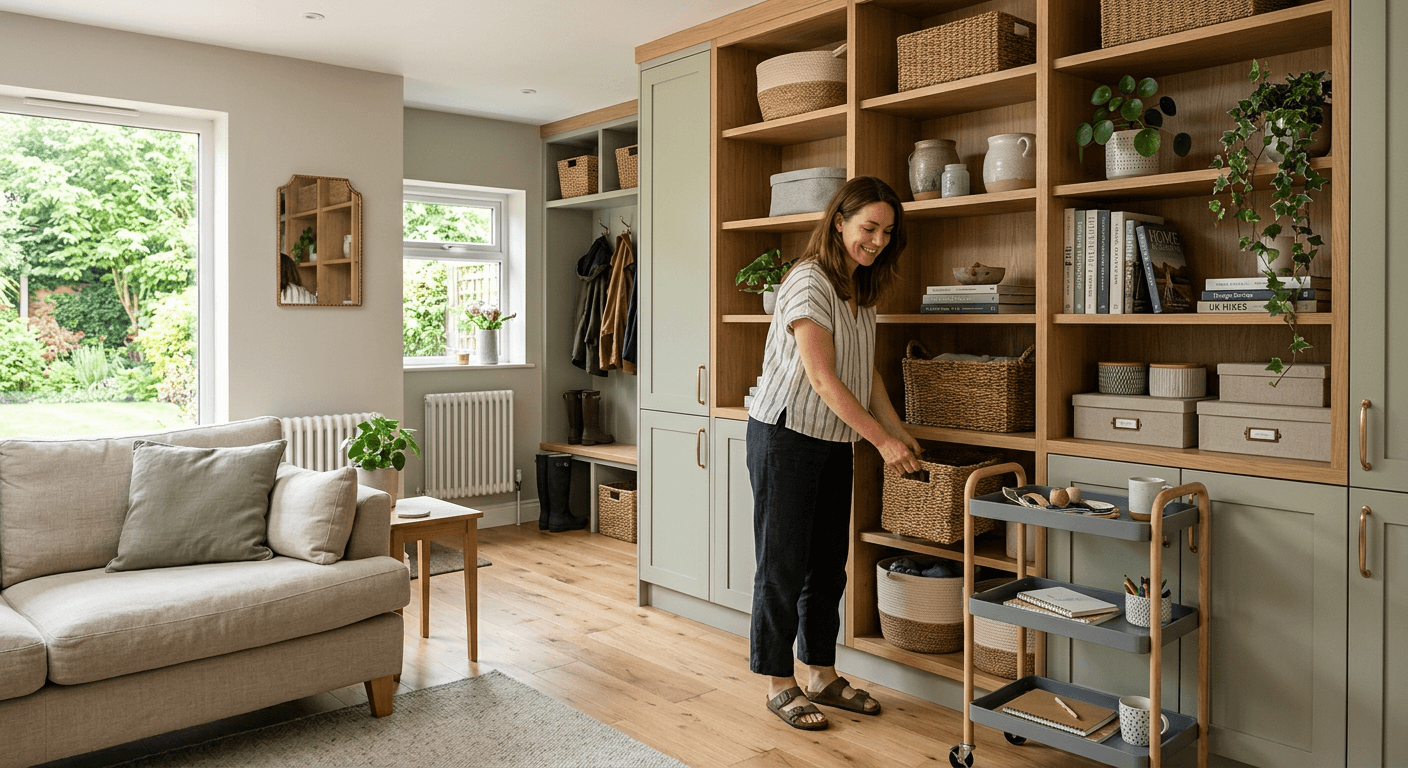
Finding the right home storage solutions UK homeowners can actually use transforms cluttered spaces into functional rooms. We've analysed hundreds of storage installations across the country, from cramped Victorian terraces to modern new-builds, and the difference proper storage makes is remarkable. This comprehensive guide walks you through the most effective storage options available to UK households, with realistic costs, practical advice, and expert recommendations from our network of storage solutions specialists.
Key Takeaways
- Budget wisely: Under stairs storage ranges from £800-£3,500 depending on complexity, whilst built-in wardrobes typically cost £1,500-£6,000
- Maximise dead space: Victorian homes offer excellent alcove opportunities; modern properties benefit most from vertical garage systems
- Consider resale value: Built-in storage adds 3-5% to property value according to estate agents, making it worthwhile for most homeowners
- Start with professional assessment: DIY works for simple shelving, but complex installations require qualified joiners or carpenters
- Plan for building regulations: Loft conversions and structural changes need compliance with Part L insulation standards
What is the Best Way to Organise a Small Home?
Small homes demand strategic thinking. We recommend working vertically first, then tackling awkward spaces most people ignore.
Start with a proper audit. Walk through each room and identify wasted space: the gap above wardrobes, unused wall areas, that awkward corner everyone avoids. According to research by the Federation of Master Builders, the average UK home wastes approximately 15-20% of potential storage space through poor planning.
Kitchen storage solutions for small kitchens deserve special attention. Pull-out larders, corner carousel units, and ceiling-height cabinets multiply usable space without extending the room footprint. We've seen galley kitchens in London flats transformed from chaotic to highly functional through clever use of drawer organisers and wall-mounted magnetic strips.
The golden rules for small home organisation:
- Install storage floor-to-ceiling wherever possible
- Use furniture with built-in storage (ottoman beds, hollow footstools)
- Mount items on walls rather than using floor space
- Create zones: one designated area per activity type
- Invest in custom solutions for awkward spaces rather than trying to fit standard units
How Much Does Under Stairs Storage Cost UK?
Under stairs storage ideas and costs UK homeowners face vary dramatically based on complexity and finish quality.
Basic shelving installations start around £800-£1,200 for simple open shelves fitted by a local carpenter. Mid-range solutions with pull-out drawers, integrated doors, and decent hardware typically run £1,500-£2,500. High-end bespoke installations with soft-close mechanisms, LED lighting, and premium materials can reach £3,000-£3,500.
London and the South East typically see prices 20-30% higher than the rest of the UK. A £1,500 installation in Manchester might cost £2,000 in the capital.
The space itself determines potential. Standard UK staircases offer roughly 2-4 cubic metres of storage volume. Victorian and Edwardian homes often have more generous under-stair areas than modern builds, where tighter building footprints reduce this space.
We recommend getting quotes from at least three joiners or fitted kitchens specialists who also handle storage. Many businesses in our directory offer free consultations and 3D renders before commitment.
Built-in Alcove Shelving Ideas Victorian Homes
Victorian properties present outstanding alcove opportunities. Those characteristic chimney breast recesses flanking fireplaces are perfect for built-in storage that looks original to the property.
Built-in alcove shelving ideas Victorian homes can accommodate range from floating shelves (£400-£800 per alcove) to full floor-to-ceiling units with cupboards below and adjustable shelving above (£1,200-£2,800 per alcove).
Materials matter significantly. MDF offers the most cost-effective option at £400-£1,200 per alcove for painted finish. Solid wood (oak, walnut, or ash) costs £1,500-£2,800 but adds substantial character and durability. Ply is increasingly popular for contemporary looks, sitting price-wise between MDF and solid wood at £800-£1,800.
Key considerations for Victorian alcoves:
- Walls are rarely straight or square—budget for scribing and adjustment
- Test for damp before installation; Victorian properties often have moisture issues
- Match skirting board and architrave styles to maintain period character
- Consider depth carefully; most alcoves are 250-350mm deep
- Paint finish should match existing woodwork unless deliberately contrasting
Is Built-in Storage Worth the Investment?
Yes, but with caveats. Built-in storage adds genuine value to properties whilst improving daily living functionality.
Estate agents we've consulted estimate well-executed built-in storage adds 3-5% to property value. On a £350,000 home, that's £10,500-£17,500 potential increase. Investments under £5,000 therefore make financial sense beyond the lifestyle benefits.
The Which? 2023 home improvements survey found fitted storage ranked among the top five modifications buyers actively seek. Families particularly value built-in wardrobes, whilst younger buyers appreciate creative small-space solutions.
However, badly executed storage actually detracts from value. Cheap materials, poor proportions, or installations that block natural light reduce appeal. We strongly recommend using qualified professionals rather than attempting complex built-ins as DIY projects.
Comparison: Storage Solution Types
| Storage Type | Pros | Cons | Typical Cost (GBP) |
|---|---|---|---|
| Freestanding Units | Portable, no installation, easy to change | Wastes wall space, less stable, looks temporary | £100-£800 |
| Alcove Shelving | Maximises awkward spaces, adds property value, looks built-in | Permanent, requires skilled joiner, not movable | £800-£2,800 per alcove |
| Under Stairs Storage | Uses dead space, customisable, significant capacity | Requires structural assessment, awkward angles | £800-£3,500 |
| Fitted Wardrobes | Floor-to-ceiling storage, tailored to room, premium finish | Expensive, permanent, installation takes 2-5 days | £1,500-£6,000 |
| Wall-Mounted Systems | Space-efficient, contemporary look, reconfigurable | Requires solid walls, weight limits, visible fixings | £200-£1,500 |
Garage Storage System Wall Mounted UK Options
Garage storage system wall mounted UK solutions have improved dramatically over recent years. Modern slatwall and gridwall systems offer flexibility traditional shelving cannot match.
The market divides into three tiers:
Budget systems (£150-£400): Basic slatwall panels from B&Q or Wickes with standard hooks and brackets. Adequate for light storage but limited weight capacity (typically 15-25kg per square metre).
Mid-range systems (£500-£1,200): Brands like GaragePride and StoreWall offer heavy-duty panels rated to 100kg+ per square metre. Better quality plastics or steel construction, wider accessory ranges, and professional installation options.
Premium systems (£1,500-£4,000): Complete garage transformations from specialists such as GarageProud. Include cabinets, workbenches, overhead storage, and integrated lighting. Built to commercial standards.
We've observed the best results come from combining wall-mounted panels with overhead ceiling storage for seasonal items. This dual approach maximises cubic metres whilst keeping floor space clear for vehicles.
Installation requirements vary. Solid brick or concrete block garages accept fixings easily. Breeze block or timber-framed garages need specialist fixings and backing boards. Budget 4-8 hours for professional installation of a full wall system.
Loft Storage Boarding and Insulation Guide
Loft storage boarding and insulation guide requirements in the UK follow specific Building Regulations standards, particularly Part L covering energy efficiency.
You cannot simply board over existing insulation. Modern UK homes require 270mm insulation depth to meet current standards. Older properties often have just 100mm, creating a dilemma: raise the floor level or compress insulation (which reduces thermal performance).
The proper solution uses loft legs or stilts—plastic or aluminium supports that lift boards above insulation. Material costs for a typical 30 square metre loft:
- Loft legs and boards: £600-£900
- Additional insulation (if needed): £200-£400
- Professional installation labour: £500-£1,200
- Total project cost: £1,300-£2,500
DIY installation is feasible for those comfortable working at height, reducing costs to £600-£1,300 for materials only. However, we recommend professional installation for several reasons: correct load distribution, proper electrical protection, and appropriate access planning.
Crucial considerations:
- Check roof structure can handle additional weight (typically 25-40kg per square metre when loaded)
- Maintain 50mm air gap above insulation for condensation prevention
- Never cover electrical cables without proper protection
- Install proper lighting before boarding; retrofitting is awkward
- Consider future access routes before boarding entire floor
According to the Energy Saving Trust, proper loft insulation saves £355 annually on heating bills for a typical semi-detached home. Storage boarding need not compromise these savings if installed correctly.
Regional Variations and Costs
Storage installation costs vary significantly across the UK. Our analysis of businesses listed on HouseJester reveals consistent regional patterns.
London pricing typically runs 25-35% above national averages. A £2,000 alcove installation elsewhere might cost £2,600-£2,700 in the capital. However, material costs remain fairly consistent; the difference lies purely in labour rates.
The South East (excluding London) sees 15-20% premiums. Major cities like Birmingham, Manchester, and Edinburgh sit 5-10% above national averages. Northern England, Wales, and Scotland (outside major cities) offer the most competitive pricing.
Material availability also varies. Specialist hardware and premium materials reach London suppliers fastest, whilst regional stockists may require longer lead times. This rarely affects standard installations but can delay bespoke projects requiring unusual components.
Choosing the Right Storage Professional
Quality varies enormously among storage installers. We've seen £3,000 disasters and £800 triumphs—price alone guarantees nothing.
Look for these qualifications and memberships:
- Institute of Carpenters membership
- City & Guilds qualifications in carpentry/joinery
- Public liability insurance (minimum £2 million)
- Professional indemnity insurance for design advice
- Established business history (3+ years trading)
Request at least three recent customer references and actually contact them. Ask specific questions about timekeeping, cleanliness, and whether final costs matched quotes.
Portfolio quality matters more than website sophistication. Examine photos of completed work carefully. Check joints are tight, lines are straight, and finishes look professional. Poor quality photos often indicate poor quality work.
Many excellent storage specialists operate locally without flashy marketing. The browse all categories section on HouseJester includes verified storage professionals across the UK who meet our listing standards.
Common Storage Installation Mistakes
We've witnessed countless storage projects go wrong. These errors appear repeatedly:
Insufficient depth planning: Shelves too shallow for actual possessions create frustration. Measure your largest items first, then design around reality.
Ignoring electrical locations: Boxing in sockets or light switches creates permanent annoyance. Plan electrical changes before installation, not after.
Poor quality hardware: Cheap drawer runners fail within months. Invest in Blum, Hettich, or similar quality brands for mechanisms you'll use daily.
Wrong finish choices: MDF needs proper priming and multiple paint coats. Rushing finishing work ruins otherwise good carpentry.
Inadequate ventilation: Built-in storage in damp-prone areas needs air circulation. Include ventilation gaps or use slatted shelving.
Overloading capability: Standard plasterboard fixings cannot support heavy shelving. Locate studs or use appropriate wall fixings for the load.
Skipping contracts: Verbal agreements cause disputes. Get written quotes specifying materials, timescales, and payment terms.
Making Storage Work Long-term
Installation represents just half the battle. Maintaining organised storage requires ongoing discipline.
Implement the one-in-one-out rule: when acquiring new items, remove something existing. This prevents gradual accumulation overwhelming even generous storage.
Label everything in closed storage. Future you will thank present you when seeking something specific among multiple similar boxes.
Review storage quarterly. Items you haven't accessed in 12 months probably deserve donation or disposal rather than valuable storage space.
Quality storage solutions should last decades. We've surveyed Victorian properties where alcove shelving installed in the 1920s remains functional today. Modern equivalents using quality materials and proper installation should match that longevity.
Taking Action
Effective home storage solutions UK properties need vary by property type, household size, and lifestyle. However, the principles remain consistent: maximise vertical space, tackle awkward areas creatively, and invest in quality installation.
Start by identifying your three biggest storage frustrations. Focus on solving those first rather than attempting whole-house transformation simultaneously. Success breeds momentum.
Get multiple quotes for any project exceeding £1,000. Price differences often reflect quality variations, but not always—sometimes you're simply paying for expensive marketing rather than better carpentry.
If you're a storage specialist or joiner offering these services, consider reaching out to list your business on HouseJester to connect with homeowners actively seeking storage solutions.
Browse Storage Solutions businesses on HouseJester to find qualified professionals in your area.
Sources & Further Reading
- Federation of Master Builders: Home Improvement Trends - Industry standards and homeowner research
- Which? Home Improvements Survey 2023 - Consumer research on storage value and satisfaction
- Energy Saving Trust: Loft Insulation Guide - Official guidance on insulation standards and Building Regulations compliance
This article was created with AI assistance and reviewed by the HouseJester editorial team for accuracy and relevance.