
On this page
The demand for professional interior design services UK has surged by 34% over the past year, according to recent industry data from the British Institute of Interior Design. Homeowners across the country are increasingly recognising that well-designed spaces aren't just aesthetically pleasing—they're investments that can add substantial value to properties whilst improving daily quality of life. From the rise of sustainable materials to the growing popularity of hybrid work-from-home spaces, the interior design landscape is evolving rapidly.
Key Takeaways
- Professional interior design services in the UK typically cost between £50-150 per hour for consultations, with full project fees ranging from £2,000-£15,000+ depending on scope and location
- The Japandi style (Japanese-Scandinavian fusion) has become the fastest-growing design trend in 2024, with searches up 67% year-on-year
- Colour psychology is now central to modern interior design, with studies showing specific hues can reduce stress by up to 40%
- Open-plan living adaptations remain the most requested service, particularly adding flexible zones for home working
- Regional pricing varies significantly, with London designers charging 30-50% more than those in Northern England or Scotland
The State of UK Interior Design in 2024
The interior design industry has fundamentally shifted. Gone are the days when hiring a designer was perceived as an unnecessary luxury reserved for period properties in Chelsea or Notting Hill. We've seen demand explode across Birmingham, Manchester, and even smaller market towns throughout the Midlands and North.
Several factors are driving this change. Remote working has made people reassess their living spaces—that spare bedroom is no longer just storage but a daily workspace requiring proper lighting, acoustics, and ergonomics. The cost-of-living crisis has paradoxically increased demand too, as homeowners choose to renovate rather than move, avoiding stamp duty and inflated property prices.
Based on listings in our directory, we've noticed a particular uptick in specialists offering sustainable design services. Homeowners want materials that meet environmental standards without compromising on style. Reclaimed timber, low-VOC paints, and natural fibres are no longer niche requests—they're baseline expectations for many clients.
How Much Does It Cost to Hire an Interior Designer UK?
Pricing remains the biggest question we receive. The short answer? It varies enormously based on your location, project scope, and the designer's experience level.
For initial consultations, expect to pay:
- Initial consultation: £100-£400 for 1-2 hours (some offer this free if you proceed with the full project)
- Hourly rates: £50-£85 (regional designers), £100-£150+ (London and established names)
- Fixed project fees: £2,000-£6,000 (single room), £8,000-£15,000+ (whole house)
- Percentage-based: 10-20% of total project costs (common for new builds or major renovations)
Regional differences are stark. Our team has found that interior design professionals in the South East typically charge 30-50% more than equivalent services in Wales, Scotland, or Northern England. A complete kitchen redesign might cost £4,500 in Leeds but £7,000 in Surrey for identical services.
Most reputable designers offer tiered packages. An entry-level service might include a colour consultation and mood boards (£500-£1,200), whilst comprehensive packages cover space planning, bespoke furniture sourcing, project management, and contractor liaison (£5,000-£20,000+).
According to Checkatrade's 2024 Home Improvement Survey, the average UK homeowner now spends £4,850 on interior design services when undertaking a full room renovation—up from £3,200 in 2022.
Interior Design Consultation: What to Expect
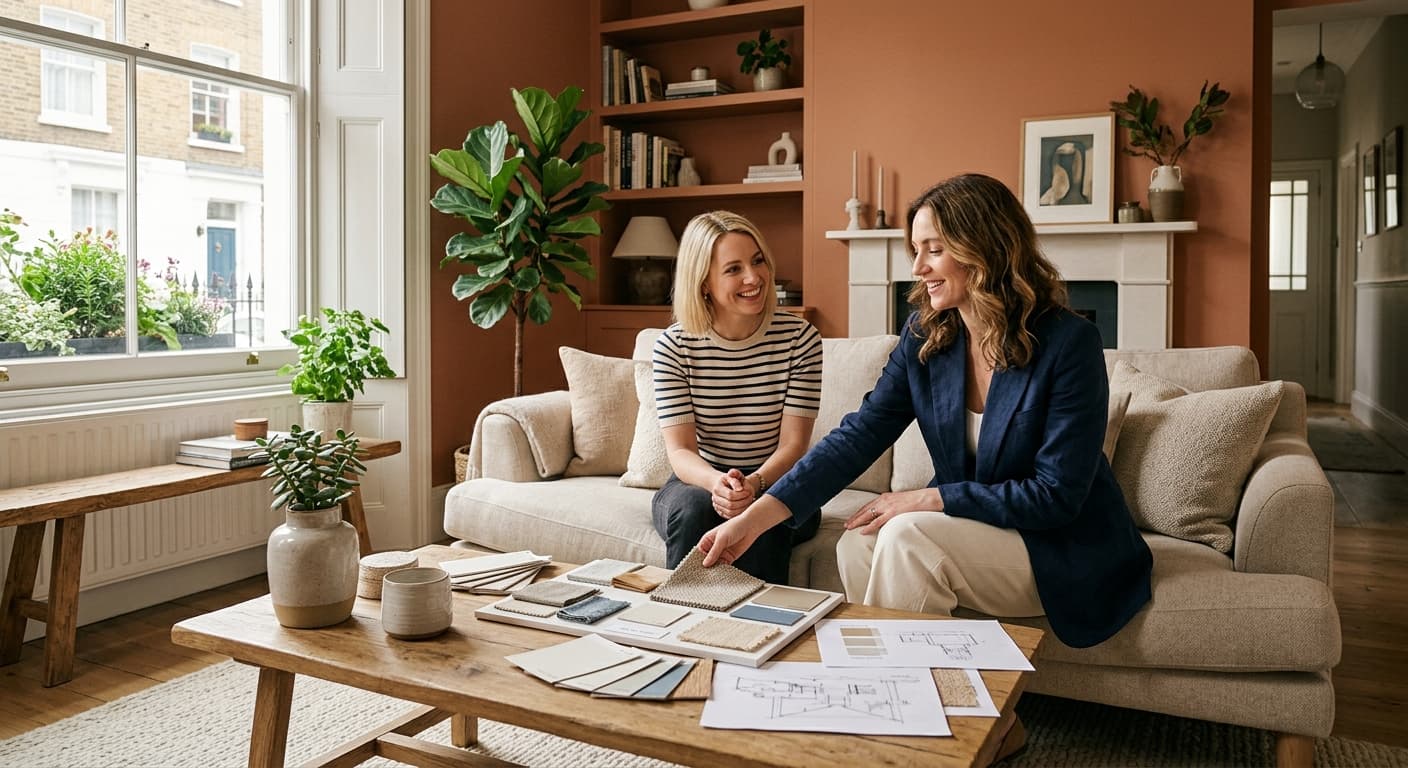
We recommend approaching your first consultation prepared. The best outcomes happen when clients and designers establish clear communication from day one.
A professional initial consultation typically includes:
- Space assessment: The designer measures rooms, notes architectural features, assesses natural light, and identifies structural limitations
- Lifestyle discussion: They'll ask about your daily routines, who uses each space, storage needs, and pain points with current layouts
- Style exploration: Expect to discuss inspirational images, existing furniture you want to retain, and colours you love (or hate)
- Budget setting: Honest conversations about realistic costs, where to splurge, and where to save
- Timeline planning: Understanding when you need completion, whether you're living in the property during works, and any fixed deadlines
After this meeting, most designers provide a written proposal outlining their recommended approach, fee structure, and next steps. Some include preliminary sketches or concept boards.
The best designers ask probing questions. They want to understand not just your aesthetic preferences but how you actually live. Do you cook daily or rely on takeaways? Do children need homework spaces? Will elderly relatives visit regularly?
One emerging trend we've noticed: designers increasingly offer virtual consultations for clients outside major cities. These typically cost 20-30% less than in-person services but obviously have limitations for accurate measurements and material assessments.
Is an Interior Designer Worth the Money?
This question deserves a nuanced answer. For some projects, absolutely. For others, perhaps not.
The return on investment becomes clear with complex renovations. Knocking through walls to create open-plan spaces, reconfiguring fitted kitchens, or updating period properties whilst respecting original features—these scenarios benefit enormously from professional expertise. Poor space planning can cost thousands to rectify.
The British Institute of Interior Design found that professionally designed homes sell 8-12% faster and achieve 3-7% higher sale prices compared to similar properties without professional input. For a £400,000 property, that's potentially £12,000-£28,000 in added value—significantly more than typical design fees.
Designers also prevent expensive mistakes. They understand Building Regulations, know which walls are load-bearing, and can spot potential issues with damp, ventilation, or lighting before you've committed to purchases. We've seen countless homeowners buy unsuitable furniture or lighting only to realise it doesn't fit or work in their space.
That said, simple refreshes—repainting, new soft furnishings, rearranging existing furniture—probably don't warrant hiring a professional. Save your money for projects involving structural changes, complete room renovations, or when you're genuinely stuck and need expert problem-solving.
What Interior Design Style Suits My Home?
The Japandi interior design style has emerged as Britain's favourite for 2024, according to Google Trends data showing a 67% increase in searches. This Japanese-Scandinavian fusion emphasises minimalism, natural materials, and functional beauty—perfectly suited to smaller UK properties where space efficiency matters.
Japandi combines Scandinavian hygge (cosiness, warmth) with Japanese wabi-sabi (embracing imperfection and simplicity). Think clean lines, neutral palettes with warm undertones, handcrafted ceramics, and plenty of plants. It works particularly well in Victorian terraces and new builds alike because it's adaptable and uncluttered.
Other popular styles for UK homes:
- Modern Country: Works beautifully in cottages and period properties; combines traditional features with contemporary comfort
- Industrial: Perfect for converted warehouses or loft apartments, especially in cities like Manchester and Birmingham
- Coastal: Increasingly popular outside traditional seaside locations; light, airy palettes that maximise natural light in British homes
- Maximalist: A reaction against years of grey minimalism; bold patterns, rich colours, and personality-filled spaces
Your home's architecture should guide style choices. Georgian and Victorian properties benefit from designs that respect original features—cornicing, sash windows, fireplaces—whilst incorporating modern comfort. Post-war and new-build properties often have neutral canvases that accommodate bolder style statements.
Colour psychology in interior design has become increasingly sophisticated. Research from the University of Brighton found that blue-grey tones reduce cortisol (stress hormone) levels by up to 40% compared to stark whites or bold reds. Warm terracotta and clay shades—hugely popular in 2024—create welcoming, grounding environments perfect for living spaces and kitchens.
Open Plan Living Room Design Ideas UK
Open-plan living remains the most requested design change in UK homes. The concept suits modern lifestyles, but executing it well requires careful planning.
Successful open-plan designs create distinct zones without physical barriers. We recommend:
Use rugs to define areas: A large rug under the sofa and coffee table visually separates the lounge zone from dining or kitchen areas
Strategic lighting: Different lighting types for different zones—pendant lights over dining tables, floor lamps in reading corners, spotlights in kitchen areas
Furniture as dividers: Position sofas perpendicular to walls rather than against them; use open shelving units or console tables to suggest boundaries
Consistent flooring with varied finishes: Keep the same wood or tile throughout but use different wall colours or textures to define each zone
Acoustic considerations: Open-plan spaces can be echoey. Add soft furnishings, curtains, upholstered furniture, and acoustic panels disguised as artwork
The biggest mistake we see? Inadequate extraction in open-plan kitchen-living spaces. Building Regulations Part F requires appropriate ventilation, but the minimum often isn't enough. Cooking smells permeate soft furnishings, so invest in a high-quality extractor (preferably vented externally rather than recirculating).
Storage is another common failure point. Open-plan living exposes clutter that would previously hide in separate rooms. Built-in storage solutions—window seats with hidden compartments, TV units with concealed shelving, ottomans with storage—are essential.
If you're considering structural changes, you'll likely need Building Regulations approval and possibly planning permission. Load-bearing walls require structural engineers' calculations and Building Control sign-off. Budget £1,500-£3,000 for structural surveys and calculations before any demolition begins.
Finding the Right Interior Designer
The UK interior design industry is unregulated, meaning anyone can call themselves a designer. This makes choosing carefully essential.
Look for designers registered with recognised professional bodies:
- British Institute of Interior Design (BIID)
- Chartered Society of Designers (CSD)
- International Interior Design Association (IIDA)
Membership requires qualifications, experience, and professional indemnity insurance. It's not foolproof, but it's a useful quality indicator.
Portfolios matter more than certifications, though. Review previous projects similar to yours. A designer who excels at minimalist new builds might struggle with maximalist Victorian renovations. Check if they've worked with your home type, era, and budget level.
We always recommend interviewing at least three designers before committing. Chemistry matters—you'll be making intimate decisions about your home and spending significant time together. Trust your instincts about who understands your vision.
Read reviews carefully, particularly on independent platforms. Based on businesses listed on HouseJester, the best designers consistently mention communication, flexibility when unexpected issues arise, and staying within budget.
Many homeowners don't realise you can hire designers for specific elements rather than full-service packages. Need help selecting paint colours and fabrics but want to project-manage contractors yourself? Most designers offer consultancy-only rates (typically £60-£120 per hour) without ongoing project involvement.
You can browse all categories of home improvement specialists on our platform, making it easier to find complementary services like bathroom specialists who can execute your designer's vision.
The Future of UK Interior Design
Several trends are reshaping the industry. Biophilic design—incorporating natural elements, plants, natural light, and organic materials—has moved from niche to mainstream. The principles align with growing awareness of mental health and wellbeing, with studies showing natural elements in homes reduce anxiety and improve cognitive function.
Technology integration is becoming standard. Smart lighting systems that adjust colour temperature throughout the day, integrated speakers that don't compromise aesthetics, and hidden charging stations are now baseline expectations for many clients, particularly in London and other major cities.
Sustainability credentials matter increasingly. Clients ask about FSC-certified timber, VOC-free paints, and locally sourced materials. The Energy Saving Trust reports that 64% of homeowners now prioritise environmental impact when making design decisions—up from just 23% in 2019.
If you're a design professional, you can list your business on HouseJester to reach homeowners actively searching for interior design services.
The democratisation of design through Instagram and Pinterest has educated consumers but also created challenges. Clients arrive with saved images of Californian homes with completely different light qualities, room proportions, and available materials. Good designers help translate inspiration into achievable, appropriate designs for British homes and budgets.
Making Your Decision
Interior design services represent a significant investment. For the right project—major renovations, open-plan conversions, whole-house redesigns—professional expertise prevents costly mistakes and creates spaces that genuinely enhance daily life.
Start with clear objectives. What problems are you solving? More storage? Better natural light? Creating a functional home office? Specific goals help designers provide targeted solutions rather than vague aesthetic improvements.
Be honest about budgets from the outset. Designers can work with most budgets if they know the constraints upfront. Trying to stretch inadequate budgets leads to disappointing compromises and strained relationships.
Remember that interior design isn't just about making spaces look attractive—it's about making them work better for how you actually live. The best designers improve functionality, flow, and comfort whilst creating beautiful environments.
Browse Interior Design businesses on HouseJester to find qualified professionals in your area, compare services, and read verified reviews from UK homeowners.
Sources & Further Reading
- British Institute of Interior Design (BIID) - Professional standards, designer directory, and industry insights
- Checkatrade Home Improvement Survey 2024 - Annual pricing data and homeowner trends
- Energy Saving Trust - Sustainable Homes - Guidance on eco-friendly materials and energy-efficient design
This article was created with AI assistance and reviewed by the HouseJester editorial team for accuracy and relevance.
Written by
Sarah Mitchell
Interior Design Editor
Sarah has spent over 12 years covering UK interiors and design trends. She works closely with interior designers and soft furnishings specialists across the country to bring readers expert insights on creating beautiful, functional living spaces.
- Interior Design
- Soft Furnishings
- Paint & Wallpaper
- Lighting