
On this page
Introduction
Finding the right interior design services UK can transform your home from a collection of rooms into a cohesive, stylish sanctuary. But with hundreds of designers offering everything from quick consultations to full project management, knowing where to start can feel overwhelming. This guide walks you through the entire process, from understanding what different services cost to choosing a design style that actually works for your lifestyle.
Key Takeaways
- Interior design services range from £50-£150 per hour for consultations to £5,000-£50,000+ for full-service projects
- Most designers offer tiered services: consultation-only, design packages, or full project management with contractor coordination
- London prices typically run 30-40% higher than regional UK rates
- A good designer pays for themselves through trade discounts, avoiding costly mistakes, and increasing property value
- Start with a clear brief and realistic budget before contacting designers
Understanding Different Types of Interior Design Services
The UK interior design market offers several service models, each suited to different needs and budgets.
Consultation services provide expert advice without ongoing involvement. You'll typically get 2-3 hours with a designer who assesses your space, suggests layouts, and recommends colour schemes or furniture. Expect to pay £50-£150 per hour (£75-£200 in London). This works brilliantly if you're confident implementing ideas yourself but need professional direction.
Design packages include room plans, mood boards, specification documents, and shopping lists. The designer creates a complete vision but leaves you to manage contractors and purchases. Costs range from £800-£3,000 per room depending on complexity. We've seen excellent results from this model for straightforward projects like single-room updates.
Full-service design covers everything from initial concepts through to final styling. Your designer coordinates contractors, sources furniture, manages the budget, and handles site visits. This premium service typically costs 15-25% of the total project budget or a fixed fee of £5,000-£50,000+ depending on project scope.
According to businesses listed on HouseJester, most residential designers offer hybrid packages, allowing you to pick and choose services based on your needs and budget.
How Much Does It Cost to Hire an Interior Designer UK?
Pricing structures vary considerably across the UK interior design market. Here's what we've found working with designers nationwide:
Pricing Models Comparison
| Pricing Model | How It Works | Typical Cost | Best For |
|---|---|---|---|
| Hourly rate | Pay for time spent on your project | £50-£150/hour (regional)<br>£100-£250/hour (London) | Small projects, consultations, design tweaks |
| Fixed fee per room | Set price for complete room design | £800-£3,000 per room | Single rooms, predictable budgets |
| Percentage of project | Designer takes % of total build/furnishing costs | 10-25% of project value | Large renovations, new builds |
| Day rate | Full day's work on-site or in studio | £400-£800 per day | Intensive design days, shopping trips |
Most designers require a retainer (typically 25-50% of estimated fees) before starting work. The British Institute of Interior Design recommends getting detailed fee proposals from at least three designers before committing.
London pricing consistently runs 30-40% higher than regional rates. A consultation costing £75 in Birmingham might be £120 in Islington. Similarly, full-service projects commanding £15,000 in Manchester could easily hit £25,000 for equivalent work in South West London.
Is an Interior Designer Worth the Money?
Short answer: usually yes, especially for projects over £10,000.
A competent designer saves you money through trade discounts (typically 20-30% off retail on furniture, fabrics, and lighting), prevents expensive mistakes, and creates spaces that genuinely improve your quality of life. We've consistently seen well-designed homes sell faster and command 5-10% premiums over comparable properties.
Consider this: if you're spending £30,000 on a kitchen renovation, paying a designer £3,000-£5,000 ensures optimal layout, prevents costly errors (like insufficient ventilation or poor lighting), and secures trade pricing that often covers their fee. According to research from Houzz UK, homeowners using designers reported 23% higher satisfaction with their renovations compared to DIY projects.
That said, skip the designer if you're simply repainting a bedroom or buying off-the-shelf furniture. For complex projects involving fitted kitchens, bathroom specialists, or structural changes, professional design expertise becomes invaluable.
Interior Design Consultation: What to Expect
Your first consultation sets the tone for the entire relationship. Professional designers follow a structured process:
Initial contact and brief: Most designers ask you to complete a questionnaire before meeting. Be honest about budget—vague answers waste everyone's time. Share inspiration images but explain what you like about them specifically.
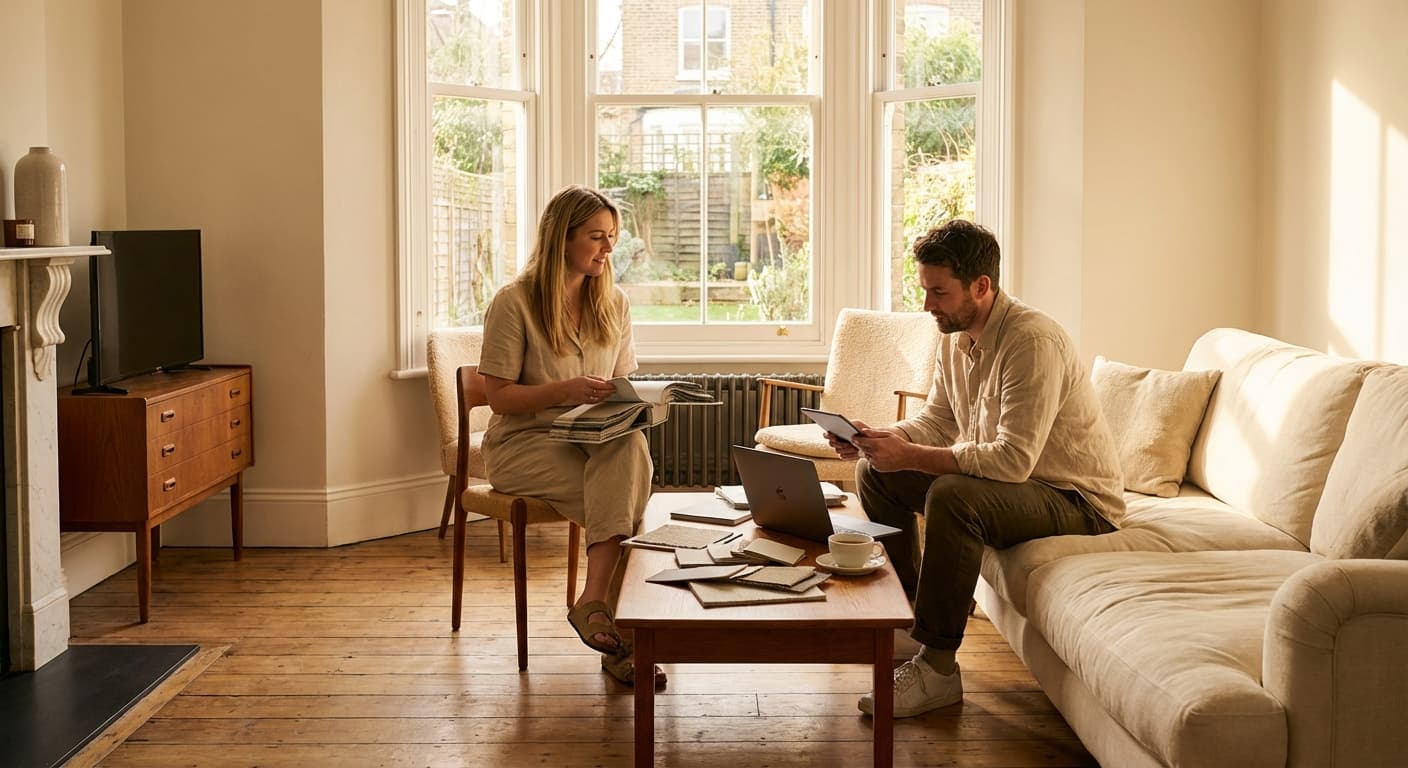
The consultation visit: A thorough designer spends 2-4 hours on a first visit. They'll measure spaces, photograph rooms, discuss how you use each area, and ask detailed lifestyle questions. Do you work from home? Entertain regularly? Have pets? These details shape practical design decisions.
Follow-up proposals: Within 1-2 weeks, expect concept boards, preliminary layouts, and a detailed fee proposal. Professional designers present 2-3 distinct directions, not just one vision. This demonstrates they've listened rather than imposing their signature style.
Red flags to watch for: Be wary of designers who don't ask about budget, dismiss your ideas without explanation, or push expensive solutions when simpler alternatives exist. The best designers balance aspiration with practicality.
What Interior Design Style Suits My Home?
Matching design style to your property's architecture and your lifestyle prevents the "beautiful but impractical" syndrome we've seen too often.
Japandi Interior Design Style Explained
Japandi blends Japanese minimalism with Scandinavian hygge, creating serene, functional spaces. Think clean lines, natural materials (pale oak, bamboo, linen), neutral palettes with warm undertones, and minimal ornamentation. This style works brilliantly in UK terraces and apartments where space is limited.
Key Japandi elements include:
- Low-profile furniture that doesn't overwhelm small rooms
- Natural light maximisation through sheer curtains or bare windows
- Tactile natural materials that add warmth without clutter
- Muted colour palettes (clay, sage, warm greys, off-whites)
Japandi suits buyers wanting calm, uncluttered spaces but finding pure minimalism too cold. It's particularly popular in urban areas where residents crave sanctuary from hectic surroundings.
Other Popular UK Styles
Modern Country: Combines traditional architecture with contemporary comfort. Works perfectly in Victorian terraces or cottages. Think exposed brick, subway tiles, butler sinks, but with modern appliances and streamlined furniture.
Industrial: Exposed brick, metal fixtures, concrete surfaces, and utilitarian furniture. Best suited to loft apartments or modern new-builds rather than period properties where it can clash.
Contemporary Traditional: Updates classic British interiors with fresh colours and simplified details. Respects period features whilst avoiding fussy, dated looks. Ideal for Georgian, Victorian, or Edwardian homes.
Open Plan Living Room Design Ideas UK
Open plan living remains hugely popular in UK homes, but getting it right requires careful planning.
Zoning without walls: Use furniture placement, rugs, and lighting to define distinct areas within open spaces. A sofa floating in the room (not pushed against walls) creates natural division between lounging and dining zones. Different ceiling lights for each area reinforces separation.
Kitchen integration: The transition between cooking and living areas causes most open-plan headaches. We recommend:
- Islands with seating that face living areas, encouraging interaction
- Handleless cabinetry that reads as furniture rather than obviously "kitchen"
- Concealed storage for everyday kitchen clutter
- Coordinated flooring throughout (luxury vinyl or engineered wood)
Acoustic considerations: Hard surfaces in open-plan spaces create echo problems. Incorporate soft furnishings (rugs, curtains, upholstered furniture) and consider acoustic panels disguised as artwork. Building Regulations Part E sets minimum sound insulation standards for conversions—your designer should reference these.
Heating and ventilation: Open spaces require more heating capacity than separate rooms. Ensure adequate radiator sizing and consider underfloor heating for even distribution. Extractor fans must meet Building Regulations Part F requirements (minimum 13 litres/second extraction rate for kitchens).
Colour Psychology in Interior Design
Colour profoundly affects mood and perception of space. Understanding basic colour psychology helps you make informed decisions.
Blues and greens: Calming, stress-reducing shades ideal for bedrooms and bathrooms. Deeper navies create cocooning effects in snugs or studies. According to research from the University of Sussex, blue environments reduce blood pressure and heart rate.
Warm neutrals: Beiges, taupes, and warm greys create versatile backdrops that make spaces feel larger and brighter. They're particularly effective in north-facing UK rooms that lack natural warmth.
Bold accent colours: Terracotta, mustard, or forest green add personality without overwhelming. Use on single walls or through accessories you can easily change. This approach lets you follow trends without expensive redecorating.
White psychology: Pure white can feel clinical in UK homes with grey daylight. Off-whites with warm or pink undertones (like Farrow & Ball's Pointing or Little Greene's Slaked Lime) feel more welcoming whilst maintaining brightness.
Common Interior Design Mistakes to Avoid
We've seen these errors repeatedly in UK homes:
Scaling problems: Furniture too large for rooms or tiny pieces lost in big spaces. Always measure carefully and use tape on floors to visualise furniture footprints before buying.
Insufficient lighting: Relying solely on ceiling lights creates flat, uninviting spaces. Layer lighting with table lamps, floor lamps, and accent lighting. Budget £800-£2,000 for comprehensive living room lighting.
Ignoring traffic flow: Furniture arrangements that block natural pathways through rooms. Maintain 80-90cm clearance for main walkways.
Trend-chasing: Instagram-worthy spaces that don't suit your lifestyle. A white sofa looks stunning until you have children or pets. Choose durability over aesthetics for high-use items.
Neglecting storage: UK homes typically lack storage. Build in solutions during design phases rather than adding freestanding units later. Expect to pay £800-£2,500 for bespoke fitted storage per room.
How to Find and Vet Interior Designers
Start by browsing Interior Design businesses in your area to compare portfolios and services. Look for designers with experience in projects similar to yours in size, budget, and style.
Essential questions to ask:
- Can you provide three recent client references?
- Are you insured (professional indemnity and public liability)?
- What design software do you use? (Professional designers use CAD or 3D rendering)
- How do you handle budget overruns?
- What's your process for contractor selection?
Portfolio red flags: Only magazine-perfect photos (no real client projects), single style repeated across all work (lacks versatility), or no before/after transformations (suggests styling rather than design problem-solving).
Professional accreditations: Membership in the British Institute of Interior Design (BIID) or the Society of British & International Interior Design (SBID) indicates professional standards and ongoing training. These bodies require members to maintain insurance and follow codes of conduct.
The Design Process: Step by Step
Understanding the typical workflow helps you prepare properly and know what to expect.
- Initial consultation (1-2 hours): Space assessment, lifestyle discussion, budget setting
- Design development (2-4 weeks): Mood boards, floor plans, 3D renders, material samples
- Presentation and refinement (1-2 weeks): Review proposals, request changes, finalise concepts
- Specification and procurement (4-8 weeks): Order furniture, materials, fixtures; coordinate contractors
- Installation (1-6 weeks depending on scope): Manage tradespeople, handle deliveries, resolve site issues
- Styling and handover (1-2 days): Final touches, accessorising, walkthrough
Timelines vary dramatically based on project complexity and lead times for custom items. A single room might complete in 8-12 weeks; whole-house projects typically run 4-8 months.
Regional Considerations Across the UK
Design approaches and costs vary by region. London's compact Victorian terraces require different solutions than spacious Scottish townhouses or Welsh stone cottages.
London and South East: Premium pricing, space-maximisation priorities, contemporary styles dominate. Expect to pay top-end rates but access the UK's largest designer pool.
Midlands and North: Better value, larger properties allow more ambitious layouts. Traditional styles remain popular though contemporary design is gaining ground.
Scotland: Properties often feature generous proportions and period details. Designers here excel at balancing heritage features with modern comfort. Weatherproofing and insulation receive more attention than in southern England.
Wales and South West: Rural locations and period properties (cottages, farmhouses) predominate. Designers specialise in sympathetic updates that respect architectural heritage whilst improving functionality.
For further guidance on specific renovations, check out our home improvement guides covering everything from kitchen planning to lighting design.
Making Your Final Decision
After meeting several designers, trust your instincts alongside practical considerations. The right designer:
- Listens more than they talk during initial meetings
- Presents ideas you hadn't considered but immediately recognise as right
- Provides transparent, detailed fee breakdowns
- Responds promptly to queries
- Shows genuine enthusiasm for your project
Don't choose solely on price. The cheapest designer often costs more long-term through mistakes, delays, or unsatisfactory results requiring correction. Similarly, the most expensive isn't automatically the best fit.
Request detailed contracts covering scope of work, fees, payment schedules, timelines, and termination clauses. Professional designers provide these as standard.
Final Thoughts
Investing in professional interior design services transforms how you experience your home daily. The difference between adequate and exceptional design lies in thousands of small decisions about proportion, colour, lighting, and material selection—exactly where professional expertise delivers value.
Start by defining your priorities, setting realistic budgets, and researching designers whose work resonates with your vision. The perfect designer for your neighbour might not suit your needs, so invest time finding the right match.
Ready to begin your interior transformation? Browse Interior Design businesses on HouseJester to connect with verified professionals across the UK.
Sources & Further Reading
- British Institute of Interior Design (BIID) - Professional body setting industry standards and providing designer directories
- Houzz UK Research - Annual surveys on renovation trends, costs, and homeowner satisfaction
- Building Regulations Approved Documents - Official guidance on Parts E (sound insulation), F (ventilation), and L (energy efficiency) relevant to interior renovations
This article was created with AI assistance and reviewed by the HouseJester editorial team for accuracy and relevance.
Written by
Sarah Mitchell
Interior Design Editor
Sarah has spent over 12 years covering UK interiors and design trends. She works closely with interior designers and soft furnishings specialists across the country to bring readers expert insights on creating beautiful, functional living spaces.
- Interior Design
- Soft Furnishings
- Paint & Wallpaper
- Lighting