
On this page
The latest interior design trends UK homeowners are embracing blend sustainability, functionality, and timeless aesthetics in ways we haven't seen before. From Japandi minimalism to bold maximalist statements, understanding current trends helps you make informed decisions that won't feel dated in three years.
Key Takeaways
- Interior designers in the UK typically charge £50-£200 per hour, with full room designs ranging from £1,500-£8,000 depending on location and complexity
- Colour psychology plays a crucial role in creating spaces that support wellbeing, with earthy tones and calming blues dominating 2024 trends
- Japandi style combines Japanese minimalism with Scandinavian warmth, creating functional yet beautiful spaces ideal for UK homes
- Open plan living requires careful zoning to balance the trend towards multi-functional spaces
- Regional pricing varies significantly, with London designers charging 30-50% more than those in other UK cities
Understanding Current Interior Design Trends UK
The UK interior design landscape has shifted dramatically since 2020. We've seen a move away from stark minimalism towards warmer, more personalised spaces that reflect individual character. Based on listings in our interior design directory, professionals report increased demand for sustainable materials, biophilic design elements, and multi-functional spaces.
Japandi interior design style explained as the marriage of Japanese wabi-sabi philosophy with Scandinavian hygge. This trend resonates particularly well in UK homes where space comes at a premium. The style emphasises:
- Natural materials like oak, bamboo, and linen
- Neutral colour palettes with occasional black accents
- Functional furniture with clean lines
- Minimal ornamentation focused on quality over quantity
Retailers like John Lewis and West Elm have expanded their Japandi collections significantly, making this aesthetic accessible across various price points. A typical Japandi living room transformation costs £3,000-£7,000 including furniture and soft furnishings.
Colour Psychology in Interior Design
Colour psychology in interior design isn't just trendy pseudoscience. Research from the Building Research Establishment confirms that colour choices directly impact mood, productivity, and even sleep quality. We recommend approaching colour selection strategically:
Warm earthy tones (terracotta, ochre, sage green) create grounding, comfortable environments ideal for living spaces. Dulux's 2024 Colour of the Year, "Sweet Embrace," reflects this trend towards nurturing neutrals.
Cool blues and greens lower heart rate and promote relaxation, making them perfect for bedrooms and bathrooms. Farrow & Ball's "Green Blue" remains consistently popular in UK homes for this reason.
Bold jewel tones (emerald, sapphire, ruby) used as accents inject personality without overwhelming spaces. We've seen this approach work particularly well in Victorian and Edwardian properties where period features provide architectural interest.
The British interior design community increasingly advocates for the 60-30-10 rule: 60% dominant colour, 30% secondary colour, 10% accent colour. This creates visual balance whilst allowing creative expression.
Open Plan Living Room Design Ideas UK
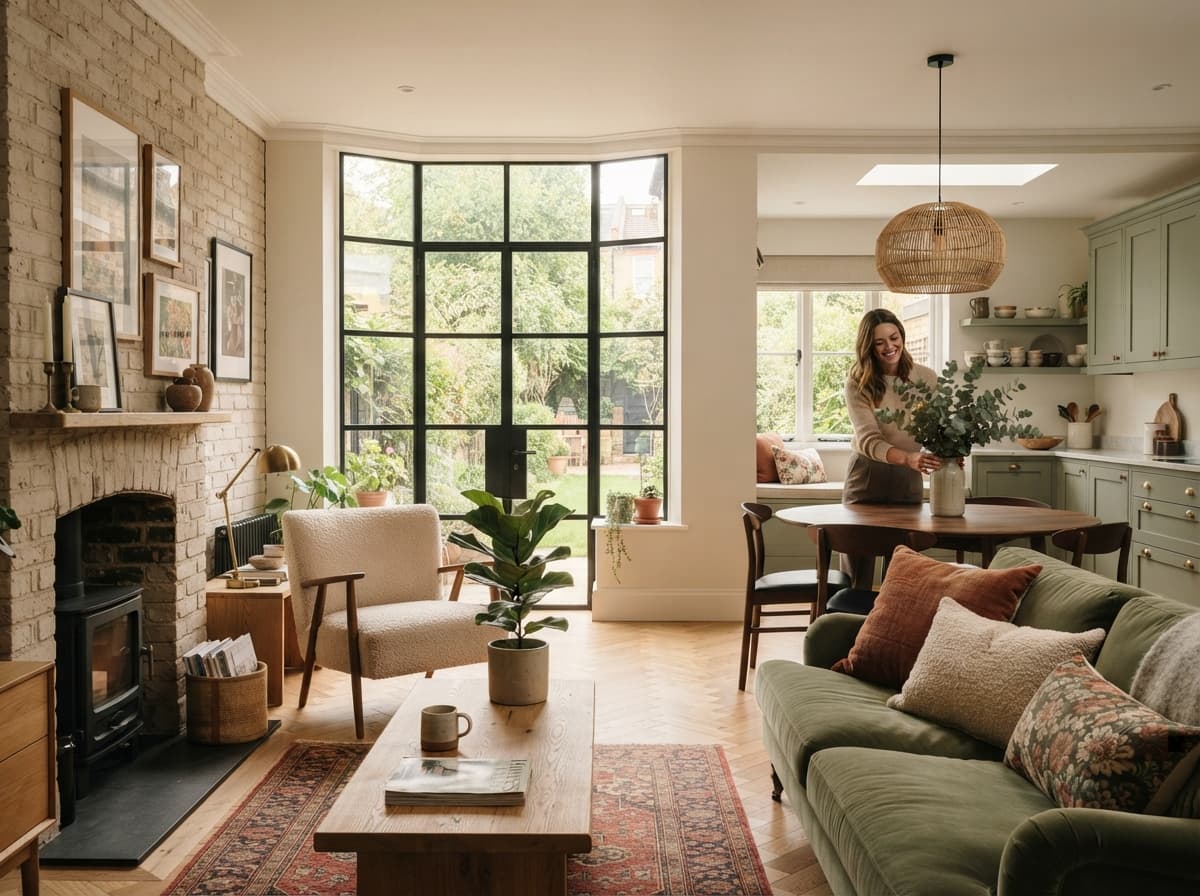
Despite recent debates about their practicality, open plan living room design ideas UK homeowners continue to search for remain popular, particularly in family homes. The key is creating distinct zones without sacrificing the sense of space.
Zoning strategies that work:
- Different flooring materials or rugs to define areas
- Strategic furniture placement creating natural pathways
- Pendant lighting at varying heights to distinguish spaces
- Partial room dividers like bookcases or screens
- Colour blocking on walls to subtly separate zones
According to research from Homebuilding & Renovating magazine, successful open plan designs maintain clear sightlines whilst providing acoustic separation. This proves especially important in UK homes where Building Regulations Part E requires specific sound insulation standards.
For a typical 40-50 square metre open plan kitchen-living-dining space, budget £15,000-£35,000 for a complete redesign including structural work, new fitted kitchens, and furnishings. London prices typically run 30-40% higher.
How Much Does It Cost to Hire an Interior Designer UK?
The question of how much does an interior designer cost UK households depends heavily on scope, location, and designer experience. Based on our analysis of professionals listed across London, Manchester, and Birmingham, here's what you can expect:
| Service Type | London Rates | Rest of UK | What's Included |
|---|---|---|---|
| Hourly consultation | £80-£200 | £50-£120 | Initial advice, mood boards, concept development |
| Room design package | £2,500-£8,000 | £1,500-£5,000 | Full design, sourcing, project management |
| Full house design | £15,000-£50,000+ | £8,000-£30,000 | Complete design service, contractor liaison |
| Online consultation | £150-£500 | £150-£500 | Remote advice, digital mood boards |
Interior Design Consultation What to Expect
Understanding interior design consultation what to expect helps you maximise value from your first meeting. Professional designers should:
Before the consultation: Send a questionnaire about your style preferences, budget, and functional requirements. Expect to provide room measurements and photographs.
During the consultation: Spend 1-2 hours discussing your vision, reviewing inspiration images, and assessing spatial challenges. A good designer asks probing questions about how you actually use spaces, not just what aesthetic you prefer.
After the consultation: Receive a proposal outlining scope of work, timeline, and fee structure. Most designers provide this within 5-7 working days.
The British Institute of Interior Design recommends checking designers carry professional indemnity insurance and belong to recognised industry bodies. Many businesses in our directory display these credentials prominently.
Is an Interior Designer Worth the Money?
This question deserves an honest answer: sometimes yes, sometimes no.
When designers add genuine value:
- Complex spatial planning requiring structural changes
- Period properties where specialist knowledge prevents costly mistakes
- High-end renovations where design cohesion justifies the investment
- Commercial spaces where functionality directly impacts revenue
Our team has found that designers typically save clients 15-20% on furniture and materials through trade discounts, often offsetting their fees partially. They also prevent expensive mistakes like incorrect room proportions or poor lighting design.
When you might not need one:
- Simple cosmetic updates (paint, soft furnishings, accessories)
- Very tight budgets under £5,000 total project cost
- Strong personal vision and confidence in your choices
- Willingness to invest time researching and project managing yourself
For middle-ground solutions, consider online design services like Havenly or Design Therapy, which offer professional guidance at £200-£600 rather than thousands.
What Interior Design Style Suits My Home?
Matching design styles to your property's architecture creates harmony rather than conflict. We've observed these pairings work consistently well:
Victorian/Edwardian properties: Rich colours, pattern layering, antique pieces mixed with contemporary furniture. Farrow & Ball's historical palette complements original features beautifully. Avoid ultra-modern minimalism that fights against architectural character.
1930s semi-detached: Art Deco influences with geometric patterns, jewel tones, and statement lighting. The curved bay windows and original fireplaces in these homes provide perfect focal points.
Post-war properties: Mid-century modern aesthetic celebrating the era's architectural simplicity. Furniture from retailers like Made.com and West Elm suits these spaces perfectly.
New builds: Contemporary or Japandi styles work well in homes lacking architectural features. Focus on creating interest through texture, layering, and carefully curated pieces rather than fighting non-existent period details.
Cottages and rural properties: Modern rustic or Scandinavian styles respect traditional proportions whilst avoiding twee country clichés. Benjamin Moore's nature-inspired palette offers sophisticated options.
Practical Implementation: A Step-by-Step Approach
Step 1: Define your budget realistically
Allocate 10-15% of your home's value for a complete interior refresh, or £3,000-£5,000 per room for substantial updates. Include a 20% contingency for unexpected costs.
Step 2: Gather inspiration systematically
Create Pinterest boards or physical mood boards separating must-haves from nice-to-haves. Note what specifically appeals: colour, texture, layout, or lighting?
Step 3: Assess your space honestly
Measure everything accurately. Note architectural features worth highlighting and problems needing solutions. Consider traffic flow and how you actually live in spaces.
Step 4: Prioritise structural changes first
If removing walls or adding windows, tackle this before decorative decisions. Building Regulations approval may be required, adding 6-8 weeks to timelines.
Step 5: Develop a cohesive colour scheme
Test paint samples on multiple walls, observing them in different light conditions for several days. We recommend Dulux or Little Greene sample pots at £2-£3 each.
Step 6: Select key furniture pieces
Invest in quality sofas, beds, and dining tables that you'll keep for 10+ years. Budget £800-£2,500 for a quality sofa, £500-£1,500 for a dining table.
Step 7: Layer lighting thoughtfully
Plan for ambient, task, and accent lighting on separate circuits. Budget £1,000-£3,000 for a complete room lighting scheme including fixtures and installation.
Common Mistakes to Avoid
Scaling errors plague DIY designers. Furniture that looks perfect online often overwhelms or underwhelms in reality. Always check dimensions against your space, using masking tape on floors to visualise footprints.
Ignoring practical considerations for aesthetic appeal creates beautiful but unlivable spaces. That pale linen sofa won't survive real life with children or pets. We recommend performance fabrics from companies like Warwick Fabrics for high-traffic areas.
Trend-chasing without consideration for longevity means costly updates every few years. Invest in classic foundations, then layer trendy elements through easily changed accessories and soft furnishings.
Poor lighting design ruins otherwise excellent interiors. The UK's limited natural light makes artificial lighting crucial. Install dimmers on all circuits and aim for 3-5 light sources per room.
Forgetting about acoustics in hard-surfaced rooms creates echo chambers. Add rugs, curtains, upholstered furniture, and acoustic panels to absorb sound, particularly important in open plan layouts.
Finding the Right Professional
When ready to hire, browse all categories on HouseJester to find specialists matching your needs. Look for designers with:
- Portfolio work similar to your project type and style
- Clear fee structures and service definitions
- Professional qualifications (BIID, SBID membership)
- Positive reviews mentioning communication and budget management
- Experience with your property type and era
Request detailed quotes from 3-4 designers before deciding. The cheapest rarely delivers best value, but the most expensive doesn't guarantee superior results either.
Many professionals offer initial consultations at reduced rates (£100-£200) before committing to full projects. This low-risk approach helps assess whether you'll work well together. If you're a design professional looking to expand your client base, you can list your business on our directory.
Making It Work for Your Budget
High-impact, lower-cost changes deliver surprising transformations:
- Fresh paint throughout (£400-£800 for a three-bedroom house, DIY)
- Updated lighting fixtures (£300-£1,000 depending on quality)
- New soft furnishings and cushions (£200-£500 per room)
- Decluttering and strategic furniture rearrangement (free)
- Adding plants and greenery (£50-£200)
Phased approaches make larger transformations manageable. Tackle one room completely before moving to the next, or address all structural work first, then decorative elements room by room over 12-18 months.
Mixed-tier sourcing balances quality and cost. Invest in foundation pieces from John Lewis, Heal's, or Sofa.com, then supplement with affordable accessories from H&M Home, Zara Home, or TK Maxx. Nobody needs to know your £12 cushion sits on a £2,000 sofa.
For those interested in finding more specialists for other aspects of home improvement, our search our company directory feature provides access to verified professionals across multiple trades.
Sustainability Considerations
The UK interior design community increasingly prioritises environmental impact. Look for:
- FSC-certified timber furniture
- Natural, non-toxic paints from brands like Earthborn or Little Greene
- Locally manufactured pieces reducing transport emissions
- Vintage and antique items for character and sustainability
- Natural fibres (wool, linen, cotton) over synthetics
Sustainable choices often cost more initially but last longer and maintain value better. A quality wool carpet at £40-£60 per square metre outlasts cheaper synthetic options at £15-£25 per square metre.
Conclusion
Navigating interior design trends UK homes follow requires balancing current aesthetics with timeless functionality. The best interiors reflect personal style whilst respecting architectural context and practical needs.
Success depends less on following every trend and more on understanding which elements align with your lifestyle, budget, and property. The Japandi-influenced, nature-connected, multi-functional spaces dominating 2024 trends work precisely because they address real needs: sustainability, adaptability, and wellbeing.
Whether you invest in professional design services or take a DIY approach, clear vision combined with realistic budgeting creates transformative results. Start small if needed, but start with intention.
Browse interior design businesses on HouseJester to find qualified professionals in your area.
Sources & Further Reading
- British Institute of Interior Design (BIID) - Professional body offering designer search and industry standards
- Homebuilding & Renovating Magazine - Comprehensive UK-specific renovation and design guidance
- Which? Home & Garden - Independent reviews and advice on home improvement products and services
This article was created with AI assistance and reviewed by the HouseJester editorial team for accuracy and relevance.
Written by
Sarah Mitchell
Interior Design Editor
Sarah has spent over 12 years covering UK interiors and design trends. She works closely with interior designers and soft furnishings specialists across the country to bring readers expert insights on creating beautiful, functional living spaces.
- Interior Design
- Soft Furnishings
- Paint & Wallpaper
- Lighting