
On this page
What's Driving Interior Designer Cost UK in 2024
The interior designer cost UK market has shifted dramatically over the past year. We're seeing homeowners willing to invest more strategically in professional design services, particularly for projects that reflect emerging trends like sustainable materials and flexible living spaces. The average spend on interior design services has increased by roughly 15-20% since 2023, but this investment now delivers significantly more value through better spatial planning and future-proofed design choices.
Read our complete guide to hiring an interior designer UK guide
Key Takeaways
- Interior designer fees in 2024 range from £50-£150 per hour outside London, rising to £150-£300 per hour in the capital
- Biophilic design and Japandi style dominate current UK trends, whilst maximalist interiors are declining
- Colour psychology is increasingly influencing commercial design choices, with earthy tones replacing the grey minimalism of previous years
- Open-plan layouts are being reimagined with flexible zoning rather than fully knocked-through spaces
- Designer consultation fees (£250-£500) are increasingly worthwhile given complex Building Regulations requirements
How Much Does It Cost to Hire an Interior Designer UK?
Pricing structures have evolved considerably. Based on listings in our directory, most designers now offer three distinct service models:
Hourly rates remain the most transparent option. Outside London, expect £50-£100 per hour for mid-level designers, rising to £100-£150 for established professionals. In the capital, rates start at £100 and commonly reach £200-£300 for sought-after designers. We've seen some exceptional practitioners in Manchester and Birmingham charging London rates due to their portfolio strength.
Fixed-fee projects typically work out better value for whole-room or whole-home redesigns. A single room consultation and design package runs £800-£2,500, whilst full house projects range from £3,500 for a two-bed flat to £15,000+ for a four-bed family home. These packages usually include mood boards, spatial planning, specification documents, and contractor liaison.
Percentage-based fees (typically 10-20% of the total project cost) suit larger renovations where furniture, fixtures, and construction work create substantial budgets. For a £50,000 kitchen renovation, you'd budget £5,000-£10,000 for design services.
Regional variations remain significant. According to data from the British Institute of Interior Design, London designers command a 40-60% premium over regional counterparts, though quality differences don't always justify this gap. Our directory shows exceptional fitted kitchens designers throughout the Midlands and North West offering better value.
Current Interior Design Trends Worth Investing In
Design trends directly impact whether your interior designer investment holds value. Some movements have genuine staying power; others represent fleeting fashions that'll date your home quickly.
Japandi Interior Design Style Explained
The japandi interior design style explained simply: Scandinavian functionality meets Japanese minimalism. This trend has dominated UK interiors throughout 2023-24 and shows no signs of fading. The style emphasises natural materials (particularly oak and walnut), clean lines, and carefully curated spaces that prioritise quality over quantity.
We've observed japandi working particularly well in UK homes because it addresses our chronic space constraints. The philosophy of "less but better" resonates with homeowners downsizing or managing smaller urban properties. Expect to see more sliding shoji-inspired screens, low-profile furniture, and neutral colour palettes with warm undertones.
Key japandi elements worth investing in:
- Solid wood furniture in light and medium tones (£500-£3,000 per piece for quality items)
- Natural linen and cotton textiles in neutral shades
- Thoughtful negative space rather than filling every corner
- Handcrafted ceramics and minimal decorative objects
Retailers like John Lewis and Heal's have substantially expanded their japandi-appropriate ranges, making this aesthetic more accessible at various price points.
Colour Psychology in Interior Design
The colour psychology in interior design has moved from fringe concept to mainstream consideration. Research from the University of Surrey's Environmental Psychology department confirms what designers have long argued: colour significantly impacts mood, productivity, and even sleep quality.
The trend toward earthy, grounding colours reflects this understanding. Terracotta, rust, sage green, and warm browns have replaced the cool greys that dominated the 2010s. These hues contain psychological benefits backed by research—greens reduce stress, whilst warm earth tones create feelings of security and comfort.
Current colour trends we're recommending:
- Living spaces: Warm neutrals (greige, taupe, mushroom) with jewel-tone accents
- Bedrooms: Deeper, cocooning shades like navy, forest green, and aubergine
- Kitchens: Moving away from all-white toward two-tone schemes with coloured base units
- Bathrooms: Terracotta, rust, and earthy pinks replacing clinical white
Paint costs remain relatively affordable (£150-£400 per room for professional application), making colour changes one of the most cost-effective ways to follow current trends. Farrow & Ball and Little Greene remain the designers' choice, whilst Dulux and Crown offer trend-led colours at more accessible prices.
Open Plan Living Room Design Ideas UK
The open plan living room design ideas UK homeowners are requesting have shifted dramatically. The pandemic fundamentally changed how we use homes, and the fully open-plan layout has fallen from favour. We're now seeing "broken-plan" designs that maintain visual connection whilst creating acoustic and functional zones.
Designers are using several techniques to zone open-plan spaces without reverting to solid walls:
Partial-height walls and glazed screens maintain light flow whilst providing acoustic separation. Crittall-style glazing remains popular, though alternatives from companies like Velfac offer better thermal performance. Budget £3,000-£8,000 for internal glazed partitions.
Level changes create psychological boundaries without physical barriers. A raised dining platform or sunken seating area naturally defines zones. These work best when incorporated during initial construction or major renovation, as retrofitting requires Building Regulations approval and structural calculations. Costs typically add £5,000-£15,000 to renovation budgets.
Furniture arrangement offers the most flexible zoning solution. Strategic sofa placement, room dividing bookcases, and area rugs create perceived boundaries that maintain flexibility. This approach suits renters and those wanting adaptable spaces.
Acoustic treatments have become essential in open-plan homes where noise disrupts work-from-home arrangements. Fabric panels, acoustic plaster, and strategic soft furnishings dramatically improve usability. Budget £500-£2,000 for meaningful acoustic improvements.
Is an Interior Designer Worth the Money?
The value equation has shifted. Professional interior design services now deliver measurable returns in three key areas.
Avoiding costly mistakes represents the clearest financial benefit. A designer's fee of £2,000-£5,000 easily pays for itself by preventing poor spatial planning, incorrect fixture specifications, or finishes that require early replacement. We've seen numerous cases where DIY design decisions cost £10,000+ to rectify.
Building Regulations compliance has become considerably more complex. Part L (conservation of fuel and power) now affects interior design decisions around glazing, lighting, and heating. A professional designer ensures specifications meet current standards, avoiding expensive non-compliance issues. The British Interior Design Association emphasises this growing compliance aspect in their 2024 practice guidelines.
Trade discounts and relationships can offset designer fees. Established designers typically receive 20-40% trade discounts from furniture suppliers, tile stockists, and lighting companies. These savings are often passed partially to clients, reducing the net cost of design services.
Interior Design Consultation: What to Expect
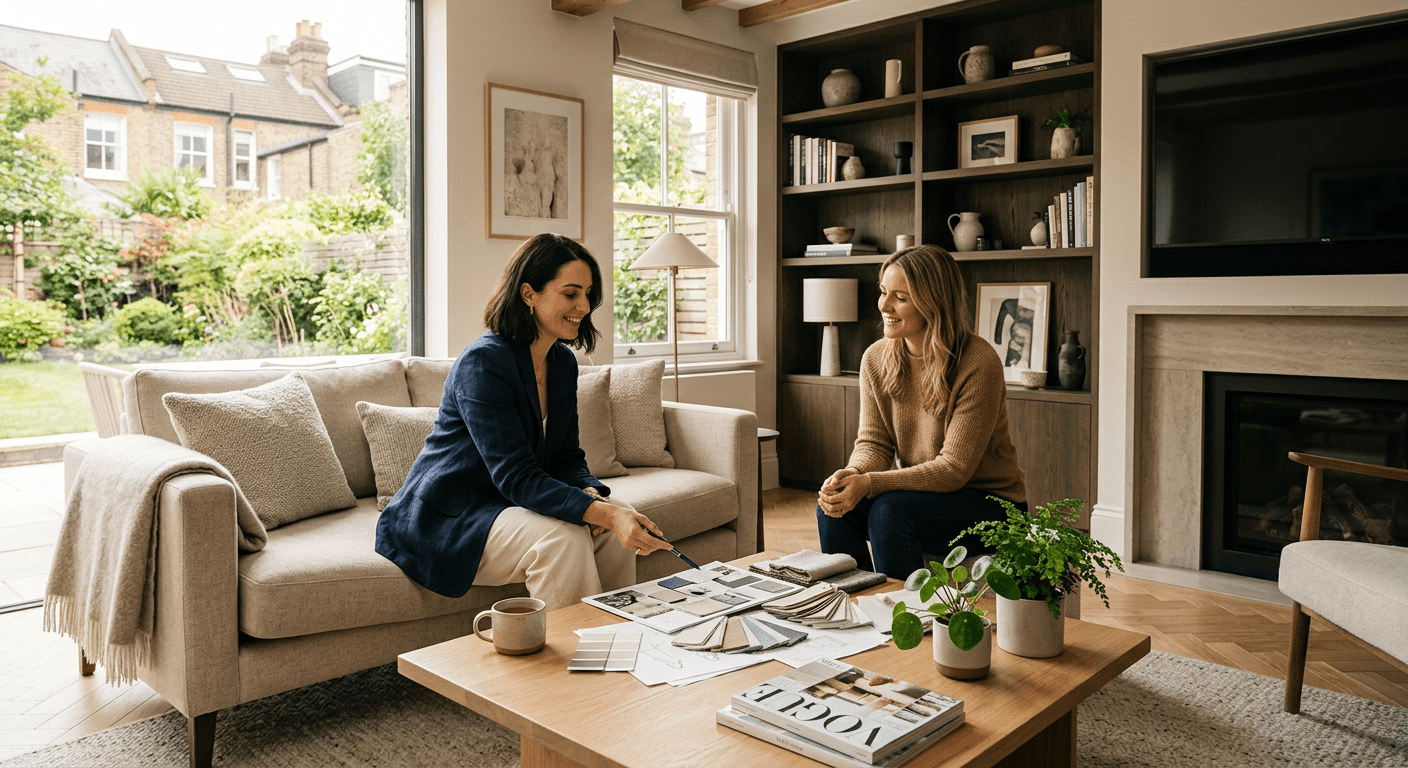
Understanding interior design consultation what to expect helps determine whether professional services suit your project. Initial consultations typically last 1-2 hours and cost £250-£500, though some designers offer shorter introductory sessions at £100-£150.
A professional consultation should include:
- Detailed discussion of your lifestyle, aesthetic preferences, and practical requirements
- Assessment of architectural features, natural light, and spatial challenges
- Preliminary ideas for layout, colour schemes, and material choices
- Budget discussion with realistic cost projections
- Overview of their working process and fee structure
- Portfolio examples of relevant previous projects
Many designers now offer this as a standalone service, providing a detailed report and recommendations you can implement independently. This represents excellent value for homeowners comfortable managing their own projects but wanting professional direction.
What Interior Design Style Suits My Home?
Matching design style to your property's architecture and your lifestyle creates coherent, comfortable spaces that age well. The current trend landscape offers several enduring directions.
Period-appropriate styling continues gaining traction. Victorian and Edwardian terraces benefit from designs that respect original architectural features whilst incorporating modern comfort. Think picture rails, deep skirting boards, and traditional joinery combined with contemporary colour and furniture. This approach particularly suits properties in conservation areas where planning constraints limit external changes.
Modern organic (sometimes called "new rustic") combines clean-lined contemporary furniture with natural materials, plants, and earthy colours. This versatile style suits both period and modern properties, making it a safe investment for homeowners concerned about resale value. Costs vary dramatically based on furniture quality, from £5,000 for a living room using high-street pieces to £25,000+ for designer items.
Sustainable and biophilic design reflects growing environmental consciousness. This trend incorporates reclaimed materials, energy-efficient choices, and abundant planting. Beyond aesthetics, these decisions deliver practical benefits through reduced running costs and improved air quality. The Royal Horticultural Society's recent research confirms measurable wellbeing improvements from indoor plants, validating this trend's staying power.
What's fading: Maximalist interiors crammed with pattern and colour are retreating after a brief renaissance. Industrial styles with exposed brick, metal fixtures, and utilitarian aesthetics now feel dated. The all-grey palette that dominated the mid-2010s has thoroughly exhausted its welcome. If your home features these elements, gradual updates toward warmer, more natural schemes represent a sound investment.
Finding the Right Designer Through HouseJester
Our directory connects you with 661 verified businesses, including numerous talented interior designers across all regions. When browsing all categories, look for designers whose portfolios demonstrate projects similar in scale and style to yours.
Key selection criteria we recommend:
- Portfolio evidence of the specific style you're pursuing
- Clear fee structures and contract terms
- Professional indemnity insurance (essential, typically £1-2 million coverage)
- Membership in professional bodies like BIID or British Institute of Interior Design
- Transparent communication about timelines and budget realities
- References from recent clients with verifiable projects
Many talented designers aren't yet listed in directories. If you work with an excellent professional, encourage them to list your business on HouseJester to help other homeowners find quality services.
Looking Ahead: 2024-25 Predictions
Several emerging trends warrant attention if you're planning a long-term design investment.
Adaptable multi-use spaces will continue gaining importance as hybrid working persists. Rooms that transform from office to guest bedroom to hobby space through clever furniture and storage choices represent the next evolution beyond open-plan debates. Budget for quality transformable furniture (£1,500-£5,000 per room) that enables flexibility.
Integrated technology will become less visible but more functional. Smart lighting, heating, and blind systems that genuinely improve daily life rather than serving as novelties. Expect designers to specify these systems more routinely, adding £2,000-£8,000 to project costs but delivering measurable comfort and efficiency improvements.
Circular design principles focusing on longevity, repairability, and eventual recycling will influence specification decisions. This reflects both environmental awareness and practical economics as quality furniture prices rise. Investment pieces that last decades make more financial and environmental sense than disposable fast furniture.
Regional aesthetic diversity will strengthen as homeowners embrace local materials and craftsmanship rather than pursuing homogeneous Instagram-driven looks. This trend particularly benefits regions like Yorkshire, Wales, and Scotland where distinctive local materials and traditions offer genuine design character.
The interior designer cost UK market reflects these shifting priorities. Homeowners increasingly view design services as investments that improve daily life and protect property values rather than superficial luxury. This mindset shift has elevated the profession whilst making services more accessible to middle-market homeowners.
Browse Interior Design businesses on HouseJester to find qualified professionals in your area who can help implement these trends in your home.
Sources & Further Reading
This article was created with AI assistance and reviewed by the HouseJester editorial team for accuracy and relevance.
Written by
Sarah Mitchell
Interior Design Editor
Sarah has spent over 12 years covering UK interiors and design trends. She works closely with interior designers and soft furnishings specialists across the country to bring readers expert insights on creating beautiful, functional living spaces.
- Interior Design
- Soft Furnishings
- Paint & Wallpaper
- Lighting