
Introduction
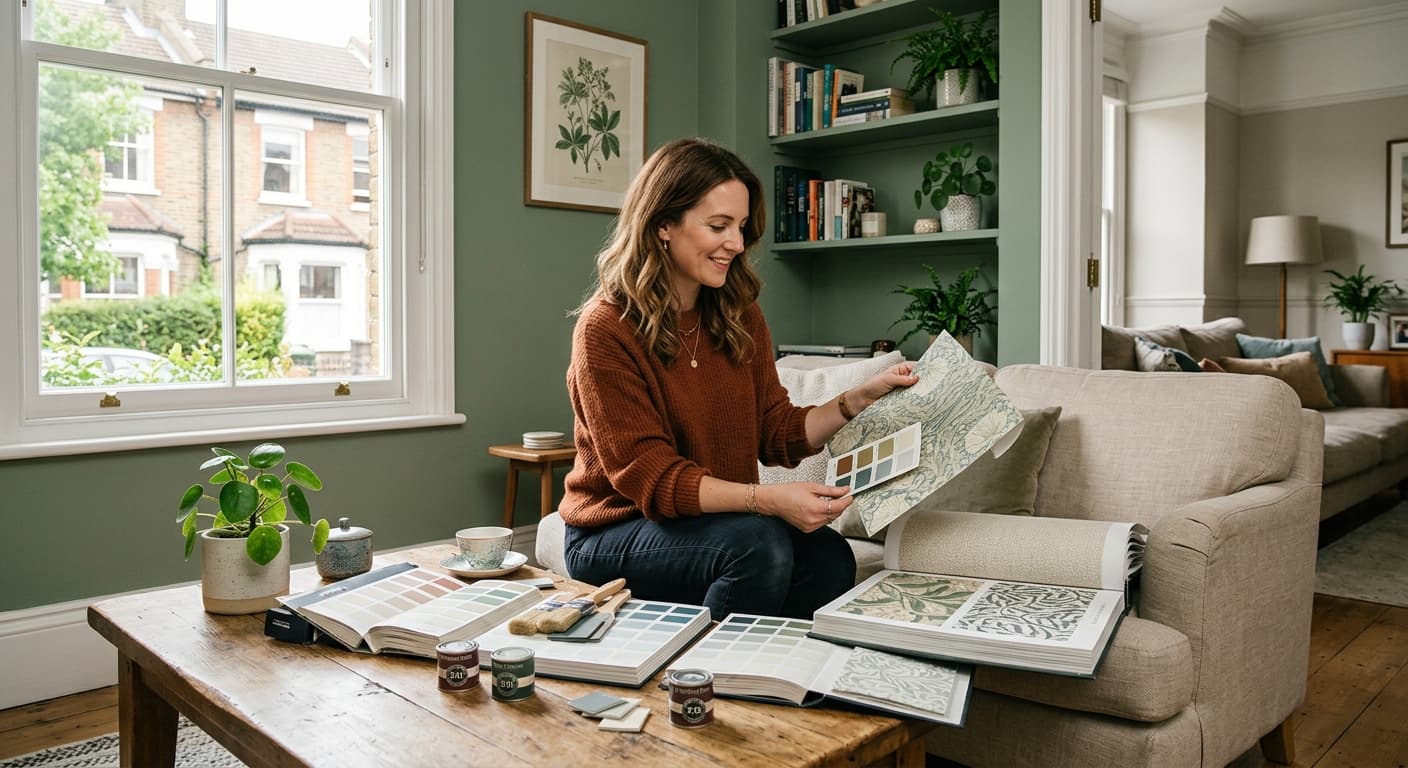
Choosing the right interior finishes transforms how a home feels, yet the sheer range of options available makes this one of the most confusing aspects of home improvement. This comprehensive interior paint guide UK covers everything from understanding paint finishes to selecting wallpaper, comparing premium brands, and getting professional results. We've compiled insights from hundreds of paint & wallpaper specialists across our directory to help you make informed decisions.
The UK market offers everything from budget-friendly options at B&Q to luxury finishes from heritage brands. Prices vary dramatically — a tin of basic emulsion costs around £15-25 for 2.5 litres, whilst premium paints can reach £90-120 for the same volume. Understanding what you're paying for makes all the difference.
Key Takeaways
- Paint finishes matter enormously: matt hides imperfections but marks easily, eggshell offers durability, and satin reflects light beautifully but shows every wall defect
- Premium paints (Farrow & Ball, Little Greene) typically require fewer coats and last longer, potentially justifying their 3-4x price premium over standard brands
- You can paint over wallpaper in many cases, but stripping it properly prevents future problems and gives superior results
- Living rooms perform best with matt or eggshell finishes, whilst kitchens and bathrooms need wipeable eggshell or satin formulations
- Professional decorators charge £150-250 per day outside London, rising to £200-350 within the capital
What is the best paint for interior walls UK?
The honest answer depends entirely on your room, budget, and expectations. We've tested dozens of formulations and spoken with decorators listed across London, Manchester, and Birmingham to understand what actually works.
Budget-friendly options include Dulux Trade Diamond Matt (£35-45 for 5L) and Johnstone's Trade Vinyl Matt (£25-35 for 5L). These workhorses deliver decent coverage and acceptable durability. Most professional decorators use these for rental properties and budget refurbishments. You'll typically need two coats over previously painted walls, three over new plaster.
Mid-range choices like Crown Period Collection (£40-55 for 2.5L) and Dulux Heritage (£45-60 for 2.5L) offer richer pigmentation and better flow. According to Which? testing in 2023, these paints scored consistently high for coverage and washability whilst costing significantly less than premium alternatives.
Premium paints command fierce loyalty. Farrow & Ball (£95-110 for 2.5L) and Little Greene (£75-90 for 2.5L) use higher pigment concentrations and traditional formulations. Devotees swear by the depth of colour and finish quality. Sceptics question whether they're worth triple the price of mid-range options.
Best interior paint brands UK compared
We've compared the leading brands across several criteria:
Farrow and Ball vs Dulux Heritage comparison reveals interesting differences. Farrow & Ball uses a unique resin system that gives colours extraordinary richness. Their 132 shades include iconic neutrals like Elephant's Breath and Railings. Coverage averages 13-14 square metres per litre on smooth surfaces. Dulux Heritage (£45-60 for 2.5L) offers 120 National Trust colours with excellent coverage of 14-16 square metres per litre. The pigment quality closely matches premium brands at roughly half the cost.
Little Greene sits between these extremes at £75-90 for 2.5L. Their 19th-century colour palette includes stunning historical shades like Yellow-Pink and French Grey. Coverage matches Farrow & Ball but dries slightly faster.
For eco-conscious homeowners, Earthborn Claypaint (£45-55 for 2.5L) and Edward Bulmer Natural Paint (£65-80 for 2.5L) use natural pigments and breathable formulations. These work beautifully on lime plaster and older properties but require careful surface preparation.
Matt vs eggshell vs satin paint finish
This choice affects both aesthetics and practicality more than most homeowners realise. The finish determines light reflection, durability, and how forgiving walls need to be.
Matt (or flat) finishes absorb light and hide surface imperfections brilliantly. They're perfect for ceilings and walls with minor defects. Modern "matt" paints often have a slight sheen (around 2-5% light reflection) making them more washable than traditional flat finishes. The downside? They mark easily and cleaning can leave burnished patches. Dulux Trade Diamond Matt addresses this with enhanced scrubbability.
Eggshell finishes reflect roughly 10-25% of light, creating subtle warmth and improved washability. This versatile finish works in most rooms and strikes an excellent balance between hiding imperfections and cleaning easily. We recommend eggshell for living rooms, dining rooms, and hallways. Farrow & Ball's Modern Eggshell is water-based and low-odour, whilst their Estate Eggshell uses traditional alkyd resins for superior flow.
Satin (sometimes called soft sheen) reflects 25-35% of light, creating a gentle lustre. It's highly washable and moisture-resistant, making it ideal for kitchens, bathrooms, and children's rooms. The catch? Satin ruthlessly highlights every bump, dent, and filling. Your walls need professional-standard preparation or the finish exposes every flaw.
Gloss and semi-gloss suit woodwork, radiators, and trim. Modern water-based glosses dry faster and yellow less than traditional oil-based formulations, though many decorators prefer oil-based for flow and durability on heavily-used surfaces like skirting boards.
What paint finish is best for living rooms?
Living rooms typically perform best with matt or eggshell finishes. The choice depends on your walls' condition and household demands.
Matt finishes create sophisticated, contemporary spaces. They're particularly effective for deep colours like Farrow & Ball's Hague Blue or Little Greene's Obsidian Green, where the light-absorbing quality adds luxurious depth. If you have young children or pets, choose enhanced formulations like Crown Hall & Stairs or Dulux Trade Diamond Matt that withstand gentle cleaning.
Eggshell offers superior practicality. The subtle sheen adds warmth whilst remaining wipeable. Period properties look stunning in eggshell — it echoes traditional distemper finishes whilst offering modern durability. This finish works beautifully in fitted kitchens open to living spaces, where you need consistent sheen levels.
Avoid satin in living rooms unless walls are perfectly prepared. The enhanced light reflection suits modern, minimalist spaces but amplifies imperfections in older properties.
Understanding Wallpaper: Selection and Installation
Wallpaper has roared back into fashion after years of painted walls dominating interiors. The UK market offers everything from £8-per-roll budget vinyls to £200-per-roll hand-printed designs.
Paper types include:
- Lining paper (£3-8 per roll): Smooths imperfect walls before painting or provides a stable base for decorative papers. Hang horizontally to avoid seams aligning with topcoat joins
- Printed paper (£15-40 per roll): Traditional pulp-based wallpaper requires careful pasting and handling. Beautiful but unforgiving for beginners
- Vinyl wallpaper (£12-35 per roll): Wipeable plastic coating makes it practical for kitchens and bathrooms. Easy to hang and strip
- Non-woven/fleece wallpaper (£25-80 per roll): Paste-the-wall application dramatically simplifies hanging. Tear-resistant and breathable. Premium brands favour this substrate
- Specialist papers: Grasscloth (£80-200 per roll), silk (£100-300 per roll), and hand-printed designs (£150-400 per roll) for statement walls
Wallpaper paste types and application guide
Matching paste to paper prevents disasters. We've seen expensive papers ruined by incorrect adhesive choices.
Standard cellulose paste (£5-8 per packet) suits traditional printed papers. Mix to different consistencies: thicker for heavy papers, thinner for lightweight designs. Stir thoroughly and leave for 10 minutes before use to avoid lumps.
Heavy-duty paste (£8-12 per packet) contains synthetic polymers for vinyls and embossed papers. Essential for anything heavier than standard wallpaper.
Ready-mixed paste (£12-25 per tub) offers convenience for vinyl and non-woven papers. No mixing means no lumps, but it costs considerably more.
Paste-the-wall adhesive (£15-25 per tub) works specifically with non-woven papers. Roll directly onto walls, then hang dry paper. This method reduces mess and speeds installation dramatically.
Always check manufacturer recommendations. Some premium papers specify particular adhesives to prevent staining or adhesion failure.
Can you wallpaper over painted walls?
Absolutely, and it's the most common scenario decorators encounter. Painted walls provide excellent substrates for wallpaper provided you prepare correctly.
Surface preparation matters enormously. Wash walls with sugar soap to remove grease and dirt. Glossy or satin paints need light sanding (120-grit) to provide tooth for adhesive. Fill any cracks or holes with fine surface filler and sand smooth. Fresh plaster needs sizing with diluted paste to prevent excessive absorption.
Lining paper (hung horizontally) creates the best possible surface, especially for expensive or delicate papers. It costs £3-8 per roll and typically adds £100-200 to decorator fees for an average room. The investment prevents show-through and provides consistent absorbency.
Paint sheen affects adhesion. Matt and eggshell paints accept wallpaper readily. Satin and gloss need abrading. Some decorators recommend primer-sealer (£25-40 for 5L) over very shiny surfaces to ensure reliable adhesion.
How to paint over wallpaper UK
Sometimes you'll want to reverse the process. Painting over wallpaper divides opinion among decorators, but it's occasionally the pragmatic choice.
It can work if the wallpaper is firmly adhered, smooth (not textured or embossed), and you're willing to accept potential compromises. Vinyl papers need their plastic coating stripped first — score and peel the vinyl layer, leaving the paper backing. This backing can then be painted.
The process requires:
- Check adhesion thoroughly. Press a damp sponge against seams — if edges lift, painting will fail
- Glue down any lifting seams with border adhesive (£8-12 per tube)
- Prime with oil-based primer-sealer or specialist wallpaper primer (£30-50 for 2.5L). This prevents moisture from paint reactivating paste
- Once primer dries (4-6 hours), apply two coats of your chosen paint
We strongly recommend stripping wallpaper instead. It's messy and time-consuming but prevents future problems. Wallpaper inevitably bubbles or peels eventually, taking your paintwork with it. Professional stripping costs £150-350 for an average bedroom, depending on paper type and location. Steam strippers hire for £15-25 per day from most tool hire shops.
Working with Professionals
Professional decorators transform results. Daily rates vary significantly by region and experience. According to Checkatrade data from 2023, expect £150-200 per day in northern England, Wales, and Scotland. Midlands and southern England (excluding London) average £180-250. London decorators command £200-350 daily.
Full room costs for a 4m x 4m bedroom typically include:
- Preparation and two coats emulsion: £350-600 (outside London), £450-800 (London)
- Wallpaper removal, preparation, painting: £500-850 (outside London), £650-1,100 (London)
- Wallpaper hanging (mid-range paper): £400-700 labour plus materials
Many specialists listed in our paint & wallpaper directory offer fixed-price quotations. Always get three written quotes, check public liability insurance, and ask for recent references.
Making Your Decision
Choosing interior finishes needn't be overwhelming. Start by assessing your walls honestly — perfect plaster accepts any finish, whilst imperfect surfaces need forgiving matt paints. Consider room function: busy spaces need durable, washable finishes.
Budget matters, but longevity and coverage affect true costs. Premium paints costing £90 for 2.5L often cover 30-35 square metres in two coats. Budget paints at £25 for 2.5L might need three coats and cover only 20-25 square metres. The premium option costs more initially but similar per-square-metre whilst looking better longer.
For wallpaper projects, consider hiring professionals unless you're confident and patient. Poor hanging ruins expensive papers. Mid-range papers (£25-40 per roll) hung professionally deliver better results than premium papers (£80+ per roll) badly installed.
Browse our search our company directory to find experienced decorators and suppliers near you. Many businesses offer colour consultation services helping you navigate the overwhelming choice of shades and finishes. You can also list your business if you're a trade professional looking to connect with homeowners.
Taking time to research, prepare properly, and choose quality materials transforms your home for years to come. The right interior finishes elevate mood, enhance light, and create spaces you'll love living in.
Sources & Further Reading
- Which? Paint Reviews and Testing — Independent testing of major UK paint brands
- The Building Regulations 2010: Approved Document Part L — Guidance on paint specifications for energy efficiency
- Checkatrade: How Much Does a Decorator Cost? — 2023 UK decorator pricing survey
This article was created with AI assistance and reviewed by the HouseJester editorial team for accuracy and relevance.