
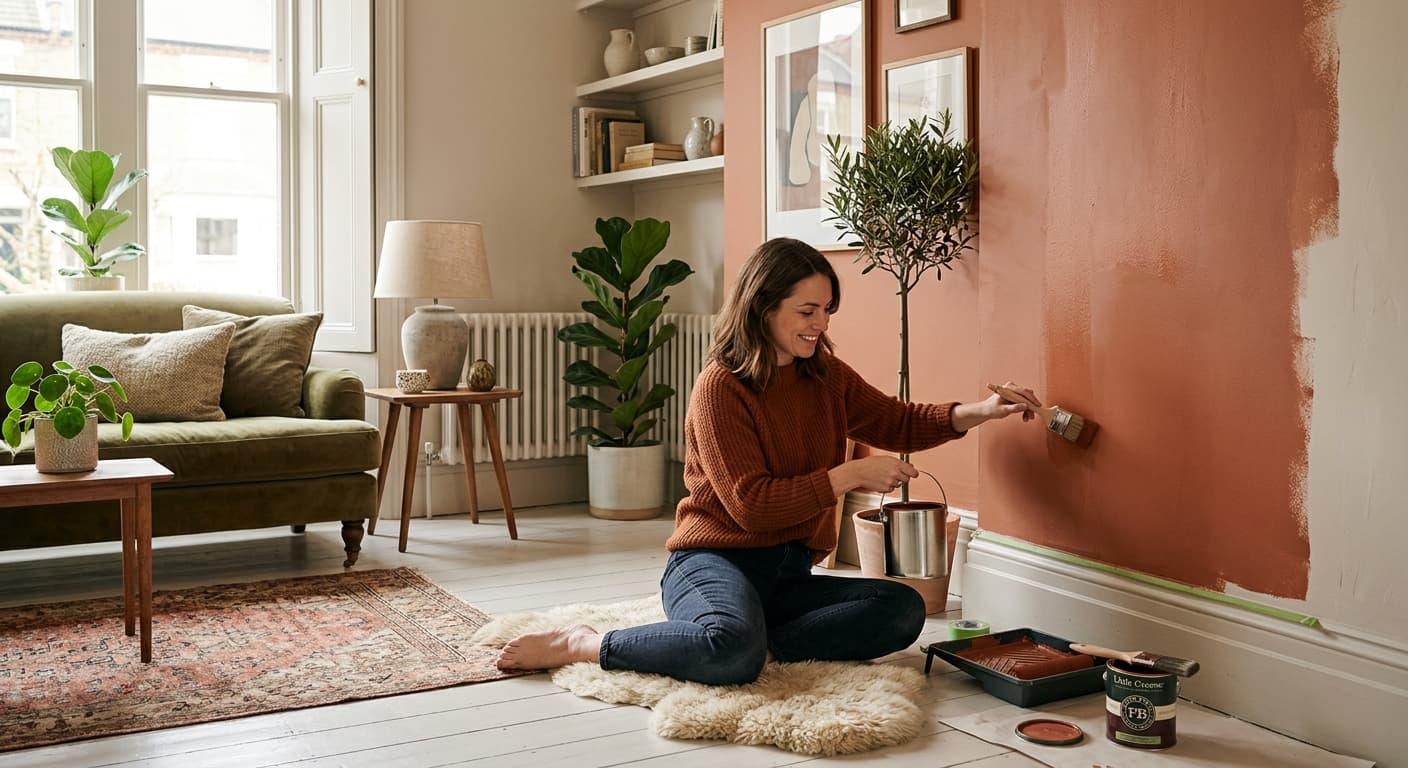
Your Complete Interior Paint Guide UK: Everything You Need to Know
Choosing the right paint or wallpaper transforms your home, but navigating finishes, brands, and application methods can feel overwhelming. This comprehensive interior paint guide UK answers the questions we hear most from homeowners planning their next decorating project. Whether you're comparing premium brands, deciding between matt and eggshell, or wondering if you can paint over existing wallpaper, we've gathered practical advice to help you make confident decisions.
Key Takeaways
- Matt finishes suit most living spaces, while eggshell and satin work better in high-traffic areas and moisture-prone rooms
- Expect to pay £15-45 per litre for quality interior paint, with budget brands starting around £15 and premium options like Farrow & Ball reaching £100+
- You can paint over wallpaper in certain conditions, but stripping it first always delivers superior, longer-lasting results
- Application matters as much as paint quality — proper preparation accounts for 70% of a professional-looking finish
- Regional pricing varies significantly, with London decorators typically charging 20-30% more than other UK cities
What is the Best Paint for Interior Walls UK?
The best interior paint depends on your room's function and traffic levels. We recommend different products for different spaces.
For living rooms and bedrooms, trade-quality matt emulsion offers excellent coverage and a sophisticated, non-reflective finish. Dulux Trade Diamond Matt, Johnstone's Trade Vinyl Matt, and Crown Trade Clean Extreme all perform exceptionally well. Budget-conscious homeowners find excellent value in Dulux Matt Emulsion (£15-20 per 2.5L at B&Q) or Wickes' own-brand Trade Matt (£12-15 per 2.5L).
Kitchens and bathrooms require moisture-resistant formulations. Dulux Easycare Kitchen suits high-humidity environments, while specialist bathroom paints from Crown or Johnstone's contain anti-mould additives. These typically cost £20-30 per 2.5L.
Hallways and children's rooms benefit from scrubbable finishes. Look for paints marketed as "washable" or "scrubbable" — Dulux Easycare lives up to its claims, and we've seen it withstand repeated cleaning without losing colour depth.
According to research by Which?, own-brand paints from major retailers often match branded equivalents in coverage and durability tests, making them sensible choices for rental properties or budget renovations. If you're searching for professional decorators, our paint & wallpaper directory features verified specialists across the UK.
What Paint Finish is Best for Living Rooms?
The matt vs eggshell vs satin paint finish debate centres on sheen levels and practicality.
Matt finishes dominate modern living rooms. They hide surface imperfections beautifully, create a contemporary aesthetic, and don't reflect light in distracting ways. Traditional matt emulsion can mark easily, but newer "washable matt" formulations from Dulux, Crown, and Farrow & Ball combine the matt appearance with improved durability.
Eggshell finishes offer subtle sheen (roughly 10-25% gloss level) and superior wipability. They work brilliantly in family living rooms where walls endure fingerprints and scuffs. The slight reflectivity adds depth to darker colours. Brands like Little Greene and Farrow & Ball built their reputations partly on exceptional eggshell formulations.
Satin finishes provide more sheen than eggshell (25-35% gloss level). They're hardwearing and moisture-resistant, making them suitable for Victorian hallways with original plasterwork or period homes where subtle shine enhances architectural details. Most contemporary homes avoid satin on walls — it can look dated in modern contexts.
Our team has found that matt works for 80% of living spaces. Reserve eggshell for areas requiring frequent cleaning, and satin for woodwork or specific period property applications.
How Much Does it Cost to Paint a Room UK?
Painting costs vary dramatically based on room size, condition, and location.
DIY costs for a standard 4m x 4m room typically run £60-150:
- Paint: £40-100 (2-3 coats for walls and ceiling)
- Brushes, rollers, and trays: £15-30
- Filler, sandpaper, sugar soap: £10-20
Professional decorator costs range from £150-400 for the same room, depending on location. According to Checkatrade's 2023 survey, average decorator day rates across the UK sit at £150-220, though Manchester and Birmingham typically charge 15-20% below London rates.
Expect these prices for professional work:
- Small bedroom (3m x 3m): £150-300
- Average living room (4m x 5m): £250-450
- Large open-plan space (6m x 7m): £500-800
Prices increase significantly if preparation work involves repairing cracks, filling holes, or stripping old wallpaper. Budget an additional £100-300 for extensive prep work. High ceilings, intricate coving, or feature walls requiring different colours add 20-40% to base costs.
London pricing runs 25-35% higher across the board. A job quoted at £300 in Leeds might cost £400-450 in the capital.
Is Farrow and Ball Worth the Price?
The Farrow and Ball vs Dulux Heritage comparison reveals genuine differences, though whether they justify the price premium depends on your priorities.
Farrow & Ball (£95-110 per 2.5L) offers:
- Exceptionally rich pigmentation with complex undertones
- Depth of colour that shifts beautifully in changing light
- Low-VOC, environmentally responsible formulations
- Unmatched colour curation and sophisticated palette
- Excellent coverage (often requiring fewer coats)
Dulux Heritage (£45-55 per 2.5L) provides:
- Historically-inspired colours at half the price
- Very good coverage and durability
- Wide availability at Homebase and independent stockists
- Solid environmental credentials
We've specified both brands extensively. Farrow & Ball's "Elephant's Breath" genuinely looks different from any Dulux grey — the depth and complexity are real, not marketing. For whole-house projects or principal rooms where colour sets the tone, the investment makes sense.
For spare bedrooms, rentals, or spaces you'll repaint frequently, Dulux Heritage or even standard Dulux Trade delivers perfectly acceptable results. Little Greene (£55-70 per 2.5L) splits the difference, offering excellent colour depth at mid-range pricing.
The specialist paint market has expanded considerably. Businesses listed in our directory increasingly stock brands like Paint & Paper Library, Edward Bulmer, and Papers & Paints — all offering distinct advantages over mainstream options.
What are the Most Popular Paint Colours UK?
UK colour preferences shifted noticeably over the past five years, moving away from Farrow & Ball's "Cornforth White" dominance.
Current bestsellers across major retailers:
- Warm neutrals — greige tones like Dulux "Natural Calico" or Crown "Neutrality"
- Soft sage greens — reflecting biophilic design trends
- Clay and terracotta — warm, earthy tones for accent walls
- Deep blues — particularly in dining rooms and bedrooms
- Barely-there pinks — subtle blush tones for bedrooms
Farrow & Ball's perennial favourites remain "Railings" (near-black with blue undertones), "Pavilion Gray", and "Skimming Stone". Dulux's annual Colour of the Year influences mainstream choices, with 2024's "Sweet Embrace" (soft pink-beige) appearing in show homes nationwide.
Regional variations exist. Scottish homes trend toward cooler greys and blues. Southern England embraces warmer neutrals. Victorian terraces in London favour heritage colours — deep greens, burgundies, and period-appropriate schemes.
Can You Wallpaper Over Painted Walls?
You absolutely can wallpaper over painted walls — it's standard practice. Success depends entirely on surface preparation.
The painted surface must be:
- Clean and grease-free — wash with sugar soap, rinse thoroughly, and allow 24 hours drying
- Matt or silk finish — gloss paint requires light sanding to provide adequate key
- Sound and intact — no flaking, peeling, or loose areas
- Smooth — fill any holes, sand bumps, and prime repaired areas
Modern vinyl and non-woven wallpapers work particularly well over painted surfaces. Traditional wallpaper paste types and application guide recommendations suggest:
- Ready-mixed tub paste — convenient for small projects, suitable for most wallpapers
- Powder paste (cellulose) — economical for large areas, mixed to preferred consistency
- Heavy-duty paste — essential for textured or embossed papers
- Overlap adhesive — specialist product for seams on vinyl papers
Paste-the-wall products (where you apply paste directly to walls rather than paper) simplify application considerably. They work brilliantly on painted surfaces and reduce the mess factor significantly.
One caution: if your existing paint is emulsion applied over new plaster within the past year, apply a coat of acrylic primer first. Fresh plaster can still release moisture that compromises wallpaper adhesion.
For challenging surfaces or period properties, consulting specialists from our paint & wallpaper category ensures proper techniques from the start.
How to Paint Over Wallpaper UK: Should You?
The question of how to paint over wallpaper UK generates heated debate among decorators. The honest answer: you can but you shouldn't except in specific circumstances.
When painting over wallpaper works:
- Paper is firmly adhered with absolutely no lifting edges or bubbles
- It's smooth vinyl or liner paper (not textured or embossed)
- You're in rental property where landlord prohibits removal
- Wallpaper conceals problematic plaster you're not ready to address
- Budget or time constraints make stripping impossible
The process:
- Test a small section — paint may reactivate wallpaper paste causing bubbling
- Seal with oil-based primer (Zinsser Cover Stain works brilliantly)
- Allow 24 hours drying
- Apply two coats of quality emulsion
Paint frequently causes older wallpaper to lift or bubble as moisture reactivates paste. Textured or embossed papers show through paint, creating obvious pattern shadows. Seams remain visible even after multiple coats.
Why stripping is better:
Removing wallpaper takes 3-6 hours for an average room but delivers vastly superior results. Steam strippers (£30-40 to buy, £15-20 to hire daily from HSS or Brandon Hire) make the job manageable. Score the surface, apply steam, scrape off paper, wash walls, fill and sand as needed.
Professional decorators charge £150-300 for wallpaper stripping — often money well spent if you value your weekend. The prepared surface then accepts paint beautifully and lasts years longer than paint-over-paper shortcuts.
Best Interior Paint Brands UK Compared
Navigating the best interior paint brands UK compared requires understanding the market tiers.
Premium (£80-110 per 2.5L):
- Farrow & Ball — unmatched colour depth, eco-credentials
- Little Greene — excellent pigmentation, heritage colours
- Paint & Paper Library — architectural-grade, showroom favourite
Mid-range (£35-60 per 2.5L):
- Dulux Heritage — historically-inspired palette, solid performance
- Fired Earth — sophisticated colours, good coverage
- Neptune Paint — curated palette, lifestyle brand appeal
Trade quality (£15-35 per 2.5L):
- Dulux Trade — industry standard, reliable performance
- Crown Trade — excellent coverage, widely specified
- Johnstone's Trade — professional favourite, great value
Budget (£10-20 per 2.5L):
- Dulux retail range — decent quality, widely available
- Wickes own-brand — surprisingly good, excellent value
- B&Q GoodHome — improved formulation, competitive pricing
Our experience with UK tradespeople suggests Dulux Trade and Crown Trade dominate professional work. They offer consistent quality, reliable coverage (typically 12-14m² per litre), and availability through trade counters nationwide.
Premium brands justify their cost in principal rooms where colour quality genuinely impacts the space. For everything else, trade-quality paint from Dulux, Crown, or Johnstone's delivers professional results without the premium price tag.
Many paint specialists in our directory offer colour-matching services, allowing you to achieve Farrow & Ball colours in more economical paint bases — though purists argue this misses the point of their unique formulations.
Finding the Right Paint & Wallpaper Professionals
Successful decorating projects depend as much on application skill as product choice. Even premium paint looks disappointing when poorly applied.
Professional decorators bring:
- Surface preparation expertise — the foundation of quality finishes
- Efficient application minimising waste and drying time
- Knowledge of product compatibility and performance
- Access to trade prices (savings often offset their fees)
- Insurance coverage for accidental damage
Our directory features 661 verified businesses across 21 categories, including extensive paint & wallpaper specialists. When comparing decorators, request detailed quotes covering preparation work, materials, labour, and timescales. VAT-registered businesses must charge 20% VAT, but labour-only quotes sometimes exclude this — clarify upfront.
For complementary renovation work, explore our browse all categories section or search our company directory to find specialists for related projects like plastering or carpentry.
Trade professionals looking to expand their client base can list your business on HouseJester to connect with homeowners planning decorating projects across the UK.
Final Thoughts
Decorating decisions shape how you experience your home daily. This interior paint guide UK aims to demystify the choices, helping you select products and finishes that suit your space, budget, and lifestyle.
Invest in quality paint for rooms you use most. Prepare surfaces properly — it matters more than the paint brand. Don't rush the process. Two properly applied coats beat three hurried ones every time.
Whether you're tackling a DIY refresh or hiring professionals, informed choices lead to results you'll love for years.
Browse Paint & Wallpaper businesses on HouseJester to find verified specialists in your area.
Sources & Further Reading
- Which? Paint Reviews — Independent testing of interior paint brands
- Checkatrade: How Much Does it Cost to Hire a Painter and Decorator? — 2023 UK pricing survey
- Historic England: Painting Historic Interiors — Guidance for period properties
This article was created with AI assistance and reviewed by the HouseJester editorial team for accuracy and relevance.