
On this page
Introduction
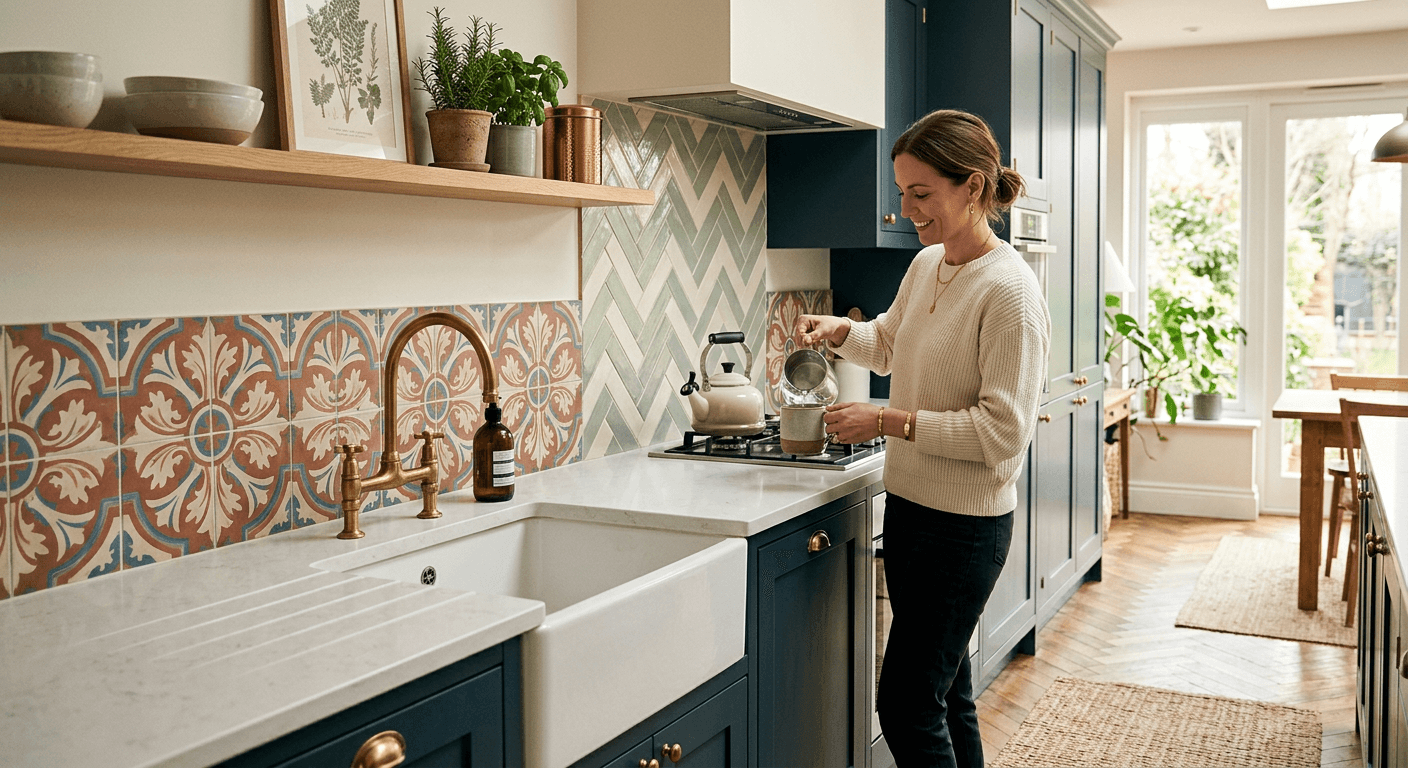
British homeowners are rethinking their approach to kitchen tiles ideas in 2024, moving away from the glossy subway tiles that dominated the past decade towards more textured, natural finishes and statement-making large formats. We've seen a remarkable shift in our directory listings over the past year, with tiles specialists reporting increased demand for terracotta-effect porcelain, ribbed surfaces, and earthy colour palettes that prioritise warmth over the clinical white aesthetics of previous years.
Key Takeaways
- Large format tiles (600x1200mm and beyond) are becoming the default choice for modern kitchens, reducing grout lines and creating seamless looks
- Terracotta and warm neutral tones are replacing cool greys and stark whites as the go-to colour palette
- Textured and three-dimensional tiles are gaining traction for splashbacks, moving away from flat, glossy finishes
- Porcelain tiles now dominate due to superior durability and realistic natural stone effects at lower price points
- Installation costs in the UK range from £25-£60 per m² for labour alone, with London prices 20-30% higher
The Big Shift: What's Trending in UK Kitchen Tiles
The Instagram-perfect white subway tile is officially on its way out. We're witnessing a dramatic pivot towards tiles that tell a story and bring character into the kitchen. Terracotta-effect porcelain has emerged as the surprise winner of 2024, offering the warmth of Mediterranean clay tiles without the maintenance headaches.
Large format tiles have moved from luxury specification to mainstream expectation. Sizes of 600x1200mm are now commonplace, with some homeowners pushing to 1200x2400mm for dramatic effect. The appeal is obvious: fewer grout lines mean easier cleaning and a more contemporary aesthetic that makes even modest kitchens feel more spacious.
Textured surfaces are replacing the glossy finishes that made kitchens feel clinical. Ribbed tiles, three-dimensional geometric patterns, and stone-effect tiles with tactile surfaces are appearing in kitchens across Manchester, Birmingham, and beyond. These tiles catch light differently throughout the day, adding depth that flat tiles simply cannot match.
The zellige tile trend—those handmade Moroccan tiles with irregular, slightly undulating surfaces—peaked in 2023 but is already fading. Too many homeowners found the high price point (£80-£150 per m² for authentic versions) difficult to justify, especially when the organic imperfections they paid for clashed with modern kitchen cabinetry.
What is the Difference Between Porcelain and Ceramic Tiles?
This question deserves straight answers because the choice significantly impacts both budget and longevity. When considering a porcelain vs ceramic tile durability comparison, porcelain wins decisively for kitchen applications.
Porcelain tiles are fired at higher temperatures (around 1,400°C versus 1,000°C for ceramic) and have a water absorption rate below 0.5%. This makes them virtually impervious to staining—crucial when you're dealing with tomato sauce splashes and red wine spills. The colour runs through the entire tile body, meaning chips are far less noticeable.
Ceramic tiles have a water absorption rate of up to 10% and feature a glaze over a different-coloured body. They're perfectly adequate for wall applications like splashbacks, but we don't recommend them for kitchen floors where moisture and dropped objects are daily occurrences.
Price-wise, porcelain typically costs £20-£60 per m² versus £15-£40 for ceramic. The premium is worth paying for floors and high-traffic areas. For a splashback in a kitchen where you're careful? Ceramic might suffice.
According to the Tile Association, porcelain tiles should last 50+ years in residential applications when properly installed, versus 20-30 years for ceramic. That longevity makes porcelain the more sustainable choice despite the higher upfront cost.
Kitchen Splashback Tile Ideas UK Homeowners Are Choosing
The splashback has evolved from practical necessity to design statement. Here's what actually works in British kitchens:
Metro tiles with a twist: The classic 75x150mm metro is being reimagined with coloured grout (sage green, terracotta, or charcoal), stacked rather than brick-bond patterns, or in unexpected colours like soft pink or sage.
Full-height splashbacks: Rather than stopping at 600mm, many homeowners are taking tiles from worktop to ceiling. This works brilliantly in kitchens with limited wall space for artwork and creates a dramatic focal wall. Budget £40-£80 per m² for materials and installation.
Statement zones: Using expensive or intricate tiles in just the cooking zone (typically 1200mm wide) and simpler tiles elsewhere keeps costs manageable while delivering visual impact.
Natural stone alternatives: Porcelain tiles replicating marble, limestone, or slate now fool even experienced designers. Brands like Porcelanosa and Fired Earth offer convincing alternatives at £35-£70 per m², considerably less than genuine stone at £80-£200 per m².
When selecting kitchen splashback tile ideas UK homes demand, remember that textured tiles create more cleaning work. Save three-dimensional patterns for areas away from the hob where grease splatters are minimal.
Large Format Tile Installation Tips Tricks From UK Professionals
Large format tiles (anything over 600mm in any dimension) require different installation approaches than traditional sizes. We've gathered insights from fitted kitchens specialists in our directory who handle these installations regularly.
Substrate preparation is everything: Large tiles amplify even minor imperfections in the substrate. Any deviation greater than 3mm across a 2-metre span will telegraph through the tile. Many installers now use levelling compounds as standard before laying large format tiles.
Lippage control systems are non-negotiable: These plastic clip systems keep tiles at uniform height while adhesive cures. Raimondi and Perfect Level are the brands professionals trust. Budget an extra £30-£50 for clips on a typical kitchen floor.
Back-buttering prevents voids: Even when using a notched trowel to apply adhesive to the floor, professionals also apply a thin layer directly to the tile back. This ensures 95%+ adhesive coverage—the British Standard (BS 5385) requirement for wet areas.
Minimum 3mm grout joints: Despite marketing promises of "seamless" looks, large format tiles require at least 3mm joints. Tiles aren't perfectly straight (even premium ones have 1-2mm size variation), and joints accommodate building movement.
Best tiles for underfloor heating: Porcelain and ceramic both conduct heat efficiently, but porcelain's lower absorption rate makes it marginally better for underfloor heating systems. More important is tile thickness—8-10mm tiles transfer heat faster than 12mm+ versions. Natural stone tiles actually outperform porcelain for heat conductivity but require more maintenance.
The British Standard BS EN 1264 governs underfloor heating installations and recommends limiting surface temperatures to 27°C in living areas—all modern tiles handle this comfortably.
How Much Does Tiling Cost Per m2 UK?
Pricing varies considerably based on location, tile complexity, and surface preparation requirements. Here's what we're seeing across listings in London and beyond:
Labour costs:
- Standard installation (300x300mm or similar): £25-£40 per m² outside London, £35-£60 in the capital
- Large format tiles (600x600mm+): £35-£50 per m² nationally, £50-£75 in London
- Complex patterns or mosaics: £45-£70 per m² nationally, £60-£90 in London
Materials:
- Budget ceramic tiles: £15-£25 per m²
- Mid-range porcelain: £30-£50 per m²
- Premium porcelain or natural stone: £60-£150 per m²
- Designer or specialist tiles: £100-£300 per m²
A typical kitchen splashback (approximately 3-4m²) costs £300-£800 all-in for mid-range tiles with standard installation. A complete kitchen floor (12m²) runs £800-£2,000 including materials and labour.
According to Checkatrade, the average tiling job in the UK costs £580, though this encompasses everything from small bathroom repairs to complete kitchen renovations.
Surface preparation adds £10-£25 per m² if existing tiles need removal, or £8-£15 per m² for levelling compound on uneven surfaces.
Can You Tile Over Existing Tiles?
Yes, but with significant caveats. Building Regulations don't specifically prohibit tiling over existing tiles, but the practice requires careful assessment.
When it works:
- Existing tiles are firmly bonded with no hollow-sounding areas when tapped
- The surface is in a structurally sound area with minimal movement
- Adding tile thickness (typically 10-15mm including adhesive) won't create issues with doorways, appliances, or worktop heights
- Existing tiles have a flat, matte surface (glossy tiles need abrading with 80-grit sandpaper or an angle grinder)
When it doesn't:
- Any existing tiles are loose or damaged
- The substrate is timber—the additional weight often causes deflection and cracking
- In wet areas where waterproofing membranes should be installed directly to substrate
- Building Regulations Part C (resistance to moisture) requires proper damp-proofing, which overlaying compromises
Professionals charge £8-£15 per m² to remove existing tiles and dispose of them properly. Given that new tiles installed directly to substrate will last decades longer, we recommend removal in most cases. The short-term saving rarely justifies the long-term compromise.
Anti Slip Tiles Bathroom Ratings: What You Need for Kitchen Floors
Slip resistance matters as much in kitchens as bathrooms—perhaps more given the combination of water, oils, and food debris. The rating system uses either the R rating (R9-R13) or the Pendulum Test Value (PTV).
For kitchen floors, specify tiles rated R10 (the Health and Safety Executive recommends R10 minimum for commercial kitchens) or with a PTV of 36+. These ratings indicate sufficient slip resistance when wet. Polished porcelain, despite its durability advantages, typically rates R9—inadequate for kitchen floors.
Textured or matte finishes provide better slip resistance but collect dirt more readily. This creates a maintenance trade-off. We recommend:
- Kitchen floors: R10-R11 rated tiles with matte or lightly textured finish
- Splashbacks and walls: Any finish works from a safety perspective; choose based on aesthetics and cleaning preferences
- Open-plan dining areas: R10 tiles maintain consistency, though R9 is acceptable in zones without cooking
Brands like Porcelanosa, Fired Earth, and Topps Tiles clearly mark slip ratings. Any reputable bathroom specialists or tile supplier should provide technical specifications including slip resistance on request.
Finding the Right Tile Installer
Tile installation quality matters far more than tile choice. Even £200-per-m² designer tiles look terrible when poorly installed. Our directory includes verified tile specialists, but here's what to verify:
- Tile Association membership: This trade body requires professional insurance and adherence to British Standards
- Portfolio of recent work: Specifically ask for large format tile installations if that's your choice
- Written quotations: Should itemise materials, labour, surface preparation, and disposal
- References: Speak to at least two previous customers about punctuality, cleanliness, and problem-solving
Don't automatically choose the cheapest quote. Tiling is skilled work where experience shows immediately. A £35-per-m² installer who works carefully will deliver better results than a £25-per-m² installer rushing three jobs per day.
You can browse all categories in our directory to find verified professionals, or list your business if you're a tile installer looking to reach homeowners researching their next project.
What's Next: Predictions for 2025
The trend towards natural, tactile materials will intensify. We're already seeing early adopters move towards:
- Recycled glass tiles: Made from post-consumer glass, offering sustainability credentials alongside unique aesthetics
- Cork-look porcelain: Capturing warmth and texture while maintaining porcelain's durability
- Oversized formats: 1200x2400mm tiles creating almost grout-free walls
- Coloured grout as feature: Moving from "make it disappear" to "make it pop" with contrasting colours
The subway tile will continue fading except in period properties where authenticity matters. Cool greys are being replaced by warm neutrals, terracottas, and sage greens that create cosier, more inviting kitchens.
Smart tiles with integrated LED lighting or heating elements remain niche and expensive (£200+ per m²) but watch for prices to drop as technology matures.
Take Action
The kitchen tile market offers more choice than ever, from budget-friendly ceramic to premium porcelain replicating any natural material imaginable. The trend towards large formats, warm colours, and textured surfaces shows no sign of slowing.
Start by identifying your priorities: budget, durability, or aesthetics. Visit showrooms with kitchen measurements and photos to visualise tiles in context. Request samples (most suppliers provide these free or for £5-£10 deposit) and live with them in your kitchen for a week, observing how they look in different lights.
Browse tiles businesses on HouseJester to find verified installers in your area. Our directory includes specialists across the UK who can guide you through selection, provide accurate quotes, and deliver installations that last decades.
The right tiles transform a kitchen from purely functional to genuinely inspiring. Choose wisely, hire well, and you'll enjoy the results every time you step into the room.
Sources & Further Reading
- The Tile Association - UK trade body providing technical guidance and installer certification
- Checkatrade Tiling Cost Guide - Comprehensive pricing data from thousands of UK jobs
- Building Regulations Approved Document C: Site Preparation and Resistance to Contaminants and Moisture - Official guidance on moisture-resistant finishes including tiling
This article was created with AI assistance and reviewed by the HouseJester editorial team for accuracy and relevance.
Written by
Emma Richardson
Kitchen & Bathroom Specialist
Emma has reviewed hundreds of kitchen and bathroom installations across the UK. She combines product knowledge with real-world testing to help homeowners choose the right fitters and materials for their projects.
- Fitted Kitchens
- Bathrooms
- Tiles
- Heating & Plumbing