
On this page
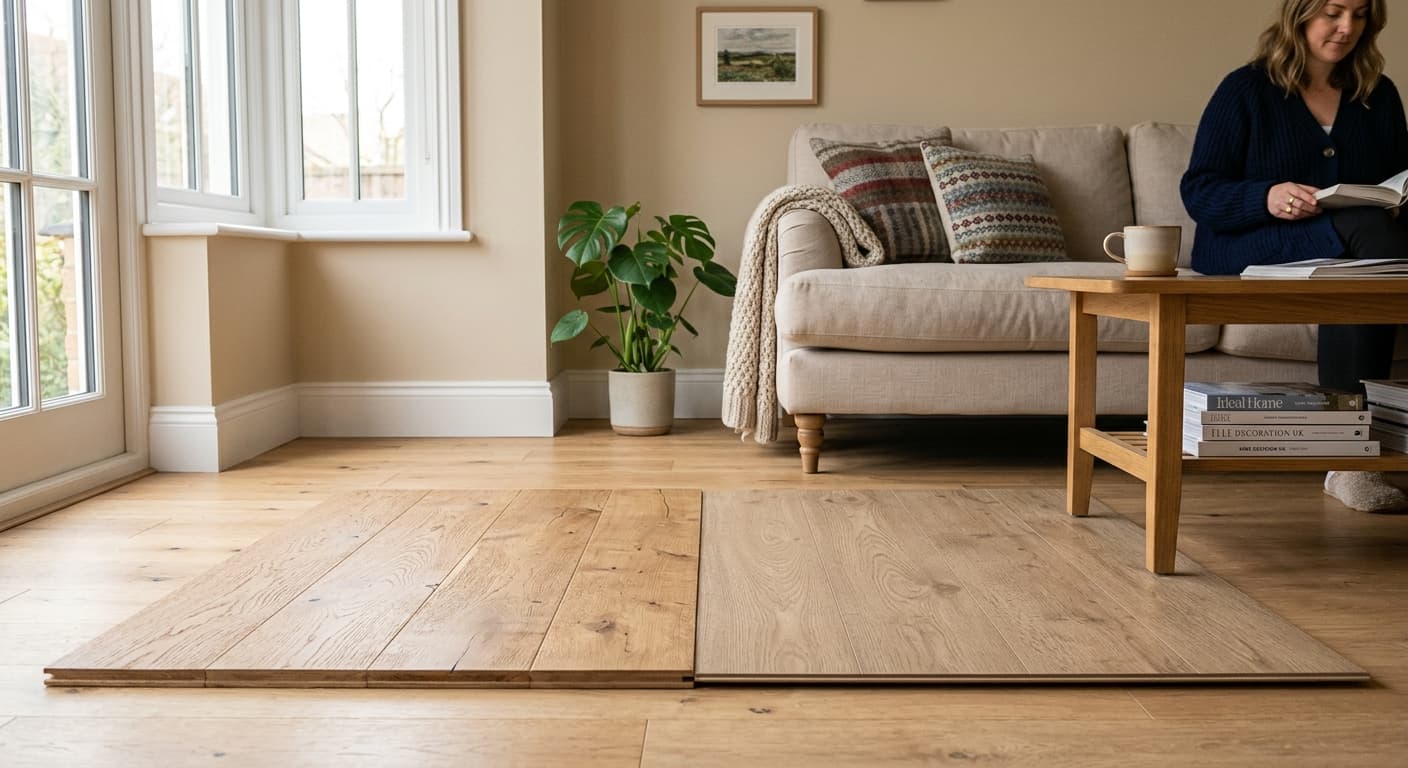
The UK flooring market has witnessed a significant shift in 2024, with engineered wood overtaking laminate as the most installed floor type in new-build homes across England and Wales. This development, reported by the Timber Trade Federation earlier this year, reflects changing consumer priorities around sustainability, longevity, and resale value. The laminate vs engineered wood debate has never been more relevant for homeowners planning renovations.
Key Takeaways
- Engineered wood costs £35-85 per m² compared to laminate's £15-45 per m², but offers better resale value and longevity
- Both options work with underfloor heating when properly specified, though engineered wood transfers heat more efficiently
- Laminate remains the best choice for tight budgets and rental properties, while engineered wood suits long-term family homes
- Leading UK retailers including Carpetright and Flooring Superstore have expanded their engineered ranges by 40% in the past year
- Installation costs range from £8-15 per m² for laminate versus £12-25 per m² for engineered wood
Price Comparison: What You'll Actually Pay
Let's address the numbers first, because budget drives most UK flooring decisions. Based on our analysis of suppliers listed in the flooring category on HouseJester, here's what you should expect to pay in 2024:
Laminate flooring:
- Budget range: £15-25 per m² (suitable for bedrooms, low-traffic areas)
- Mid-range: £25-35 per m² (AC4 rating, 8-10mm thickness)
- Premium: £35-45 per m² (AC5 rating, 12mm thickness, bevelled edges)
Engineered oak flooring cost per m2:
- Entry-level: £35-50 per m² (3mm wear layer, click-fit system)
- Mid-range: £50-70 per m² (4-6mm wear layer, European oak)
- Premium: £70-85+ per m² (6mm+ wear layer, hand-finished, UV oiled)
Installation costs vary considerably by region. We've seen quotes in London ranging from £18-25 per m² for engineered wood fitting, whilst comparable work in Manchester and Birmingham typically costs £12-18 per m². Laminate installation generally runs £3-7 cheaper per square metre.
For a typical 30m² living room and hallway, you're looking at total project costs of £900-1,800 for laminate versus £1,800-3,300 for engineered wood, including fitting and underlay.
What Is the Most Durable Flooring for a Family Home?
This question dominates our inbox, and the answer depends on what you mean by "durable". If you're asking which resists surface scratches better, laminate wins. The melamine resin wear layer on quality laminate (AC4 or AC5 rated) handles dropped toys, chair legs, and pet claws remarkably well.
Engineered wood scratches more easily on the surface, but here's the crucial difference: you can sand and refinish engineered wood. A 4mm wear layer provides enough material for 1-2 full refinishing cycles over 20-30 years. Laminate cannot be refinished. Once it's damaged, you're replacing boards.
Best flooring for pets and children UK considerations:
-
Laminate: Choose AC5 commercial-grade with textured finishes (hides micro-scratches better than high-gloss). Brands like Quick-Step and Pergo offer excellent warranties. Look for water-resistant or "Aqua" ranges if accidents are likely.
-
Engineered wood: Opt for oiled finishes rather than lacquered. Oil penetrates the wood and allows for spot repairs. Matt or brushed finishes disguise wear better than satin. Species matters too—European oak withstands impacts better than softer woods like walnut.
-
Luxury vinyl tile vs laminate comparison: LVT deserves mention here. It's 100% waterproof, softer underfoot than laminate, and increasingly popular for kitchens and bathrooms. Prices sit between budget and mid-range laminate (£20-40 per m²), and the best ranges from Karndean and Amtico genuinely fool visitors into thinking they're walking on real wood.
According to Which? magazine's 2023 flooring survey, 68% of pet owners who installed laminate reported visible surface damage within three years, compared to 34% of engineered wood owners. However, engineered wood owners were more likely to describe damage as "acceptable patina" rather than viewing it as deterioration.
Is Engineered Wood Better Than Solid Wood?
This wasn't your original question, but it's the logical follow-up everyone asks. Engineered wood outperforms solid wood in several crucial ways for UK homes:
Dimensional stability: Britain's damp climate and our love of central heating create humidity swings that cause solid wood to expand and contract. Engineered wood's cross-ply construction resists this movement, reducing gaps and cupping. Building Regulations-compliant new builds with improved airtightness (Part L standards) create stable environments, but most UK homes pre-2010 experience significant seasonal humidity variation.
Underfloor heating compatibility: This matters more each year as heat pumps become standard. Solid wood's movement and insulating properties make it problematic over underfloor heating. Engineered wood works beautifully, provided you follow specifications.
Installation flexibility: Engineered boards can be floated (click-fit), glued, or secretly nailed. Solid wood requires either nailing to a subfloor or full glue-down. Floating installation over existing floors saves money and works better in flats where you can't nail through screeds.
Price: Solid oak flooring typically costs £60-120 per m²—significantly more than engineered alternatives offering similar aesthetics.
The main advantage of solid wood? Thickness. A 20mm solid board can be sanded repeatedly over 50+ years. But for most homeowners, engineered wood's practical benefits outweigh this theoretical longevity.
Can You Put Underfloor Heating Under Laminate?
Yes, but you need the right specification. This is where many DIY installations go wrong, and we've seen expensive remedial work required when people ignore manufacturers' guidelines.
Underfloor heating compatible flooring types requirements:
-
Maximum tog rating: Your laminate plus underlay must not exceed 2.5 tog combined. Most standard underlays are 1.0-1.5 tog, leaving room for laminate around 1.0-1.5 tog maximum. Check technical specifications—not all laminate is suitable.
-
Thickness matters: Thinner laminate (7-8mm) transfers heat more efficiently than thick planks (12mm+). This seems counterintuitive since thick laminate feels more premium, but physics wins.
-
Temperature limitations: Most laminate warranties void above 27°C surface temperature. Set your UFH thermostat maximum to 26°C to maintain warranty coverage.
Engineered wood works better with underfloor heating for several reasons. Wood's natural thermal conductivity exceeds laminate's synthetic construction. A 14mm engineered board with 4mm wear layer transfers heat comparably to 8mm laminate, whilst feeling substantially more luxurious underfoot.
The Energy Saving Trust recommends engineered wood for UFH installations in their 2024 guidance, noting that laminate's plastic core can off-gas when repeatedly heated and cooled, though modern products meet strict VOC regulations.
Expect to pay £65-85 per m² for UFH-compatible engineered wood versus £25-40 per m² for suitable laminate products. Installation requirements are identical for both—professional fitting over insulation boards with moisture barriers.
Best Flooring for Hallways High Traffic
Hallways destroy flooring faster than any other domestic space. They combine maximum footfall with dirt, moisture from outside, and furniture impacts during house moves. We recommend very specific products for this application:
Laminate choice: Only AC5 commercial-rated laminate survives hallway abuse. Quick-Step's Impressive range or Kronospan's Super Natural Classic both exceed residential requirements. Budget £35-42 per m² for appropriate specifications. Anything cheaper won't last.
Engineered wood choice: Look for 5-6mm wear layers with factory-applied oil finishes. Entrance areas benefit from darker tones (smoked oak, walnut) that disguise dirt. Kährs and Boen both offer excellent hardwearing ranges. Budget £60-75 per m² for hallway-appropriate engineered products.
The wildcard: Luxury vinyl tile deserves serious consideration. It's waterproof, virtually indestructible, and can be installed with welded seams for commercial-grade performance. Amtico Spacia costs £40-55 per m² fitted and looks indistinguishable from real wood until you're kneeling beside it. For families with muddy dogs or coastal properties battling salt and sand, LVT makes tremendous sense.
Entrance matting matters more than flooring choice. A recessed matwell capturing dirt in the first metre saves any floor type from premature wear. British Standard BS 7953 recommends minimum 2-metre entrance matting for effective soil removal—something most homes ignore.
Market Changes Driving the 2024 Shift
Several factors explain engineered wood's rising popularity beyond simple aesthetics:
Mortgage valuations: Estate agents consistently report that engineered wood flooring adds more perceived value than laminate. Nationwide's 2024 property data shows homes with engineered wood throughout sell for 2-3% premiums compared to identical properties with laminate—potentially £7,500-11,000 on a £350,000 property.
Sustainability concerns: FSC-certified engineered wood uses approximately 70% less slow-growth hardwood than solid timber flooring. With environmental concerns influencing purchasing decisions, manufacturers are promoting this angle heavily. Read our complete guide to UK flooring guide comparing all options for more on sustainability factors.
Improved product quality: Budget engineered wood has improved dramatically. Five years ago, £35 per m² bought you 2mm wear layers prone to edge damage. Today, that budget secures 3-4mm wear layers with proper click-locking systems. The quality gap between budget engineered and mid-range solid has narrowed considerably.
Supply chain maturity: European manufacturers have invested heavily in UK distribution. Lead times for engineered oak dropped from 4-6 weeks in 2021 to 5-10 days in 2024. Laminate remains slightly faster (2-7 days), but the gap has closed. For time-sensitive renovations, both options now work.
Making Your Decision
Choose laminate if:
- Your budget is below £30 per m² all-in
- You're flooring a rental property
- You need maximum scratch resistance for active pets
- You're planning to sell within 5 years (ROI doesn't justify engineered wood premium)
- You're DIY installing (laminate is more forgiving)
Choose engineered wood if:
- You're staying 10+ years
- Resale value matters
- You want authentic wood character
- You're installing underfloor heating
- You can stretch to £50+ per m² budgets
Both options work. We've installed both in our own homes and recommend both to clients regularly. The "better" choice depends entirely on your specific circumstances, not abstract material superiority.
If you're ready to move forward, browse all categories on HouseJester to find reputable installers. Our directory includes 661 verified listings across the UK, with detailed reviews and verified credentials. Many specialists listed offer both laminate and engineered wood installation, allowing you to compare quotes for both options before deciding.
Browse flooring businesses on HouseJester to find experienced installers in your area. Check reviews, compare quotes, and make informed decisions based on real customer experiences.
Sources & Further Reading
This article was created with AI assistance and reviewed by the HouseJester editorial team for accuracy and relevance.
Written by
Tom Davies
Renovation & Building Correspondent
Tom covers everything from flooring and furniture to eco-friendly building solutions. With a background in sustainable construction, he helps readers make informed choices that balance quality, cost, and environmental impact.
- Flooring
- Furniture
- Storage Solutions
- Eco & Sustainable