
On this page
The British lighting market has undergone a remarkable transformation over the past decade, with LED technology becoming the undisputed standard for home illumination. This comprehensive LED lighting guide explores the trends reshaping UK interiors in 2024, from smart systems that adapt to your lifestyle to the layered approaches professional designers now consider essential.
Key Takeaways
- LED lighting now dominates UK homes, offering up to 90% energy savings compared to halogen bulbs and lasting 15-25 years
- The layered lighting design approach—combining ambient, task, and accent lighting—has become standard practice rather than luxury specification
- Smart lighting systems are finally achieving mass-market adoption, with prices dropping to £150-£400 for whole-home starter kits
- Warm white LEDs (2700-3000K) continue to dominate residential specifications, whilst cooler temperatures gain traction in task-focused areas
- Understanding bathroom IP ratings and lighting zones is now essential knowledge for compliance with Building Regulations Part P
How do I plan lighting for a room?
The days of relying on a single ceiling pendant are firmly behind us. Professional designers and specialists listed in our lighting directory consistently recommend the layered lighting design approach explained through three distinct tiers.
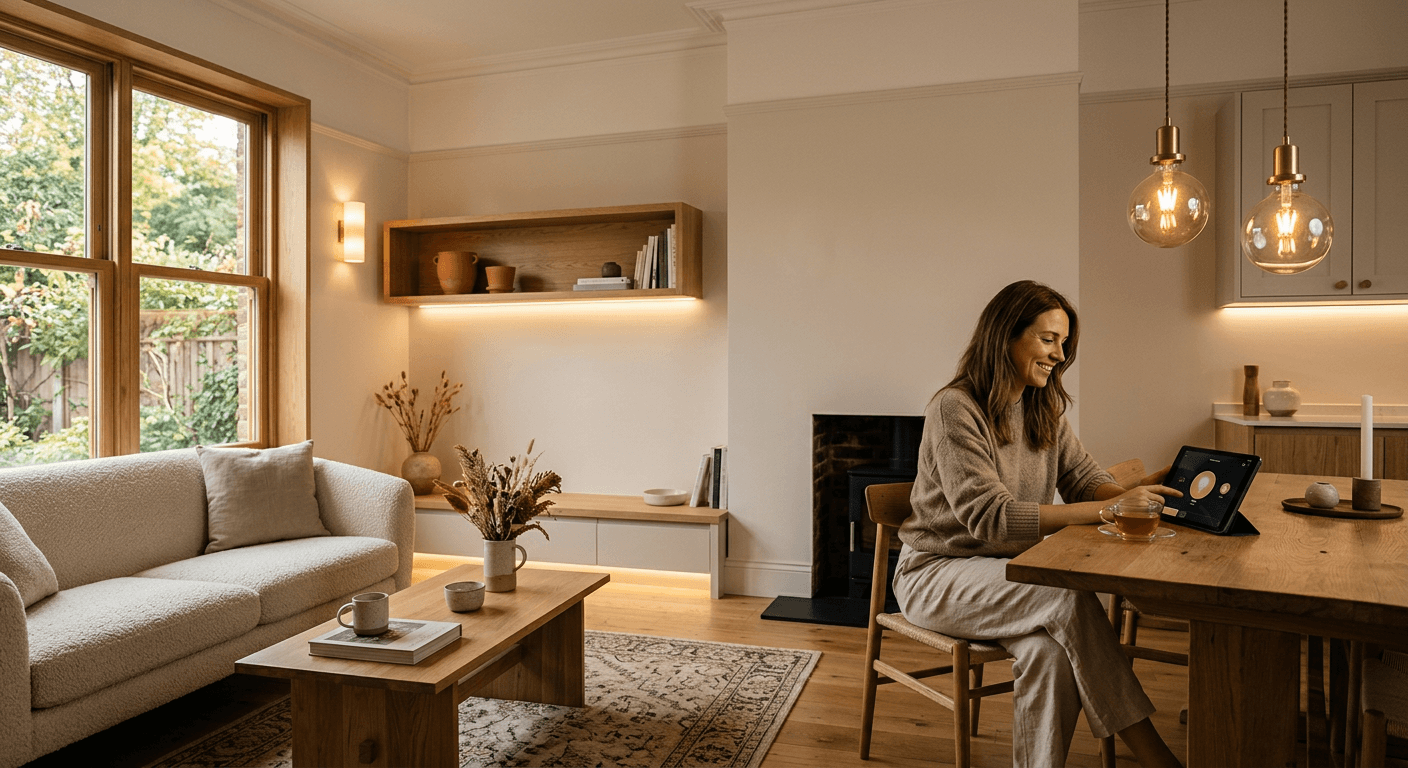
Ambient lighting provides overall illumination—typically recessed downlights, flush ceiling fittings, or architectural solutions like cove lighting. Task lighting focuses on specific activities: reading lights beside the bed, under-cabinet strips in kitchens, or adjustable desk lamps in home offices. Accent lighting adds drama and depth through spotlights highlighting artwork, LED strips beneath floating shelves, or backlit panels.
We recommend starting with ambient lighting calculations based on room function. Living rooms typically require 100-150 lumens per square metre, whilst kitchens demand 300-400 lumens per square metre for safety and functionality. The Energy Saving Trust confirms that proper lighting design can reduce energy consumption by 40-60% compared to traditional approaches.
Budget £800-£1,500 for a professional lighting plan covering a three-bedroom house, though many lighting specialists offer free consultations for projects exceeding £2,000. Prices in London typically run 20-30% higher than the national average.
The Rise of Smart Lighting Systems
Smart lighting has moved from early-adopter novelty to mainstream expectation. Businesses in our directory report that approximately 35% of residential projects now incorporate smart controls, up from just 12% in 2021.
Three ecosystems dominate the UK market. Philips Hue remains the premium choice (£150-£800 for comprehensive systems), offering excellent colour accuracy and third-party integration. IKEA's Trådfri provides budget-friendly entry points from £40, whilst TP-Link's Tapo range offers the sweet spot for most homeowners at £60-£200 for multi-room setups.
The smart lighting systems compared UK market reveals significant functionality differences. Philips Hue excels at colour rendering and scene creation but requires a dedicated hub (£50). Tapo products connect directly to Wi-Fi, eliminating hardware costs but sometimes suffering from connectivity issues in larger properties. IKEA sits between these extremes, offering solid performance without premium pricing.
We've seen the most successful installations combine wired smart switches (£45-£120 each) with smart bulbs, ensuring lights remain controllable even when household members ignore app-based controls. Lutron Caseta and Lightwave systems dominate the premium installed market, with typical costs of £2,500-£5,000 for whole-home integration including labour.
Kitchen Lighting: The New Focal Point
Kitchens receive more lighting investment than any other room, according to specialists we've surveyed across Manchester, Birmingham, and beyond. The kitchen island pendant lighting ideas flooding Instagram and Pinterest reflect broader shifts in how we use these spaces.
Statement pendants above islands have evolved from functional task lighting to sculptural centrepieces. Expect to pay £120-£600 for quality pendant fixtures, with designer pieces reaching £1,200+. The trend favours oversized single pendants (40-60cm diameter) or clusters of three smaller fixtures spaced 30-40cm apart.
Crucially, pendant height matters enormously. Hang fixtures 70-80cm above island worktops—any higher and they fail to provide adequate task lighting; any lower and they obstruct sightlines. Dimmer controls are non-negotiable, allowing adjustment from bright prep-work illumination (4000K, 400+ lumens per square metre) to ambient dinner-party warmth (2700K, significantly dimmed).
Under-cabinet LED strips have become universal, with prices dropping to £15-£45 per metre for quality installations. The LED colour temperature guide warm vs cool becomes particularly relevant here. We strongly recommend 3000K for under-cabinet lighting—warm enough to avoid clinical harshness but cool enough to accurately represent food colours during preparation.
Understanding LED Colour Temperature
The LED colour temperature guide warm vs cool confuses many homeowners, yet it's fundamental to creating comfortable spaces. Measured in Kelvin (K), colour temperature dramatically affects room atmosphere and functionality.
Warm white (2700-3000K) produces the cosy, slightly amber glow most Britons prefer in living areas, bedrooms, and dining rooms. It flatters skin tones and creates relaxation-friendly environments. Neutral white (3500-4000K) suits kitchens, bathrooms, and home offices where colour accuracy and alertness matter. Cool white (5000K+) rarely suits residential applications, though it occasionally appears in garages or workshop spaces.
Most quality LED manufacturers now offer "dim-to-warm" technology, where lights shift from 3000K at full brightness to 2200K when dimmed, mimicking traditional incandescent behaviour. These cost 30-50% more than standard LEDs but deliver noticeably superior ambience. John Lewis and specialist retailers stock excellent ranges from £12-£35 per bulb.
One critical specification often overlooked: colour rendering index (CRI). Quality residential LEDs should achieve CRI of 90+, ensuring colours appear natural rather than washed out. Cheap LEDs from budget retailers frequently score 70-80, resulting in unflattering, slightly greenish light that undermines otherwise thoughtful design.
What IP rating do I need for bathroom lights?
Bathroom lighting regulations cause considerable confusion, yet the bathroom IP rating lighting zones explained framework is straightforward once you understand the basics.
UK Building Regulations Part P divides bathrooms into zones based on proximity to water sources. Zone 0 (inside baths/showers) requires IP67 rating—complete immersion protection. Zone 1 (directly above baths/showers to 2.25m height) demands IP44 minimum, though IP65 provides better longevity. Zone 2 (60cm horizontal radius from bath/shower) requires IP44. Areas beyond these zones technically need no special rating, though we recommend IP44 throughout bathrooms for condensation resistance.
Quality IP44-rated downlights cost £15-£40 each at B&Q, Screwfix, or Wickes. IP65 variants run £25-£60. Installation requires a qualified electrician due to Part P regulations, with typical labour charges of £150-£300 for a standard bathroom depending on location. London electricians often charge £60-£80 per hour compared to £35-£50 elsewhere.
One trend we've noticed: homeowners increasingly specify IP65 throughout wet rooms and ensuites, adding perhaps £100-£200 to project costs but eliminating worry about condensation damage. Given that bathroom lighting typically remains unchanged for 10-15 years, the modest premium seems worthwhile.
Are LED lights cheaper to run than halogen?
The economics are unambiguous. LED lighting delivers 80-90% energy savings compared to halogen equivalents, according to the Energy Saving Trust. A typical halogen downlight consumes 50W, whilst an equivalent LED uses just 5-7W.
Consider a kitchen with eight downlights running four hours daily. Halogen bulbs would consume 1,600W-hours daily (58.4 kWh monthly). At current UK electricity prices averaging 27p per kWh, that's £15.77 monthly or £189 annually. LED equivalents would cost just £1.90 monthly or £23 annually—a saving of £166 per year from one room alone.
Initial investment is higher. Quality LED downlights cost £12-£40 compared to £3-£8 for halogens. However, LEDs last 15,000-50,000 hours versus 2,000-4,000 for halogens, eliminating frequent replacement costs and ladder-climbing inconvenience. Payback periods typically run 6-18 months.
One consideration: LED compatibility with existing dimmer switches. Older leading-edge dimmers cause flickering or buzzing with LEDs. Replacing with trailing-edge dimmers costs £25-£50 per switch but ensures smooth, silent dimming. Many lighting specialists include dimmer upgrades in quotations.
Emerging Trends to Watch
Several developments are gaining momentum across the UK market. Wireless charging integration in table lamps and bedside lights has moved from gimmick to genuinely useful feature, with prices falling to £60-£150 for quality pieces.
Human-centric lighting systems that automatically adjust colour temperature throughout the day—energising cool white mornings transitioning to relaxing warm evenings—are appearing in premium installations. Expect costs of £1,500-£4,000 for whole-home systems, though prices should fall as adoption increases.
Battery-powered LED picture lights and display lighting have improved dramatically, eliminating visible cables and installation complexity. Quality rechargeable options cost £40-£120 and run 8-12 weeks between charges.
Conversely, some trends are fading. Chrome and polished finishes are losing ground to brushed brass, matt black, and aged bronze. Crystal chandeliers appear less frequently in new-build specifications, replaced by linear pendants and architectural minimalism. The obsession with maximum quantities of downlights has given way to more considered, layered approaches using fewer, better-positioned fixtures.
Finding the Right Specialist
Lighting design significantly impacts how you experience your home, yet many homeowners underinvest in professional advice. Electrical contractors can install fixtures competently, but dedicated lighting specialists—whether independent designers or showroom consultants from businesses listed in our directory—bring expertise that transforms spaces.
When comparing lighting specialists, ask about qualifications (ILP membership indicates professional standing), request portfolio examples from completed projects, and clarify whether design fees are refundable against product purchases. Many showrooms offer free initial consultations, though complex projects warrant investing £400-£800 in professional design fees.
For comprehensive renovations involving fitted kitchens or bathroom specialists, coordinate lighting plans early. Retrofit installations cost significantly more than pre-wired solutions, and structural decisions (ceiling heights, coffer details, services routing) fundamentally affect what's achievable.
If you're a lighting specialist looking to reach more UK homeowners, list your business on HouseJester to connect with customers searching for expert guidance.
Browse lighting businesses on HouseJester to find qualified specialists in your area, or browse all categories to explore related services for your home improvement project.
Sources & Further Reading
This article was created with AI assistance and reviewed by the HouseJester editorial team for accuracy and relevance.
Written by
Sarah Mitchell
Interior Design Editor
Sarah has spent over 12 years covering UK interiors and design trends. She works closely with interior designers and soft furnishings specialists across the country to bring readers expert insights on creating beautiful, functional living spaces.
- Interior Design
- Soft Furnishings
- Paint & Wallpaper
- Lighting