
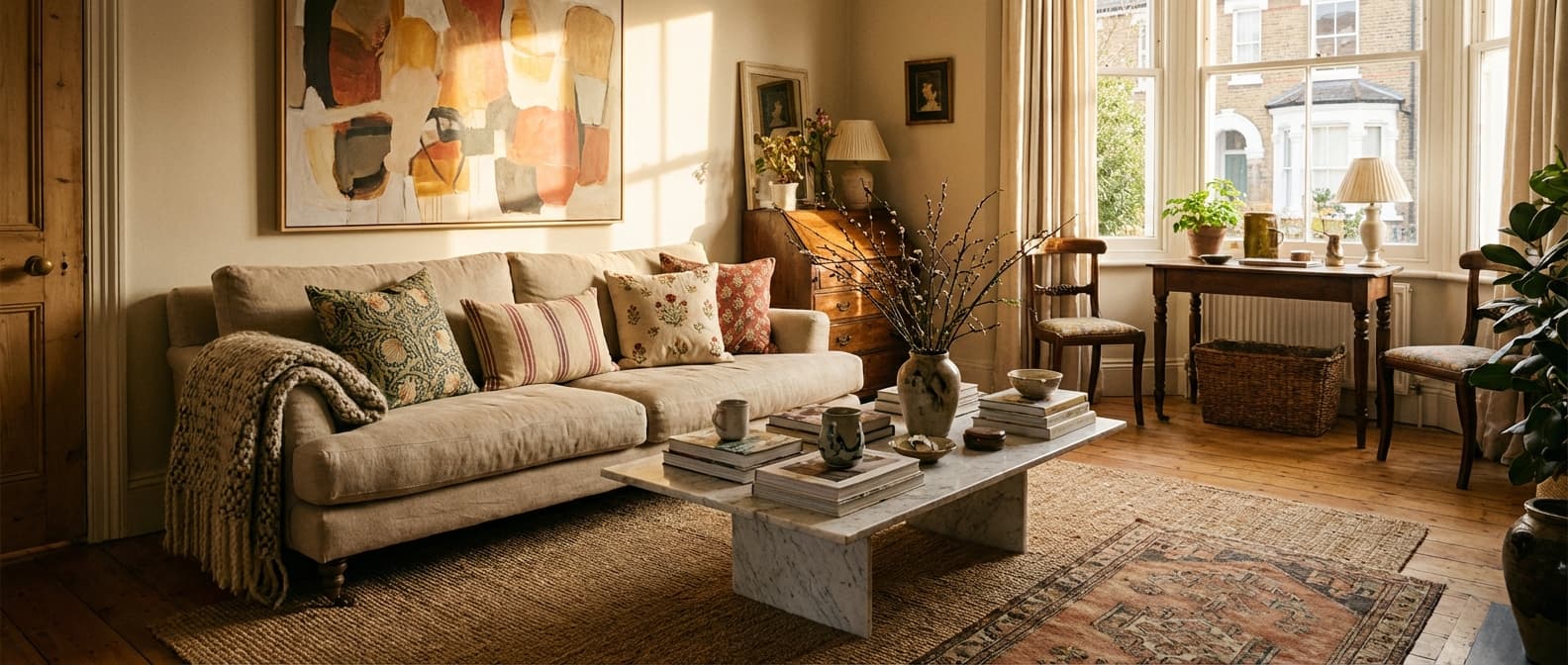
The living room is where your home makes its strongest impression — it is where you relax, entertain, and spend the most waking hours. Choosing the right furniture shapes not only the look of the room but how comfortably and practically your household uses the space every day.
Living room furniture covers a broad spectrum: sofas and armchairs, coffee tables and side tables, TV units and media consoles, bookcases and display shelving, sideboards, occasional chairs, and storage solutions. The sofa is typically the single biggest purchase and the anchor piece around which the rest of the room is arranged. Getting it right — in terms of size, comfort, durability, and style — is critical.
The UK sofa market alone is worth over £3.5 billion annually, with options ranging from mass-produced high-street designs to handcrafted bespoke pieces made in British workshops. Professional furniture companies offer fabric and leather selections you can take home as swatches, try-before-you-buy experiences in showrooms, and customisation options including size adjustments, arm styles, seat depths, and leg finishes.
Beyond the sofa, living room furniture should work as a cohesive system — providing enough storage to keep clutter at bay, enough surface area for everyday use, and enough visual interest to create a room with character. This is where a good furniture company or interior design consultant adds genuine value, helping you select pieces that work together in proportion, material, and style.
HouseJester's directory connects you with verified living room furniture suppliers across the UK, from independent artisan makers to established retailers. Browse by location, read genuine customer reviews, and find companies whose style and price range match your vision.
Browse living room furniture companies on HouseJester
How Much Does Living Room Furniture Cost in the UK?
| Item | Budget | Mid-range | Premium |
|---|---|---|---|
| 3-seater sofa | £400 – £800 | £800 – £2,000 | £2,000 – £6,000+ |
| Armchair | £200 – £500 | £500 – £1,200 | £1,200 – £3,000+ |
| Coffee table | £50 – £200 | £200 – £600 | £600 – £2,000+ |
| TV unit/media console | £100 – £300 | £300 – £800 | £800 – £2,500+ |
| Bookcase/shelving | £80 – £250 | £250 – £700 | £700 – £2,000+ |
| Sideboard | £150 – £400 | £400 – £1,000 | £1,000 – £3,000+ |
A complete living room furnishing scheme for a typical UK home costs £2,000-£5,000 budget, £5,000-£12,000 mid-range, or £12,000-£30,000+ premium.
What to Look For When Choosing a Living Room Furniture Company
- Sofa construction quality — Ask about the frame (hardwood is best), suspension (sinuous springs or webbing), and cushion filling (foam density and fibre wrapping).
- Fabric and leather range — A good company offers extensive material choices with take-home swatches.
- Comfort testing — Always sit on a sofa before buying. Spend at least 15 minutes testing — a quick sit reveals little about long-term comfort.
- Customisation options — The best companies offer customisable sizes, arm styles, seat depths, and leg finishes.
- Delivery logistics — Measure doorways, staircases, and access routes. Some companies offer a pre-delivery survey to avoid access problems.
- Warranty and frame guarantee — Expect a minimum 10-year frame guarantee on quality sofas and 2 years on cushions and upholstery.
- Stain protection — Ask about fabric protection treatments and their effectiveness, especially for family homes with children and pets.
- Sustainability — Look for FSC-certified frames, responsibly sourced leather, and foam made without harmful flame retardants (UK regulations changed in 2024).
- Lead times — Bespoke and made-to-order sofas can take 6-14 weeks. Stock items are typically available for delivery within 1-4 weeks.
- Reviews — Read customer reviews on HouseJester, paying attention to comments about comfort over time, delivery experience, and customer service.
Frequently Asked Questions
How long should a quality sofa last?
A well-made sofa with a hardwood frame, quality suspension, and good upholstery should last 10-15 years with regular use. Premium handcrafted sofas can last 20-25 years. The frame rarely fails on quality pieces; it is the cushions that degrade first. Foam cushions lose their resilience after 5-8 years and may need replacing or re-padding. Feather-filled cushions need regular plumping but maintain their comfort longer. Fabric wear depends on the material — high-rub-count fabrics (30,000+ Martindale) resist pilling and wear. Rotating and flipping reversible cushions extends their life.
What sofa size do I need for my room?
As a general rule, leave at least 45cm clearance around all sides of a sofa for comfortable circulation. A standard 3-seater sofa is approximately 200-220cm wide. For a living room of 4m x 5m, a 3-seater sofa with an armchair works well. Larger rooms (5m x 6m+) can accommodate an L-shaped corner sofa or a 3-seater plus 2-seater arrangement. Always measure your room and create a floor plan before purchasing. Consider the depth as well as width — deep-seated sofas (over 95cm depth) are very comfortable but consume more floor space.
Should I choose fabric or leather for my sofa?
Both have advantages. Leather is durable, easy to wipe clean, develops attractive patina with age, and does not harbour dust mites — ideal for allergy sufferers. However, it can feel cold in winter and sticky in summer, and high-quality leather is expensive (£2,000+ for a 3-seater). Fabric offers unlimited colour and pattern choices, is generally warmer and softer, and is available at all price points. Performance fabrics (e.g. Aquaclean, Crypton) are stain-resistant and easy to clean, making them practical for family homes. For households with pets, avoid loose weaves that catch claws.
What is the difference between foam and feather cushions?
Foam cushions maintain their shape without plumping, are hypoallergenic, and offer consistent support. Higher density foam (35kg/m³+) is firmer and more durable. Feather and down cushions are softer and more luxurious but require daily plumping to maintain their shape. Many premium sofas use a combination — a foam core wrapped in a feather-and-fibre jacket — which provides the support of foam with the sink-in comfort of feathers. Pure feather cushions suit those who prefer a relaxed, lived-in look; foam suits those who prefer a neat, structured appearance.
How do I arrange furniture in an open-plan living space?
Define zones using furniture placement rather than walls. Position the sofa to face the focal point (fireplace, TV, or window view) and use its back to subtly divide the living area from the dining space. A console table behind the sofa reinforces the boundary. Rugs anchor each zone — a rug under the coffee table and sofa defines the seating area. Ensure natural traffic flow between zones with clear pathways of at least 90cm. In large open-plan spaces, a pair of armchairs facing the sofa creates an inviting conversation area. Avoid pushing all furniture against the walls, which makes large rooms feel cold and disconnected.
This article was created with AI assistance and reviewed by the HouseJester editorial team for accuracy and relevance.