
On this page
Introduction
The outdoor tiles UK market has undergone a remarkable transformation over the past two years, with homeowners increasingly treating their gardens and patios as genuine extensions of their living space. Gone are the days when a simple concrete slab sufficed for outdoor entertaining. We've seen a surge in demand for sophisticated outdoor tiling solutions that combine durability with design-forward aesthetics, particularly as the popularity of alfresco dining and garden rooms continues to grow across the UK.
Key Takeaways
- Porcelain dominates outdoor spaces: 20mm thick porcelain pavers have become the go-to choice for UK gardens, offering superior frost resistance and low maintenance compared to natural stone
- Large format tiles reign supreme: 600x600mm and 900x900mm tiles are replacing smaller formats, creating seamless indoor-outdoor transitions and reducing grout lines
- Anti-slip ratings are non-negotiable: R11 rated tiles are now standard for outdoor applications, with R13 preferred for pool surrounds and high-traffic areas
- Expect to pay £35-£75 per m² for quality outdoor porcelain, plus installation costs of £40-£80 per m² depending on location and substrate preparation
- Wood-effect and concrete-look finishes lead design trends, whilst traditional terracotta and decorative patterns are experiencing a revival
The Rise of Porcelain for Outdoor Spaces
Porcelain has decisively won the outdoor tiles UK market, and for good reason. The material's water absorption rate of less than 0.5% makes it virtually impervious to frost damage – a critical consideration given our unpredictable British weather. According to research from the Tile Association, porcelain now accounts for approximately 68% of all outdoor tiling projects in the UK, up from just 42% five years ago.
What is the difference between porcelain and ceramic tiles?
This question remains one of the most searched queries among UK homeowners planning outdoor projects. The porcelain vs ceramic tile durability comparison boils down to fundamental manufacturing differences. Porcelain is fired at temperatures exceeding 1,200°C and pressed under significantly higher pressure than ceramic, resulting in a denser, more durable tile with through-body colour.
Ceramic tiles, whilst suitable for many indoor applications, typically absorb more water (3-10% by weight) and can crack or spall when subjected to freeze-thaw cycles. For outdoor use in the UK climate, porcelain is the clear winner. We recommend reserving ceramic tiles for protected areas like covered porches or conservatories.
Specialist tiles suppliers in our directory report that 20mm thick porcelain pavers have become particularly popular for garden installations. These chunky tiles can be dry-laid on gravel or pedestals, eliminating the need for mortar beds and making them ideal for DIY-savvy homeowners.
Current Design Trends: What's Hot and What's Not
Wood-Effect Porcelain Leads the Pack
Wood-effect porcelain tiles continue their dominance in outdoor spaces. These tiles offer the warmth and visual appeal of timber decking without the maintenance headaches of staining, sealing, or replacing rotted boards. Popular shades include weathered grey oak, warm walnut, and lighter ash tones.
Brands like Porcelanosa, Iris Ceramica, and British manufacturer Johnson Tiles offer extensive ranges starting from £35 per m² for basic collections, rising to £75+ per m² for premium lines with realistic grain patterns and varied plank widths.
Large Format Tiles Create Seamless Transitions
The trend towards large format tile installation has revolutionised how we think about indoor-outdoor flow. Tiles measuring 600x600mm are now considered standard, whilst 900x900mm and even 1200x600mm planks are increasingly common for contemporary garden designs.
Large format tile installation tips tricks centre on proper substrate preparation and handling. These oversized tiles require:
- Perfectly level substrates (variation no greater than 3mm over 2 metres)
- Specialist suction cup lifting tools for safe handling
- Back-buttering with flexible adhesive to ensure full coverage
- Spacers rated for outdoor use (we recommend 3-5mm joints minimum)
- Experienced installers – this isn't a DIY-friendly option
According to businesses listed on HouseJester, London-based installers typically charge £60-£80 per m² for large format outdoor tiling, compared to £40-£55 per m² in Manchester and other northern cities.
Concrete-Look Tiles Gain Ground
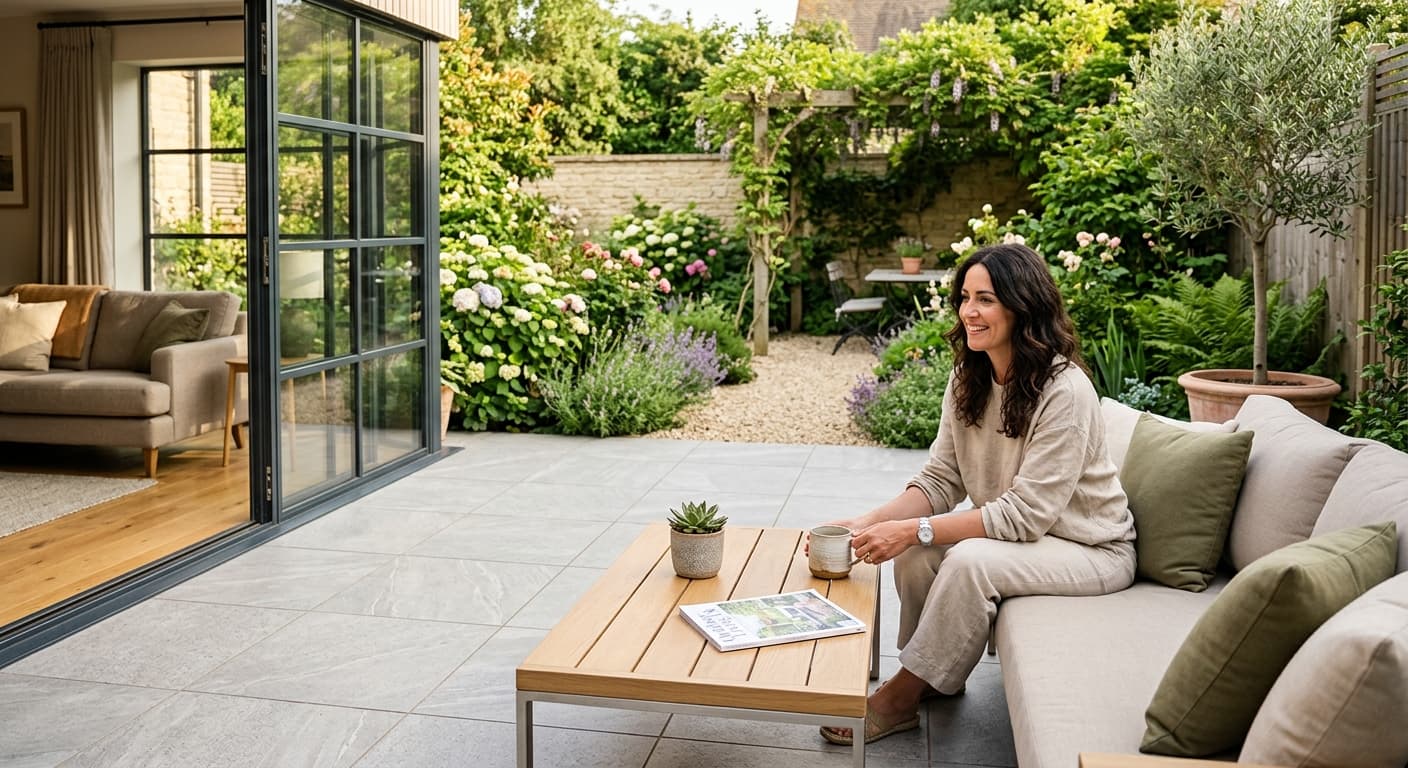
Industrial-inspired concrete-effect tiles have emerged as serious contenders in the outdoor tiles UK market. These tiles appeal to homeowners seeking minimalist, contemporary aesthetics that complement modern architectural extensions. Available in shades from light grey through to charcoal, they pair beautifully with steel-framed glazing and aluminium bi-fold doors.
Pricing sits around £40-£65 per m² for quality concrete-look porcelain from suppliers like Tile Giant, CTD Tiles, or specialist showrooms in Birmingham and beyond.
What's Fading: Traditional Styles Make Way
Small mosaic tiles (under 100x100mm) for outdoor patios have largely fallen from favour. They create excessive grout lines that collect dirt and algae, requiring more maintenance than contemporary large formats. Similarly, highly polished finishes have declined in popularity due to legitimate safety concerns about slippage when wet.
However, we're seeing an interesting counter-trend: decorative encaustic-style tiles and terracotta effects are experiencing a revival for specific applications like courtyard gardens, Mediterranean-inspired terraces, and Victorian property restorations.
Technical Considerations for UK Climates
Frost Resistance and British Standards
Any outdoor tile used in the UK must comply with BS EN 14411 for frost resistance. Look for tiles rated as "fully vitrified" with water absorption below 0.5%. The Building Regulations don't specifically govern garden tiling, but Approved Document M (Access to and Use of Buildings) does require adequate slip resistance for paths and ramps.
Anti-Slip Ratings You Need to Know
Anti slip tiles bathroom ratings use the same R-rating system applicable to outdoor spaces. For UK gardens and patios, we recommend:
- R11: Minimum for patios, pathways, and general outdoor areas
- R12: Preferred for sloped surfaces and areas near pools
- R13: Specified for pool surrounds, steps, and ramps
The Tile Association provides excellent guidance on slip resistance testing, noting that textured or relief finishes typically perform better than smooth surfaces when wet. Interestingly, many wood-effect outdoor tiles achieve R11 ratings despite appearing relatively smooth, thanks to subtle surface texturing.
Best Tiles for Underfloor Heating Outdoors
Yes, outdoor underfloor heating is becoming a thing – particularly for covered terraces and outdoor dining areas used year-round. The best tiles for underfloor heating outdoors are porcelain formats under 600x600mm, which conduct and retain heat efficiently whilst minimising expansion issues.
Installation requires specialist frost-protected cable systems designed for external use, typically costing £75-£125 per m² installed. When combined with quality outdoor porcelain (£50-£70 per m²), you're looking at total project costs of £125-£195 per m² for a heated outdoor living space.
Browse qualified installers on our fitted kitchens and related categories to find professionals experienced with outdoor heating systems.
Indoor Trends Influencing Outdoor Choices
Kitchen Splashback Innovations
Whilst we're focusing on outdoor trends, it's worth noting how kitchen splashback tile ideas UK homeowners are embracing indoors often inspire outdoor selections. Large format tiles with minimal grout lines have proven popular for kitchen backsplashes, and this aesthetic now extends to outdoor kitchen areas and BBQ surrounds.
Current splashback trends include:
- Elongated metro tiles (75x300mm) in muted colours
- Full-height single-slab porcelain panels (3000x1200mm)
- Textured 3D tiles creating shadow and depth
- Terrazzo-effect porcelain in neutral tones
These same formats work beautifully for outdoor kitchen features, with prices ranging from £45 per m² for standard metro tiles to £200+ per m² for premium large-slab installations. Our directory of bathroom specialists often cross over into kitchen and outdoor tiling projects.
Can You Tile Over Existing Tiles?
This frequently asked question applies to both indoor and outdoor scenarios. The short answer: yes, but with significant caveats.
For outdoor applications, tiling over existing tiles is generally inadvisable unless the original installation is perfectly sound, completely level, and provides adequate drainage. The Tile Association recommends removing old tiles in most cases to:
- Assess and repair substrate damage
- Ensure proper falls for water drainage (minimum 1:80 gradient)
- Avoid raising floor levels excessively
- Guarantee adhesive bond strength
If you absolutely must tile over existing outdoor tiles, use a high-quality primer like BAL Bond SBR or similar products, and expect to pay an additional £8-£12 per m² for primer and extra adhesive requirements.
Cost Realities: What to Budget
How much does tiling cost per m2 UK?
Pricing for outdoor tiling projects in 2024 varies considerably based on materials, labour rates, and regional location:
Materials (tiles only):
- Budget porcelain: £25-£40 per m²
- Mid-range porcelain: £40-£65 per m²
- Premium porcelain: £65-£95 per m²
- Designer/imported collections: £95-£150+ per m²
Labour costs:
- London and Southeast: £50-£80 per m²
- Regional cities: £40-£60 per m²
- Rural areas: £35-£50 per m²
Additional costs:
- Substrate preparation: £15-£35 per m²
- Adhesive and grout: £8-£15 per m²
- Sealants (if required): £5-£10 per m²
- Removing existing surfaces: £20-£40 per m²
For a typical 20m² patio installation using mid-range porcelain in London, budget £2,200-£3,000 total. The same project in northern regions might cost £1,600-£2,200.
Watch Out for Hidden Costs
Substrate preparation often catches homeowners off guard. Outdoor tiling requires proper concrete bases with adequate drainage, which may involve excavation, membrane installation, and concrete pouring before any tiles go down. These groundworks can add £50-£100 per m² to project costs.
Finding the Right Professionals
Outdoor tiling demands specialist skills beyond standard indoor bathroom work. When searching our company directory, look for installers with:
- Membership in the Tile Association or similar trade bodies
- Portfolio evidence of outdoor projects
- Understanding of drainage requirements and DPM installation
- Insurance covering external works
- References from recent outdoor projects
Many of the 661 verified businesses across our directory offer free site surveys and detailed quotes. We've found that obtaining three comparable quotes helps establish realistic budgets and identifies installers who truly understand the technical requirements of outdoor tiling.
For homeowners considering DIY installation of outdoor tiles, we strongly recommend professional help unless you have experience with concrete work and substrate preparation. The tiles themselves may seem straightforward, but creating a properly drained, level base that won't shift or crack requires genuine expertise.
Looking Ahead: Emerging Trends for 2025
Several emerging trends are worth watching as we move through 2024:
Sustainable materials: Recycled-content porcelain tiles are appearing from manufacturers like Original Style and Eco Tiles, containing up to 40% recycled materials whilst maintaining performance standards.
Integrated lighting: LED strip lights set into tile joints or beneath glass tile borders create stunning evening ambiance for outdoor spaces.
Warmer colour palettes: After years of grey dominance, we're seeing increased interest in warmer beiges, taupes, and terracotta-inspired shades that create more inviting outdoor environments.
Textured finishes: Beyond anti-slip functionality, heavily textured tiles mimicking riven slate or stone provide visual interest and tactile appeal.
Make Your Outdoor Space Work Harder
The outdoor tiles UK market reflects broader shifts in how we use our homes. Gardens have become valuable square footage, particularly following the work-from-home revolution and increased focus on outdoor entertaining.
Investing in quality outdoor tiling – properly specified and professionally installed – adds genuine value to properties. Estate agents consistently report that well-executed outdoor spaces contribute significantly to buyer appeal and can add 5-10% to property values in competitive markets.
Browse Tiles businesses on HouseJester to find experienced installers in your area, compare verified companies, or list your business if you're a tiling professional serving the UK market. Our directory spans all 21 home improvement categories, connecting homeowners with trusted tradespeople across the country.
Sources & Further Reading
- The Tile Association - UK trade body providing technical guidance and installer certification
- Homebuilding & Renovating: Patio Materials Guide - Comprehensive comparison of outdoor flooring options
- Which? Patio Buying Guide - Independent consumer advice on patio materials and installation
This article was created with AI assistance and reviewed by the HouseJester editorial team for accuracy and relevance.
Written by
Emma Richardson
Kitchen & Bathroom Specialist
Emma has reviewed hundreds of kitchen and bathroom installations across the UK. She combines product knowledge with real-world testing to help homeowners choose the right fitters and materials for their projects.
- Fitted Kitchens
- Bathrooms
- Tiles
- Heating & Plumbing