
On this page
Choosing Between Paint and Wallpaper for Your UK Home
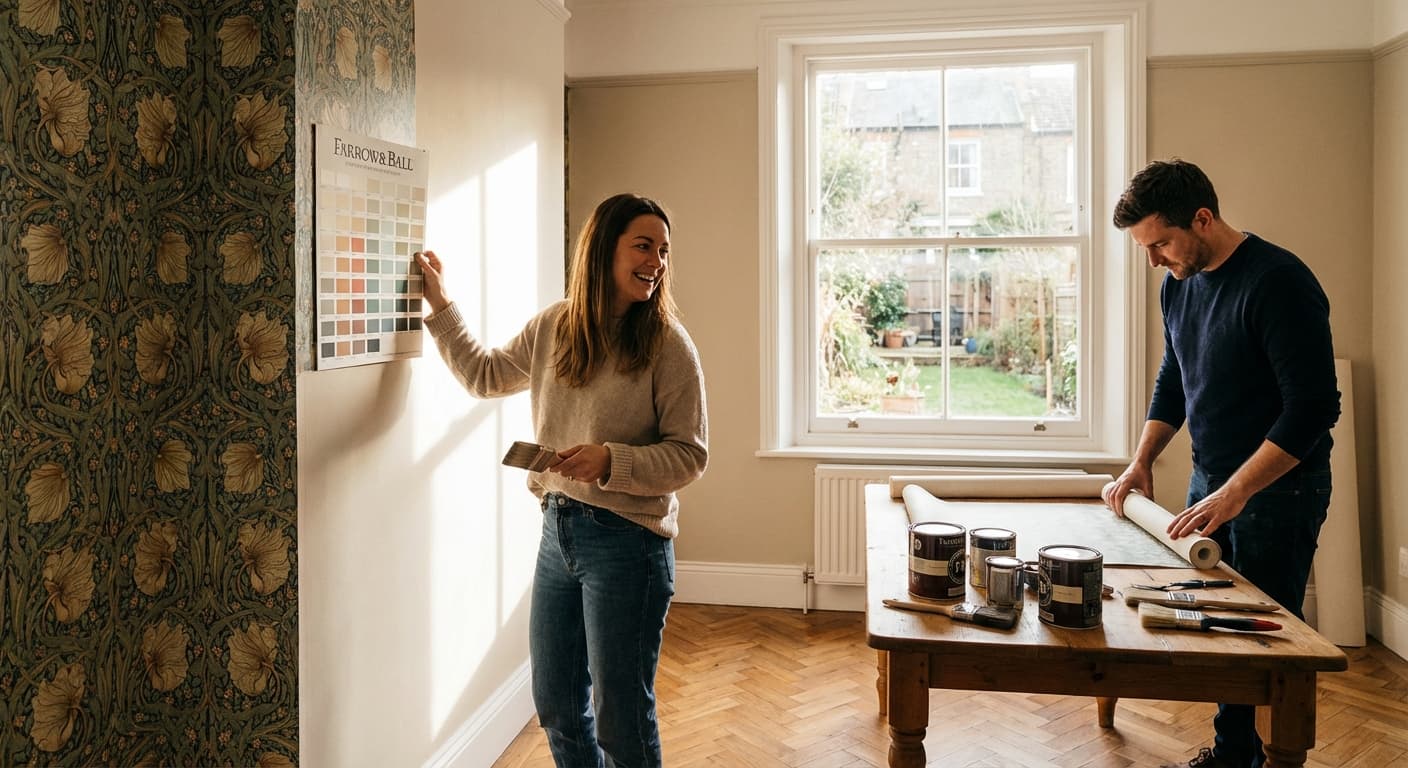
When refreshing your home's interior, the choice between paint and wallpaper remains one of the most fundamental decisions you'll make. Both paint and wallpaper offer distinct advantages, and understanding the nuances of each option will help you create a space that reflects your style whilst fitting your budget. With UK homeowners spending an estimated £3.2 billion annually on decorating products, making the right choice matters both aesthetically and financially.
The UK market offers an exceptional range of paint and wallpaper options, from traditional trade brands like Dulux and Crown Paints to premium choices such as Farrow & Ball and Little Greene. Whether you're tackling a single feature wall or embarking on a whole-house renovation, understanding the costs, application methods, and long-term performance of these materials will ensure your investment delivers lasting results.
What Are the Real Costs of Paint vs Wallpaper?
Budgeting accurately for decorating projects requires understanding both material and labour costs across the UK. Paint typically represents the more economical choice, with quality emulsion costing between £15-£45 per 2.5 litre tin from mid-range brands like Johnstone's or Dulux. Premium brands such as Farrow & Ball command £89-£110 for similar quantities, though their exceptional depth of colour often justifies the investment.
Wallpaper pricing varies enormously depending on quality and design complexity. Standard wallpapers from high street retailers start around £8-£15 per roll, whilst designer papers from brands like Cole & Son or Sanderson can reach £80-£150 per roll. A typical bedroom requiring 8-10 rolls means material costs alone range from £80 to £1,500.
Labour costs differ significantly between London and regional areas. Professional painters typically charge £150-£200 per day outside London, rising to £200-£300 within the capital. Wallpaper hanging costs approximately £150-£250 per day for a skilled decorator, reflecting the specialist skills required. For a standard 4m x 4m room, expect to pay:
- Painting: £200-£400 for preparation and two coats (materials and labour)
- Wallpapering: £400-£800 for hanging quality wallpaper (materials and labour)
- Feature wall only: £100-£250 for wallpaper, £80-£150 for paint
London prices typically run 20-30% higher than these national averages.
How Long Do Paint and Wallpaper Last?
Durability represents a crucial factor when weighing your options. Modern paint formulations offer excellent longevity, with quality emulsions maintaining their appearance for 5-7 years in typical conditions. High-traffic areas like hallways and children's rooms benefit from wipeable paints or eggshell finishes, which resist marking and damage more effectively than standard matt emulsions.
Wallpaper can outlast paint significantly when properly installed, often remaining attractive for 10-15 years. Vinyl wallpapers prove particularly durable in kitchens and bathrooms, offering moisture resistance that standard papers cannot match. However, wallpaper trends change more dramatically than paint colours, meaning you might desire a refresh before the paper shows wear.
The quality of preparation work fundamentally affects longevity for both materials. Properly filled and sanded walls accept paint better and prevent wallpaper bubbling. Investment in thorough preparation pays dividends through extended lifespan, regardless of your chosen finish.
Which Option Works Best for Different Rooms?
Different rooms present unique challenges that favour particular decorating approaches. Understanding these nuances helps you allocate your budget effectively and achieve optimal results throughout your home.
Living rooms and bedrooms offer maximum flexibility, accommodating both paint and wallpaper beautifully. Feature walls using statement wallpaper create focal points without overwhelming spaces, whilst coordinating paint colours maintain cohesion. This combination approach typically costs £300-£600 for a standard bedroom including materials and professional installation.
Kitchens and bathrooms require moisture-resistant solutions. Vinyl or vinyl-coated wallpapers handle humidity better than standard papers, though many homeowners prefer wipeable paints in these spaces. Kitchen and bathroom-specific paints contain anti-mould additives essential for UK homes, where condensation frequently challenges decorative finishes. Expect to invest £150-£300 per room for appropriate materials and application.
Hallways and staircases experience heavy traffic and benefit from durable finishes. Hardwearing paints in eggshell or satin finishes resist scuffs effectively, whilst textured wallpapers disguise minor marks between decorating cycles. The architectural features common in Victorian and Edwardian hallways particularly suit period-appropriate wallpaper designs.
Children's rooms present special considerations around changeable tastes and inevitable wear. Paint offers easier updates as children grow, with chalkboard and magnetic paints adding functional interest. However, wipeable vinyl wallpapers with playful designs prove surprisingly durable and can survive the childhood years admirably.
What Are the Latest Paint and Wallpaper Trends?
UK interior design trends currently favour warmth and texture after years of grey minimalism. Paint colours trending in 2024 include:
- Warm terracottas and clay tones
- Soft sage and olive greens
- Rich navy and midnight blues
- Natural earth tones and warm neutrals
Farrow & Ball's 'Jitney' and Little Greene's 'Nether Red' exemplify this shift toward cocoon-like, comforting spaces. These deeper tones require careful consideration of natural light, particularly in north-facing rooms common in UK housing stock.
Wallpaper trends emphasise maximalism and personality. Large-scale botanical prints, geometric patterns, and textured grasscloths create dramatic statements whilst complementing sustainability concerns. British heritage brands like Morris & Co continue their renaissance, with their archive patterns appealing to homeowners in period properties seeking authentic period details.
Textured finishes bridge paint and wallpaper categories, with lime washes and textured paints offering depth without pattern. These finishes particularly suit older properties with uneven walls, where they enhance rather than fight architectural character.
Should You DIY or Hire Professionals?
The DIY versus professional debate depends largely on skill level, time availability, and the specific requirements of your project. Painting suits confident DIYers, with modern low-VOC formulations making the process more pleasant than traditional paints. Quality brushes and rollers cost £30-£60 for a complete set, whilst preparation materials (sugar soap, filler, sandpaper) add another £20-£40.
Wallpapering demands greater technical skill, particularly around corners, switches, and architectural features. Pattern matching requires precision, and expensive designer papers leave little margin for error. Most homeowners find professional installation worth the investment for wallpaper, whilst tackling painting themselves with professional help reserved for challenging areas like staircases or high ceilings.
Building Regulations rarely affect decorative finishes, though fire-retardant papers may be required in Houses in Multiple Occupation (HMOs) or commercial properties converted to residential use. Always verify requirements with your local authority for non-standard properties.
Finding the Right Paint and Wallpaper Specialists
Selecting skilled professionals ensures your decorating investment delivers lasting satisfaction. Seek decorators with verifiable references and portfolio examples matching your project scope. Trade body membership with organisations like the Painting and Decorating Association indicates professional standards and ongoing training.
Request detailed written quotations specifying materials, preparation work, and timescales. Quality decorators provide clear breakdowns allowing you to understand exactly what you're purchasing. Don't automatically accept the cheapest quote—inadequate preparation and rushed application create problems costing more to rectify than initial savings.
Browse Paint & Wallpaper businesses on HouseJester to discover verified specialists across the UK. Our directory includes 661 verified listings spanning decorators, paint suppliers, and wallpaper specialists who can help transform your home with skill and professionalism.
This article was created with AI assistance and reviewed by the HouseJester editorial team for accuracy and relevance.
Written by
HouseJester Editorial
Editorial Team
The HouseJester editorial team brings together specialists in furniture, interior design, and home improvement to provide trusted guidance for UK homeowners.