
On this page
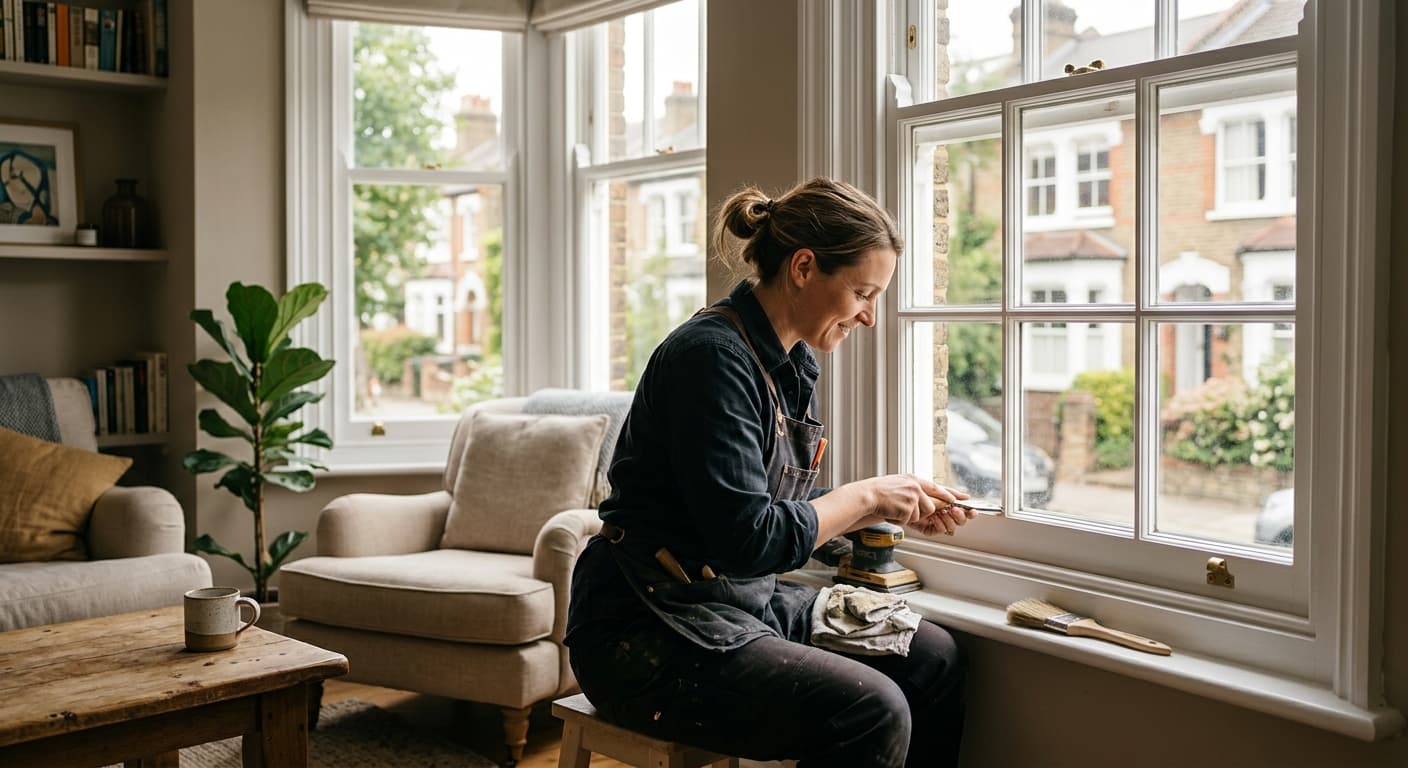
Sash window restoration remains one of the most worthwhile investments for period property owners across the UK. Rather than ripping out original features, restoring traditional sash windows preserves character whilst delivering modern performance standards. We've seen countless homeowners wrestling with this decision, so this guide walks you through everything you need to know about restoring, repairing, or replacing your windows and doors.
Key Takeaways
- Professional sash window restoration typically costs £800–£1,500 per window, compared to £1,200–£2,000 for full replacement
- Modern draught-proofing and secondary glazing can achieve U-values as low as 1.8 W/m²K without compromising original features
- uPVC windows may be cheaper initially (£300–£600 per window) but last 20-25 years versus 60+ years for restored timber sash windows
- Always check if your property sits within a Conservation Area before replacing original windows — you may need planning permission
- Energy-efficient windows must meet Building Regulations Part L requirements (minimum U-value of 1.6 W/m²K for replacement windows)
Understanding Sash Window Repair vs Replacement Cost
The choice between restoration and replacement isn't straightforward. Original timber sash windows in decent structural condition almost always benefit from restoration rather than replacement.
Restoration involves stripping back layers of paint, replacing worn sash cords, repairing rot with timber splices, and fitting modern draught-proofing systems. Full restoration with double-glazed slim units costs £1,200–£2,000 per window in London, dropping to £800–£1,500 elsewhere. Basic repairs without glazing upgrades start from £400–£600 per window.
Replacement becomes necessary when timber has suffered extensive rot (over 40% of the frame) or when windows are beyond economic repair. Like-for-like timber replacements cost £1,800–£3,000 per window, whilst uPVC 'sash-style' alternatives run £600–£1,200.
The maths favours restoration. A restored sash window will outlast uPVC by decades, maintains period authenticity, and adds more value to your property. The Energy Saving Trust confirms that well-maintained timber windows with secondary glazing can match modern double glazing for thermal performance.
How Much Does Double Glazing Cost for a 3-Bed House?
Budgeting for whole-house glazing projects requires understanding the variables at play. The average cost to double glaze a typical UK three-bedroom semi-detached house ranges from £4,500 to £9,000, depending on materials, glazing specifications, and regional pricing.
Breaking this down by window type:
- uPVC casement windows: £300–£600 per window installed
- Aluminium casement windows: £500–£900 per window installed
- Timber casement windows: £600–£1,200 per window installed
- Timber sash windows (double-glazed): £1,200–£2,000 per window installed
A standard three-bed semi typically has 8-10 windows plus a front and back door. Using mid-range uPVC throughout, you're looking at £5,000–£6,500 for windows alone. Factor in installation complexity, scaffolding requirements, and any structural modifications, and the total climbs to £7,000–£10,000.
London pricing runs 15-25% higher than the national average. We've tracked quotes in Manchester and Birmingham coming in 10-15% below London rates, whilst rural areas often see premiums due to travel costs.
Many businesses listed in our windows & doors directory offer package discounts for whole-house projects. Always obtain three written quotes and verify memberships with FENSA (Fenestration Self-Assessment Scheme) or CERTASS, which ensure compliance with Building Regulations.
Material Comparison: Which Windows Work Best?
Choosing the right material affects longevity, maintenance requirements, thermal performance, and aesthetics. Here's how the main contenders stack up:
| Material | Pros | Cons | Typical Cost (per window) |
|---|---|---|---|
| uPVC | Low maintenance, cost-effective, good thermal performance (U-value 1.4), wide colour range | Eventual discolouration, can't be repaired easily, 20-25 year lifespan, less suited to period properties | £300–£600 |
| Aluminium | Slim sightlines, extremely durable (40+ years), modern aesthetic, fully recyclable, excellent for large glazing | Higher cost, poorer thermal performance without thermal breaks (U-value 1.6-1.8), condensation risk | £500–£900 |
| Timber | Authentic appearance, repairable, 60+ year lifespan with maintenance, excellent thermal performance, suits all property styles | Requires painting/staining every 5-7 years, higher initial cost, can suffer rot if neglected | £600–£1,200 |
| Composite | Combines timber interior with aluminium/uPVC exterior, low maintenance, good security, 30+ year lifespan | Premium pricing, heavier than alternatives, fewer style options | £700–£1,400 |
Are Aluminium Windows Better Than uPVC?
This debate dominates our conversations with homeowners. Neither material is objectively 'better' — the right choice depends on your property type, budget, and priorities.
Aluminium excels for contemporary properties and large glazed openings where slim frames maximise glass area. Modern aluminium windows with polyamide thermal breaks achieve U-values of 1.4 W/m²K, matching uPVC performance. They're powder-coated in virtually any RAL colour and require minimal maintenance beyond occasional cleaning.
The aluminium bifold doors vs uPVC comparison tilts heavily towards aluminium. Bifold doors demand structural strength to support large panes and smooth operation. Aluminium frames won't warp, bow, or discolour. Expect to pay £2,500–£4,000 for a three-panel aluminium bifold versus £1,800–£2,800 for uPVC equivalents.
uPVC dominates the replacement window market because it delivers solid performance at accessible prices. For standard casement windows in modern houses, uPVC makes perfect sense. But period properties and design-conscious homeowners increasingly reject uPVC's plasticky appearance and bulky frames.
According to Which?, aluminium windows last 45 years on average compared to 20-25 years for uPVC. Over a 50-year period, you'll replace uPVC twice whilst aluminium soldiers on. Factor in disposal costs (uPVC recycling remains limited) and aluminium's lifecycle cost advantage becomes clear.
Best Energy Rated Windows UK: A++ and Beyond
Energy ratings confuse many homeowners. Windows carry Window Energy Ratings (WER) from A++ down to G, calculated using U-values (heat loss), solar gain, and air leakage.
Best energy rated windows UK A++ achieve U-values below 0.8 W/m²K through triple glazing, argon or krypton gas fills, and warm-edge spacer bars. Premium manufacturers like Rationel, Velfac, and Internorm offer A++ rated products, typically costing £800–£1,500 per window.
Building Regulations Part L mandates that replacement windows achieve minimum U-values of 1.6 W/m²K (whole window value, not just glazing). Most modern double glazing comfortably exceeds this at 1.2-1.4 W/m²K.
Does chasing A++ ratings make financial sense? Usually not. The jump from A-rated (U-value 1.2) to A++ (U-value 0.8) adds 30-50% to window costs but only saves an additional £20-40 annually on heating bills for a typical home. Payback periods stretch beyond 20 years.
We recommend targeting A-rated double glazing (U-value 1.2-1.4) for most UK homes. This balances performance and cost effectively. Triple glazing makes more sense in exposed locations, north-facing rooms, or for noise reduction than pure energy savings.
Is Triple Glazing Worth the Extra Cost UK?
Triple glazing adds 25-40% to window costs compared to double glazing — typically an extra £100-£200 per window. For a three-bed house, that's £800-£1,600 premium.
The thermal benefits are modest. Triple glazing achieves U-values around 0.8 W/m²K versus 1.2 W/m²K for quality double glazing. For a well-insulated home, annual heating savings amount to £30-£60 — a payback period of 20-25 years.
Triple glazing makes financial sense in specific circumstances:
- Noise reduction: Three panes with laminated glass dramatically cut traffic and aircraft noise
- North-facing rooms: Marginal solar gain benefits aren't sacrificed where sunlight is limited anyway
- New builds: When part of whole-house design, the incremental cost is minimal
- Passive House standards: Required to meet ultra-low energy consumption targets
For most retrofit projects, invest your budget in sorting insulation, heating controls, and draught-proofing before upgrading from A-rated double to triple glazing. The Energy Saving Trust confirms this approach delivers better return on investment.
Front Door Selection: Security and Performance
Composite front doors security ratings have improved dramatically, with modern designs achieving Secured by Design (SBD) certification — the police-backed standard for crime prevention.
Composite doors combine a timber core with GRP (glass-reinforced plastic) skins, creating doors that resist forced entry whilst maintaining thermal efficiency. Premium models feature:
- Multi-point locking systems (5-7 points)
- Anti-snap, anti-drill, anti-bump cylinders
- Reinforced steel or aluminium edge banding
- Laminated or toughened glazing
- U-values as low as 0.8 W/m²K
Expect to pay £800-£1,800 for quality composite front doors including installation. Budget options start around £600 but often skimp on security hardware.
Solid timber doors remain popular for period properties, offering authentic appearance and repairability. Ensure timber doors are treated for weather resistance and fitted with modern multi-point locks. Costs run £1,200-£2,500 depending on design complexity.
Aluminium entrance doors suit contemporary properties, with powder-coated finishes, concealed hinges, and excellent security. Prices start at £1,500 and climb quickly for bespoke designs.
Common Mistakes to Avoid
Twenty years of covering home improvements have shown us these pitfalls repeatedly:
Ignoring planning requirements: Conservation Areas, Listed Buildings, and Article 4 Direction zones all restrict window replacement. Check with your local authority before ordering. Unauthorised replacements can force costly reinstatement.
Choosing installers on price alone: The cheapest quote often signals corner-cutting. Verify FENSA/CERTASS registration, review previous work, and check company longevity. Businesses listed on platforms like HouseJester undergo verification processes that filter out fly-by-night operators.
Overlooking ventilation: Modern airtight windows reduce natural ventilation. Building Regulations require trickle vents or alternative ventilation strategies to prevent condensation and maintain air quality. Many homeowners block trickle vents due to noise or draughts, creating damp problems.
Underestimating scaffolding costs: Upper-floor windows may need scaffolding, adding £500-£1,500 to project costs depending on access and duration.
Neglecting maintenance schedules: Timber windows need repainting every 5-7 years. uPVC and aluminium need gasket replacement every 10-15 years. Factor ongoing costs into your decision.
Finding the Right Installer
Quality installation matters as much as the windows themselves. Poor fitting causes draughts, water ingress, and premature failure.
Start by browsing verified specialists in our windows & doors category. Look for:
- FENSA or CERTASS registration (provides Building Regulations compliance certificates)
- Insurance-backed guarantees (protects you if the company folds)
- Trade association membership (GGF, FMB, or similar)
- Portfolio of similar projects
- Written quotations specifying materials, specifications, and timescales
Obtain three detailed quotes. The cheapest is rarely the best value. Question significant price variations — they often reflect quality differences in materials, hardware, or installation standards.
For period properties requiring specialist restoration, seek members of the Institute of Historic Building Conservation or craftspeople experienced with traditional techniques. These specialists command premium rates (20-30% above standard installers) but deliver appropriate solutions.
If you're a qualified installer looking to expand your customer base, consider the opportunity to list your business in our directory alongside other verified tradespeople.
Step-by-Step: Managing Your Windows Project
Step 1: Assessment and Planning (Week 1-2)
Survey all windows and doors. Note condition, any rot or damage, opening mechanisms, and glazing type. Photograph everything. Decide whether restoration, repair, or replacement is appropriate for each opening.
Check planning requirements with your local authority. Conservation Area consent typically takes 6-8 weeks.
Step 2: Specification and Quotes (Week 3-6)
Develop specifications including:
- Material (uPVC, aluminium, timber, composite)
- Glazing type (double/triple, U-value target)
- Hardware (locks, handles, hinges)
- Colours and finishes
- Any bespoke requirements
Request three written quotes from reputable installers. Allow 2-3 weeks for site surveys and detailed quotations.
Step 3: Ordering and Manufacture (Week 7-14)
Standard windows arrive in 4-6 weeks. Bespoke timber or heritage specifications take 8-12 weeks. Confirm lead times before committing.
Arrange scaffolding if required. Book 2-3 weeks ahead during busy periods.
Step 4: Installation (Week 15-16)
Typical installation timelines:
- Single window: 2-3 hours
- Whole house (8-10 windows): 3-5 days
- Sash window restoration (per window): 1-2 days
Clear access routes and cover furniture with dust sheets. Expect mess and disruption. Homes remain secure overnight but prepare for temporary draughts.
Step 5: Completion and Certification (Week 17)
Installers must provide FENSA/CERTASS certificates within 4 weeks, confirming Building Regulations compliance. Chase these if delayed — you'll need them for future property sales.
Check all windows open, close, and lock properly. Verify trickle vents function and seals compress evenly. Address snagging issues immediately.
How Much Do New Windows Cost UK Average?
Pulling together industry data and quotes from our directory, average new window costs across the UK break down as follows:
Individual window replacement (including installation):
- uPVC casement: £350-£550
- Aluminium casement: £500-£850
- Timber casement: £650-£1,100
- uPVC sash: £600-£1,000
- Timber sash (double-glazed): £1,200-£1,800
Whole-house projects (3-bed semi, 8-10 windows):
- Budget uPVC: £3,500-£5,000
- Mid-range uPVC with premium hardware: £5,000-£7,000
- Aluminium throughout: £7,000-£10,000
- Timber throughout: £8,000-£13,000
- Heritage sash window restoration: £10,000-£18,000
These figures include VAT, installation, and disposal of old windows. Scaffolding, decorating, and structural modifications cost extra.
London and Southeast England prices run 15-25% higher. Scotland and the North generally see 5-10% lower pricing, though remote locations face travel premiums.
Making Your Decision
Restoring original features almost always adds more value than wholesale replacement, particularly in period properties. Well-executed sash window restoration preserves character whilst meeting modern performance standards.
For contemporary properties or when original windows are beyond salvation, choose materials appropriate to your building style and budget. Don't obsess over marginal U-value improvements at the expense of suitable aesthetics or reasonable costs.
Prioritise quality installation over rock-bottom pricing. Poor fitting undermines even premium products. Verify credentials, check references, and obtain detailed written quotations.
Remember that windows represent a long-term investment. Timber lasts 60+ years, aluminium 40+ years, uPVC 20-25 years. Calculate true lifecycle costs rather than focusing solely on initial outlay.
Browse our verified windows & doors specialists today to find experienced installers in your area. From sash window restoration to contemporary aluminium systems, our directory connects you with qualified professionals across the UK.
Sources & Further Reading
- Energy Saving Trust: Energy Efficient Glazing — Authoritative guidance on window energy performance and Building Regulations requirements
- Historic England: Energy Efficiency and Historic Buildings: Windows — Essential reading for anyone working with traditional windows in period properties
- GGF (Glass and Glazing Federation): Consumer Guides — Industry standards, finding installers, and understanding guarantees from the UK's main trade association
This article was created with AI assistance and reviewed by the HouseJester editorial team for accuracy and relevance.
Written by
James Hartley
Home Improvement Writer
A former building contractor turned journalist, James brings hands-on experience to every article. He specialises in home improvement projects, building regulations, and helping homeowners navigate renovation work with confidence.
- Home Improvements
- Building Services
- Roofing
- Windows & Doors