
On this page
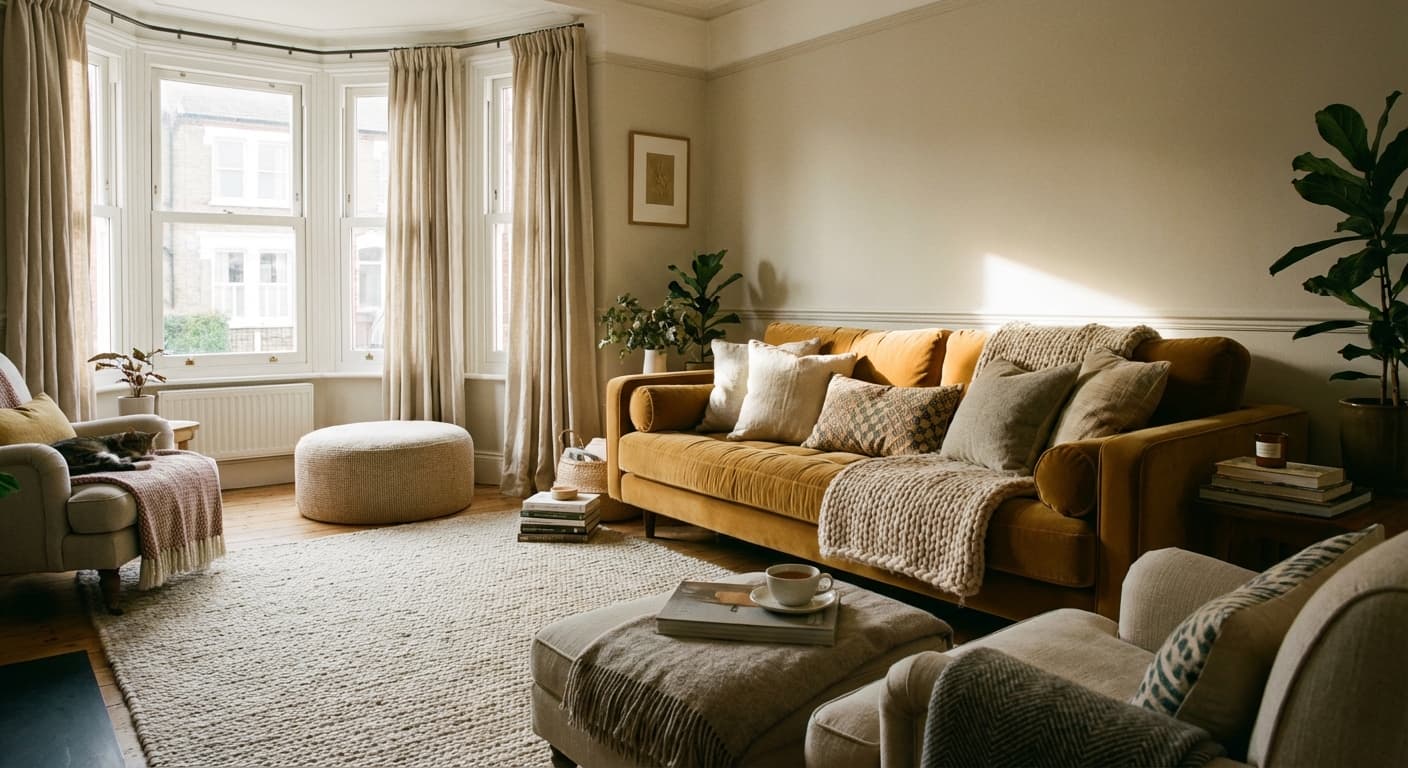
Soft furnishings are the quickest and most cost-effective way to refresh your home's interior. From cushions and curtains to throws and rugs, these textile elements add warmth, colour, and personality to any room. Whether you're updating a single space or redecorating your entire home, understanding how to select and style soft furnishings will help you achieve a professional, cohesive look.
Understanding What Counts as Soft Furnishings
Soft furnishings encompass any moveable textile items used to decorate your home. These include curtains and blinds, cushions and cushion covers, throws and blankets, bed linens and bedspreads, rugs and mats, tablecloths and napkins, and even decorative wall hangings.
Unlike furniture or fixed features, soft furnishings are relatively easy to change, making them ideal for seasonal updates or quick style refreshes. They're also essential for adding comfort and acoustics to a room—particularly important in open-plan spaces or rooms with hard flooring.
Key consideration: When planning your soft furnishing budget, allocate approximately 15-20% of your overall room budget to these items. This ensures you've got sufficient funds for quality pieces that will last, rather than cheap alternatives that need frequent replacement.
Choosing the Right Fabrics and Materials
Selecting appropriate fabrics is crucial for both aesthetics and practicality. Different rooms have different requirements, and understanding fabric properties will save you money and disappointment in the long run.
Living Areas
For high-traffic areas like lounges and family rooms, durability is paramount. Look for fabrics with a high rub count—ideally 25,000+ for heavy use. Cotton blends, chenille, and synthetic microfibre perform well and resist wear. Brands like Clarke & Clarke and Sanderson offer excellent mid-range options specifically designed for British homes.
Avoid delicate fabrics like silk or velvet in rooms with young children or pets, unless you're prepared for regular professional cleaning. Instead, opt for performance fabrics with stain-resistant treatments.
Bedrooms
Comfort takes priority in sleeping spaces. Natural fibres like cotton, linen, and wool allow your skin to breathe and help regulate temperature throughout the night. Egyptian cotton with a thread count between 200-400 offers the best balance of softness and durability—anything higher can actually feel less comfortable.
For throws and decorative cushions, consider luxurious textures like faux fur, cashmere blends, or brushed cotton that invite you to relax.
Fire Safety Regulations
UK fire safety regulations are strict, particularly for upholstered items and curtains. Ensure any soft furnishings meet the Furniture and Furnishings (Fire Safety) Regulations 1988. Reputable retailers will clearly label compliant products. When purchasing from small makers or importing items, always verify they meet British Standards (BS 5852 for upholstery, BS 5867 for curtains and drapes).
Creating a Cohesive Colour Scheme
Soft furnishings are your opportunity to inject personality and tie a room together. Follow this step-by-step approach to avoid a chaotic, mismatched look:
Step 1: Identify your base colour. This is typically your largest fixed element—walls, flooring, or a substantial piece of furniture. This colour should occupy roughly 60% of your visual space.
Step 2: Choose a secondary colour. This should complement your base and occupy about 30% of the space. This might be your curtains, a large rug, or your sofa upholstery.
Step 3: Add accent colours. These bold touches should represent about 10% of the room and appear in cushions, throws, artwork, and smaller accessories. The classic rule of three works brilliantly—use three different but complementary accent colours for visual interest.
Step 4: Vary your textures and patterns. Even within the same colour family, mixing textures prevents a flat, one-dimensional look. Pair smooth cotton with chunky knits, plain fabrics with subtle patterns, or geometric prints with organic shapes.
Many UK retailers like John Lewis, Dunelm, and Laura Ashley offer coordinated soft furnishing ranges that take the guesswork out of matching. However, don't feel obliged to buy everything from one collection—mixing sources creates a more personal, curated aesthetic.
Common Mistakes to Avoid
Mistake 1: Choosing style over practicality. Those pristine white cushions look stunning in magazines, but they're impractical for real family life. Be honest about your lifestyle and select accordingly. Performance fabrics now come in beautiful designs—you needn't sacrifice style for function.
Mistake 2: Ignoring scale and proportion. Oversized cushions on a small sofa look ridiculous, as do tiny throws on large beds. As a rule, cushions should be approximately one-third the width of your sofa arm, and throws should overhang your bed or sofa by at least 15-20cm on each side.
Mistake 3: Buying everything at once. Soft furnishings are an investment. Purchase key pieces first—curtains, a quality rug, essential cushion inners—then add decorative elements over time. This approach allows you to live with colours and adjust as needed.
Mistake 4: Neglecting care instructions. Before purchasing, check whether items are machine washable or require dry cleaning. The true cost includes maintenance, so factor this into your decision. British weather means cushions near windows may need frequent cleaning, whilst darker colours hide dirt better in high-traffic areas.
Mistake 5: Skimping on curtain width. Curtains should be at least 1.5-2 times the width of your window for a full, luxurious appearance. Skimpy curtains that barely cover the window frame look cheap and won't effectively block light or draughts—a key consideration in UK homes.
Seasonal Updates and Storage
One advantage of soft furnishings is the ability to rotate them seasonally. Create two collections: lighter linens, cottons, and brighter colours for spring and summer; heavier wools, velvets, and richer tones for autumn and winter.
Store off-season items properly to maintain their condition. Vacuum-sealed bags save space and protect against moths—particularly important for natural fibres. Add cedar balls or lavender sachets as natural moth deterrents. Store in a cool, dry location away from direct sunlight to prevent fading and mildew.
Before storing, always wash or dry clean items according to care labels. Storing dirty textiles attracts pests and can set stains permanently.
By thoughtfully selecting and styling your soft furnishings, you'll create a home that's both beautiful and comfortable. Remember that these elements should evolve with your lifestyle and tastes—don't be afraid to experiment, mix old favourites with new finds, and refresh your space as often as you like.
This article was created with AI assistance and reviewed by the HouseJester editorial team for accuracy and relevance.
Written by
HouseJester Editorial
Editorial Team
The HouseJester editorial team brings together specialists in furniture, interior design, and home improvement to provide trusted guidance for UK homeowners.