
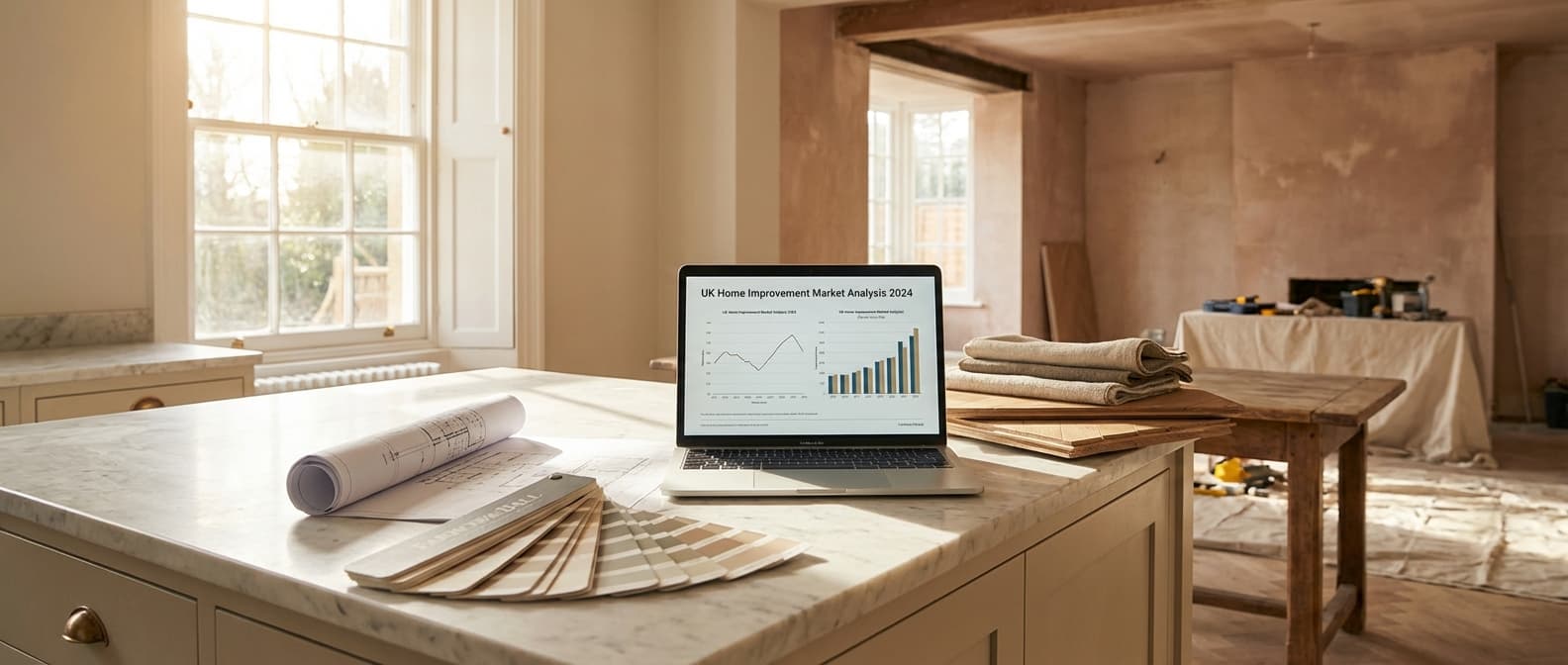
The UK home improvement market is experiencing a period of significant change. Rising renovation budgets, major high-street collapses, and shifting consumer habits are reshaping the landscape for homeowners and tradespeople alike. Here is a data-driven look at where the market stands in 2026 and what it means for anyone planning a home project.
The Numbers: How Much Are Britons Spending?
The headline figures tell a story of growing investment in the home:
- Median renovation spend: £21,440 — up 26% from £17,000 just two years ago. Homeowners are spending more per project, driven by higher material costs, upgraded specifications, and a desire for quality over quantity.
- Total UK home and garden spending: £47 billion forecast for 2026. This encompasses everything from a tin of paint to a full kitchen refit.
- Global furniture market: $29.69 billion, growing at a compound annual growth rate (CAGR) of 5.18%. The UK remains one of Europe's largest furniture markets.
- Housing transactions up 25.7% year-on-year, fuelling demand for renovation and furnishing as new owners put their stamp on recently purchased properties.
These figures suggest a market that is robust despite broader economic uncertainty. When people move house, they spend — and with transaction volumes rising sharply, the ripple effect across the home improvement sector is substantial.
Retail Shake-Up: Winners and Losers
The UK home improvement retail landscape has been transformed by several high-profile collapses and strong performances.
The Casualties
Homebase collapsed into administration, closing all 135 stores and making thousands of staff redundant. Once a household name, Homebase struggled with an ill-fated ownership by Bunnings (the Australian DIY chain) and subsequent attempts to reposition the brand. Its closure leaves a gap in the mid-market home improvement segment.
Carpetright entered administration, putting 273 stores at risk. Although some locations were rescued by Tapi Carpets, the brand as consumers knew it has effectively disappeared from the high street. The collapse highlights the vulnerability of specialist flooring retailers in a market increasingly dominated by online and multi-category competitors.
The Winners
Kingfisher (parent of B&Q and Screwfix) has strengthened its position. B&Q's marketplace — which allows third-party sellers to offer products alongside B&Q's own range — saw gross merchandise value (GMV) grow 45.4% to £228 million. Screwfix continues to dominate the trade channel, with 58% of its sales now through e-commerce.
Dunelm has consolidated its position as the UK's leading homewares retailer, achieving a 7.9% market share. Digital sales account for 41% of revenue, and the company's "Total Dunelm" strategy — integrating physical stores with online — has proven resilient.
ScS Group has performed steadily in the upholstered furniture segment, while DFS remains the market leader in sofas with continued investment in showrooms and online.
What Is Driving the Market?
Several factors are fuelling growth in the home improvement sector:
1. The "Improve, Don't Move" Mindset
With stamp duty costs, high mortgage rates, and limited housing stock, many homeowners are choosing to improve their current property rather than move. A well-planned kitchen or bathroom renovation can add 5-10% to a home's value at a fraction of the cost of moving.
2. Higher Specifications
Homeowners are trading up. Quartz worktops have replaced laminate as the mid-range standard. Smart home technology — from connected thermostats to automated lighting — is increasingly expected rather than aspirational. Energy-efficient appliances are now the default choice.
3. Regulatory Changes
The Future Homes Standard (taking full effect in December 2026) is driving investment in insulation, ventilation, and low-carbon heating. Homeowners undertaking extensions or major renovations must comply with updated Part L and Part F building regulations, which adds cost but also adds value.
4. Post-Pandemic Legacy
The pandemic permanently changed how people view their homes. Home offices, garden rooms, and multi-functional living spaces remain in high demand. The proportion of people working from home at least part of the week has stabilised at around 30-40%, sustaining demand for home office furniture and dedicated workspaces.
Regional Variations
Spending patterns vary significantly across the UK:
- London and the South East command the highest average renovation budgets, reflecting higher property values and greater disposable income.
- The Midlands and North West are seeing the fastest growth in renovation spending, partly driven by lower property prices offering better return on investment.
- Scotland and Wales have distinct regulatory frameworks that can affect building costs and available grants.
When searching for local professionals, a directory like HouseJester allows you to filter by region and category, ensuring you find tradespeople who understand local market conditions and regulations.
What This Means for Homeowners
If you are planning a home improvement project in 2026, here are the key takeaways:
-
Budget realistically — The median spend of £21,440 reflects genuine market conditions. Materials, labour, and compliance costs have all risen. Get at least three quotes from verified professionals on HouseJester to benchmark pricing.
-
Act on supply chain lead times — Popular items such as bespoke kitchens, engineered flooring, and specific tiles can have lead times of 8-16 weeks. Order early.
-
Consider the resale impact — Kitchens and bathrooms deliver the best return on investment. Focus your budget where it will add the most value.
-
Shop around for materials — With Homebase and Carpetright gone, explore alternatives. B&Q's expanded marketplace, Dunelm's growing range, and independent specialists listed on HouseJester all offer competitive options.
-
Future-proof your investment — Choose energy-efficient appliances, sustainable materials, and designs that accommodate evolving building regulations. What feels like an optional upgrade today may become a regulatory requirement tomorrow.
Looking Ahead
The UK home improvement market in 2026 is characterised by higher spending, consolidating retail, and a growing emphasis on sustainability and digital convenience. For homeowners, this means more choice in how and where they shop, but also a need for careful planning and professional guidance.
Whether you are renovating a kitchen, refreshing a living room, or building an extension, starting with reliable, verified professionals makes all the difference. Browse HouseJester's directory to find specialists in your area and take the first step towards your project.
This article was created with AI assistance and reviewed by the HouseJester editorial team for accuracy and relevance.