
On this page
Introduction
A well-designed wardrobe storage organiser transforms cluttered bedrooms into orderly sanctuaries, but the principles of effective storage extend far beyond your bedroom cupboards. We've worked with hundreds of UK homeowners who've discovered that strategic storage planning—from wardrobes to under-stairs cupboards—can reclaim dozens of square metres of usable space whilst adding significant value to their properties. According to research by Homebuilding & Renovating, thoughtful storage solutions can increase a home's value by up to 5%, making them one of the most cost-effective improvements you can make.
Key Takeaways
- Professional wardrobe storage organisers typically cost £200-£800 for DIY systems, or £1,500-£4,000 for bespoke fitted solutions
- Under-stairs storage conversions average £800-£2,500 depending on complexity and finish quality
- Built-in storage solutions offer better long-term value than freestanding furniture, particularly in period properties
- Proper planning and accurate measurements prevent the most common storage installation mistakes
- Regional pricing varies significantly, with London installations costing 20-35% more than equivalent work in northern England
What is the Best Way to Organise a Small Home?
Small homes demand ruthless efficiency. We recommend starting with a comprehensive audit of what you actually need to store, then working backwards to design solutions that maximise every cubic metre.
The vertical space principle proves most effective. Floor-to-ceiling storage solutions utilise otherwise wasted height whilst keeping floor space clear. In our experience working with UK tradespeople, built-in solutions consistently outperform freestanding furniture in homes under 75 square metres.
Kitchen storage solutions for small kitchens require particular creativity. Pull-out larders (£150-£400 for retrofit units), corner carousel units (£120-£350), and ceiling-height cabinets transform cramped kitchens. Wren Kitchens and Howdens both offer excellent modular systems designed specifically for compact UK homes. The key lies in using the triangle between sink, hob, and fridge efficiently—keep daily-use items within this zone, relegating occasional items to higher or lower cabinets.
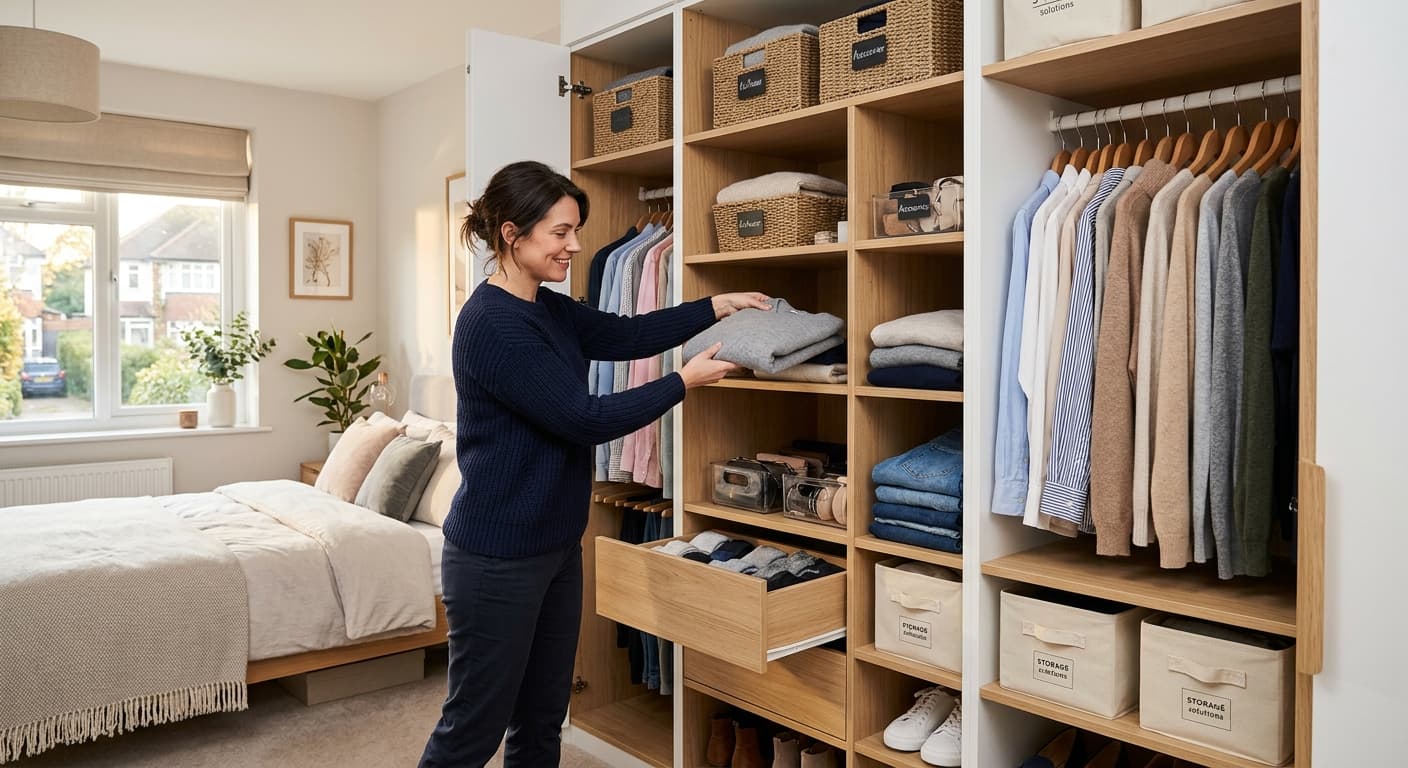
Bedroom organisation starts with the right wardrobe storage organiser. Modular systems from IKEA's PAX range (£300-£1,200 for a standard double wardrobe) or more premium options from John Lewis (£800-£2,500) offer flexibility. We've found that adjustable shelving beats fixed shelves in 95% of applications—your storage needs will change over time.
The Golden Rules for Small Space Storage
- Use doors: The back of every door offers 1-2 square metres of hanging space
- Double up: Ottoman beds, storage coffee tables, and window seats hide belongings in plain sight
- Go bespoke in awkward spaces: Custom joinery costs more upfront but uses every centimetre
- Keep sightlines clear: Open shelving works beautifully but requires disciplined editing
- Zone ruthlessly: Every item needs a designated home, or it becomes clutter
How Much Does Under Stairs Storage Cost UK?
Under-stairs space represents one of the most underutilised areas in British homes. The typical under-stairs cupboard offers 2-4 cubic metres of storage potential, yet most homeowners use it as an unorganised dumping ground.
Professional under stairs storage ideas and costs UK break down as follows:
Basic conversion (£800-£1,500): A local carpenter installs simple shelving and possibly pull-out drawers. This suits homes where the staircase is already enclosed. Expect 1-2 days of work.
Mid-range solution (£1,500-£2,000): Bespoke fitted storage with a combination of shelving, drawers, and hanging rails. Often includes improved lighting and better door hardware. Takes 2-3 days.
Premium installation (£2,000-£3,500): Fully integrated storage with soft-close mechanisms, LED lighting, specialist finishes, and maximised space utilisation. Some installers create walk-in storage areas or wine cellars. Requires 3-5 days plus finishing.
Prices in London and the South East typically run 25-35% higher than equivalent work in Manchester or Birmingham. According to Checkatrade's 2023 pricing survey, the national average for under-stairs storage conversion sits at £1,650.
The configuration matters enormously. Straight-run staircases offer the most straightforward conversions. Winder stairs (those that turn) create awkward triangular spaces that require clever joinery to use effectively—expect to pay towards the higher end of the range.
Built-In Alcove Shelving Ideas for Victorian Homes
Victorian and Edwardian properties present unique storage opportunities. The chimney breast alcoves found in most period homes are perfect for built-in storage that looks original to the property.
Built-in alcove shelving ideas Victorian homes should respect the architecture whilst maximising utility. We've seen beautifully executed projects that combine open shelving at eye level with cupboards below—the classic combination that Victorian builders themselves favoured.
Typical costs for alcove storage:
- DIY timber shelving: £80-£200 for materials (brackets, timber, fixings, paint)
- Professional joiner installation: £400-£800 per alcove for painted MDF shelving
- Premium hardwood with cupboards: £1,200-£2,500 per alcove
The construction method matters. Proper alcove storage requires fixing to the masonry behind the plaster, not just the plasterboard. Victorian walls are typically solid brick—you'll need appropriate fixings rated for masonry. We recommend Rawlplug's R-SPL heavy-duty anchors for shelving that will hold books or heavy items.
Depth proves critical. Victorian alcoves typically measure 200-300mm deep. Shelving should sit 30-40mm proud of the skirting board to avoid looking cramped. If you're installing cupboards below, ensure they're deep enough to be useful (minimum 250mm internally) but don't protrude so far they narrow the room awkwardly.
Garage Storage System Wall Mounted UK Options
Garages represent significant storage potential—typically 15-25 square metres in standard UK homes. The floor space usually serves the car (if you still park it there), but walls and ceilings often sit empty.
Garage storage system wall mounted UK solutions range from budget DIY to professional installations:
Garage Storage Comparison
| System Type | Pros | Cons | Typical Cost (GBP) |
|---|---|---|---|
| Slatwall panels | Extremely flexible, easy to reconfigure, huge accessory range | Requires sturdy wall fixing, can look industrial | £150-£400 for 3x2m coverage |
| Heavy-duty shelving (Gladiator, Biohort) | Strong, purpose-built for garages, weather-resistant | Fixed configuration, requires wall space | £200-£600 per unit |
| Overhead ceiling racks | Uses dead space, ideal for seasonal items | Requires suitable ceiling joists, access can be awkward | £120-£350 installed |
| Custom fitted systems | Maximises every centimetre, can include workbenches | Expensive, permanent installation | £1,500-£4,000 for full garage |
Garage Proud and Dura Ltd manufacture excellent British-made systems. Their wall-mounted offerings comply with relevant loading standards and suit UK garage construction (typically breeze block or brick rather than drywall).
The critical consideration: weight loading. A typical garage wall can support 50-75kg per square metre when properly fixed, but this assumes decent-quality blockwork and appropriate fixings. Always locate studs or use through-bolts for heavy storage. Building Regulations Part A covers structural loading—whilst garages aren't typically covered, the principles apply.
Loft Storage Boarding and Insulation Guide
Loft spaces offer enormous storage potential, but incorrect boarding damages insulation and potentially violates Building Regulations Part L (conservation of fuel and power).
A proper loft storage boarding and insulation guide must address both functions simultaneously. The Energy Saving Trust recommends 270mm of loft insulation for UK homes—significantly more than the joists in most properties (typically 100-150mm).
The solution involves loft legs or raised boarding systems:
LoftZone StoreFloor (£350-£600 for materials covering 10-15 square metres): Raises the boarding above insulation on adjustable legs. Meets Building Regulations and preserves thermal performance.
Traditional timber batten method (£200-£400 for materials): Create a raised floor using 50x50mm timber battens perpendicular to joists, then board across them. Cheaper but more labour-intensive.
Professional installation (£800-£1,800): Including loft ladder upgrade, boarding, and insulation top-up. Specialist loft conversion companies listed in our browse all categories section typically complete this in 1-2 days.
Critical safety points:
- Never board directly onto ceiling joists with insulation beneath—you'll compress it and lose 50% of its effectiveness
- Ensure adequate ventilation (Building Regulations Part F)—blocked eaves cause condensation
- Respect load limits: 25kg per square metre for modern truss roofs, 50kg for traditional cut roofs
- Maintain access to any services (plumbing, electrics)
The loft boarding market in the UK has matured significantly. According to the National Insulation Association, properly executed loft storage adds £800-£1,500 to property values whilst improving energy efficiency.
Is Built-In Storage Worth the Investment?
This question dominates discussions with homeowners considering major storage upgrades. The answer depends on your timeline and property type.
Short-term residents (1-3 years): Stick with quality modular systems. IKEA, B&Q, and Wickes offer excellent wardrobe storage organisers and shelving that delivers immediate benefit without the commitment of permanent joinery. A well-organised PAX wardrobe system costs £400-£1,000 and can move with you.
Medium-term residents (3-7 years): Built-in storage makes financial sense, particularly in locations with strong property markets. A £3,000 investment in fitted wardrobes, alcove shelving, and under-stairs storage typically returns 100-150% when selling in areas like London, Bristol, or Edinburgh.
Long-term residents: Absolutely worth it. Bespoke storage improves daily quality of life immeasurably. We've worked with families who transformed their homes through comprehensive storage planning, reducing clutter stress and creating genuinely pleasant living environments.
The Federation of Master Builders notes that built-in storage ranks among the top five improvements buyers value when viewing properties, alongside kitchens, bathrooms, and decoration.
When Built-In Storage Makes Most Sense
- Period properties with alcoves, chimney breasts, and awkward spaces
- Small homes where every centimetre counts
- Properties you're renovating anyway (add storage whilst trades are on-site)
- Family homes with long-term storage needs (school uniforms, sports equipment, seasonal items)
Finding the Right Storage Specialist
The storage solutions industry in the UK includes everyone from one-person carpentry outfits to national franchises. Quality varies enormously.
Our directory features verified storage solutions specialists who've demonstrated competence through completed projects and customer reviews. When researching contractors, we recommend:
- Request photos of completed projects in similar properties
- Ask about guarantees (5 years minimum for quality joinery)
- Verify insurance (public liability minimum £2 million)
- Check membership in trade associations (British Woodworking Federation, Federation of Master Builders)
- Obtain three written quotes for comparable specifications
Pricing transparency matters. Reputable installers provide itemised quotes showing labour, materials, and any subcontractor costs separately. Be wary of vague "supply and fit" prices that make comparisons impossible.
For businesses offering storage solutions, list your business on HouseJester to reach homeowners actively seeking professional installation services across the UK.
Common Storage Installation Mistakes to Avoid
We've seen hundreds of botched storage installations over the years. The most common errors:
Incorrect measurements: Measure twice, order once. A £2,000 wardrobe storage organiser that doesn't fit the space is an expensive mistake. Account for skirting boards, uneven walls (common in period properties), and ceiling slopes.
Ignoring ventilation: Built-in storage needs air circulation, particularly in bedrooms and kitchens. Solid backs on wardrobes in external walls can trap moisture and cause mould. Leave gaps or use ventilated backing.
Poor quality fixings: Using plasterboard plugs where masonry fixings are required causes sagging shelves and potential collapse. Match fixings to wall construction and load requirements.
Forgetting future access: Sealing in stopcocks, electrical panels, or service access points creates expensive problems later. Always maintain access to home systems.
Overcomplicated designs: The best storage systems remain simple. Overly clever mechanisms jam, break, or prove annoying in daily use. Straightforward drawers and shelves outperform fancy carousels and pull-out systems in reliability.
Making Storage Work for Your Home
Effective storage planning starts with honest assessment of what you own and realistic expectations about what you'll actually use. That bike you haven't ridden in three years probably doesn't deserve premium storage space.
Prioritise storage for items you use weekly. Seasonal decorations, camping equipment, and archive paperwork can occupy harder-to-reach spaces like high shelves or loft storage. Daily-use items deserve the most accessible locations.
The wardrobe storage organiser you choose sets the tone for your entire storage strategy. Invest in quality systems with adjustable components—your needs will change. A young family requires different storage than empty nesters, and good systems adapt.
Remember that storage solutions aren't just about hiding things away. Well-designed storage creates calm, organised spaces that make homes genuinely more pleasant to live in. The hour you save each week not searching for lost items adds up to days per year—time better spent enjoying your home rather than fighting it.
Browse storage solutions businesses on HouseJester to find verified specialists in your area, from bespoke joinery workshops to national retailers offering installation services.
Sources & Further Reading
- Homebuilding & Renovating: Storage Solutions Guide - Comprehensive resource for UK home improvement including storage planning
- Energy Saving Trust: Loft Insulation Guidance - Official guidance on combining loft storage with proper insulation
- Checkatrade: UK Trade Pricing Research - Regular surveys of UK trade pricing including storage installation costs
This article was created with AI assistance and reviewed by the HouseJester editorial team for accuracy and relevance.
Written by
Tom Davies
Renovation & Building Correspondent
Tom covers everything from flooring and furniture to eco-friendly building solutions. With a background in sustainable construction, he helps readers make informed choices that balance quality, cost, and environmental impact.
- Flooring
- Furniture
- Storage Solutions
- Eco & Sustainable