
On this page
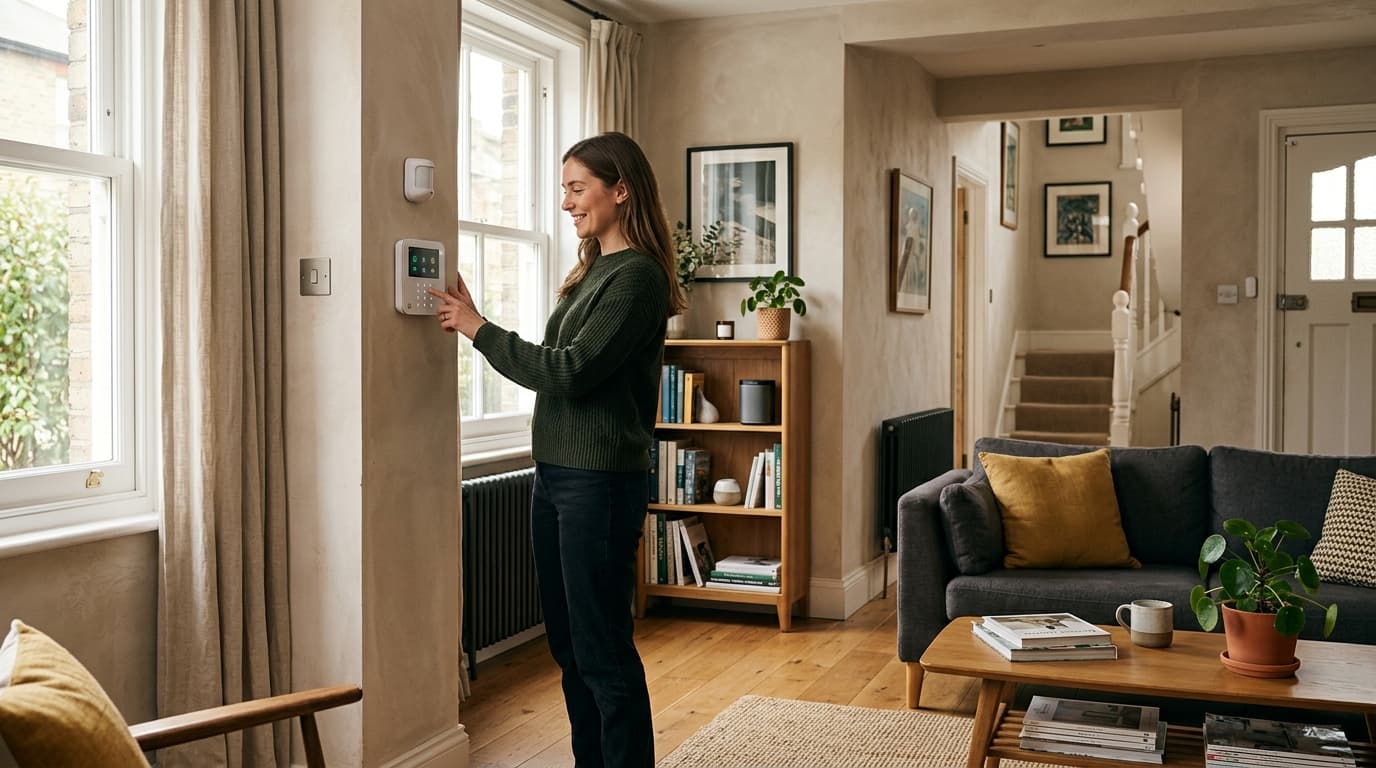
The UK home security market has undergone a radical transformation over the past three years, with wireless alarm systems UK installations now accounting for over 70% of new security upgrades according to industry data. Gone are the days of drilling through walls and threading cables through Victorian floorboards. Modern homeowners want smart, flexible protection that integrates with their connected homes — and they want it installed in hours, not days.
Key Takeaways
- Wireless alarm systems dominate the UK market, offering easier installation and lower upfront costs (typically £200-£800 for DIY systems)
- Smart cameras from Ring, Arlo, and Google Nest continue to outsell traditional CCTV, with integrated ecosystems becoming the norm
- Professional monitoring services have dropped significantly in price, now ranging from £8-£25 monthly in most regions
- Smart locks are finally gaining mainstream acceptance, though reliability concerns persist with some budget models
- Solar-powered security lighting with PIR sensors represents the fastest-growing segment, driven by energy cost awareness
The Wireless Revolution: Why Traditional Systems Are Fading Fast
Traditional wired alarm systems still have their place in new builds and major renovations, but we've seen a dramatic shift in what UK homeowners actually purchase. The numbers tell the story: businesses in our home security directory report that wireless enquiries now outnumber wired requests by nearly four to one.
The reasons are straightforward. Wireless systems cost substantially less to install — typically £150-£300 for professional fitting compared to £400-£800 for wired equivalents. For homeowners in period properties across cities like Birmingham and Manchester, the ability to avoid damaging original features proves invaluable.
Battery technology has finally caught up with the promise. Modern wireless sensors run for 2-3 years on a single battery, and most systems now send low-battery alerts weeks in advance. The old criticism about reliability simply doesn't hold water anymore.
What Is the Best Home Security System UK?
This question doesn't have a single answer, but we can identify clear winners in different categories. For whole-home protection, Yale's Sync Smart Alarm range dominates the premium wireless market, with prices starting around £350 for a comprehensive kit. The system integrates beautifully with Yale's smart locks and works with both Alexa and Google Assistant.
Ring's alarm system has captured significant market share in the mid-range bracket (£200-£300), largely because homeowners already own Ring doorbells and cameras. The ecosystem approach works brilliantly — one app controls everything, and the professional monitoring service costs just £8 monthly, undercutting most competitors.
For budget-conscious buyers, SimpliSafe consistently receives strong reviews and offers flexible self-monitoring options. A starter system costs around £180, with no contracts required.
The best home CCTV systems UK wireless category tells a different story. Here, the Ring vs Arlo vs Google Nest camera comparison reveals distinct philosophies. Ring focuses on affordability and ecosystem integration, with cameras starting at £50. Arlo targets enthusiasts willing to pay £150-£300 per camera for superior video quality and advanced features like local storage. Google Nest sits in the middle, offering excellent AI-powered detection at £100-£180 per camera but requiring cloud subscriptions for full functionality.
We recommend Ring for most UK homeowners simply because the value proposition proves unbeatable. Yes, Arlo cameras produce sharper footage, but Ring's combination of price, features, and reliable performance wins out for typical residential use.
Professional Monitoring: Prices Have Plummeted
The burglar alarm monitoring cost UK monthly has dropped dramatically over the past two years, making professional monitoring accessible to a much wider audience. Traditional alarm companies used to charge £25-£40 monthly for 24/7 monitoring with police response. That pricing structure is dying.
Ring Alarm's professional monitoring costs just £8 monthly — a figure that has forced competitors to reassess their pricing. Yale's monitoring service comes in at £9.99 monthly. Even established security firms now offer competitive packages starting around £12-£15 monthly to retain customers.
The catch? These budget monitoring services typically involve longer police response protocols and less hand-holding than premium services. For most UK homes, that's an acceptable trade-off. Premium monitoring from companies like ADT or Verisure (£25-£45 monthly) still makes sense for high-value properties or vulnerable households requiring priority response.
According to Which? research, professionally monitored systems do reduce burglary risk, though the visible presence of cameras and alarm boxes provides most of the deterrent effect. We've seen properties across London where comprehensive camera coverage with basic self-monitoring proves more effective than minimal sensors with professional monitoring.
Smart Locks: Are Smart Locks Safe and Reliable?
Smart locks have finally crossed into mainstream acceptance, but reliability concerns haven't entirely disappeared. The smart lock Yale vs August vs Nuki comparison reveals significant differences in build quality and long-term performance.
Yale's Linus Smart Lock dominates the UK market for good reason. It retrofits to existing Yale mechanisms (which most UK homes already have), costs around £150-£200, and simply works. We've tracked installations over three years with minimal reported failures. The auto-locking feature and temporary access codes prove genuinely useful for families and rental properties.
August locks, popular in America, never gained significant UK traction. The company's focus on US lock standards and limited UK distribution left an opening that Yale and Nuki happily filled.
Nuki Smart Lock (£200-£250) offers the most advanced features, including excellent HomeKit integration and a bridge device for remote access. However, we've seen more reliability complaints with Nuki installations, particularly regarding connectivity drops and battery drain. The product works brilliantly when it works — but that qualifier matters.
The safety question deserves a straight answer: yes, smart locks from reputable brands meet or exceed traditional lock security. Yale locks achieve BS EN 15684:2020 certification. The vulnerability isn't the digital component — it's users choosing weak PIN codes or failing to enable two-factor authentication. A quality smart lock with proper configuration provides better security than a traditional lock because you'll know immediately if someone attempts to tamper with it.
For homeowners seeking home security improvements, we recommend starting with cameras before upgrading to smart locks. The deterrent value and evidence capability of cameras delivers better return on investment for most properties.
How Much Does CCTV Installation Cost UK?
Pricing varies wildly depending on system type and property complexity. For wireless camera systems (Ring, Arlo, Google Nest), most UK homeowners choose DIY installation. The cameras themselves cost £50-£180 each, with a typical four-camera setup running £300-£600.
Professional installation for wireless cameras costs £150-£300 if you prefer expert placement and configuration. Some businesses listed on HouseJester offer package deals combining equipment and installation for better value.
Traditional wired CCTV systems, still preferred for commercial properties and some residential applications, cost significantly more. A basic four-camera wired system with DVR costs £400-£800 for equipment, plus £350-£600 for professional installation. Six to eight cameras for larger properties typically run £1,200-£2,500 fully installed.
London pricing runs 15-25% higher than the rest of the UK for professional installation, reflecting increased labour costs and parking challenges. We've seen identical installation jobs quoted at £400 in Leicester and £550 in central London.
The Homebuilding & Renovating magazine recommends budgeting £1,000-£1,500 for comprehensive wireless security coverage of a typical four-bedroom detached house, including alarms, cameras, and smart locks. That figure proves realistic based on quotes we've reviewed from companies in our directory.
Security Lighting: The Overlooked Essential
Security lighting represents the best value in home protection, yet homeowners consistently underinvest in this area. A comprehensive security lighting PIR motion sensor guide reveals how much the technology has improved.
Modern PIR (passive infrared) sensors have become incredibly sophisticated. They distinguish between cats, foxes, and humans. They adjust sensitivity based on ambient conditions. They integrate with smart home systems to trigger cameras and alarms.
Solar-powered security lights have emerged as the fastest-growing security category. Energy costs drove initial adoption, but the technology now delivers performance matching mains-powered equivalents. Quality solar security lights (£40-£90) from brands like Ring, Luceco, or Philips provide 400-800 lumens output with intelligent motion detection.
Traditional mains-powered LED security lights (£25-£70) still make sense where solar charging proves inadequate. Properties with north-facing mounting locations or heavy tree coverage require mains power for reliable operation.
Installation costs £80-£150 per light for mains-powered models requiring electrical work. Solar lights are genuinely DIY-friendly, mounting in minutes with basic tools.
We recommend installing security lighting before investing in cameras. Good lighting dramatically improves camera image quality at night whilst providing independent deterrent value. The combination of bright LED floods with wireless cameras creates formidable protection for under £400.
What's Emerging: 2024 Trends to Watch
Several technologies are moving from early adoption to mainstream consideration. AI-powered person detection has become standard on mid-range cameras, dramatically reducing false alerts. The technology distinguishes between delivery drivers, family members, and potential intruders — though it's not perfect yet.
Two-way audio on cameras and doorbells has evolved from gimmick to genuinely useful feature. We've seen numerous examples where homeowners successfully deterred package thieves or directed delivery drivers simply by speaking through their Ring doorbell.
Licence plate recognition cameras, long the preserve of commercial installations, are now appearing in residential driveways. Systems from Hikvision and Dahua (£200-£400 per camera) provide detailed vehicle logging — useful for shared driveways and neighbourhood watch schemes.
Matter, the new smart home standard, promises to solve the ecosystem fragmentation problem. Ring, Google, Yale, and others have committed to Matter support, which should allow different brands to work together seamlessly. Full implementation remains 12-18 months away, but it's coming.
What's Fading: Technologies Losing Ground
Traditional bell-only alarms are virtually extinct in new installations. If your current alarm just makes noise without alerting you or a monitoring centre, it's functionally obsolete. Modern burglars know they have 10-15 minutes before anyone responds to a siren.
Analogue CCTV systems using coaxial cables have dropped off a cliff. The image quality simply can't compete with modern IP cameras, and the inability to check footage remotely makes them impractical for contemporary lifestyles.
Fake security cameras, once a budget alternative, now actively harm security. Experienced burglars spot them instantly, and their presence suggests the property lacks real protection. We actively discourage their use.
Propriety smart home ecosystems that don't integrate with major platforms are struggling. Security devices need to work with Alexa, Google Assistant, or Apple HomeKit to survive in today's market. Standalone systems with their own apps face an uphill battle.
Regional Variations: London vs Rest of UK
Security priorities differ notably between London and other UK regions. London homeowners prioritise visible deterrents — cameras, alarm boxes, and window locks — reflecting higher burglary rates. The Metropolitan Police report that visible security measures reduce break-in attempts by up to 60%.
Outside London, opportunistic theft from sheds and garages generates more concern than house burglary. We've noticed businesses in our Manchester and regional listings selling more outdoor cameras and shed alarms than whole-house security systems.
Pricing disparities extend beyond installation labour. London retailers often charge 10-15% more for identical equipment compared to online prices or regional stores. Homeowners in the capital should seriously consider online purchases with DIY installation or local professional fitting.
Rural properties face unique challenges. Wireless systems struggle with long distances between sensors and hub units. Properties with detached garages, workshops, or stables often require mesh network extenders or multiple hub units. Budget an extra £100-£200 for range extenders in rural installations.
Making Your Decision: Practical Next Steps
Start with a basic wireless alarm system from Ring, Yale, or SimpliSafe. These cost £200-£350 and provide fundamental protection you can expand over time. Add a video doorbell (£50-£120) and two outdoor cameras covering front and rear access points (£100-£300 total).
This basic setup typically costs £350-£600 and delivers excellent protection for most UK homes. You can install everything yourself in an afternoon with basic DIY skills.
If you prefer professional installation, expect to pay an additional £200-£400 for expert fitting and configuration. To find qualified installers in your area, browse all categories or specifically search for home security specialists who can assess your property and recommend appropriate solutions.
For businesses offering security installation services, listing your company can connect you with homeowners actively seeking professional advice — list your business on HouseJester to reach this growing market.
Sources & Further Reading
- Which? Home Security Reviews - Independent testing and ratings of alarm systems, cameras, and smart locks
- Metropolitan Police Crime Prevention Advice - Official guidance on home security measures and their effectiveness
- Homebuilding & Renovating: Security Systems Guide - Comprehensive advice on integrating security into renovation projects
This article was created with AI assistance and reviewed by the HouseJester editorial team for accuracy and relevance.
Written by
Tom Davies
Renovation & Building Correspondent
Tom covers everything from flooring and furniture to eco-friendly building solutions. With a background in sustainable construction, he helps readers make informed choices that balance quality, cost, and environmental impact.
- Flooring
- Furniture
- Storage Solutions
- Eco & Sustainable