
The kitchen installation cost UK homeowners face in 2024 has risen by an average of 18% compared to pre-pandemic levels, according to recent data from the Federation of Master Builders. Supply chain normalisation hasn't brought the price relief many expected, with labour shortages and energy costs keeping fitted kitchen prices stubbornly high across England, Scotland, and Wales.
Key Takeaways
- Basic fitted kitchen installation now starts at £5,000–£8,000, with mid-range projects costing £12,000–£20,000 in most UK regions
- London and the South East command 25-35% premiums over national averages due to labour costs
- Installation timelines have shortened to 3-5 days for standard projects as material availability improves
- Handleless designs and composite worktops dominate 2024 specifications, with quartz overtaking granite in popularity
- Regional kitchen specialists often undercut national chains by 15-20% on identical specifications
How Much Should I Pay for a Fitted Kitchen?
The answer depends heavily on your location, specification, and who you hire. Our analysis of fitted kitchens businesses across the UK reveals significant regional variations.
A basic fitted kitchen for a standard 3x4 metre room typically costs:
- Budget range: £5,000–£8,000 (flat-pack units, laminate worktops, basic appliances)
- Mid-range: £12,000–£20,000 (semi-custom units, quartz or solid wood worktops, integrated appliances)
- Premium: £25,000–£45,000+ (bespoke cabinetry, stone worktops, high-end appliances)
These figures include supply and installation but exclude structural work, rewiring, or plumbing relocations. London homeowners should add 25-35% to these estimates, whilst properties in Manchester and Birmingham typically sit 5-10% below national averages.
Which? research from March 2024 confirms that kitchen installation costs have plateaued after two years of steep increases, but remain substantially higher than 2019 levels. The data shows that labour now accounts for 35-40% of total project costs, up from 28-32% five years ago.
Breaking Down Installation Costs: Where Your Money Goes
Understanding how much does a fitted kitchen cost in the UK requires looking beyond headline figures. The installation component alone typically breaks down as:
- Removal and disposal of existing kitchen: £300–£600
- First fix (plumbing, electrical, gas): £800–£1,500
- Unit installation: £1,200–£2,500
- Worktop templating and fitting: £400–£900
- Appliance installation: £300–£600
- Finishing trades (tiling, plastering, decorating): £500–£1,200
For a typical mid-range project, you're looking at £3,500–£6,500 in pure labour costs before materials enter the equation. Regional installers we've spoken to report that skilled kitchen fitters now command £200–£280 per day outside London, and £280–£350 within the M25.
The debate around fitted kitchen vs freestanding kitchen has intensified as installation costs have risen. Freestanding units eliminate much of the installation complexity, potentially saving £2,000–£3,000 on a typical project. However, they sacrifice the seamless integration and space efficiency that makes fitted kitchens the overwhelming preference for UK homeowners.
Material Choices That Impact Your Budget
When comparing best kitchen worktop materials compared side-by-side, the price spectrum has widened considerably. Homebuilding & Renovating's 2024 materials survey highlights these typical costs per linear metre:
- Laminate: £80–£150
- Solid wood: £200–£400
- Quartz composite: £300–£600
- Granite: £350–£700
- Dekton/ultra-compact surfaces: £500–£900
- Corian and solid surfaces: £400–£650
Quartz has emerged as the clear winner for 2024 installations. It captures 42% of the mid-to-premium market according to businesses listed on HouseJester, overtaking granite's previous dominance. The material offers stone aesthetics with lower maintenance requirements and better stain resistance than natural alternatives.
Cabinet choices create equally dramatic price variations. Rigid units from Howdens or Magnet start around £1,200–£2,000 for a basic kitchen layout. Step up to semi-custom ranges from British manufacturers like Second Nature or Symphony, and you're looking at £4,000–£8,000 for equivalent space. Full bespoke cabinetry from specialist makers can easily exceed £15,000 before installation.
How Long Does a Kitchen Installation Take?
Installation timelines have improved markedly as supply chains stabilise. Standard projects now complete in 3-5 working days for the core installation, with an additional 1-2 days for finishing trades.
A realistic timeline breaks down as:
- Day 1: Strip out existing kitchen, first fix begins
- Days 2-3: Complete first fix, install base units and worktops
- Day 4: Hang wall units, fit appliances, connect services
- Day 5: Finishing touches, tiling, trim work
- Days 6-7: Plastering touch-ups, decorating, final clean
Complex projects involving structural changes, utility relocations, or bespoke elements can extend to 2-3 weeks. Building Regulations compliance adds time when work involves gas connections, electrical circuits, or ventilation modifications requiring certification.
One installer we work with in Bristol notes that material lead times have compressed from 8-12 weeks in 2022 to 4-6 weeks currently for most mid-range suppliers. This has eliminated the painful delays that plagued kitchen projects during the pandemic years.
What Is the Best Kitchen Layout for a Small Room?
Space-constrained properties need thoughtful kitchen layout ideas for small spaces that maximise functionality without overwhelming the room. The galley layout remains the most efficient solution for narrow kitchens under 2.5 metres wide.
For compact spaces up to 8 square metres, we recommend:
- L-shaped layouts that leave the centre open and create natural work triangles
- Peninsula designs that provide breakfast bar seating without blocking circulation
- Full-height storage maximising vertical space with larder units and wall cabinets to ceiling height
- Integrated appliances including slimline dishwashers (45cm) and combination microwave ovens
- Handleless kitchen designs UK style that create sleeker, more spacious visual impact
Handleless kitchen designs UK specifications have grown from 15% of installations five years ago to nearly 40% currently. Push-to-open mechanisms and recessed grip profiles eliminate visual clutter whilst reducing the projection of cabinets by 20-30mm—a meaningful gain in tight spaces.
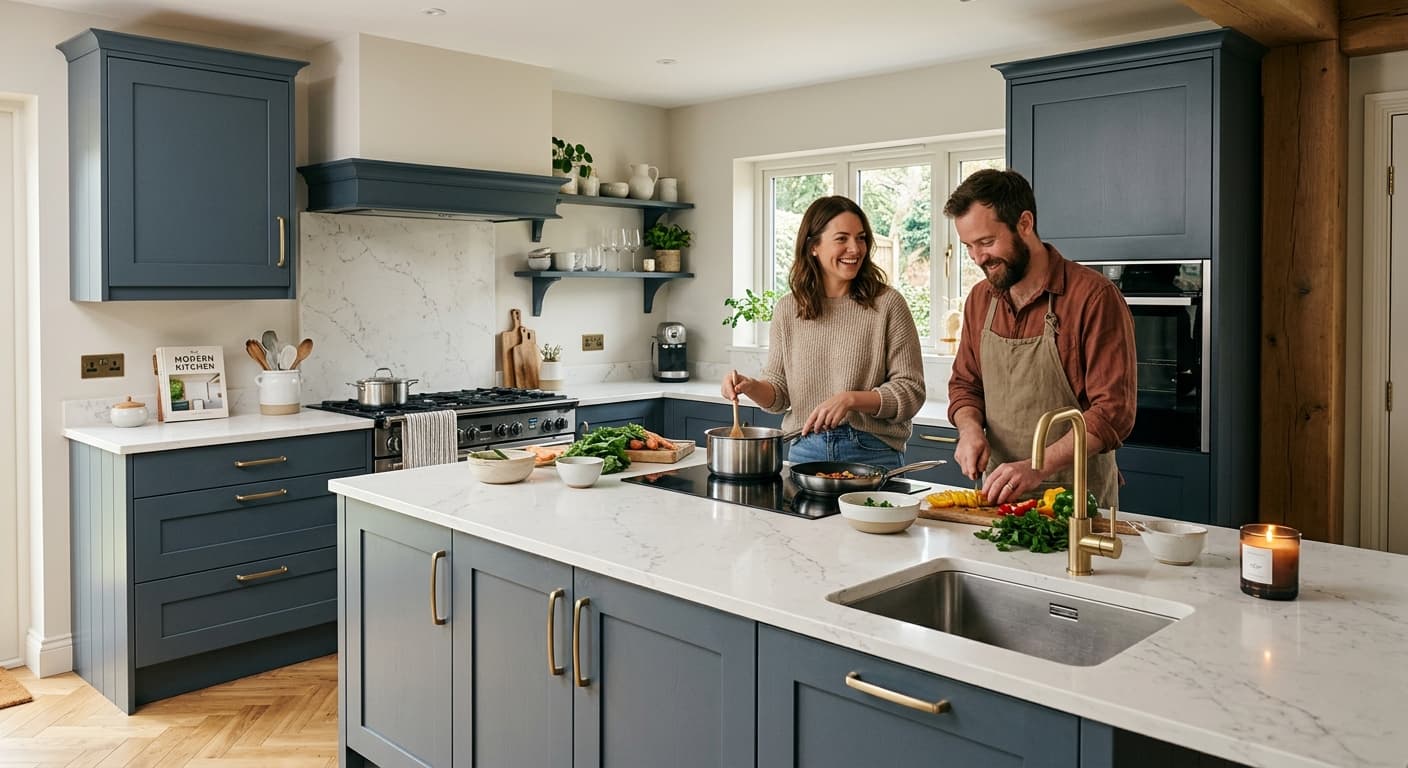
Light reflective materials amplify perceived space. White or light grey matt lacquered units paired with pale quartz worktops remain the safe choice, though darker navy and forest green cabinetry has gained traction for those willing to embrace bolder aesthetics.
Regional Price Variations Across the UK
Location dramatically affects what you'll pay. Our directory data from browse all categories reveals these regional patterns:
London and South East: Premium of 25-35% over national averages. A mid-range kitchen costing £15,000 in Leeds will run £19,000–£21,000 in the capital. Labour accounts for most of this difference, with materials adding only 5-8%.
South West: Prices run 8-12% above national average, driven by affluent demographics and limited installer availability in rural areas.
Midlands and North: Most competitive pricing, typically 5-10% below national benchmarks. Strong competition among local installers keeps rates reasonable.
Scotland: Roughly on par with northern England, though remote and island communities face significant premiums for materials transport.
Wales: Mixed picture—Cardiff and Newport align with English midlands pricing, whilst rural Welsh properties can see 15-20% premiums due to travel time and limited installer availability.
Checkatrade data from Q1 2024 confirms these patterns, with average kitchen installation quotes ranging from £4,200 in northern regions to £6,800 in greater London for comparable projects.
Finding Reliable Kitchen Installers
The quality gap between competent professionals and cowboys remains alarmingly wide in kitchen installation. We've seen too many botched installations where inadequate waterproofing, poor electrical work, or misaligned units created expensive remediation projects.
Vet installers rigorously:
- Verify credentials: Check for relevant trade association membership (CEDIA, NKBA, or Master Builder certification)
- Review recent projects: Insist on seeing completed work from the past six months, not just portfolio highlights
- Validate insurance: Confirm public liability coverage (minimum £2 million) and guarantees on workmanship
- Get itemised quotes: Reject vague estimates that lump supply and labour together
- Check Building Regulations compliance: Ensure installers understand Part L ventilation requirements and Part P electrical certification
Businesses in our search our company directory undergo verification processes that help identify established, credible installers. For those considering launching or expanding kitchen businesses, you can list your business to reach homeowners actively researching kitchen projects.
The 2024 Kitchen Trends Driving Specifications
Current specifications reveal clear preferences:
Handleless designs now appear in 38% of new installations, up from 22% in 2020. J-profile and integrated rail systems have evolved to offer better ergonomics than early push-to-open mechanisms.
Quartz worktops dominate the £15,000+ segment, capturing 42% market share. Brands like Silestone, Caesarstone, and Dekton lead specifications, with British manufacturer Cambria gaining ground.
Integrated appliances appear in 68% of fitted kitchens according to our analysis. Seamless integration with cabinetry creates the clean aesthetic UK buyers prefer, though it increases replacement complexity.
Shaker-style doors refuse to fade despite predictions. This classic profile accounts for 35% of new installations, testament to its versatility across traditional and contemporary schemes.
Sustainable materials influence 23% of specifications, with FSC-certified timber, recycled glass composite worktops, and water-based finishes gaining traction among environmentally conscious buyers.
Making Your Kitchen Budget Work Harder
Smart homeowners extract maximum value through strategic compromises:
Keep the existing layout: Moving plumbing and gas connections adds £1,500–£3,500 to projects. Work with your current footprint unless the layout fundamentally fails.
Mix quality levels: Specify premium materials where they matter (worktops, drawer systems) whilst accepting budget units in less visible locations like larder interiors.
Time your purchase: End-of-line sales at Howdens, Magnet, and Wren typically occur January-February and July-August, offering 20-30% discounts on display models.
Separate supply and installation: Buying units independently and hiring an installer can save 15-20%, though you assume coordination responsibility and lose integrated warranties.
Phase the project: Install the kitchen structure now, add premium appliances later as budget permits. Most designs accommodate specification upgrades.
Looking Ahead: What's Coming in 2025
Industry forecasts suggest modest price increases of 3-5% for 2025 installations, roughly tracking inflation. Labour shortages persist as skilled fitters age out of the trade faster than apprentices enter it, maintaining upward pressure on installation costs.
Technology integration will accelerate. Smart appliances, integrated charging stations, and under-cabinet lighting controlled via apps feature in 18% of current specifications and growing. Voice-activated functions and automated ventilation linked to hob use represent the cutting edge.
Sustainability requirements may tighten as England considers bringing kitchen installations within stricter Building Regulations oversight, potentially mandating enhanced ventilation standards and energy-efficient specifications.
The kitchen installation cost UK homeowners face remains substantially higher than pre-2020 levels, but at least the uncertainty has diminished. Material availability has normalised, lead times have compressed, and pricing has stabilised after two turbulent years. That predictability makes 2024 a more sensible time to commit to kitchen projects than the preceding period of volatile costs and unpredictable delays.
Browse Fitted Kitchens businesses on HouseJester to compare verified installers in your area and get your project started with confidence.
Sources & Further Reading
This article was created with AI assistance and reviewed by the HouseJester editorial team for accuracy and relevance.
